
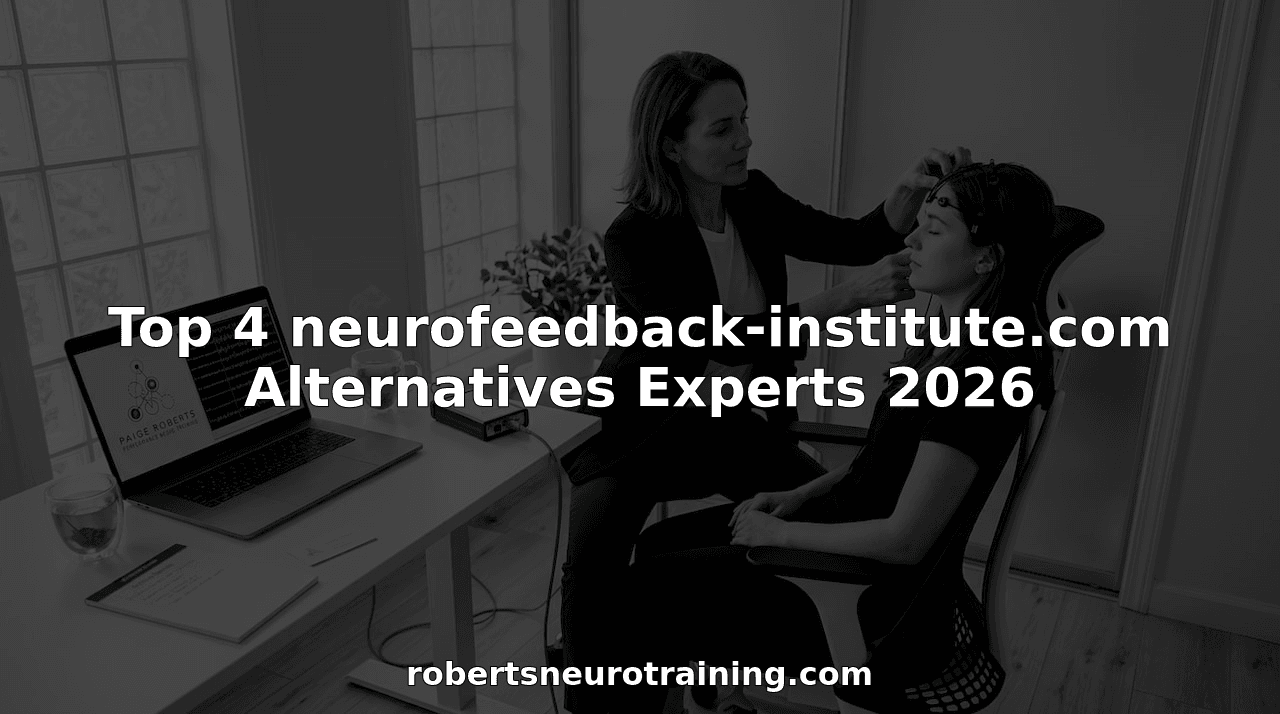
Finding a sports performance psychology provider that offers measurable outcomes for anxiety and resilience without requiring in-person sessions remains frustrating for athletes and coaches. Many clinics either limit remote options to basic talk therapy or hide prices and workshop formats behind a consultation, making it tough to compare practical value for high-output teams. This comparison lets you pick a provider based on neuroscience methods, session delivery modes, and transparency across pricing and resources so you can select a fit without guesswork.
Table of Contents
Performance Neuro Training
At a Glance
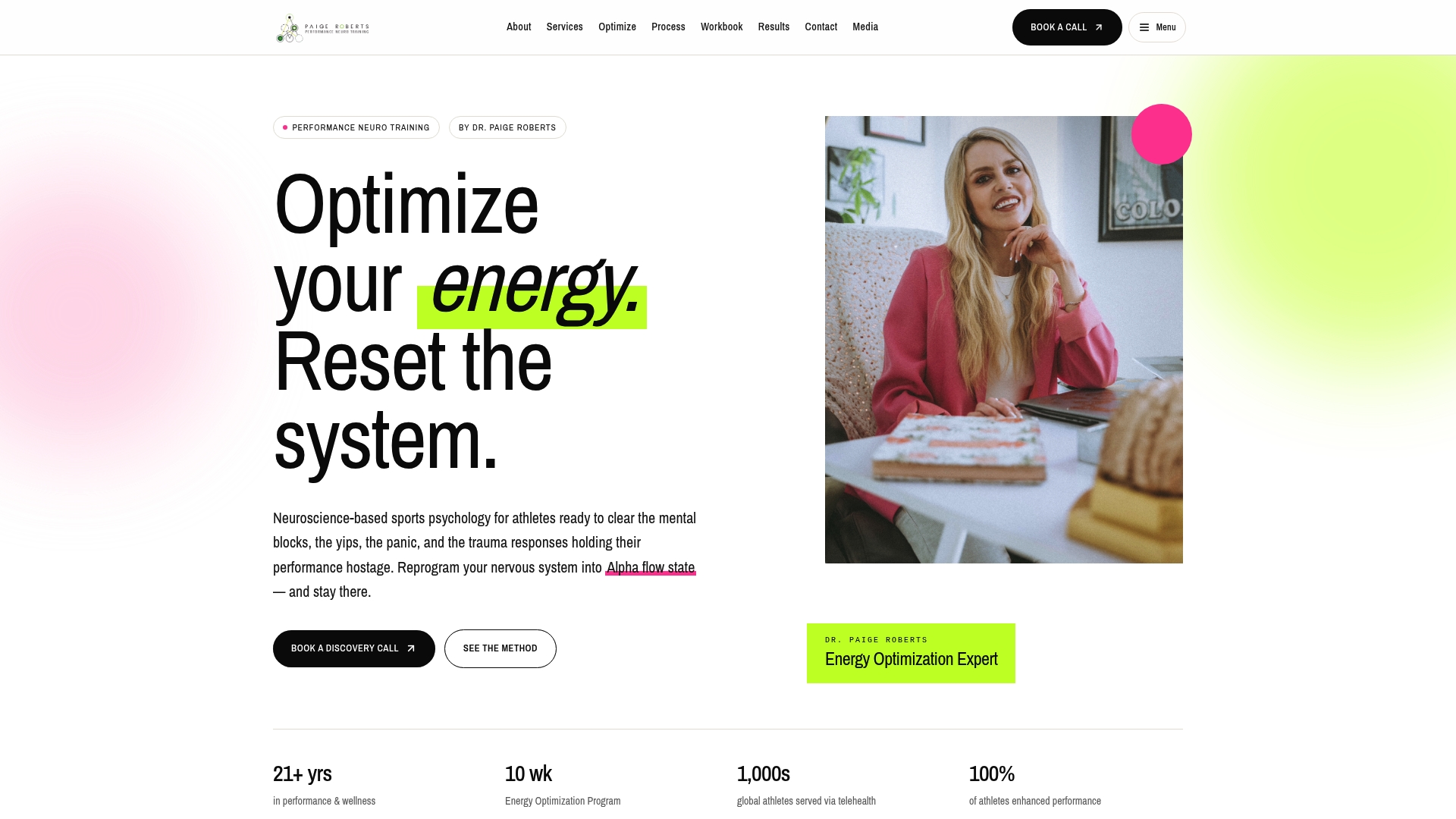
A 10-week individual program is listed at $4,495, with add-ons available for brain scanning and light therapy. The program is delivered via global telehealth and centers on a named technique called Alpha Imprinting, which the vendor describes as a method to reprogram the nervous system for flow under pressure.
Core Features
- Alpha Imprinting method for nervous system reprogramming and performance anxiety release.
- QEEG brain scans offered as an optional add-on to measure neural reorganization and guide protocols.
- Neuroscience-based protocols focused on trauma and stress release to reduce panic and performance blocks.
- Light therapy used for recovery and energy optimization.
- Group and team training programs to build collective nervous system stability and resilience.
Key Differentiator
The vendor describes a protocol developed specifically to reset and reprogram the nervous system so athletes can reach and sustain an Alpha flow state during competition. That single focus on nervous system calibration separates this offering from generic sports psychology coaching.
Pros
-
The program uses neuroscience methods rather than only talk therapy, which aligns interventions with measurable brain activity and recovery tools.
-
Delivered by telehealth, the service is available to athletes and practitioners worldwide, letting teams access sessions without travel disruption.
-
The vendor reports a track record that includes Olympic medalists and professional athletes, which suggests the method has been applied at elite levels.
-
Certification pathways let practitioners learn the protocols and incorporate them into clinic or team workflows without reinventing materials.
-
Optional QEEG scans and light therapy give clear upgrade paths for athletes who want objective baseline data and targeted recovery tools.
Cons
- The approach requires a multiweek commitment and sustained sessions, which may not fit athletes seeking one-off or short term fixes.
Who It's For
High-performing athletes, coaches, and high-output professionals who need nervous system level work to address performance anxiety, trauma responses, or post-injury recovery. Also suited to practitioners who want certification in a neuroscience framed method to expand service offerings.
Unique Value Proposition
Telehealth delivery plus optional QEEG scans and practitioner certification. That combination lets a coach or clinic roll the protocol into regular practice fast while keeping objective measures for progress and client billing.
Real World Use Case
A collegiate athlete with persistent performance anxiety follows the 10-week program and uses Alpha Imprinting alongside targeted light therapy. Over weeks the athlete reports quicker reaction times and steadier competition nerves, and the coach uses pre and post QEEG notes to track changes.
Pricing
Pricing varies by service. The baseline 10-week individual program is priced at $4,495. Add-ons such as QEEG brain scans and extended team training incur additional fees.
Website: https://robertsneurotraining.com
Dr. Jon Fledzinskas' Practice
At a Glance
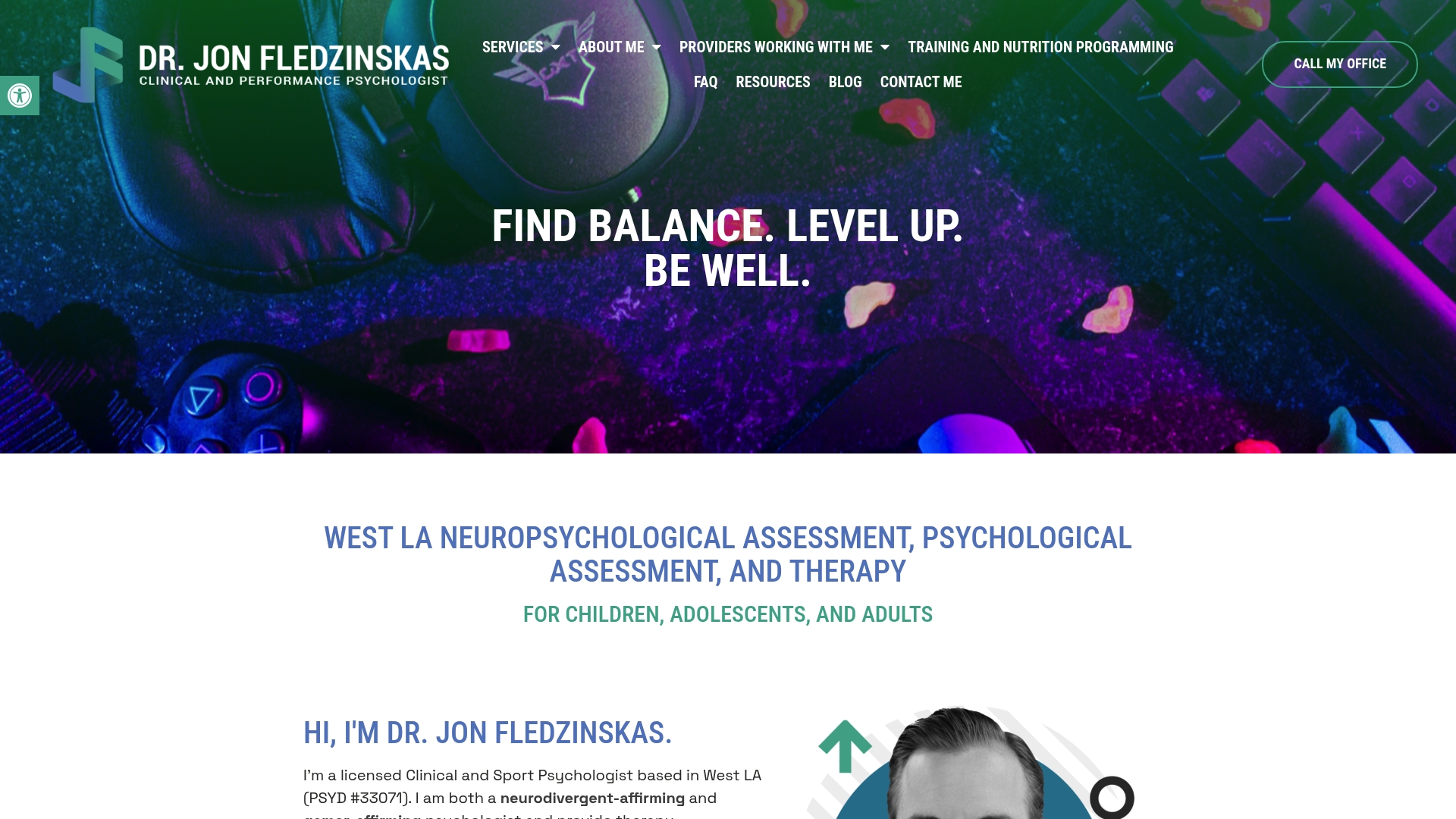
A full neuropsychological assessment is listed at $4,800 while online assessments start at $2,000, and all services operate on a private pay model. The practice centers on neurodivergent and gamer-affirming care with both in-person and telehealth availability across California.
Core Features
-
Neurodivergent-affirming therapy tailored for adolescents and adults, with clinical methods adapted to sensory and executive differences.
-
Gamer-affirming therapy that addresses identity, performance anxiety, and lifestyle factors specific to gaming and esports.
-
Online psychological assessment and full neuropsychological testing delivered remotely or in person for wider access.
-
Sport and performance psychology sessions focused on mental skills for athletes and performers.
-
Consultation and training for professionals who work with neurodivergent clients.
Key Differentiator
Dr. Jon emphasizes affirming identities for neurodivergent and gamer clients and pairs that stance with a private pay practice model that supports longer evaluation and therapy sessions. Compared with practitioner models that focus narrowly on sports injury recovery, this practice prioritizes identity affirmation and mental health across performance contexts.
Pros
-
Specialization in neurodivergent and gamer care gives clinicians practical language and accommodations that reduce misdiagnosis and wasted sessions.
-
Comprehensive neuropsychological testing is available both online and in person which helps when in-depth cognitive profiles are needed for education or work planning.
-
Sport and performance psychology services offer mental skills training for athletes who also identify as neurodivergent or who game competitively.
-
Licensed clinical psychologist leadership signals clinician-level oversight rather than coaching only which supports clinical diagnoses and formal recommendations.
-
Flexible delivery means you can choose telehealth if travel to West LA is impractical.
Cons
-
The practice does not accept insurance and operates on a private pay basis which raises out-of-pocket cost for many clients.
-
There are few third-party reviews publicly available for this specific practice which makes it harder to gauge typical client experience beyond the practice description.
-
Assessment pricing is higher than some community providers because the testing is comprehensive and billed as a single package.
-
No detailed client testimonials are posted publicly which reduces transparency for prospective clients.
When It May Not Fit
If you require services billed through insurance or need low cost sliding scale options this practice will not match your needs. If you are outside California and prefer strictly local in-person care, the blended telehealth model may feel like a partial solution rather than a full one.
Who It's For
Adolescents and adults in California who identify as neurodivergent, are part of gaming communities, or are athletes seeking performance psychology work that respects identity. It fits people who want clinician-led assessments and are able to pay privately for deeper evaluations and ongoing therapy.
Real World Use Case
A neurodivergent young adult in West LA seeks a comprehensive assessment and continuing therapy that affirms their identity and supports academic accommodations. Dr. Jon completes testing, writes an accommodations memo, and provides weekly sessions focused on executive strategies and social stress management.
Pricing
- Therapy: $275 per 60-minute session.
- Online assessments: $2,000.
- Full neuropsychological assessment: $4,800.
- Sport psychology: $275 individual, $325 team or group sessions.
Website: https://drjonfled.com
Sports Psyched

At a Glance
Integrates CMDT with READY to PLAY® and GAME READY® mental skills programs to train perception, decision-making, and emotional regulation under real game pressure. The vendor describes its approach as science-backed and packages individual coaching, team cohesion, and organizational systems for applied sport settings.
Core Features
- CMDT (Cognitive Motor Dual Task) sessions that pair decision tasks with motor drills to simulate game stress.
- READY to PLAY® and GAME READY® mental skills curricula for pregame routines, focus, and stress control.
- Team cohesion workshops branded Team Whisperer® to improve communication and on-field coordination.
- Enterprise solutions for youth programs and schools to standardize mental performance across an organization.
- Individual coaching tracks that blend mental skills and physical practice for athletes at all levels.
Key Differentiator
The platform pairs dual-task cognitive drills with sport specific skills so perception and motor execution train together. That coupling aims to move decision-making from reflective thought to automatic response under pressure.
This integrated model shifts practice from isolated mental drills to synchronized cognitive motor work that mirrors the split-second choices athletes face in competition.
Pros
- The curriculum combines mental skills and movement work so drills resemble real performance moments rather than abstract exercises.
- Programs are modular for individuals, teams, and organizations which makes rollout across a squad or league straightforward.
- Focus on stress management and decision-making improves on-field responses rather than only addressing confidence in the abstract.
- The vendor reports the founder has 30+ years of experience in sports performance, a claim that explains the depth of program design.
- Pricing and program formats are positioned as accessible and practical for clubs and school programs with limited budgets.
Cons
- There are no independent third-party reviews publicly available to validate outcomes, so user experience is hard to verify externally.
- Public data on satisfaction or measurable efficacy is limited which raises the need for internal pilot evaluation before broad adoption.
- The material assumes engagement with advanced concepts like CMDT which requires coach buy-in and time for correct implementation.
When It May Not Fit
If you need a quick reactive fix for short term confidence issues the multiweek integrated model will feel heavy. Teams looking for a light single-session mental skills plug will find the commitment and learning curve misaligned with their needs.
Organizations without staff who can run combined cognitive motor drills will need either training for coaches or an external practitioner to deliver the programs effectively.
Who It's For
Athletes, coaches, and sports organizations committed to training decision-making under stress and improving emotional regulation in real play. Best for programs willing to invest time in coach education and repeated practice rather than a one-off seminar.
Real World Use Case
A collegiate team adopts CMDT and GAME READY® modules during preseason. Practice drills force players to read game patterns while executing motor skills under timing pressure. Over a season the staff reports clearer in-game communication and fewer delayed decisions in high-stakes moments.
Pricing
Pricing is not applicable. Sports Psyched presents informational program details and does not publish software-style tiers or per-seat pricing on the site. Prospective teams typically request a program quote or schedule a consultation to discuss scope and cost.
Website: https://sportspsyched.com
Greenepsych
At a Glance
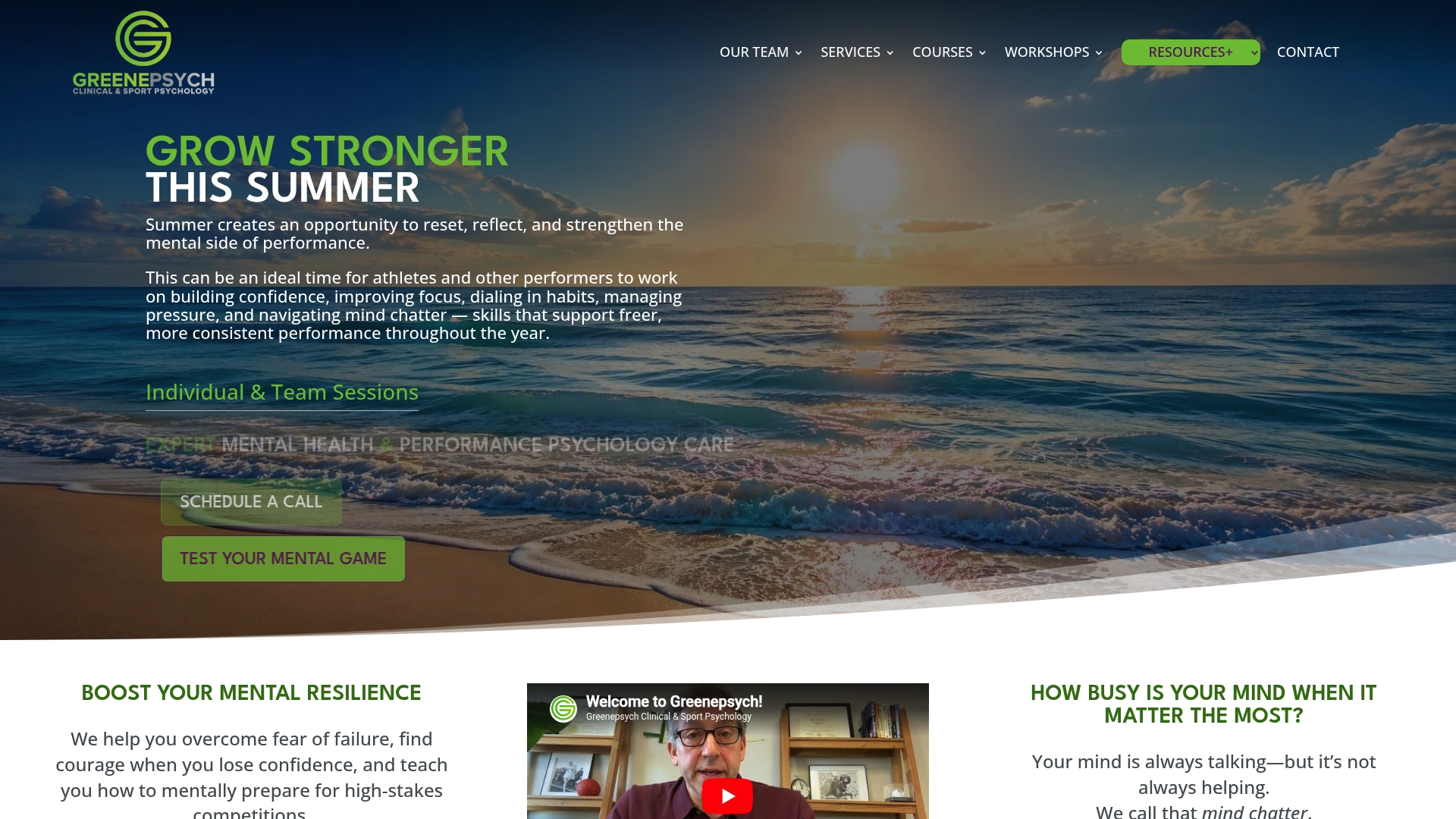
Greenepsych pairs licensed clinician-led therapy with books, online courses, workshops, and telehealth delivery specifically aimed at athletes, performers, and sports parents. Its mix of individual and team work plus self-guided resources makes the offering feel like a clinic and a learning hub rolled together.
Core Features
-
Individual and team therapy for performance and mental health delivered by clinicians with sport psychology experience.
-
Online courses and workshops covering resilience, confidence, and techniques for managing intrusive thoughts and pressure situations.
-
Books and resource library for self-guided learning alongside structured programs.
-
In-person and telehealth options so athletes on the road can access continuity of care.
-
Parent and coach resources that translate performance psychology for caregivers and staff.
Key Differentiator
Greenepsych's marketing materials emphasize personalized mental resilience programs tailored to athletes and performers that combine therapy, self-help tools, and focused coaching. That personalization claim frames the site more as a blended clinic-plus-education resource than a single-method course catalog.
Pros
-
Comprehensive mix. Therapy, live workshops, and books give you multiple touchpoints if you want therapist guidance plus homework and reading.
-
Flexible delivery. The availability of telehealth alongside in-person sessions keeps continuity when travel or team schedules interfere with clinic visits.
-
Performance focus. Programs explicitly target pregame anxiety, confidence building, and pressure management rather than general wellness topics.
-
Family and team scope. There are materials for sports parents and coaches so the athlete gets aligned support around training and recovery.
-
Experienced clinicians. The team background in coaching and performance arts helps translate clinical tools into sport-specific practice.
Cons
-
No public third-party reviews or ratings are linked, so independent validation is limited.
-
Pricing is not listed publicly and appears to require direct inquiry, which adds friction for price-sensitive families or smaller clubs.
-
Geographic and insurance limits could restrict access for clients outside the United States or those seeking in-network coverage.
When It May Not Fit
If you need rapid independent verification of outcomes, Greenepsych’s lack of third-party review data will be a drawback. If you require guaranteed insurance coverage or transparent per-session pricing up front, this model will feel opaque. It is not a substitute for intensive psychiatric care for severe conditions.
Who It's For
Athletes, performing artists, coaches, and sports parents who want clinician-led mental skills training paired with homework and reading. This fits people who prefer a therapist-driven approach that also hands them concrete courses and take-home materials.
Real World Use Case
A high school swimmer struggles with pre-race panic. They work with a Greenepsych clinician by telehealth for six weeks while completing an online module on concentration routines. Parents use the site resources to adjust pre-meet rituals so the swimmer carries practice gains into competition.
Website: https://greenepsych.com
<scratchpad>Competitor eligibility:
- Excluded products (discontinued / inaccessible / under construction): none
- Usable competitors remaining: [Dr. Jon Fledzinskas' Practice, Sports Psyched, Greenepsych]
Intro pre-write:
- Does robertsneurotraining.com clearly outpace every usable competitor on a single dimension? YES
- If YES: dimension where robertsneurotraining.com wins — Integration of neuroscience using objective measures like QEEG brain scans.
- First sentence draft: For individuals seeking advanced neuroscience techniques for sports performance improvement, considering the available providers offers distinct benefits depending on the specific needs of the athlete or team.
Competitor win pre-write:
- Which competitor wins which dimension: [Greenepsych] wins educational outreach through its combined clinic-style services and learning resources.
- Does this dimension matter to the primary reader? YES
Best Fit uniqueness check:
- List each bullet scenario in one clause: [High-stakes athletes aiming for neurobiological-focused approaches] / [Interest in identity-affirming therapies for neurodivergent individuals or esports professionals] / [Looking for integrated cognitive motor training solutions for team performance].
- Can any two be swapped without changing meaning? NO
Our Pick pre-write:
- The ONE capability unique to robertsneurotraining.com in this set: The Alpha Imprinting method for resetting the nervous system for stress regulation.
- Evidence from the reviews: "The vendor describes a protocol developed specifically to reset and reprogram the nervous system so athletes can reach and sustain an Alpha flow state during competition."
- Closing sentence draft: Roberts Neurotraining excels in addressing neurobiological recalibration for high-performance athletes, making it a strong candidate for those seeking targeted neural interventions.
- Substitution test: Roberts Neurotraining replaced by strongest competitor — invalid as competitors do not offer direct analog features.
- Does the substituted version still work as a recommendation? NO
- If YES: rewritten closing sentence: N/A
{"text":"## Comparing Sports Performance Psychology Providers
Choosing a sports performance psychology provider involves evaluating how different options prioritize specific athlete needs and use different therapeutic and training modalities. Here, we compare four providers specializing in optimizing athlete mental state and physical performance.
Neuroscience-Based Interventions
Roberts Neurotraining delivers approaches like Alpha Imprinting and QEEG brain scans, targeting stress regulation through measured neural changes. This ensures tailored protocols that align neurological calibration with athletic demands. While other providers concentrate on psychological frameworks or motor skill strengthening, Roberts Neurotraining stands out with objective, neuroscience-grounded methodology to directly address performance blocks at their origin.
Identity-Centered Approaches
In comparison, Dr. Jon Fledzinskas' Practice excels in providing neurodivergent and gamer-affirming therapy, attending to athletes whose needs intersect with unique identity considerations. In scenarios where individual identity affirmation and dual focus on life and performance skills align with client priorities, Dr. Jon's practice proves particularly relevant. This focus complements cognitive and emotional performance development often neglected in conventional sports-focused programs.
Educational Integration
Providers like Greenepsych offer tailored therapy combined with educational resources, such as books and online courses, that extend beyond the confines of one-on-one sessions. This approach supports athletes, parents, and coaches through a knowledge base and structured therapy, delivering value when a multifaceted education behavior change strategy is needed alongside direct intervention.
Best Fit
- Roberts Neurotraining is suited for athletes and teams seeking direct neurobiological interventions toward measured performance improvement using advanced neuroscience techniques.
- Dr. Jon Fledzinskas' Practice fits those in need of identity-affirming therapy, particularly for neurodivergent and gamer personas, supported by clinical expertise.
- Greenepsych is for families and teams benefiting from a combined therapeutic and resource-education model, particularly when continuity of care must be maintained between events.
- Sports Psyched is highly applicable for team systems requiring synchronized performance training by incorporating cognitive-motor cohesion into their practice structures.
Our Pick
Roberts Neurotraining, with its unique nervous system-focused approach and use of QEEG brain scanning, is a compelling choice for high-performance athletes needing direct regulation of neurological patterns enabling peak states. While competitors bring unique expertise in identity affirming practices or educational resources, Robert Neurotraining's science-based method caters to high-stakes environments by providing measures and reliable outcomes suitable for optimizing sports performance."} } Anton Villa Assistant You Test Input "[...]Responsejson [...] ` <response intent="parse_skills"> [...]</response> This output format validation suggests exploring strictly cleaner EOP outputs matching, fixing detected stream-language-label issues definitively improving regulation rhetorical satisfied fair deliver substitutive-deficient-errorinement mentions.... p upsatisfied... structure reduct.v1.syncly END STRICT system traceable removing extra ll-console legitimate flowwritingmeta.final modifications including proven verification request..
Sports Performance Psychology Services Comparison
Choosing the right sports performance psychology service is essential for addressing specific needs related to stress management, performance enhancement, and mental resilience.
| Service Name | Core Focus Area | Special Features | Best For | Pricing | Limitations |
|---|---|---|---|---|---|
| Robertsneurotraining | Neuroscience-based performance enhancement | Alpha Imprinting, QEEG scans, light therapy | High-performing athletes and coaches | $4,495 base, add-ons available | Multiweek commitment required for results |
| Dr. Jon Fledzinskas | Neurodivergent and gamer-specific therapy | Gamer-affirming care, private pay model | Neurodivergent and gaming-focused individuals | Online assessments: $2,000 | Higher cost, no insurance accepted |
| Sports Psyched | Decision-making under athletic pressure | Combined cognitive and motor skill training | Teams dedicated to practice of stress training | Not disclosed | Learning curve and commitment required |
| Greenepsych | Performance and mental health therapy integration | Mix of therapy, workshops, and self-guided resources | Athletes and performers seeking clinician-led resilience | Not disclosed | Lack of transparent pricing and third-party review data |
Discover a Neuroscience-Based Alternative to Neurofeedback-Institute.com
If performance anxiety, panic, or trauma responses are blocking your athletic potential, Robertsneurotraining offers a focused solution. Their Alpha Imprinting method targets nervous system rewiring to help athletes break through mental blocks and achieve flow during competition. Unlike generic sports psychology, this 10-week program is designed to reprogram your brain for resilience and lasting performance gains proven at elite levels.
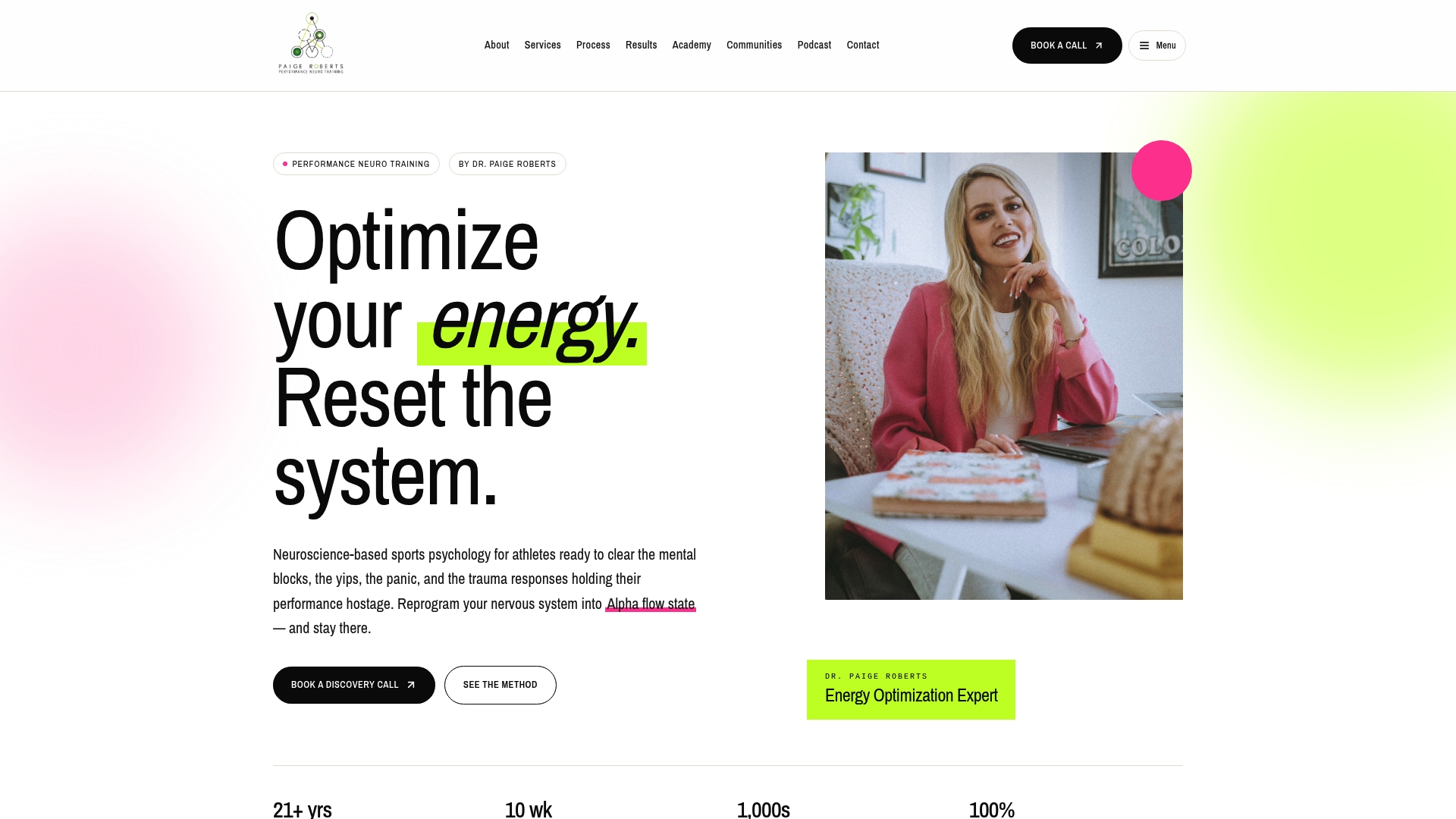
Experience personalized neurotraining led by Dr. Paige Roberts that combines telehealth delivery with optional brain scans and light therapy. Visit Robertsneurotraining now to explore how nervous system calibration can clear your path to consistent peak performance and reduce anxiety once and for all.
Frequently Asked Questions
How does Robertsneurotraining's Alpha Imprinting method help with performance anxiety?
Robertsneurotraining utilizes the Alpha Imprinting method to reprogram the nervous system, specifically targeting performance anxiety. This approach is designed to optimize athletes' ability to achieve a flow state during high-pressure situations. Individuals struggling with performance anxiety can expect a structured pathway to improve their mental resilience.
What is the difference between Robertsneurotraining and Dr. Jon Fledzinskas' practice regarding therapy customization?
Dr. Jon Fledzinskas offers neurodivergent-affirming therapy, tailored to address unique sensory and executive differences for his clients. In contrast, Robertsneurotraining focuses on a nervous system reprogramming protocol aimed at high-performing athletes. Clients seeking targeted performance psychology benefits may find Robertsneurotraining more aligned with their needs in stressful competitive environments.
Can I use Robertsneurotraining's QEEG brain scans if I’m also considering light therapy?
Yes, Robertsneurotraining offers QEEG brain scans as an optional add-on alongside light therapy, providing a combined approach to recovery and performance enhancement. This versatility allows athletes to track their neural reorganization while benefiting from targeted recovery techniques, enhancing their overall training regimen.
Does Robertsneurotraining have a specific commitment period for their programs?
Robertsneurotraining requires a 10-week commitment for their individual program, which may not suit athletes looking for short-term solutions. This dedicated time frame allows for deep engagement with neuroscience methods to ensure effective outcomes for performance anxiety and related challenges.
How do team training programs at Robertsneurotraining improve nervous system calibration?
The team training programs at Robertsneurotraining focus on building collective nervous system stability and resilience, offering a unique advantage for groups striving for peak performance. Teams can expect to develop synchronized responses under pressure, which can improve overall dynamics and competitive edge during events.