
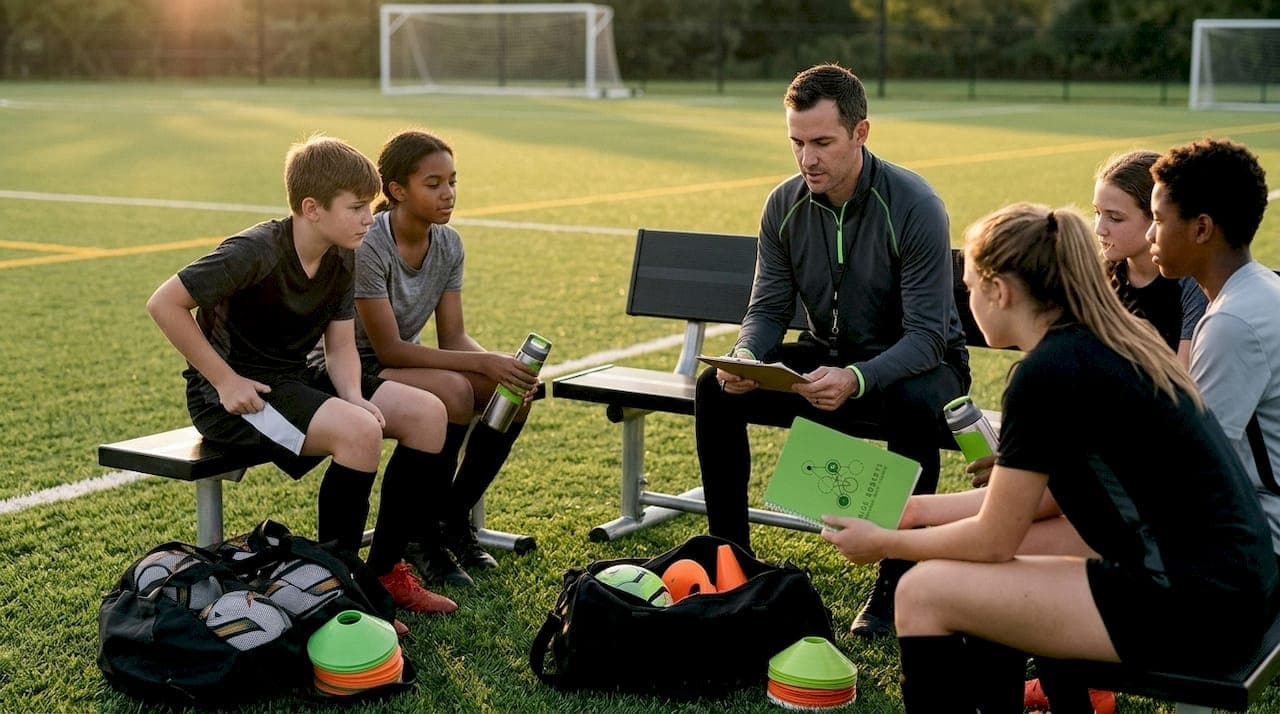
Psychological safety is the shared belief that speaking up is safe without fear of punishment or humiliation, and it is the single most powerful driver of trust, communication, and performance on sports teams. Amy Edmondson's foundational research frames it not as niceness or comfort, but as the condition that allows candid conversation and interpersonal risk-taking. ISO 45003:2021 has since elevated this concept into a formal occupational health standard, requiring organizations to embed psychosocial risk controls into daily operations. A 2026 BMC Psychology study of 369 Turkish athletes confirmed that supportive coaching directly improves performance perception through psychological safety, self-efficacy, and resilience. Team psychological safety best practices are not one-off interventions. They are repeatable leader behaviors and structured systems that make speaking up the norm, not the exception.
1. Model the leader behaviors that signal safety daily
Psychological safety is determined by small, consistent leadership behaviors, not grand gestures. Listening without interrupting, crediting athletes publicly for their ideas, admitting your own mistakes, and staying transparent during uncertainty all send relational signals that speaking up is welcome. A Slovak study identified emotional availability, relational consistency, and accessibility as the leadership competencies most directly tied to psychological safety in teams. Coaches who show up the same way every day, regardless of win-loss record, build the predictability athletes need to take interpersonal risks.
Amy Edmondson's vision of psychological safety centers on candor, not comfort. Telling athletes what they want to hear is not safety. Inviting dissent, tolerating disagreement, and responding to bad news without blame are the behaviors that actually build trust. When a coach reacts to a mistake with curiosity instead of criticism, every athlete watching learns that honesty is safe here.
- Listen actively and avoid interrupting athletes mid-thought
- Credit athletes by name when their input shapes decisions
- Admit your own errors openly and without deflection
- Stay transparent about team decisions, even when outcomes are uncertain
- Respond to mistakes with questions, not punishment
Pro Tip: Schedule brief one-on-one check-ins with each athlete weekly. Relational predictability built in private transfers directly to openness in group settings.
2. Use autonomy-supportive coaching, not controlling tactics
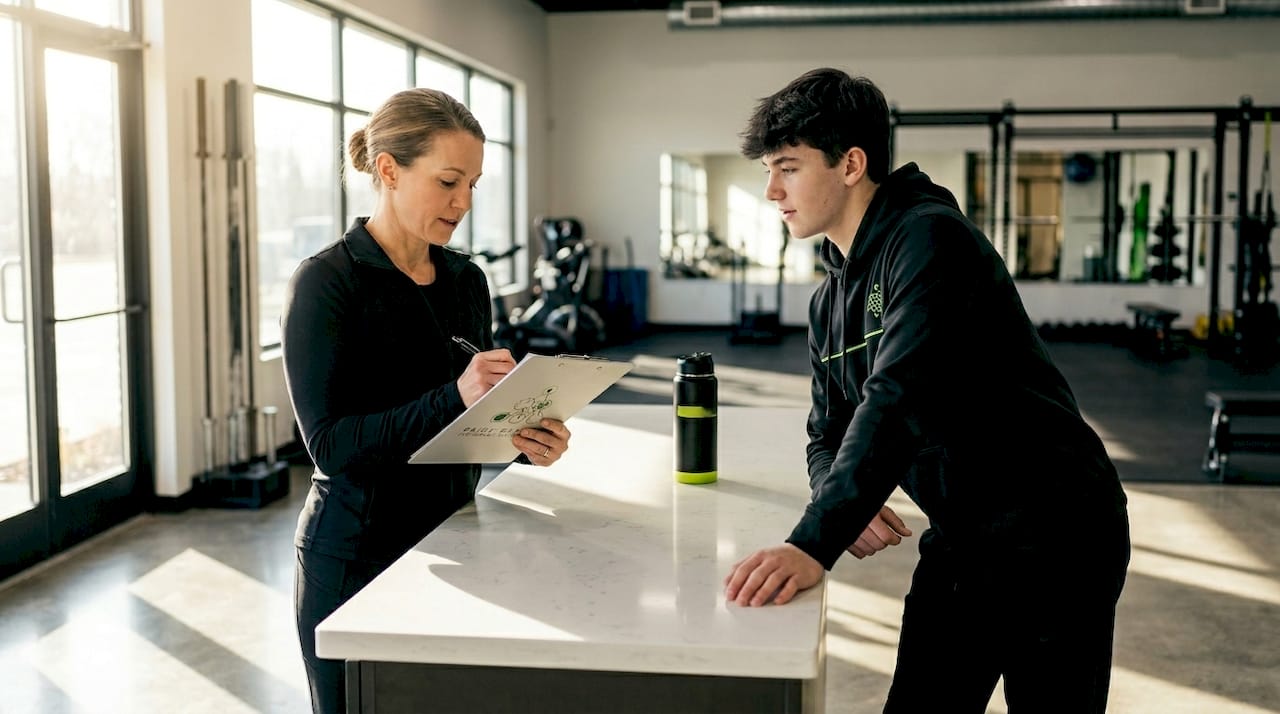
The 2026 BMC Psychology study found that supportive coaching positively influences athletes' perceived performance through psychological safety, while controlling behaviors have measurable negative effects. Autonomy-supportive coaching means offering rationale for decisions, acknowledging athlete perspectives, and giving athletes meaningful choices within the team structure. Controlling coaching, which relies on pressure, surveillance, or conditional approval, suppresses the exact openness psychological safety requires.
Athlete voice works best when it is paired with structured opportunities for dialogue, not just open-door policies. Reflection meetings after competitions, where athletes are explicitly invited to evaluate what worked and what did not, create a repeatable format for honest input. The format matters because it removes the guesswork. Athletes should not have to wonder whether today is a safe day to speak up.
3. Replace broad questions with focused, low-friction input channels
Broad, unfocused questions in high-pressure settings rarely generate honest feedback. Asking "Does anyone have concerns?" after a team meeting puts athletes in the position of guessing what kind of feedback is welcome. Focused questions, such as "What is one thing we should do differently in the next practice?" or "What felt unclear about today's game plan?", lower the barrier to response and signal that specific input is valued.
Anonymous pulse checks are a practical tool for teams where trust is still developing. Digital tools like Google Forms or SurveyMonkey allow athletes to share honest feedback without social risk. The key is consistency. Running a pulse check once and never referencing it again destroys more trust than not running one at all.
Pro Tip: Run a two-question anonymous check-in after every major competition: one question about team communication and one about individual confidence. Review results with the team openly to close the loop.
4. Close the feedback loop visibly and consistently
Feedback must translate into visible change to sustain psychological safety over time. ISO 45003 principles are explicit on this point: when athletes see that their input leads to actual decisions or adjustments, they learn that speaking up has real influence. When feedback disappears into silence, athletes stop providing it. The feedback loop is not complete until the team sees the outcome.
Closing the loop does not require acting on every suggestion. It requires acknowledging what was heard, explaining what will change and what will not, and giving a reason for both. A coach who says "Three of you flagged the warm-up timing, so we are adjusting it starting Tuesday" builds more trust in one sentence than a month of open-door rhetoric. Visible follow-through is the proof that the system works.
5. Separate the dissent phase from the decision phase
Pairing psychological safety with structured accountability phases prevents two common failure modes: fear-based silence and endless validation loops. The dissent phase is the designated window for athletes and staff to raise concerns, challenge assumptions, and propose alternatives. The decision phase is when the leader commits to a direction and the team executes. Keeping these phases distinct means disagreement has a legitimate home without derailing execution.
This structure also protects coaches from the trap of mistaking psychological safety for consensus management. Safety does not mean every decision is made by committee. It means every person had a genuine opportunity to contribute before the decision was made. Once the decision phase begins, accountability applies equally to everyone, including those who disagreed.
6. Integrate psychological safety into team operations, not just culture talks
ISO 45003:2021 positions psychological health as risk management, not a wellness add-on. This means psychological safety practices belong in team protocols, meeting structures, and performance review processes, not just in pre-season culture conversations. When safety is embedded in how the team operates every day, it does not depend on any single coach's mood or memory.
Practical integration looks like this: structured reflection sessions built into the weekly schedule, a standing agenda item for athlete feedback in staff meetings, and explicit norms around how disagreement is handled during competition prep. These are operational decisions, not motivational speeches. Teams that treat psychological safety as a system rather than a value are the ones that sustain it through pressure, roster changes, and losing streaks.
7. Measure the impact and track progress over time
Psychological safety that is never measured is psychological safety that is assumed. Regular measurement through anonymous surveys, structured interviews, or validated tools like the Team Psychological Safety Scale developed from Edmondson's research gives leaders actual data to work with. Without measurement, coaches tend to overestimate safety in high-performing athletes and underestimate it in quieter ones.
Measurement also creates accountability for the leader. If survey results show athletes feel reluctant to raise concerns, that is a leadership signal, not an athlete problem. Tracking scores over a season reveals whether specific interventions, such as changing how feedback is delivered after losses, are actually shifting the team's experience. Data turns psychological safety from a feeling into a manageable outcome.
8. What the measurable benefits look like in practice
Psychological safety facilitates honest dialogue and faster problem-solving, improving engagement, retention, and team performance. The 2026 BMC Psychology study demonstrated that athletes on teams with supportive coaching reported higher self-efficacy and resilience, two factors that directly predict performance under pressure. Teams with higher psychological safety also show earlier problem detection, meaning issues surface before they become crises.
| Outcome | With psychological safety | Without psychological safety |
|---|---|---|
| Athlete self-efficacy | Higher, linked to supportive coaching | Lower, suppressed by controlling behaviors |
| Communication quality | Open, honest, and frequent | Guarded, filtered, or absent |
| Problem detection speed | Early, before performance impact | Late, after damage is done |
| Team resilience | Strong under pressure and adversity | Fragile, dependent on winning |
| Motivation and retention | Sustained across the season | Volatile, declines after setbacks |
9. Common pitfalls versus best practices in sports coaching
The most damaging mistake coaches make is mistaking psychological safety for freedom from consequences. Safety and accountability are not opposites. A team where athletes can speak up honestly and are still held to clear performance standards is the goal. Removing accountability in the name of safety produces a different problem: low standards and unclear expectations.
| Common pitfall | Best practice |
|---|---|
| Broad, unfocused feedback questions | Specific, low-friction input channels with clear prompts |
| Treating safety as a one-time culture event | Embedding safety into daily operations and meeting structures |
| Controlling or coercive coaching behaviors | Autonomy-supportive coaching with rationale and athlete voice |
| Ignoring feedback after collecting it | Closing the feedback loop with visible, explained follow-up |
| Equating safety with no consequences | Pairing open dialogue with structured accountability phases |
Autonomy-supportive coaching, as the 2026 BMC Psychology research confirms, improves both psychological safety and performance perception simultaneously. The two are not in tension. Coaches who give athletes genuine input into training decisions while maintaining clear expectations get more honest communication and better execution than coaches who rely on authority alone.
Key takeaways
Psychological safety on sports teams requires consistent leader behaviors, structured communication systems, and visible follow-through to produce lasting improvements in trust, communication, and performance.
| Point | Details |
|---|---|
| Leader behavior drives safety | Daily actions like listening, crediting, and admitting mistakes build the relational trust athletes need to speak up. |
| Structure beats good intentions | Scheduled feedback sessions, anonymous pulse checks, and clear dissent phases create safety that does not depend on mood. |
| Closing the loop is non-negotiable | Athletes stop speaking up when their input produces no visible change. Follow-through is the proof the system works. |
| Safety and accountability coexist | Psychological safety is not freedom from consequences. It is the condition where honest input and high standards operate together. |
| Measurement makes it manageable | Tracking psychological safety with validated tools turns a cultural value into a data-driven leadership outcome. |
What I have learned about psychological safety that most coaching guides miss
Most articles on psychological safety treat it like a mindset shift. In my work with athletes at every level, from college programs to Olympic competitors, the reality is more concrete and more demanding than that. Safety is not something you declare. It is something athletes test, repeatedly, before they believe it.
The athletes I work with at Robertsneurotraining often arrive carrying the residue of coaching environments where speaking up cost them playing time or social standing. Their nervous systems have learned that honesty is risky. No amount of culture talk undoes that learning quickly. What does undo it is relational predictability: a coach who responds the same way to bad news on Tuesday as they do on Friday, who credits the athlete who flagged a problem instead of resenting them for it.
The other thing I push back on is the idea that psychological safety is primarily about feelings. It is about performance. When athletes trust that speaking up will not cost them, they surface problems earlier, take smarter risks, and recover from setbacks faster. That is a competitive advantage, not a wellness benefit. Coaches who treat it as a soft skill are leaving real performance gains on the table.
Remote and hybrid team settings add another layer of complexity. Digital communication strips out the relational cues, tone, facial expression, and body language, that athletes use to gauge whether it is safe to speak. Leaders working with distributed teams need to be more deliberate, not less, about creating structured moments for honest input. The absence of those cues does not mean safety is present. It means you have to build it more intentionally.
— Paige
How Robertsneurotraining supports your team's performance foundation
Building psychological safety creates the conditions for peak performance, but some athletes carry nervous system patterns that require more targeted work. At Robertsneurotraining, Dr. Paige Roberts works directly with athletes and team leaders to address the neurological roots of performance anxiety, mental blocks, and trauma responses that undermine both individual output and team trust. Using Alpha Imprinting and neuroscience-based training, the program helps athletes clear the internal barriers that no amount of culture work alone can reach. If you lead a team and want to understand how nervous system training complements the psychological safety practices you are building, Robertsneurotraining offers the tools to take performance to the next level.
FAQ
What is psychological safety in sports teams?
Psychological safety in sports teams is the shared belief among athletes that they can speak up, admit mistakes, and take interpersonal risks without fear of punishment or humiliation. Amy Edmondson's research defines it as the foundation for honest communication and team learning.
How does coaching style affect psychological safety?
Supportive coaching directly increases psychological safety, self-efficacy, and resilience, while controlling behaviors suppress all three. The 2026 BMC Psychology study of 369 Turkish athletes confirmed this relationship with measurable performance outcomes.
What are the best tools for measuring team psychological safety?
Anonymous pulse surveys, structured reflection sessions, and validated instruments like the Team Psychological Safety Scale provide reliable data. Measurement is only effective when results are shared with the team and lead to visible changes in practice.
Is psychological safety the same as avoiding accountability?
Psychological safety and accountability are not the same thing and should not be treated as opposites. Experts recommend separating a structured dissent phase, where concerns are raised freely, from a decision phase where accountability applies to everyone.
How often should coaches check in on psychological safety?
Regular, brief check-ins after competitions and structured weekly one-on-ones build the relational predictability that sustains safety over time. Consistency matters more than frequency. A predictable monthly survey beats an unpredictable daily open-door policy.