

Mental reprogramming is the active process by which the brain rewires its neural pathways during recovery to restore emotional regulation, update maladaptive memories, and rebuild performance readiness. This process is not optional. For athletes recovering from sports injuries or trauma, the brain undergoes neurobiological reorganization that demands deliberate psychological intervention to succeed. Without addressing why recovery involves mental reprogramming, physical rehabilitation alone leaves critical gaps that increase re-injury risk and stall return to peak performance. Techniques like EMDR, mindfulness, and visualization are not add-ons. They are core tools that drive the brain's capacity to heal.
Why recovery involves mental reprogramming: the neurobiology
Recovery is an active neurobiological reorganization process, not a passive return to baseline. When an athlete sustains an injury or trauma, the brain does not simply wait for the body to heal. It begins restructuring neural networks, and the direction of that restructuring depends heavily on the inputs it receives. Prefrontal cortex activity must be restored and glutamatergic balance normalized for genuine recovery to occur. Without targeted mental intervention, the brain can stabilize maladaptive patterns instead of adaptive ones.
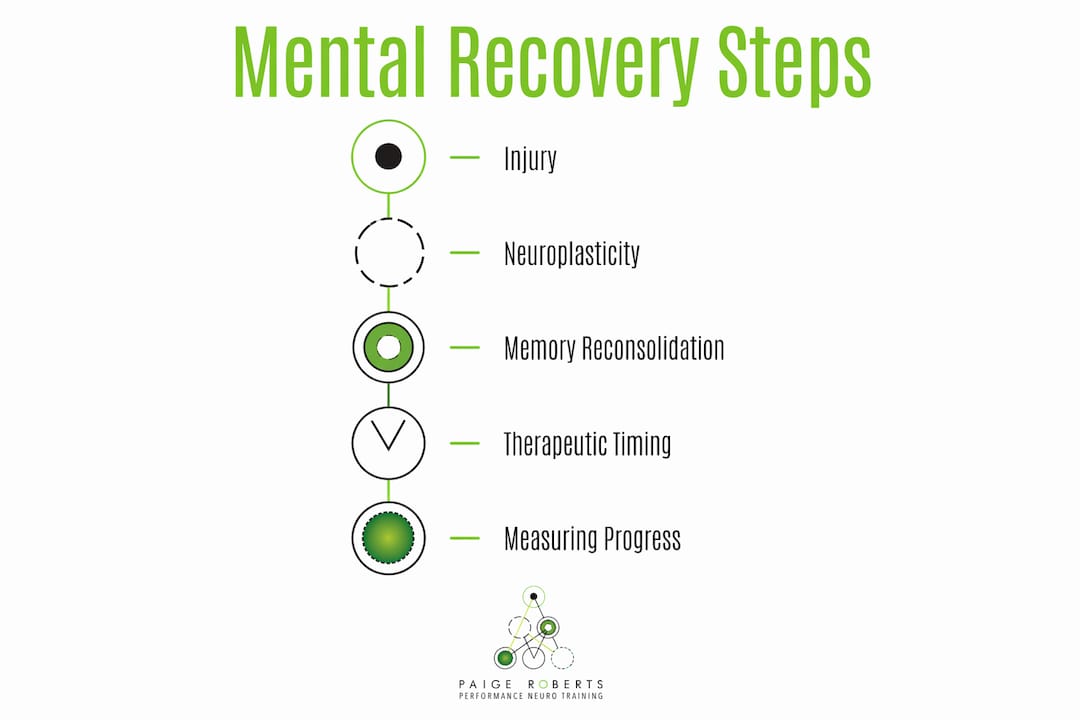
Neuroplasticity is the brain's ability to form new synaptic connections in response to experience and learning. In recovery, this works both for and against you. Adaptive plasticity rebuilds healthy movement patterns and emotional regulation. Maladaptive plasticity, by contrast, locks in threat responses, avoidance behaviors, and fear-based predictions that persist long after physical healing is complete. Maladaptive network stabilization can actively limit recovery, which is why structured mental reprogramming must challenge those networks directly.
Memory reconsolidation is one of the most powerful mechanisms available in mental reprogramming. When a traumatic or injury-related memory is reactivated, it enters a brief labile state. During this window, EMDR reconsolidation and similar therapies can update the emotional meaning stored in that memory, replacing threat predictions with more accurate, adaptive ones. Miss that window, and the old pattern reconsolidates unchanged.
Pro Tip: Time your therapeutic work to coincide with memory reactivation. Deliberately recalling the injury moment at the start of a session, then applying EMDR or guided visualization, maximizes the reconsolidation window and accelerates neural updating.
| Neural mechanism | Role in mental reprogramming |
|---|---|
| Neuroplasticity | Enables formation of new adaptive pathways during rehab |
| Memory reconsolidation | Allows stored trauma memories to be updated during therapy |
| Prefrontal cortex restoration | Rebuilds executive control over emotional and threat responses |
| Maladaptive network stabilization | Blocks recovery if not actively challenged through structured intervention |
How sports injuries affect the mind and why mindset matters
The psychological impact of a sports injury follows a recognizable pattern: shock, grief, anxiety, frustration, and in many cases, clinical depression. These are not signs of weakness. They are predictable neurobiological responses to a sudden loss of identity, routine, and physical capability. A 2025 scoping review of 64 studies confirmed that psychological support is a critical gap in most rehabilitation programs, directly influencing recovery experience and outcomes.

Fear of re-injury is one of the most underestimated barriers in sports rehab. Athletes who return to competition before their psychological readiness matches their physical clearance face measurably higher re-injury rates and avoidance behaviors. Returning to sport prematurely without completing psychological recovery increases both re-injury risk and long-term avoidance patterns. The body may be structurally healed, but the brain is still running threat predictions based on the original injury event.
Overcoming mental barriers in recovery requires more than positive thinking. It requires deliberate, structured work on how the brain appraises threat and safety. Here is what the evidence supports for integrating mental health into athletic rehab:
- Counseling and cognitive behavioral therapy (CBT): Directly challenges distorted threat appraisals and rebuilds confidence in the injured body part.
- Visualization: Mentally rehearsing successful, pain-free movement updates the motor cortex and reduces fear-based inhibition before physical practice.
- Mindfulness: Trains attention regulation, reducing rumination on injury and improving present-moment focus during rehab exercises.
- Social support: Peer and coach support buffers emotional distress, though poorly managed social pressure can also accelerate premature return to sport.
- Goal-setting: Structured short-term goals maintain motivation and provide measurable evidence of progress, countering the helplessness that often accompanies injury.
Pro Tip: Ask your rehab team to include a psychological readiness assessment alongside physical clearance criteria. Tools like the Injury-Psychological Readiness to Return to Sport (I-PRRS) scale give you and your clinician objective data, not guesswork.
What mental reprogramming techniques work best in athletic recovery
The role of cognitive therapy in recovery is well-established, but the specific mechanisms matter. CBT restructures the cognitive distortions that follow injury, such as catastrophizing pain or predicting permanent performance loss. Mindfulness-based stress reduction (MBSR) reduces cortisol-driven inflammation and trains the prefrontal cortex to override limbic threat responses. Visualization activates the same motor networks as physical practice, which means mental rehearsal is not just psychological preparation. It is actual neural training.
Memory updating approaches go deeper than talk therapy. EMDR uses bilateral stimulation to process trauma memories during their labile reconsolidation window. Cue exposure therapy systematically reintroduces injury-related stimuli in safe contexts, gradually extinguishing the threat response. Distraction or suppression of traumatic memories is ineffective. Active, sustained reprogramming that updates the emotional meaning of memories is what produces lasting change.
Rehab design itself functions as mental reprogramming when structured correctly. Consider these four approaches ranked by their depth of neural impact:
- Feedback-rich practice: Exercises that provide immediate sensory or performance feedback force the brain to update its predictions in real time, directly challenging maladaptive network stabilization.
- Error-processing drills: Intentionally introducing controlled errors during rehab activates the brain's prediction-error signal, which is the primary driver of neural plasticity and learning.
- Graduated exposure: Progressively increasing load and complexity while monitoring psychological response trains the brain to recalibrate threat thresholds safely.
- Whole-person integration: Combining sleep optimization, stress management, and mindset work alongside physical rehab ensures the neurobiological conditions for plasticity are met consistently.
| Technique | Primary neural target | Best used when |
|---|---|---|
| EMDR | Memory reconsolidation | Trauma or fear of re-injury is present |
| CBT | Prefrontal threat appraisal | Negative thought patterns dominate rehab |
| Visualization | Motor cortex and confidence networks | Preparing for return to sport milestones |
| Feedback-rich drills | Prediction-error plasticity | Rebuilding movement patterns and trust |
How can you measure mental and brain recovery progress?
Measuring mental reprogramming progress is no longer limited to self-report questionnaires. Neuroscience now offers objective markers that track how the brain changes during recovery. EEG studies show that feedback-P3 signals are largest early in recovery and gradually normalize toward healthy patterns as the brain reorganizes. This signal reflects how the brain processes reward and learning feedback, and its normalization is a measurable indicator that neural reprogramming is working.
Neuroimaging and biomarker research is expanding the toolkit for clinicians. Frontolimbic network connectivity, measured via fMRI, can show whether memory and emotion regulation interventions are producing the expected network changes. BDNF (brain-derived neurotrophic factor) levels in blood can serve as a proxy for neuroplastic activity, offering a biological window into how well the brain is responding to mental reprogramming efforts.
| Recovery marker | What it measures | Clinical relevance |
|---|---|---|
| Feedback-P3 EEG signal | Reward and learning processing normalization | Tracks neural adaptation over recovery timeline |
| Frontolimbic connectivity | Emotion regulation network integration | Confirms psychological intervention is producing brain change |
| BDNF levels | Neuroplastic activity in the brain | Biological indicator of plasticity response to rehab |
| Psychological readiness scales | Self-reported confidence and fear of re-injury | Aligns subjective experience with objective neural data |
The challenge in longitudinal tracking is personalization. Every athlete's brain reorganizes on a different timeline, and interventions must be adjusted based on both neural and psychological markers rather than fixed schedules. Sports performance coaching that integrates mental skills with physical rehab creates the feedback loop needed to personalize this process effectively.
How to integrate mental reprogramming into your recovery plan
Building mental reprogramming into your recovery is a practical, structured process. The following steps reflect what the evidence supports for athletes at any level:
- Work with a sports psychology specialist. A clinician trained in EMDR, CBT, or neuroscience-informed rehab can design interventions timed to your brain's reconsolidation windows, not just your physical milestones.
- Practice visualization daily. Spend 10 to 15 minutes each day mentally rehearsing pain-free, confident performance. Specificity matters. Visualize the exact movement, the exact environment, and the exact emotional state you want to access.
- Use mindfulness to monitor threat responses. Body-scan meditation and breath-focused attention train you to notice fear-based tension before it becomes avoidance behavior.
- Design your return to sport as a graduated exposure protocol. Each session should slightly exceed your previous comfort threshold while remaining psychologically safe. This is how the brain recalibrates threat predictions.
- Prioritize sleep. Memory consolidation and neural plasticity peak during slow-wave and REM sleep. Cutting sleep short during recovery is cutting the brain's reprogramming time short.
- Avoid confusing mental toughness with denial. Systematic threat updating through safe, structured exposure produces better outcomes than suppressing fear. Acknowledging fear is the first step to reprogramming it.
Key takeaways
Mental reprogramming is a neurobiological necessity in recovery, not a motivational supplement, because the brain actively reorganizes its networks during healing and that reorganization requires deliberate psychological input to produce adaptive rather than maladaptive outcomes.
| Point | Details |
|---|---|
| Brain reorganization is active | Recovery rewires neural networks; without mental input, maladaptive patterns stabilize. |
| Reconsolidation windows are time-sensitive | EMDR and memory-based therapies work best when applied during memory reactivation. |
| Psychological readiness predicts re-injury risk | Returning to sport without mental clearance increases avoidance and re-injury rates. |
| Feedback-rich rehab drives plasticity | Error-processing and graduated exposure directly challenge and update maladaptive networks. |
| Progress is measurable | EEG markers, BDNF levels, and psychological readiness scales track mental reprogramming objectively. |
Why I believe physical clearance is only half the story
I have worked with athletes who were structurally healed by every imaging standard available, yet could not perform at their pre-injury level. The missing variable was never fitness. It was the brain's threat model. The nervous system had learned the injury as a prediction, and that prediction was still running every time they approached the movement that caused the original trauma.
What I see most often is a fundamental misunderstanding of what mental toughness means in recovery. Pushing through fear is not reprogramming. It is suppression, and suppression leaves the maladaptive network intact. Real mental reprogramming means deliberately reactivating the threat memory, working through it with structured therapeutic input, and giving the brain a new, accurate prediction to consolidate. That is a skill, not a personality trait.
The athletes who recover fastest are not the ones who ignore their psychological state. They are the ones who treat mindset as a measurable recovery metric with the same seriousness they give to strength output or range of motion. When you start tracking your psychological readiness alongside your physical benchmarks, you stop guessing and start directing your brain's reorganization with intention.
The work Robertsneurotraining does with Alpha Imprinting is built on exactly this principle. The nervous system can be trained to release maladaptive threat predictions and access a state of flow. That is not a metaphor. It is applied neuroscience.
— Paige
Take your recovery further with Robertsneurotraining

Robertsneurotraining, led by Dr. Paige Roberts, offers a neuroscience-based training program specifically designed for athletes recovering from sports injuries and trauma. The program uses Alpha Imprinting, a method that targets the nervous system directly to clear mental blocks, performance anxiety, and trauma responses that physical rehab alone cannot address. Olympic Medalists and professional athletes across major leagues have used this approach to achieve measurable performance improvements and return to competition with full psychological readiness. If you are ready to treat your brain's recovery with the same precision you apply to your body, explore neurotraining for athletes and take the next step toward complete recovery.
FAQ
What is mental reprogramming in recovery?
Mental reprogramming in recovery is the deliberate process of updating maladaptive neural pathways, threat memories, and emotional predictions formed during injury or trauma. It uses techniques like EMDR, CBT, visualization, and mindfulness to guide the brain toward adaptive reorganization rather than fear-based stabilization.
How does mindset affect physical recovery from sports injuries?
Mindset directly influences physical outcomes because psychological readiness determines whether the brain's threat predictions allow full, confident movement. Athletes who return to sport before completing psychological recovery face higher re-injury rates and persistent avoidance behaviors regardless of physical clearance.
What is the role of EMDR in athletic recovery?
EMDR targets the reconsolidation window that opens when a traumatic memory is reactivated, allowing the therapist to update the emotional meaning stored in that memory. For athletes, this means the fear and threat predictions tied to the original injury can be replaced with accurate, adaptive responses.
Can mental recovery progress be measured objectively?
Yes. EEG markers like the feedback-P3 signal normalize as the brain reorganizes during recovery, and BDNF blood levels reflect neuroplastic activity. Psychological readiness scales like the I-PRRS provide validated self-report data that aligns with these neural indicators.
How is mental toughness different from mental reprogramming?
Mental toughness often refers to pushing through discomfort, which can mask unresolved fear and increase re-injury risk. Mental reprogramming actively updates the brain's threat model through structured, safe exposure and therapeutic work, producing lasting neural change rather than temporary suppression.