
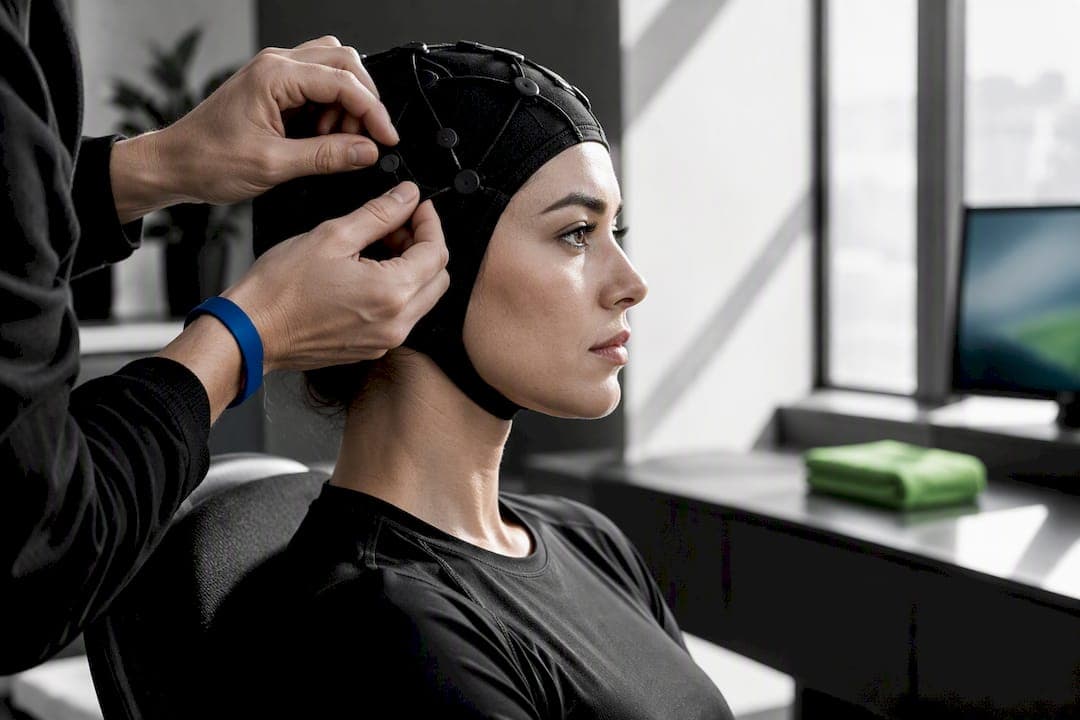
Alpha Imprinting is a neuroscience-based training protocol that aims to reset the nervous system's set-point so athletes and high performers can release trauma-related blocks and access flow. It's built for people whose performance is capped not by skill but by an overactive stress response, chronic hyperarousal, or a past injury that still fires alarm bells in competition. The rest of this guide breaks down the mechanism, the four-phase protocol, and what an actual training arc looks like.
TL;DR:
- Alpha Imprinting targets nervous system recalibration, especially for athletes whose performance is limited by stress or trauma, over an 8 to 12-week program.
- The method uses brainwave navigation, somatic work, and neuroplasticity principles to shift the body's arousal baseline and unlock flow states on demand.
- There is no large-scale scientific trial validating the protocol, but individual outcomes and neuroscience plausibility provide supportive evidence.
- It is unsuitable for acute trauma, active mental health crises, or substance abuse, which require clinical mental health treatment first.
- Progress measurement involves a mix of self-reports, performance metrics, and optional brain scans, with safety screening essential before starting.
Table of Contents
- What Is Alpha Imprinting Training?
- How Does Alpha Imprinting Work in the Brain and Body?
- What Are the Four Steps of the Alpha Imprinting Protocol?
- Who Actually Benefits From This Kind of Training?
- What Happens in an Alpha Imprinting Session?
- Who's Behind the Method, and What's the Evidence?
- How Should You Weigh the Promise Against the Evidence?
- Ready to Start Alpha Imprinting Training?
- Sources
- FAQ
What Is Alpha Imprinting Training?
Alpha Imprinting is a nervous-system retraining method developed by Dr. Paige Roberts that combines hypnotherapy, somatic techniques, and brain-based feedback tools to change how the body responds to stress, competition pressure, and old trauma triggers. The name refers to alpha brainwave activity, the relaxed, focused state associated with flow, not the dominance-based "alpha" concept from older dog-training models. That distinction matters because the word carries baggage: modern canine science has largely abandoned alpha-dominance training in favor of reward-based methods, and readers searching for "alpha imprinting" sometimes land here expecting something closer to obedience conditioning. This is a different animal entirely (pun intended), aimed at human athletes and their internal wiring, not behavioral compliance.
The core claims behind the method are specific, and worth stating plainly rather than dressing up:
- It aims to shift the nervous system's baseline arousal level, so a person doesn't default to fight-or-flight under pressure.
- It targets stored trauma responses (a bad fall, a career-threatening injury, a public failure) that keep replaying in the body even after the conscious mind has "moved on."
- It works toward making the alpha state, and the flow performance associated with it, more accessible on demand rather than something that only shows up by accident on a good day.
- It does not promise a permanent cure for anxiety, a guaranteed competitive outcome, or a substitute for treating diagnosed PTSD or other clinical conditions.
That last point deserves its own emphasis. Alpha Imprinting is a performance and nervous-system training approach, not psychiatric treatment. Athletes with a documented trauma disorder or active mental health crisis need a licensed clinician involved, sometimes alongside this kind of training, never instead of it. The honest scope of the method is retraining a stress response that's gotten in the way of performance, not diagnosing or curing disease.
How Does Alpha Imprinting Work in the Brain and Body?
The plausibility of Alpha Imprinting rests on three separate but connected ideas: brainwave states, neuroplasticity, and autonomic set-points. None of them are exotic. All three show up in mainstream neuroscience, though the specific branded protocol built around them hasn't been through the kind of large randomized trial that would settle the question definitively.
Alpha brainwaves and behavioral correlates. Alpha activity, roughly 8 to 12 Hz on an EEG, tends to show up when someone is relaxed but alert: eyes closed, mind quiet, not drowsy and not stressed. Athletes describe this territory as "the zone," where decisions happen faster than conscious thought and the body just executes. The behavioral correlate is real and measurable. What's less settled is whether deliberately inducing an alpha state through hypnotherapy or light-based stimulation reliably produces the same performance benefits as the alpha state that shows up spontaneously during genuine flow. That's a fair caveat, and it's one worth sitting with rather than glossing over.
Neuroplasticity and reprocessing. The idea that the brain rewires based on experience isn't controversial. What's being applied here is the theory that accessing a calmer, more suggestible brain state creates a better window for reprocessing a stuck memory or a conditioned fear response, similar in spirit to how EMDR or brainspotting work with trauma in a clinical setting. A 2019 study on canine imprinting protocols found that intensive, targeted imprinting produced measurable detection-performance changes in dogs within weeks, evidence that focused, repeated exposure paired with a regulated state can drive fast behavioral change in a mammalian nervous system. That's an animal model, not a human clinical trial, but it supports the underlying mechanism: state plus targeted exposure equals faster learning.
Alpha rhythms sit at 8 to 12 Hz and are the brainwave signature most associated with relaxed, focused performance states, the physiological target Alpha Imprinting sessions are designed to access.
Autonomic set-points. Your autonomic nervous system runs on two competing branches: sympathetic (fight-or-flight) and parasympathetic (rest-and-digest). After a serious injury, a panic episode on the field, or a chronic pattern of pressure without recovery, that system can get stuck with its sympathetic dial turned up too high, permanently primed for threat even when there's no threat present. Alpha Imprinting's stated goal is to shift that baseline down, so the sympathetic response only fires when it's actually useful, not every time a competitor steps onto the same field.
The caveat that has to sit alongside all of this: none of these three mechanisms have been validated together, as a branded protocol, in a peer-reviewed randomized controlled trial. A 2026 study on early olfactory imprinting in detection dogs found real performance gains but flagged small sample sizes and called for larger controlled studies, a pattern that shows up across imprinting research generally. The mechanism is plausible and grounded in real neuroscience. The specific outcomes for any one athlete are practice-level evidence, not settled science.
What Are the Four Steps of the Alpha Imprinting Protocol?
The protocol runs through four distinct phases, each building on the last rather than functioning as standalone sessions.
- Reset. The opening phase focuses on getting the nervous system out of chronic high alert. Sessions typically use guided relaxation, breathwork, and sometimes light or audio-visual entrainment tools to bring brainwave activity down toward the alpha range before any deeper work begins. Think of this as clearing static off the line before a real conversation can happen.
- Desensitize. Once the baseline state is accessible, sessions work directly with the trigger, the specific memory, moment, or sensation tied to the performance block. This phase borrows heavily from trauma-processing approaches like somatic experiencing and brainspotting, working to reduce the emotional charge attached to a specific memory without demanding the athlete relive it in full detail.
- Reimprint. With the old charge reduced, this phase introduces a new response pattern in its place, often through hypnotherapy and NLP-style language work, so the nervous system has something constructive to default to instead of the old alarm response.
- Refine. The final phase tests and reinforces the new pattern under conditions closer to real competition stress, adjusting as needed. This is where progress gets checked against actual performance, not just how someone feels in a quiet room.
The modalities woven through those four phases include:
- Hypnotherapy, used to access a suggestible state for reimprinting new response patterns.
- NLP (neuro-linguistic programming) techniques, applied during the reimprint phase to shift language and internal narrative around the trigger.
- Somatic experiencing, a body-based approach used mainly in the desensitize phase to process trauma stored in physical sensation rather than narrative memory.
- QEEG brain scans, offering an objective, quantitative baseline of brainwave activity before and, optionally, after training.
- Light and audio-visual entrainment tools, used to help guide the brain toward target frequency ranges during Reset sessions.
A full program typically runs on a weekly cadence, with many clients working within an 8 to 12 week arc, roughly matching the structure of a 12-Week Energy Optimization Program. That timeline isn't a guarantee of a specific outcome by week 12. It's a realistic window for the four phases to actually build on each other rather than being rushed through in a single session, which practitioners across trauma-adjacent modalities generally agree undercuts the work. Some athletes need more time on Desensitize before Reimprint sticks; others move faster once the Reset phase quiets the noise.
Who Actually Benefits From This Kind of Training?
The clearest candidate profile is an athlete or high performer whose skill and preparation aren't the problem, their nervous system is. That shows up in a few recognizable patterns:
- A gymnast or equestrian rider who freezes or overcorrects after a fall, even months later, well past the point where the injury itself has healed.
- A pitcher, golfer, or tennis player who performs beautifully in practice and tightens up in competition, the classic clutch-performance block.
- A first responder or surgeon carrying chronic hypervigilance from repeated high-stakes exposure, where the "always on" nervous system starts costing precision rather than protecting it.
- A creative professional or executive whose performance anxiety traces back to a specific failure or public setback that keeps replaying under pressure.
Equestrian athletes are a particularly common example in practice, since a horse mirrors a rider's nervous system state almost instantly. A rider who's carrying unresolved fear from a previous fall often transmits that tension straight to the animal, creating a feedback loop that no amount of technical coaching fixes on its own.
There's an important line to draw here, though. Alpha Imprinting is not the right first step for someone with diagnosed PTSD in an acute phase, active suicidality, or uncontrolled substance use. Those situations call for licensed clinical care first, with performance-focused nervous-system work potentially layered in afterward, under coordination with that care team, not as a replacement for it.
What Happens in an Alpha Imprinting Session?
Sessions run in a few different formats depending on the athlete's situation and location. Telehealth sessions are common for the coaching and reimprinting work, since much of it is verbal and doesn't require hands-on equipment. In-person sessions come into play for QEEG scans and certain light-therapy components. Teams sometimes book group workshops that combine both. Device-assisted home protocols, using in-home light and audio-visual tools, let athletes reinforce the Reset phase between formal sessions.
A single session usually runs somewhere in the 60 to 90 minute range, though the Reset-only sessions can be shorter once a client has learned the pattern.
Before any of that starts, a proper safety screen matters more than the flashy neuroscience. That screen should cover:
- Current mental health status and any existing diagnoses or treatment relationships.
- History of seizures or photosensitivity, relevant to light and audio-visual entrainment tools specifically.
- Substance use patterns that could complicate a hypnotherapy or trance-based approach.
- Whether a licensed mental health provider should be looped in alongside performance training, not after something goes wrong.
Pro Tip: Ask any provider how they measure progress before you book. A program built on feelings alone is harder to evaluate than one that pairs self-report with something objective, like a QEEG scan at the start and again partway through.
Progress tracking typically blends self-report (sleep quality, competition anxiety scores, subjective sense of control) with performance metrics specific to the sport, and optionally a pre/post QEEG comparison for athletes who want an objective marker alongside how they feel. A reasonable check-in cadence is every two to three weeks through a program, enough time for a phase to actually land before reassessing.
Who's Behind the Method, and What's the Evidence?
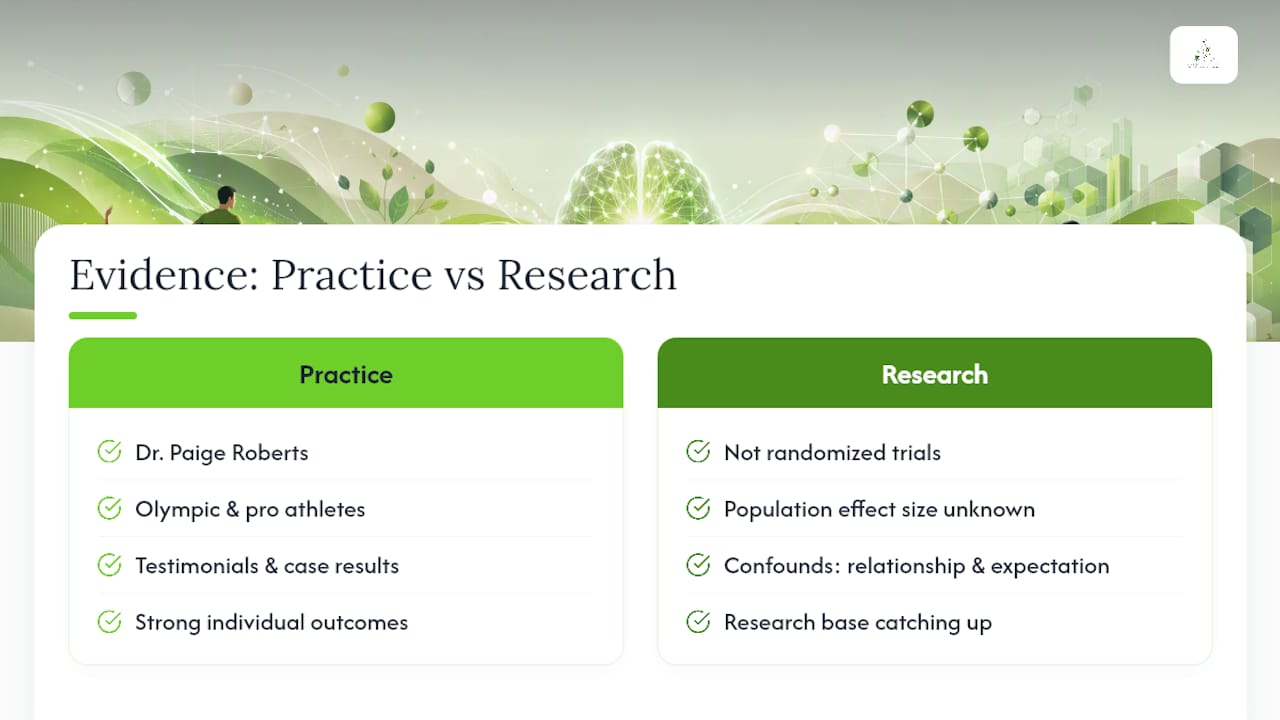
Dr. Paige Roberts developed Alpha Imprinting after years working directly with competitive athletes on the mental and physiological side of performance, an approach that blends hypnotherapy, brainspotting, QEEG-based assessment, and light therapy into a single protocol rather than treating each as a separate specialty. Her client base includes Olympic medalists and professional athletes across major leagues, and testimonials from that pool point to measurable shifts in composure and clutch performance under pressure.
That kind of practice-level evidence, testimonials and case-by-case results from real clients, is genuinely useful, but it's a different category of proof than a randomized controlled trial. It tells you the method has worked for specific people in specific circumstances. It doesn't tell you the effect size across a broad population, or how much of the result came from the protocol itself versus the relationship, expectation, and structure that comes with any serious coaching engagement. Readers evaluating this method should hold both truths at once: strong individual outcomes, and a research base that's still catching up. For coaches or clinicians who want to go deeper into the method itself, practitioner certification is available through the Academy.
How Should You Weigh the Promise Against the Evidence?
The mechanism here is genuinely plausible, alpha states, neuroplastic windows, and autonomic retraining are all real neuroscience concepts, and the practitioner-level outcomes are strong. What's missing is a large controlled trial on the branded protocol itself. When evaluating any provider in this space, check for real safety screening, transparency about what's practice evidence versus published research, clear outcome metrics, and a willingness to coordinate with your existing mental health care rather than working around it.
— Paige
Ready to Start Alpha Imprinting Training?
If chronic tension, a lingering injury response, or a pattern of tightening up under pressure has been quietly capping your performance, Alpha Imprinting training offers a structured, measurable path through it rather than another generic mental-skills pep talk. Services offered include the 12-Week Energy Optimization Program for individual athletes working through the full Reset, Desensitize, Reimprint, and Refine arc, standalone QEEG brain scans for an objective baseline, and Group & Team Alpha Imprinting for squads working through shared pressure points together.
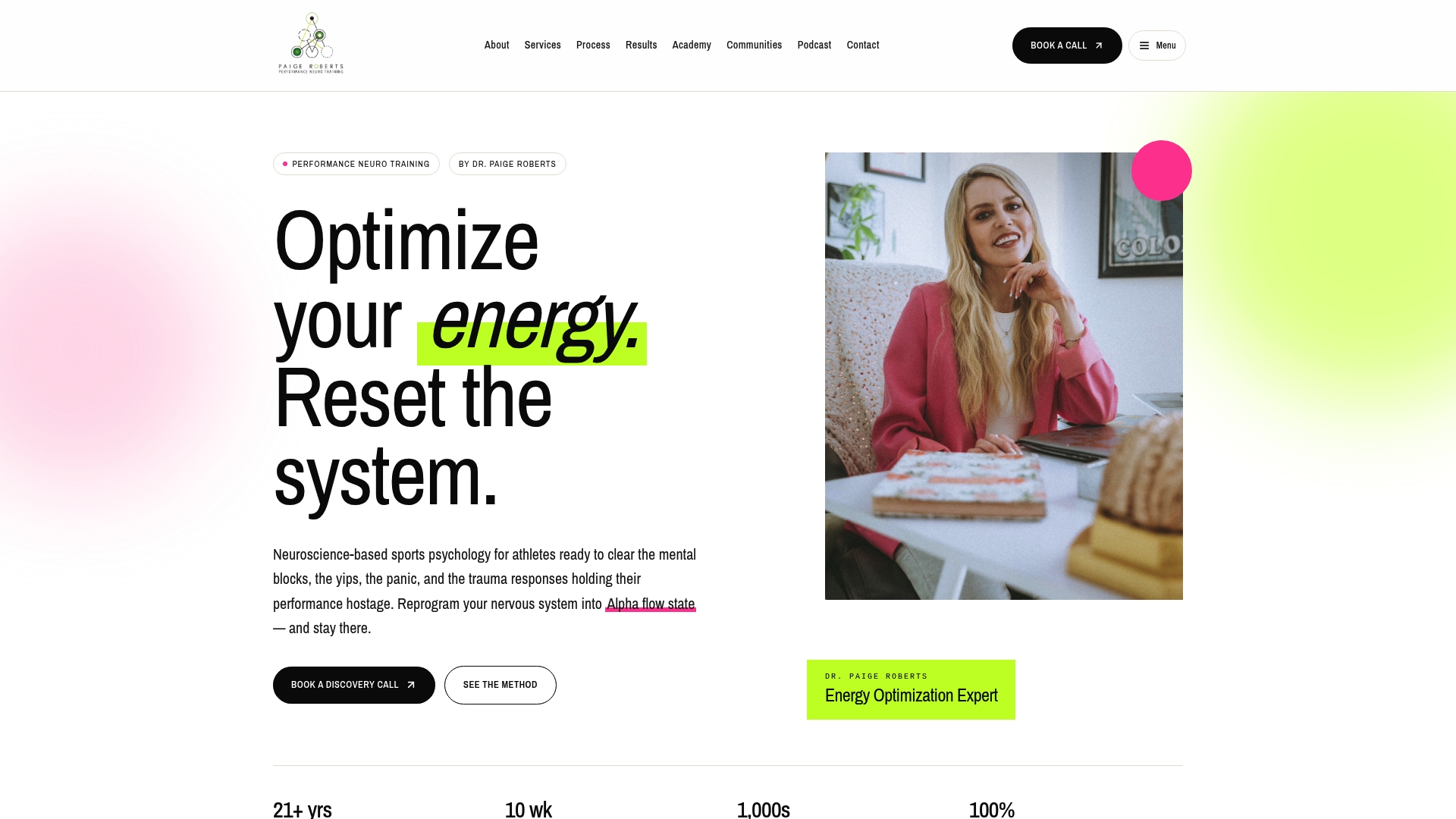
Coaches or clinicians curious about learning the method themselves can look into Alpha Imprinting™ certification through the Academy, and athletes who want direct, focused work outside a full program can book One on One Mentoring. The most practical next step is a discovery call: come with your specific performance block, ask what a baseline safety screen looks like for your situation, and ask how they'll measure change beyond how a session made you feel that day.
Sources
For context on the "alpha" terminology and why it differs from dominance-based dog training, see Whole Dog Journal's analysis. For the animal-model evidence on rapid imprinting protocols, see the 2019 canine imprinting study and the foal imprint training evidence review.
- Why Alpha Dog Training is Outdated - Whole Dog Journal
- Frontiers in Veterinary Science — canine imprinting study (2019)
FAQ
What Is Alpha Imprinting Training?
Alpha Imprinting is a neuroscience-based method developed by Dr. Paige Roberts that retrains the nervous system's stress response using hypnotherapy, somatic techniques, and brain-state tools like QEEG scans and light therapy. It's aimed at athletes and high performers dealing with trauma-linked performance blocks, not general obedience or dominance training.
Is Alpha Imprinting the Same as Alpha Dog Training?
No. Despite the shared word "alpha," this method has nothing to do with dominance-based dog training, which modern canine behavior science has moved away from in favor of positive reinforcement. Alpha Imprinting refers to the alpha brainwave state targeted in human nervous-system retraining.
How Long Does an Alpha Imprinting Program Take?
Most clients work through the four phases, Reset, Desensitize, Reimprint, and Refine, over roughly 8 to 12 weeks of weekly sessions, matching the structure of the 12-Week Energy Optimization Program. Timelines vary depending on how much processing the Desensitize phase requires.
Can Alpha Imprinting Replace Therapy for Trauma?
No. It's a performance-focused nervous-system training approach, not a substitute for treating diagnosed PTSD, active crisis, or clinical mental health conditions, which require a licensed provider. Athletes with those conditions should coordinate this training alongside, not instead of, clinical care.
How Much Does Alpha Imprinting Training Cost?
Pricing depends on the format: the 12-Week Energy Optimization Program is 4500 USD as a one-time fee, Group & Team Alpha Imprinting is 4500 USD one-off, and standalone QEEG Brain Scans run 1500 USD one-off. One-on-one mentoring sessions are priced separately at 300 USD each.