
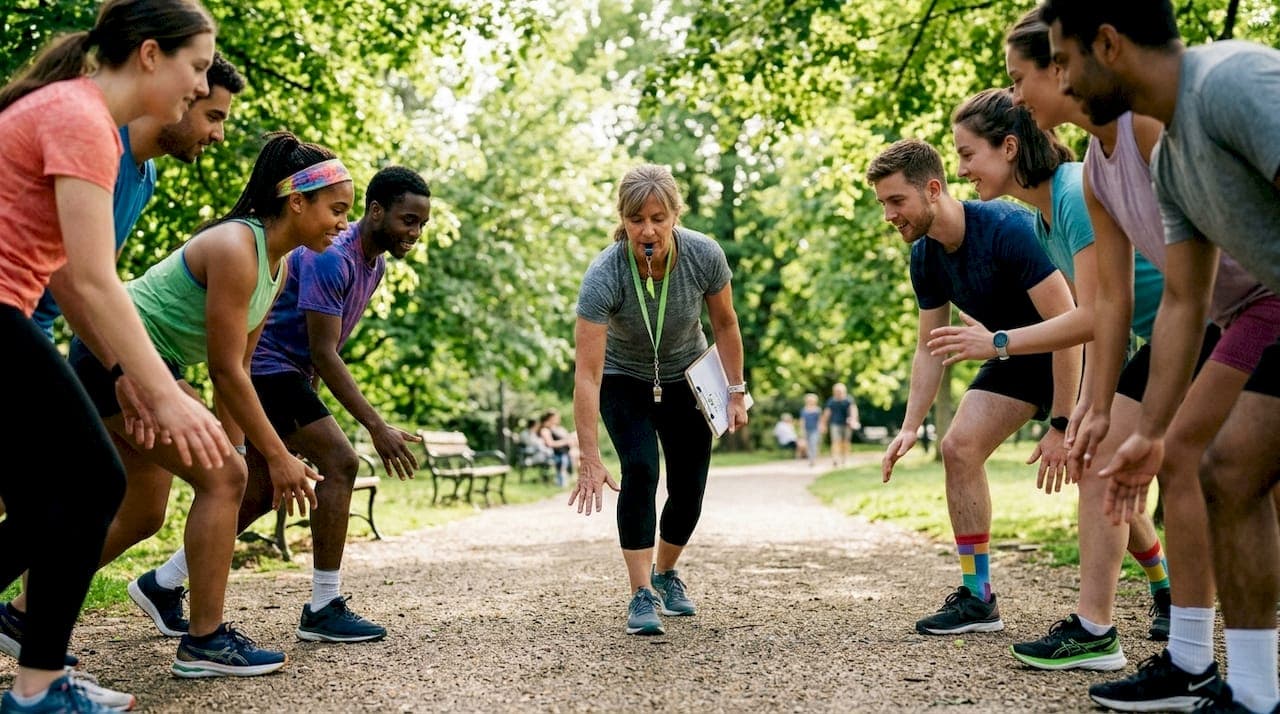
Resilience training drills for teams are structured exercises designed to build mental toughness, emotional agility, and cohesive collaboration under competitive pressure. The best coaches know that physical preparation alone does not win championships. Teams that crack under pressure, freeze after a bad call, or fall apart when a key player goes down share one common gap: they never trained their nervous systems to handle adversity. This guide gives you the exact drills, design principles, and implementation steps to close that gap and build a team that performs when it counts most.
What are the essential skills targeted by resilience training drills for teams?
Effective resilience building drills for athletes target four distinct skill domains. Each one addresses a different way athletes break down under pressure. Train all four, and you build a team that adapts instead of collapses.
Emotional resilience is the foundation. Athletes who can name what they feel in the moment can regulate it faster. Self-awareness, emotional vocabulary, and the ability to shift states quickly are the core skills here. Without them, frustration turns into panic and panic turns into errors.
Mental resilience covers how athletes think under stress. Reframing setbacks, setting micro-goals during a game, and solving problems in real time are all trainable skills. A team with strong mental resilience does not spiral after a bad quarter. They reset and execute.
Social resilience is what separates good teams from great ones. Trust, inclusive communication, and shared coping strategies allow a team to function as a unit when individual performance dips. Athletes who feel psychologically safe take smarter risks and communicate more honestly.
Physical resilience ties everything together. Energy management, recovery habits, and the ability to sustain output late in competition all depend on how well athletes manage their nervous systems. Athletic performance research confirms that physical and mental recovery are deeply linked, and training one without the other leaves performance on the table.
- Emotional resilience: self-awareness, emotional vocabulary, state regulation
- Mental resilience: reframing, goal-setting, pressure problem-solving
- Social resilience: trust, communication, shared coping
- Physical resilience: energy management, recovery, sustained output
Pro Tip: Run a quick team survey before your first drill session. Ask athletes to rate their confidence in each of the four domains on a scale of 1 to 5. The lowest scores tell you exactly where to start.
What practical resilience drills can coaches run with their team?
The best team resilience exercises feel slightly uncomfortable. That discomfort is the point. Controlled exposure to adversity builds muscle memory, so athletes can regulate their nervous system responses without trauma. The goal is friction, not chaos.
-
Emotional Poker. Deal each athlete a card with an unexpected emotion written on it: "curious," "grateful," "irritated," "proud." Give them a stressful game scenario and ask them to respond from that emotional state. This expands emotional vocabulary and rewires stress responses from automatic to intentional. Run it for 15 minutes before a practice session.
-
Discomfort Roulette. Spin a wheel or draw cards with low-stakes challenges: cold water immersion for 30 seconds, speaking first in a group debrief, or running a drill with the non-dominant hand. The drill normalizes discomfort and builds courage as a habit. Athletes who practice choosing discomfort stop flinching from it in competition.
-
Gameday Simulation. Structure a full practice session as a high-pressure scenario with clear roles, a shared vocabulary for calling out problems, and a defined outcome. Simulation drills with shared vocabulary boost team confidence and reduce chaos when real pressure arrives. Assign a "chaos agent" who introduces unexpected variables mid-drill.
-
Micro-Debrief Sprints. Within 20 minutes of any key practice event, gather the team for a focused 10-to-20-minute debrief. Short micro-debriefs capture and fix issues before details fade. Use three questions only: What happened? What did we learn? What do we do differently next time?
-
Solution Sprints. Present the team with a real problem from last week's game. Give them five minutes to generate solutions in pairs, then share with the group. This drill trains problem-solving under time pressure and builds the habit of moving toward solutions instead of dwelling on failures.
Pro Tip: Rotate who leads each drill. When athletes take ownership of running an exercise, their buy-in and retention both increase significantly.
How do you design an effective resilience training program for your team?
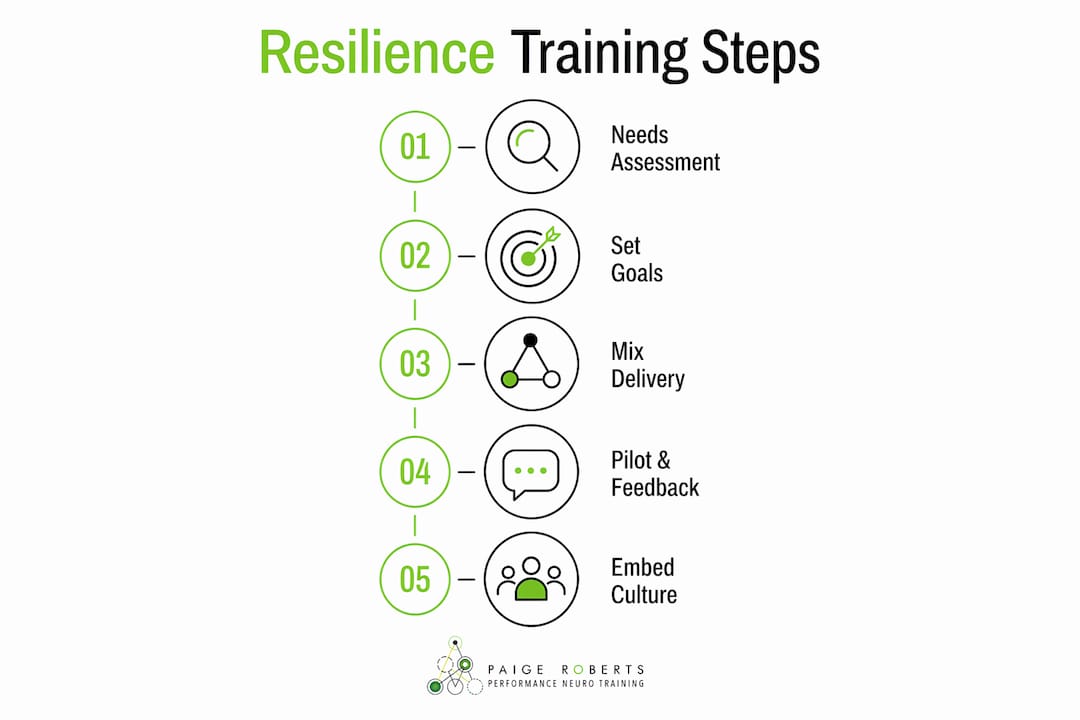
Building team resilience is not a one-time workshop. It is a curriculum that fits inside your existing training schedule. Resilience training works best when it combines a shared mindset framework, clear roles, and repeatable routines that turn stress into learning.
Step 1: Conduct a needs assessment
Start with surveys, short interviews, and direct observation during practice. You are looking for patterns: where does the team freeze, blame, or disengage? Which athletes shut down after errors? Which situations produce the most communication breakdowns? Your assessment shapes every drill you choose.
Step 2: Set focused, measurable goals
Vague goals produce vague results. Instead of "build mental toughness," set goals like "reduce visible panic responses after turnovers by the end of the season" or "achieve consistent blameless debrief participation within six weeks." Measurable goals let you track progress and adjust the program.
Step 3: Mix your delivery formats
| Format | Best used for | Frequency |
|---|---|---|
| In-person workshops | Introducing new frameworks and drills | Monthly |
| Micro-debriefs | Immediate learning after practice events | After every key session |
| Coaching conversations | Individual resilience skill gaps | Weekly |
| Gamified drills | Engagement and repetition of core skills | 2–3 times per week |
Step 4: Pilot, gather feedback, and iterate
Run each new drill with a small group first. Collect honest feedback: Was it clear? Did it feel relevant? Did it create the right level of discomfort? Daily 60-second drills can maintain resilience gains and adapt to evolving team needs, so keep your program flexible.
Step 5: Embed routines into team culture
Embedding resilience practices into daily management routines through short, repeatable habits sustains gains over time. Regular check-ins, pre-game energy prompts, and blameless post-mortems become the culture. When resilience is a habit, it shows up automatically under pressure. For a deeper look at how to structure these routines, the mental training program guide from Robertsneurotraining offers a practical coach-facing framework.
What common challenges arise in resilience drills, and how do teams overcome them?
Every coach who runs group resilience strategies hits the same walls. Knowing them in advance cuts the learning curve significantly.
-
Blame-focused reviews kill psychological safety. When debriefs turn into finger-pointing, athletes stop being honest. Blameless design shifts the focus to system and process failures, not individual mistakes. This produces more honest communication and faster improvement. Train your leaders to ask "What in our process failed?" before "Who made the error?"
-
Too much friction causes burnout. Controlled adversity builds capacity. Uncontrolled adversity breaks it. The goal is micro-dosing adversity so athletes adapt without hitting their ceiling. Watch for signs of disengagement or chronic fatigue and dial back intensity when they appear.
-
Repetition without variety kills engagement. Athletes tune out drills they have seen too many times. Rotate exercises, change the scenario, or add a new constraint. Building flexibility through controlled chaos prepares teams to adapt rather than freeze. Variety keeps the nervous system engaged and learning.
-
Leaders who do not model resilience undermine the program. If a coach loses composure after a loss, the team reads that signal louder than any drill. Leadership behavior sets the emotional tone. Coaches who practice collective mental resilience alongside their athletes build credibility and trust.
-
Resistance to emotional work is common, especially in contact sports. Athletes trained in traditional toughness culture often resist exercises that involve naming emotions. Frame emotional dexterity as a performance skill, not a therapy session. The data supports it: emotional dexterity training produces better cognitive flexibility and stress management in competitive environments.
Key Takeaways
Resilience training drills for teams build lasting mental toughness when they target emotional, mental, social, and physical skills through consistent, blameless, and progressively challenging practice.
| Point | Details |
|---|---|
| Target four skill domains | Train emotional, mental, social, and physical resilience to cover every way athletes break under pressure. |
| Use controlled discomfort | Micro-dose adversity through drills like Discomfort Roulette and Gameday Simulation to build nervous system muscle memory. |
| Run micro-debriefs consistently | A 10-to-20-minute blameless debrief after every key session captures lessons before they fade. |
| Design a structured curriculum | Combine needs assessments, measurable goals, and mixed delivery formats to build a program that sticks. |
| Model resilience from the top | Coaches who practice resilience behaviors alongside athletes reinforce the program more than any single drill. |
What I have learned from watching resilience drills actually work
Most coaches come to resilience training looking for a drill that fixes mental weakness. That is the wrong frame. What actually works is building a team culture where discomfort is expected, emotional honesty is safe, and learning happens immediately after every hard moment.
The coaches I have seen get the best results are not the ones with the most elaborate programs. They are the ones who run a five-minute blameless debrief after every tough practice, every single time. Consistency beats complexity. A team that debriefs honestly after a bad game learns faster than a team that trains harder but never reflects.
The other shift that changes everything is moving away from the old "toughness" model. Telling athletes to push through feelings does not build resilience. It builds suppression, and suppression shows up as panic at the worst possible moment. Emotional dexterity, the ability to name, accept, and redirect an emotion in real time, is a trainable skill. When athletes develop it, their performance under pressure becomes more consistent and more controlled.
One more thing: do not wait until the season is on the line to test your resilience systems. Run your Gameday Simulations and Solution Sprints in preseason. Find the cracks when the stakes are low. The teams that handle crisis well in competition practiced handling crisis well in training. Resilience is a muscle. You build it the same way you build every other one: repetition, progressive load, and recovery.
— Paige
How Robertsneurotraining supports your team's resilience work
Robertsneurotraining, led by Dr. Paige Roberts, works directly with coaches and athletes to train the nervous system for peak performance under pressure. The programs go beyond traditional mental skills training by using neuroscience-based methods, including Alpha Imprinting, to clear mental blocks and anxiety responses that drills alone cannot reach.

The Energy Optimization Workbook is a practical starting point for coaches who want to support their athletes' physical and mental recovery between sessions. It gives athletes concrete tools for managing energy, regulating stress, and sustaining performance across a full competitive season. For teams ready to go deeper, Robertsneurotraining's full programs integrate directly with your existing training schedule without replacing what already works.
FAQ
What are resilience training drills for teams?
Resilience training drills for teams are structured exercises that build emotional agility, mental toughness, and team cohesion under pressure. They range from short micro-debriefs to full simulation scenarios designed to train the nervous system to respond adaptively to stress.
How often should coaches run resilience drills?
Short drills integrated into existing practice sessions produce the best results. Daily 60-second exercises and 10-to-20-minute micro-debriefs after key events maintain resilience gains without adding significant time to the schedule.
What is blameless design in resilience training?
Blameless design means structuring debriefs and reviews to focus on process and system failures rather than individual mistakes. This approach creates psychological safety, which produces more honest communication and faster team improvement.
How does emotional dexterity differ from traditional mental toughness training?
Traditional toughness training tells athletes to suppress or push through emotions. Emotional dexterity training teaches athletes to name, accept, and redirect emotions in real time, which produces better cognitive flexibility and more consistent performance under competitive stress.
How does Robertsneurotraining support team resilience programs?
Robertsneurotraining uses neuroscience-based methods, including Alpha Imprinting, to train the nervous system directly. This addresses the mental blocks and anxiety responses that standard resilience drills do not fully resolve, making it a strong complement to any team resilience program.