
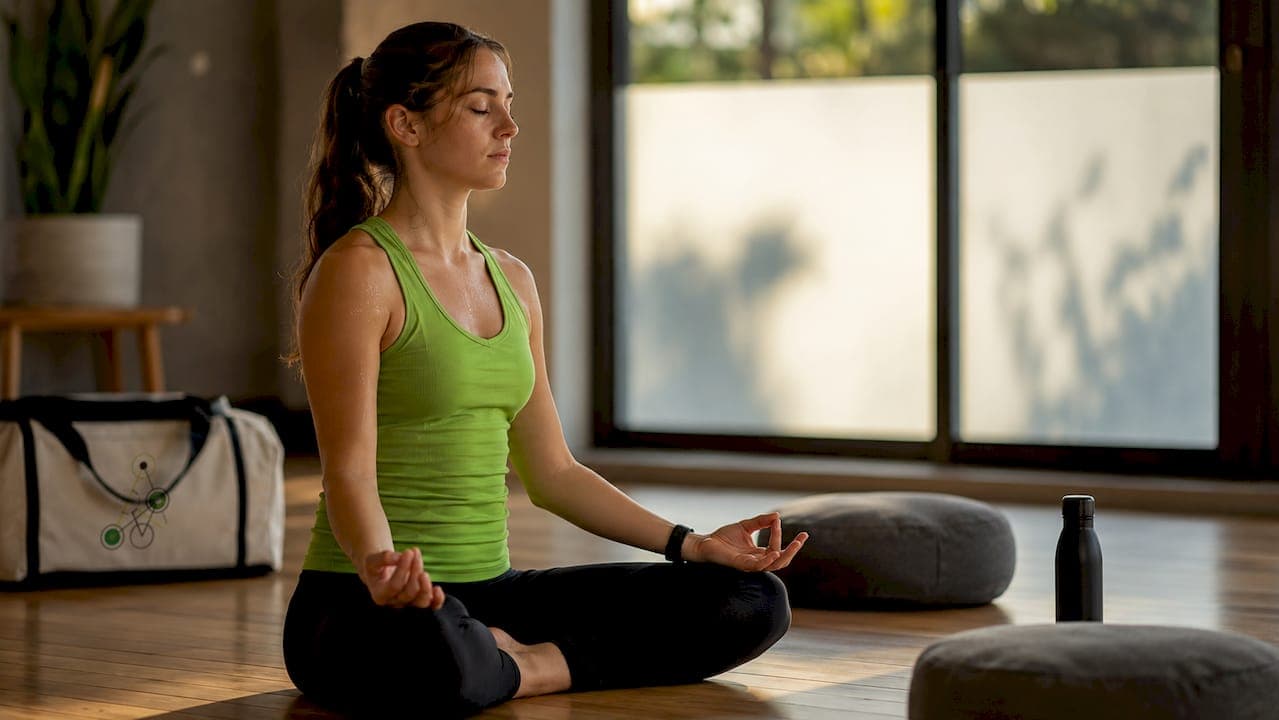
Elite athlete mindset training is the systematic practice of building mental skills, including mindfulness, cognitive flexibility, mental imagery, and brain endurance, to reduce competitive anxiety and sustain peak performance under pressure. The industry term for this discipline is athlete mental performance, and it sits at the intersection of sport psychology and applied neuroscience. Recent 2026 research confirms that structured mental skills programs produce measurable reductions in both somatic and cognitive anxiety, with Mindfulness-Acceptance-Commitment (MAC) protocols showing the largest overall effect. For competitive athletes and coaches, the question is no longer whether to develop elite athlete mindset training into your program. The question is how to do it precisely.
What mental skills are essential for an elite athlete mindset?
Four mental skills form the foundation of any serious athlete mental performance program: mindfulness, cognitive flexibility, mental imagery, and brain endurance training (BET). Each one targets a different dimension of performance anxiety and competitive readiness.
-
Mindfulness and MAC: MAC reduces overall competitive anxiety with an effect size of SMD = −1.33, the largest of any psychological intervention studied in 2026. Relaxation-based mindfulness shows the strongest effect on cognitive anxiety specifically (SMD = −1.54). This means athletes who struggle with racing thoughts and pre-competition mental spirals get the most direct relief from mindfulness-based approaches.
-
Cognitive flexibility: Cognitive flexibility drives psychological recovery through self-regulation (β=0.381) and perceived control (β=0.139, p<0.001). Athletes who can shift their thinking in response to unexpected competition conditions recover faster and perform more consistently. This skill is trainable through structured reflection drills and situational simulations.
-
Mental imagery: An 8-week imagery program using three sessions per week at 15 minutes per session improves gymnastics floor skills in beginners beyond technical practice alone. The key is competition relevance. Generic positive visualization does not produce the same results as imagery scripts tied directly to specific skill execution.
-
Brain endurance training: BET pairs executive-control cognitive tasks such as Stroop and Go/No-Go with physical training sessions to build resistance to mental fatigue. Athletes who train this way maintain cognitive composure and effort allocation late in competition when untrained athletes fade mentally.
Pro Tip: Match your mental skill to your anxiety type. If you experience physical tension and a racing heart before competition, prioritize MAC and somatic-focused mindfulness. If your problem is overthinking and negative self-talk, start with cognitive reframing and relaxation techniques.
What tools do you need before starting mindset training?
Starting without an assessment is the most common mistake coaches make. You need to know your athlete's anxiety profile before selecting any intervention.
| Tool | Purpose | Best for |
|---|---|---|
| Competitive State Anxiety Inventory-2R (CSAI-2R) | Measures somatic anxiety, cognitive anxiety, and self-confidence pre-competition | Baseline profiling for all athletes |
| Imagery ability scales (e.g., MIQ-3) | Assesses vividness and control of mental imagery | Screening before imagery program design |
| Cognitive flexibility assessments | Identifies self-regulation capacity and perceived control gaps | Recovery and resilience planning |
| Mindfulness apps (e.g., Headspace, Calm) | Delivers structured daily meditation sessions | Beginner mindfulness implementation |
| Cognitive task platforms (e.g., Stroop-based apps) | Provides BET cognitive challenges during physical training | Advanced BET integration |
The CSAI-2R is the non-negotiable starting point. It separates somatic anxiety from cognitive anxiety, and elite athletes respond differently to interventions depending on their experience level. Elite athletes benefit most from imagery, MAC, and biofeedback. Semi-elite athletes respond better to MAC and cognitive behavioral therapy. Junior athletes show the strongest results with biofeedback and self-talk. Applying the wrong tool to the wrong athlete wastes months of training time.
Coach and sport psychologist collaboration is not optional at the elite level. A coach can observe behavioral patterns in training that an athlete cannot self-report accurately. A sport psychologist translates those observations into periodized mental training blocks that match the physical training calendar. Think of mental skills the same way you think of strength blocks, speed blocks, and recovery weeks. They require the same planning discipline.
Pro Tip: Run the CSAI-2R three to four weeks before a major competition, not the night before. This gives you enough time to implement a targeted intervention and measure whether it is working.
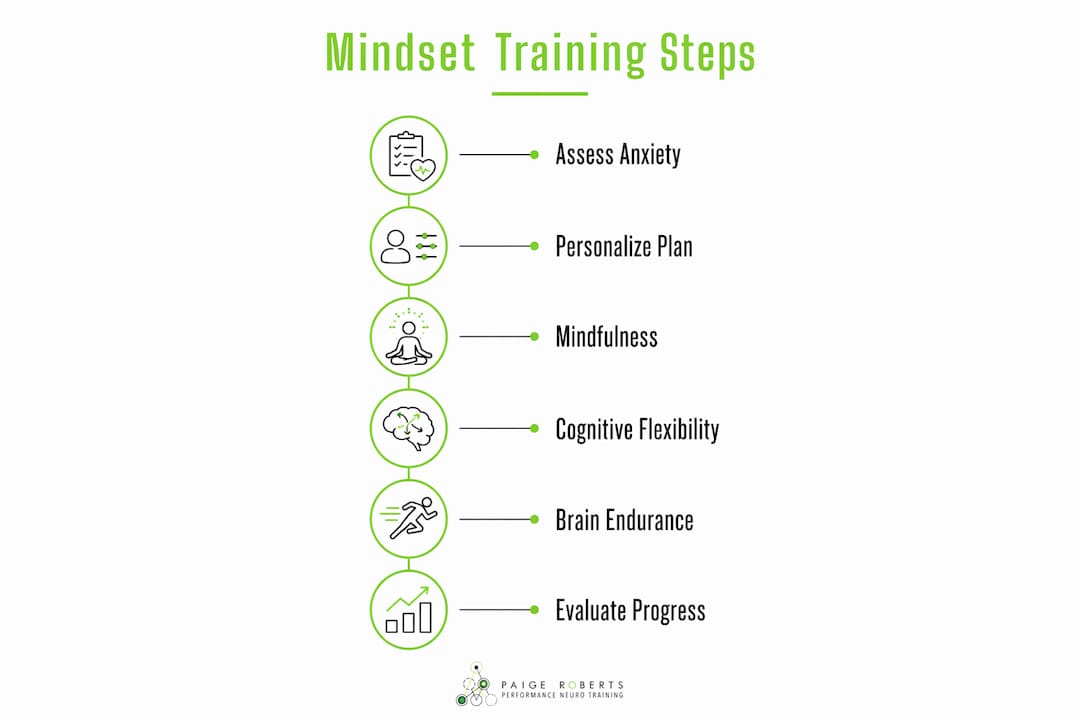
How to implement mindfulness and cognitive flexibility training
This is where most programs stall. Athletes understand the concept but lack a repeatable daily structure. Here is a sequence that works.
-
Establish a daily mindfulness baseline. Practice 15 minutes of mindfulness meditation every day. A 16-week study (n=78) showed that daily mindfulness practice significantly reduces both somatic and cognitive anxiety while increasing self-confidence in competitive athletes. Start with breath-focused sessions using a guided app, then progress to open-monitoring meditation as comfort increases.
-
Add cognitive reframing drills three times per week. After training sessions, spend 10 minutes reviewing one competitive scenario where you felt anxious or lost focus. Write down the automatic thought, challenge it with evidence, and replace it with a process-focused statement. This builds the cognitive flexibility needed for self-regulation under pressure.
-
Build cue-based pre-competition routines. Assign a specific physical cue, such as a breath pattern or a hand gesture, to a mental state you want to access before competing. Repeating this pairing in practice conditions the nervous system to shift states on demand. This is the mechanism behind perceived control in recovery, which moderates how effectively self-regulation translates into performance.
-
Set process goals, not outcome goals, for each session. "I will maintain my breathing rhythm through the first set" is a process goal. "I will win" is not. Process goals give athletes something controllable to focus on, which directly reduces the threat interpretation of competitive stress.
-
Track self-regulation metrics weekly. Use a simple 1-10 scale to rate your perceived control, focus quality, and anxiety level before and after each training session. Trends over four weeks reveal whether your current protocol is working or needs adjustment.
Pro Tip: Consistency beats intensity here. Ten minutes of mindfulness every day outperforms a 90-minute session once a week. The nervous system adapts to repeated, low-dose stimuli more effectively than occasional high-dose exposure.
How to incorporate mental imagery and brain endurance training
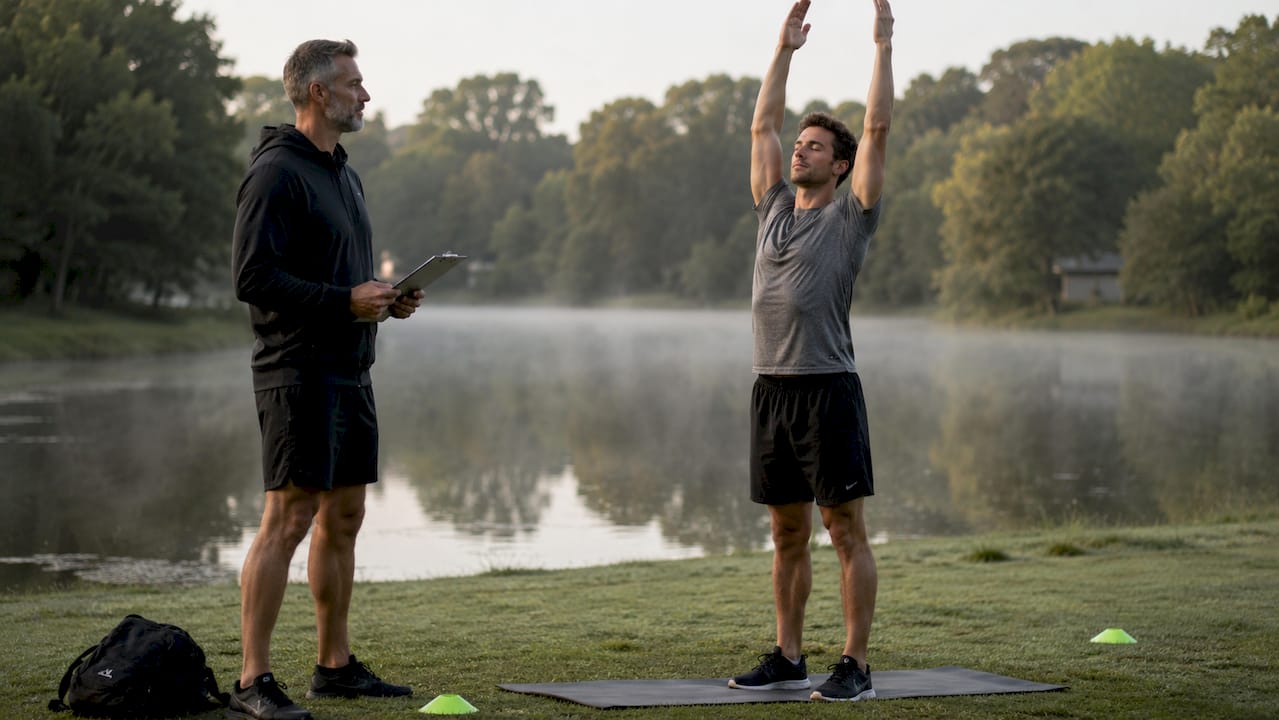
Imagery and BET are the two most underused tools in competitive athlete programs, and they are also the two most frequently misapplied.
Designing effective imagery sessions:
- Write imagery scripts that match your exact competition environment: the sounds, the physical sensations, the sequence of movements, and the emotional state you want to maintain.
- Use first-person perspective for skill execution imagery and third-person perspective for tactical or strategic review.
- Schedule three sessions per week at 15 minutes each, consistent with the gymnastics imagery protocol that produced measurable skill improvements. Beginners should pair imagery with technical practice rather than replace it.
- Sequence matters. Run imagery before physical practice to prime motor patterns, and run it after practice to consolidate learning.
Brain endurance training integration:
| BET Protocol Element | Practical Application | Timing |
|---|---|---|
| Stroop task | Color-word interference app during warm-up | First 10 minutes of session |
| Go/No-Go task | Reaction-based cognitive app between sets | Mid-session rest periods |
| Working memory tasks | N-back exercises on a tablet | Cool-down or post-session |
| Cognitive load during cardio | Solve verbal problems while on a stationary bike | Steady-state cardio blocks |
Embedding cognitive tasks within physical training prepares athletes to maintain effort allocation and composure when mental fatigue accumulates late in competition. This is not about making training harder for its own sake. It is about exposing the nervous system to the same cognitive demands it will face in a high-stakes game or race, so those demands no longer feel threatening.
Adapt BET load based on athlete feedback. If cognitive performance drops sharply during physical sessions, reduce the cognitive task difficulty before increasing it again. Progressive overload applies to mental training just as it does to strength work.
Common pitfalls in elite sports mindset training
Even well-intentioned programs break down at predictable points. Recognizing these failure patterns early saves months of wasted effort.
-
Using generic visualization instead of competition-specific imagery. Imagining yourself winning feels good but does not improve performance. Imagery outcomes depend on competition relevance and precise sequencing. Define explicit performance targets before writing any imagery script.
-
Ignoring individual anxiety profiles. Applying MAC to an athlete whose primary issue is somatic anxiety, not cognitive anxiety, produces weaker results. The CSAI-2R assessment exists precisely to prevent this mismatch.
-
Keeping mental training separate from physical training. Cognitive composure drills practiced only in isolation do not transfer reliably to competition. BET works because it builds cognitive resilience inside the physical training context where it will actually be needed.
-
Overconfidence in self-regulation without perceived control. An athlete can have strong self-regulation skills and still perform poorly under pressure if they interpret competitive stress as an uncontrollable threat. Building process goals and cue-based routines is what converts self-regulation capacity into actual recovery and performance.
-
Losing athlete motivation over time. Mental training does not produce visible results as quickly as physical training. Set four-week review points, share CSAI-2R trend data with athletes, and connect mental skill improvements to specific competition outcomes they have already experienced.
"The athletes who plateau mentally are almost always the ones treating mindset work as an add-on rather than a core training stimulus. When you periodize mental skills the same way you periodize physical load, the results compound."
For coaches building a full program structure, the 2026 coach guide on mental training components provides a detailed framework for integrating these elements across a full season.
Key takeaways
Developing an elite athlete mindset requires periodized, individualized mental skills training targeting specific anxiety types, not generic motivation or willpower exercises.
| Point | Details |
|---|---|
| Assess anxiety type first | Use the CSAI-2R to separate somatic from cognitive anxiety before selecting any intervention. |
| MAC produces the largest anxiety reduction | Mindfulness-Acceptance-Commitment shows SMD = −1.33 overall, the strongest effect of any 2026-studied intervention. |
| Imagery must match competition demands | Generic visualization does not improve performance; scripts must align with specific skill execution and competition context. |
| BET builds mental fatigue resistance | Pairing Stroop and Go/No-Go tasks with physical training maintains cognitive composure under late-competition pressure. |
| Perceived control drives recovery | Building process goals and cue-based routines converts self-regulation capacity into real psychological recovery outcomes. |
Why most mindset programs miss the point
I have worked with athletes across multiple levels, from junior competitors to professionals in major leagues, and the pattern I see most consistently is this: coaches treat mental training as a motivational supplement rather than a technical discipline. They run a visualization session before a big game and call it sport psychology. It is not.
What actually works is treating each mental skill as a distinct training stimulus with its own dose, frequency, and progression logic. The research on cognitive flexibility and recovery shows that perceived control is the moderating variable that determines whether self-regulation actually translates into performance. You cannot build perceived control through inspiration. You build it through cue-based routines and process goals practiced under realistic competitive pressure, repeatedly, over weeks.
The athletes I have seen make the most dramatic mental performance gains are the ones who accepted that their nervous system needed the same progressive overload their muscles do. They did not skip mental training when physical training got hard. They understood that the two are inseparable. If you want to understand the deeper neuroscience behind why this works, the article on neuroscience and athlete mental performance is worth your time.
The uncomfortable truth is that most athletes already know what they should be doing mentally. The gap is not knowledge. It is the absence of a structured, periodized system that holds them accountable to mental skill development the same way a training log holds them accountable to physical output.
— Paige
How Robertsneurotraining supports your mental performance development
Robertsneurotraining, led by Dr. Paige Roberts, applies a neuroscience-based approach to athlete mental performance that goes beyond standard sport psychology. The program targets the nervous system directly, using the proprietary Alpha Imprinting method to clear mental blocks, performance anxiety, and trauma responses that prevent athletes from reaching a state of flow in competition.
Olympic Medalists and professional athletes across major leagues have used Robertsneurotraining to recover from performance-disrupting anxiety and rebuild competitive confidence. If you are a competitive athlete or coach ready to move beyond generic mindset advice and into a personalized, nervous-system-level program, explore the full range of neurotraining programs at Robertsneurotraining and take the first step toward sustainable elite performance.
FAQ
What is elite athlete mindset training?
Elite athlete mindset training is the structured practice of mental skills including mindfulness, cognitive flexibility, imagery, and brain endurance to reduce competitive anxiety and sustain performance under pressure. The formal discipline is called athlete mental performance in sport psychology.
Why do elite athletes train the mind as well as the body?
Mental fatigue, performance anxiety, and cognitive rigidity directly impair physical execution. Research shows MAC reduces competitive anxiety with an effect size of SMD = −1.33, proving that mental training produces measurable, not just motivational, performance gains.
How long does it take to see results from mindfulness training?
A 16-week daily mindfulness program (15 minutes per day) produces significant reductions in both somatic and cognitive anxiety in competitive athletes. Measurable self-confidence improvements appear within the same timeframe when practice is consistent.
What is brain endurance training for athletes?
Brain endurance training (BET) pairs executive-control cognitive tasks such as Stroop and Go/No-Go exercises with physical training sessions to build resistance to mental fatigue. Athletes who use BET maintain cognitive composure and effort allocation late in competition when mental fatigue typically causes performance to drop.
How do coaches personalize mental training for different athletes?
Coaches use the Competitive State Anxiety Inventory-2R (CSAI-2R) to identify whether an athlete's primary anxiety is somatic or cognitive, then select interventions accordingly. Elite athletes respond best to imagery, MAC, and biofeedback, while junior athletes show stronger results with biofeedback and self-talk protocols.