

Energy management for athletes is the practice of optimizing nutrition, hydration, rest, and mental focus to sustain peak performance and accelerate recovery. The industry term for this is athlete energy optimization, and it covers everything from carbohydrate loading protocols to nervous system regulation. Competitive athletes who ignore even one of these pillars pay for it in fatigue, slower recovery, and mental fog during competition. This guide covers the energy management best practices athletes need right now, grounded in current sports science and built for real competition demands.
1. What are the top nutritional strategies for athlete energy optimization?
Carbohydrate loading is the most researched pre-competition fueling method. Athletes should consume 6–10 g/kg of body mass in carbohydrates per day during the 24–36 hours before competition to maximize glycogen stores. That range exists because body weight, sport type, and training intensity all affect how much fuel you actually burn.
Meal timing matters as much as meal content. A high-glycemic index meal of 1–3 g/kg body weight eaten 3–4 hours before an event gives your body time to digest and convert fuel without causing GI distress at the start line. Eating too close to competition, or skipping this window entirely, leaves glycogen stores incomplete.
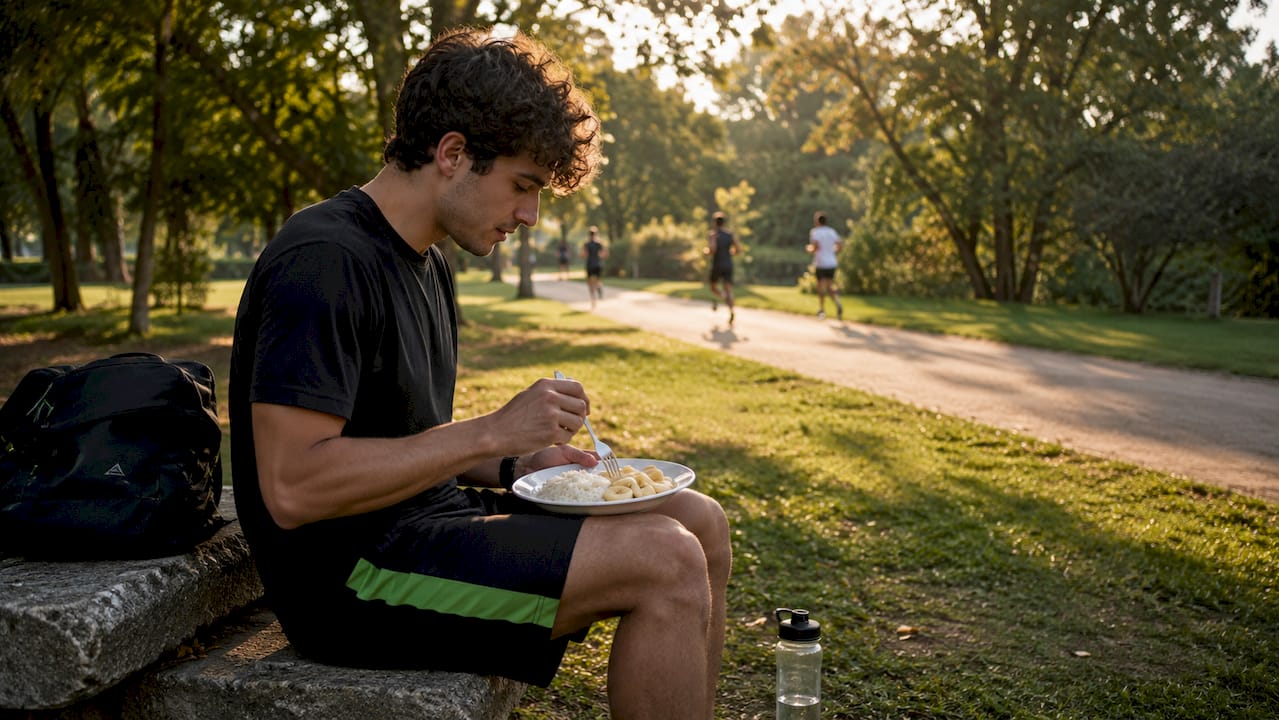
During events lasting over 60–90 minutes, fueling mid-competition is non-negotiable. 30–60 g of carbohydrates per hour during activity keeps blood glucose stable and delays fatigue. Gels, chews, and sports drinks all work, but your gut needs to practice processing them under exertion.
Key nutrition practices for competitive athletes:
- Eat a carbohydrate-rich meal 3–4 hours before competition
- Use easily digestible carb sources (white rice, bananas, sports drinks) during long events
- Avoid high-fat, high-fiber foods within 2 hours of competition
- Consume carbohydrates plus protein within 30–60 minutes after exercise
- Keep your daily eating window under 12 hours to avoid eating jetlag and support circadian alignment
Pro Tip: Test every fueling strategy during training, not on competition day. GI distress from a new gel or drink can end a race faster than poor fitness.
2. How does hydration impact athlete energy levels and performance?
Dehydration is a direct performance killer. Losing more than 2% of body mass through sweat impairs muscle function, decision-making speed, and energy output. That 2% threshold is not a rough estimate. It is the point where measurable performance decline begins across endurance and team sports.
Pre-event hydration sets the foundation. Drinking approximately 7 ml/kg body weight 2–3 hours before exercise gives your kidneys time to process excess fluid and helps you start competition in a fully hydrated state. Chugging water 20 minutes before a game does not achieve the same result.
Electrolytes are not optional during long efforts. Sodium intake of 300–800 mg per hour during exercise helps retain fluid, prevents hyponatremia, and supports nerve and muscle function. Plain water alone during multi-hour events dilutes sodium levels and can cause cramping or worse.
Practical hydration checkpoints for athletes:
- Check urine color before training. Pale yellow means hydrated. Dark yellow means drink more.
- Weigh yourself before and after training to track sweat loss
- Sip fluids consistently throughout the day rather than drinking large amounts at once
- Use electrolyte drinks or sodium-containing foods during events lasting over 60 minutes
- Rehydrate post-exercise with 1.5 liters of fluid for every kilogram of body weight lost
Pro Tip: Consistent sipping beats chugging. Your gut absorbs fluid at a fixed rate. Flooding it causes bloating and slows absorption.
3. Which rest and recovery practices restore energy for competitive athletes?
Sleep is the single most powerful recovery tool available to athletes. Seven to nine hours of quality sleep per night supports muscle repair, hormone regulation, and glycogen restoration. Cutting sleep to six hours or less for even a few nights measurably reduces reaction time and power output.
Sleep environment and pre-sleep habits determine sleep quality. Avoiding caffeine after mid-afternoon, keeping your room cool and dark, and maintaining a consistent sleep schedule across training and competition days all protect sleep architecture. Alcohol disrupts deep sleep stages even in small amounts, which means it directly delays recovery.
Mental recovery is as important as physical rest. Diaphragmatic breathing, progressive muscle relaxation, and short mindfulness sessions reduce cortisol and help the nervous system shift out of fight-or-flight mode after hard training. Athletes who skip mental recovery carry accumulated tension into the next session. That tension costs energy before the warm-up even starts.
Post-training nutrition and rest work together. Carbohydrates and protein within 30–60 minutes after exercise accelerate muscle repair and replenish glycogen. Pairing that window with a deliberate wind-down routine, rather than scrolling or watching high-stimulation content, compounds the recovery effect.
Pro Tip: Build a fueling culture with your teammates and coaches. Athletes who normalize post-training nutrition habits together are far more consistent than those trying to do it alone.
4. How can athletes manage energy during travel and competition schedules?
Travel is one of the most underestimated energy drains in competitive sport. Three days of underfueling during travel can cause a significant drop in muscle glycogen stores. That kind of depletion does not reverse overnight, which means you arrive at competition already behind.
Here are the most effective travel energy strategies for athletes:
- Start travel well-fueled. Eat a full carbohydrate-rich meal before departure. Do not rely on airport food or airline meals to hit your targets.
- Pack portable, easy-to-digest snacks. Oat bars, rice cakes, dried fruit, and nut butter packets travel well and keep blood sugar stable during long transit.
- Align meal timing with your destination's time zone immediately. Meal timing acts as a signal to peripheral body clocks, helping your metabolism adapt faster than light exposure alone.
- Hydrate aggressively on flights. Cabin air is extremely dry. Drink water consistently throughout the flight and avoid alcohol and excess caffeine.
- Use light exposure strategically. Morning sunlight at your destination resets your circadian rhythm faster than any supplement.
- Adjust training intensity during travel days. Heavy training on a travel day accelerates glycogen depletion when you are already underfueling.
- Personalize your approach. Your chronotype, sport demands, and travel distance all affect how quickly you adapt. A morning-type athlete flying east recovers faster than a night-type athlete on the same route.
5. What mental and emotional strategies improve energy efficiency for athletes?
Mental energy is a finite resource, and athletes who ignore it burn out faster than those who manage it deliberately. Psychological stress activates the same physiological stress response as physical exertion. Chronic anxiety, performance pressure, and unresolved trauma all drain the nervous system and reduce the energy available for competition.
Specific techniques that reduce mental energy waste:
- Diaphragmatic breathing: Activates the parasympathetic nervous system within minutes. Use it before competition, between sets, or after a mistake during play.
- Progressive muscle relaxation: Systematically tensing and releasing muscle groups reduces physical tension that the brain registers as threat.
- Visualization: Mental rehearsal of successful performance primes motor patterns and reduces pre-competition anxiety without burning physical fuel.
- Mindfulness practice: Even 10 minutes of daily mindfulness reduces baseline cortisol and improves focus under pressure.
Team culture shapes individual energy habits more than most athletes realize. When coaches and team captains reinforce consistent fueling and recovery protocols, athletes follow through at much higher rates. The social environment is not a soft factor. It is a performance variable. Understanding mental performance coaching gives athletes a concrete framework for building these skills systematically.
Athletes who integrate mental and physical energy management outperform those who treat them as separate concerns. The nervous system does not distinguish between a hard interval session and a high-stakes argument with a coach. Both cost energy. Both require recovery.
Key takeaways
Athlete energy optimization works when nutrition, hydration, sleep, and mental recovery are treated as one system, not four separate habits.
| Point | Details |
|---|---|
| Carbohydrate loading | Consume 6–10 g/kg body weight in carbs 24–36 hours before competition to maximize glycogen. |
| Hydration timing | Drink ~7 ml/kg body weight 2–3 hours pre-event and maintain 300–800 mg sodium per hour during effort. |
| Recovery nutrition window | Eat carbohydrates and protein within 30–60 minutes post-exercise to accelerate muscle repair. |
| Travel fueling | Start every trip well-fueled and align meal timing with your destination's time zone immediately. |
| Mental energy management | Use diaphragmatic breathing, visualization, and team fueling culture to reduce energy waste from stress. |
What I've learned about energy management that most guides skip
The articles that cover energy management for athletes almost always stop at nutrition and hydration. Those matter enormously. But in my work with athletes at every level, including professionals in major leagues and Olympic competitors, the piece that consistently gets left out is the nervous system.
An athlete can follow every carbohydrate loading protocol perfectly and still underperform because their nervous system is stuck in a threat response. Anxiety, unresolved trauma from a past injury, and chronic performance pressure all activate the same physiological stress response as a hard training session. That costs energy. Real, measurable energy that does not show up in a food log.
What I see repeatedly is athletes who are physically prepared but neurologically depleted. They have done the nutrition work. They have slept. But they walk into competition carrying accumulated tension that their body reads as danger. The result is a performance that does not match their training. That gap is not a fitness problem. It is a nervous system problem.
The most effective approach I have found is combining physical energy management with deliberate nervous system training. Techniques like Alpha Imprinting at Robertsneurotraining specifically target the mental blocks and anxiety patterns that drain energy before competition even starts. When athletes clear those patterns, they stop wasting energy on threat responses and start channeling it into performance.
Self-advocacy matters here too. You have to know your own patterns, your chronotype, your stress triggers, and your recovery needs. No generic protocol replaces that knowledge. Build it deliberately.
— Paige
How Robertsneurotraining supports athlete energy and performance
Physical energy strategies only go so far when the nervous system is working against you. Robertsneurotraining, led by Dr. Paige Roberts, works directly with competitive athletes to address the neurological side of energy depletion, including mental blocks, performance anxiety, and trauma responses that drain focus and physical output.
The program uses Alpha Imprinting to reprogram the nervous system, helping athletes clear the patterns that cause energy waste under pressure. For athletes who want a deeper look at their nervous system function, QEEG brain scans provide a data-driven baseline for customizing energy and performance strategies. Olympic medalists and professional athletes have used these methods to close the gap between training performance and competition results.
FAQ
What is the best pre-competition meal for energy?
A high-glycemic index meal of 1–3 g/kg body weight eaten 3–4 hours before competition maximizes glycogen stores without causing GI distress. White rice, pasta, or bread with a moderate protein source works well for most athletes.
How much should athletes drink before exercise?
Athletes should drink approximately 7 ml/kg body weight 2–3 hours before exercise to start competition fully hydrated. Sipping consistently throughout the day is more effective than drinking large amounts right before activity.
Why does travel hurt athletic performance?
Travel disrupts circadian rhythms, reduces sleep quality, and causes glycogen depletion when athletes undereat during transit. Starting travel well-fueled and aligning meal timing with the destination time zone immediately reduces these effects.
How does mental stress affect physical energy in athletes?
Chronic stress and anxiety activate the same physiological response as physical exertion, depleting the nervous system and reducing energy available for performance. Mental recovery techniques like diaphragmatic breathing and visualization reduce this energy drain directly.
When should athletes eat after training?
Consuming carbohydrates and protein within 30–60 minutes after exercise is the most effective window for muscle repair and glycogen replenishment. Waiting longer than 60 minutes slows recovery measurably.