

Mental performance coaching is the science-backed practice of training psychological skills to help athletes perform reliably under pressure in sports and competition. Unlike general motivation or pep talks, this is a structured, evidence-based process recognized by organizations like the USOPC (United States Olympic and Paralympic Committee), which describes mental performance skills as trainable competencies assessed through validated tools like the Competitive State Anxiety Inventory-2-Revised (CSAI-2R). The core targets are focus, emotional regulation, confidence, and arousal control. These are skills you can build deliberately, the same way you build strength or speed.
What is mental performance coaching and how does it work?
Mental performance coaching is a performance-focused process that teaches athletes to recognize, regulate, and direct their psychological states during training and competition. The industry term used by certified practitioners is sport psychology consulting, though mental performance coaching and mental performance training are widely used to describe the same applied skill-building work. The goal is not to fix a mental illness. The goal is to make a healthy, capable athlete perform closer to their actual ceiling.
The process starts with assessment. Practitioners use validated inventories to identify exactly where an athlete's mental game breaks down. Tools like the CSAI-2R measure competitive anxiety, while instruments like the Test of Performance Strategies (TOPS) and the Sport Motivation and Toughness Questionnaire (SMTQ) map focus patterns and motivational states. This matters because pressure problems differ by type: cognitive worry requires cognitive reframing, physiological tension requires relaxation techniques, and low confidence requires confidence-building routines. Treating all three the same way produces weak results.
Once the assessment identifies the specific gaps, the coaching moves through structured phases:
- Education: The athlete learns what the targeted mental skill is and why it affects performance.
- Acquisition: The skill is practiced in low-pressure, nonevaluative settings where mistakes carry no cost.
- Practice: Repetition builds automaticity, the same way physical drills do.
- Integration: The skill is rehearsed under conditions that simulate competition pressure.
- Review: Progress is tracked, and the plan is adjusted based on what the data shows.
This multi-phase training structure mirrors physical periodization, which is exactly the point. Mental skills are treated as trainable competencies, not fixed personality traits.
Pro Tip: Ask your coach or sport psychologist to identify whether your pressure problem is cognitive (racing thoughts), somatic (tight muscles, elevated heart rate), or confidence-based before choosing a technique. The wrong tool for the wrong problem wastes training time.
How mental performance coaching differs from therapy
Mental performance coaching and clinical therapy share some techniques, but they serve fundamentally different purposes. Mental performance coaching targets optimization for athletes who are already functioning well. Clinical therapy addresses diagnosed mental health disorders. Confusing the two leads athletes to either avoid coaching because they think it implies something is wrong with them, or to seek coaching when they actually need clinical support.
The USOPC manages both pathways simultaneously. It employs providers licensed in mental health and certified in mental performance, handling hundreds of athlete service requests annually through separate but coordinated service tracks. The credentialing differs too. A Certified Mental Performance Consultant (CMPC), credentialed through the Association for Applied Sport Psychology (AASP), is trained specifically in performance optimization. A licensed clinical psychologist or counselor is trained to diagnose and treat disorders.
The practical distinctions look like this:
- Mental performance coaching addresses focus lapses, pre-competition anxiety, slumps, and confidence issues in otherwise healthy athletes.
- Clinical mental health care addresses depression, trauma, eating disorders, substance use, and other diagnosable conditions.
- Both can coexist. An athlete working through trauma with a therapist can simultaneously work with a mental performance consultant on attention control.
The scope of practice for CMPCs explicitly prioritizes optimizing healthy performers, not treating disorders. This distinction shapes every intervention, every session structure, and every outcome measure used in the field.
Mental coaching techniques that actually improve performance
Psychological Skills Training (PST) is the formal framework behind most mental coaching techniques. PST improves athletes' ability to control emotions, attention, and arousal through deliberate, repeatable practice. These are not abstract concepts. Each technique has a specific mechanism and a specific application in sport.
The most widely used techniques, ranked by how commonly they appear in applied sport psychology programs:
- Relaxation training: Diaphragmatic breathing, progressive muscle relaxation, and biofeedback teach athletes to reduce physiological tension on demand. A swimmer who tightens up on the blocks uses this before a race.
- Imagery and mental rehearsal: Athletes mentally simulate successful execution of a skill or competition scenario. Research in applied sport psychology shows this activates the same neural pathways as physical practice, reinforcing motor patterns without physical load.
- Self-talk restructuring: Replacing automatic negative thoughts ("I always choke in finals") with instructional or motivational cues ("stay low, drive through") redirects attention and reduces cognitive interference.
- Cognitive reframing: Athletes learn to interpret pressure as a signal of readiness rather than a threat. This shifts the physiological response from anxiety to activation.
- Pre-performance routines: Structured behavioral sequences before competition anchor focus and reduce decision fatigue. Rafael Nadal's pre-serve routine is one of the most documented examples in sport.
Mental strength consists of multiple trainable components rather than a single trait, which means no single technique covers every athlete's needs. A sprinter managing start-line panic needs different tools than a golfer managing a three-round confidence slump.
Pro Tip: Practice your chosen mental technique during training, not just before competition. Imagery rehearsed only on race day has far less transfer than imagery practiced three times per week during the acquisition phase.

Consistent practice with structured feedback loops is what separates athletes who benefit from mental coaching from those who try it once and dismiss it. Mental training under realistic conditions is the mechanism that makes skills transfer to actual competition.
How to integrate mental training into your athletic routine
Mental skills training works best when it is scheduled alongside physical training, not treated as a separate add-on reserved for crisis moments. The integration follows the same logic as physical periodization: volume and intensity of mental training shifts depending on where you are in the competitive season.
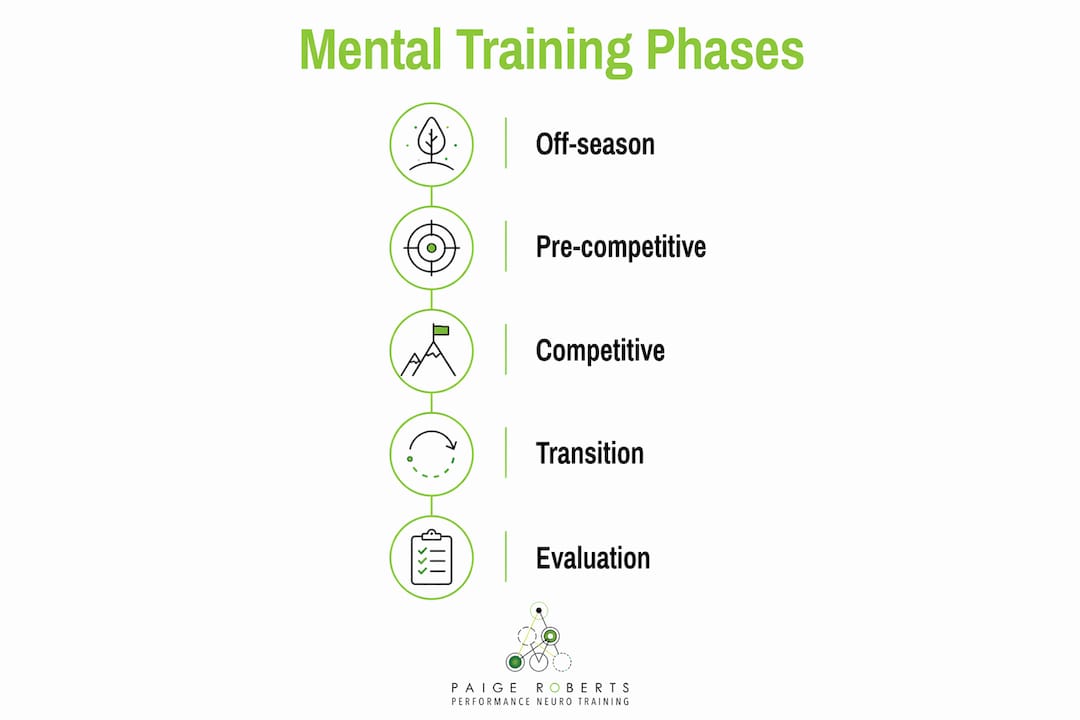
| Training phase | Mental training focus | Example activity |
|---|---|---|
| Off-season | Skill acquisition and education | Learn imagery scripts, practice breathing protocols |
| Pre-season | Skill practice under low pressure | Simulate competition scenarios in training |
| In-season | Integration and competition prep | Pre-performance routines, self-talk cues during drills |
| Post-competition | Review and adjustment | Debrief mental performance, update training targets |
Individual athletes benefit from one-on-one sessions with a CMPC, where the plan is tailored to their specific assessment results. Teams benefit from group mental skills sessions that build psychological safety and shared communication norms alongside individual skill work.
Tracking progress matters as much in mental training as in physical training. The USOPC uses its PsyDoc system to document and analyze mental performance interventions across athletes, treating mental coaching as measurable and continuous rather than anecdotal. You do not need enterprise software to do this. A simple training log that records pre-competition anxiety levels, focus quality, and post-competition mental performance ratings gives you the data to adapt your plan over time.
The benefits of sports performance coaching extend beyond competition day. Athletes who train mental skills consistently report better recovery from setbacks, faster return to baseline after poor performances, and greater resilience across a full season.
Key takeaways
Mental performance coaching trains specific, measurable psychological skills through structured phases, and consistent practice under realistic conditions is what transfers those skills to competition.
| Point | Details |
|---|---|
| Coaching targets specific gaps | Assessment tools like CSAI-2R identify whether the problem is cognitive worry, tension, or low confidence before any technique is chosen. |
| Mental skills are trainable | Focus, arousal control, and confidence are built through deliberate practice phases, not personality or natural talent. |
| Coaching differs from therapy | Mental performance coaching optimizes healthy athletes; clinical therapy treats diagnosed mental health disorders. |
| Techniques must match the problem | PST methods like relaxation, imagery, and cognitive reframing each address different pressure problems and cannot be used interchangeably. |
| Integration requires scheduling | Mental training follows periodization logic and must be practiced in realistic conditions to transfer to competition. |
Why most athletes wait too long to take mental training seriously
Most athletes I work with arrive after the problem has already cost them something. A missed Olympic qualifier. A season-long slump they could not explain. A panic response mid-competition that physical training never addressed. The frustrating part is that the mental skills they needed were trainable the entire time. They just were not treated as training.
The stigma is real but shrinking. What I have observed is that the athletes who resist mental coaching the longest are often the ones with the most physical talent. They have been rewarded for raw ability their entire careers, so the idea that something psychological is limiting them feels like an admission of weakness. It is not. It is an accurate diagnosis.
The other misconception I push back on constantly is that mental coaching is only for elite athletes. The subconscious beliefs that create performance blocks exist at every level of sport. A college swimmer managing pre-meet panic and an Olympic sprinter managing start-line anxiety are dealing with the same nervous system mechanics. The tools are the same. The stakes differ.
What I find most compelling about the neuroscience-based approach we use at Robertsneurotraining is that it goes beyond teaching coping strategies. It targets the nervous system directly, which is where performance blocks actually live. Cognitive reframing helps. But reprogramming the physiological response at the source produces changes that hold under the highest pressure, when coping strategies often fail.
— Paige
Take your mental performance further with Robertsneurotraining

Robertsneurotraining, led by Dr. Paige Roberts, offers a neuroscience-based approach to mental performance that goes beyond standard sport psychology techniques. The program uses Alpha Imprinting to retrain the nervous system at the source of performance blocks, targeting panic responses, trauma-linked anxiety, and the mental barriers that standard coaching does not reach. Athletes from Olympic medalists to professional league competitors have used this method to clear mental blocks and perform in a state of flow. If you are ready to address the mental side of your performance at the level your physical training deserves, start with Robertsneurotraining and see what your nervous system is actually capable of.
FAQ
What is mental performance coaching in simple terms?
Mental performance coaching is a structured process that teaches athletes trainable psychological skills, such as focus, confidence, and arousal control, to perform reliably under competitive pressure. It is evidence-based and distinct from clinical therapy.
Who can benefit from mental performance coaching?
Any athlete experiencing focus lapses, pre-competition anxiety, confidence issues, or performance slumps can benefit. The USOPC uses mental performance coaching across all levels of elite sport, and the same tools apply to amateur and youth athletes.
How does mental performance coaching differ from sports psychology?
Sports psychology is the broader academic and applied field. Mental performance coaching is the applied practice within that field focused specifically on skill-building for performance optimization rather than clinical treatment.
How long does it take to see results from mental training?
Results depend on consistency and the complexity of the skill being trained. Most athletes notice meaningful changes in focus and anxiety management within four to eight weeks of structured, regular practice.
What mental coaching techniques are used most often?
The most common techniques are relaxation training, imagery and mental rehearsal, self-talk restructuring, cognitive reframing, and pre-performance routines. Each targets a different type of pressure problem and works best when matched to the athlete's specific assessment results.