

Team energy management is the deliberate coordination of physical, mental, and emotional resources within a sports team to maximize collective performance and prevent burnout. Coaches and sports managers increasingly treat energy as a measurable performance KPI rather than a vague concept. The approach covers everything from how athletes recover between sessions to how psychological safety shapes locker room creativity. Understanding what is team energy management gives you a concrete framework to sustain engagement, protect focus, and keep your roster performing at its ceiling when it matters most.
What is team energy management and its core pillars?
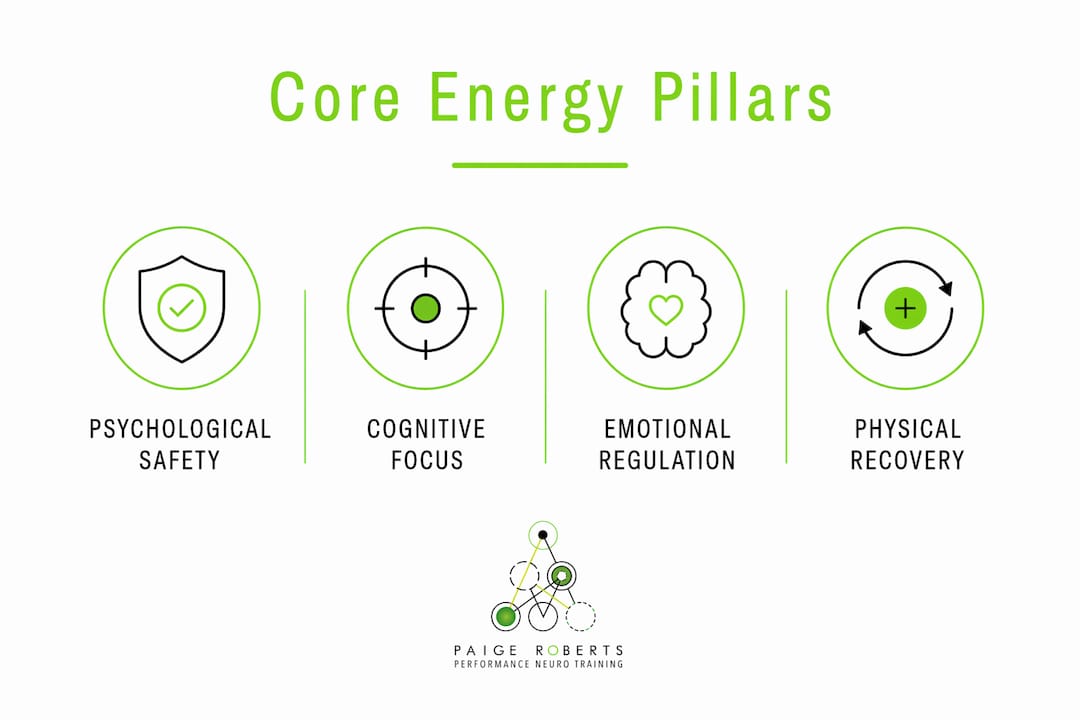
Team energy management is a holistic system that balances mental, physical, and emotional resources to optimize team output and reduce burnout. It treats energy as finite and manageable, not as a fixed trait some athletes have and others lack. The four pillars below define how high-performing teams structure this balance.
The four pillars explained
Psychological safety is the foundation. When athletes feel safe to speak up, admit fatigue, or flag a bad mental day, the team adapts faster and wastes less energy on hidden stress. Research confirms that neglecting psychological safety slows decision-making and reduces creativity across the entire roster. You can explore sport-specific applications of this concept through psychological safety practices developed specifically for competitive teams.
Cognitive focus is the second pillar. Athletes and coaches have a finite daily supply of sharp mental attention. Protecting that supply means prioritizing the highest-impact tasks during peak hours and pushing lower-stakes work to lower-energy windows.
Emotional regulation keeps morale stable under pressure. Teams that train emotional regulation respond to losses, referee calls, and lineup changes without energy-draining spirals of frustration or blame. Morale-building practices like post-game debriefs and recognition rituals directly feed this pillar.
Intentional recovery closes the loop. Without structured recovery, exhaustion compounds and resilience drops. Recovery is not passive rest. It includes sleep protocols, mental decompression routines, and scheduled low-intensity days that allow the nervous system to reset.
| Pillar | Core Function | Sports Example |
|---|---|---|
| Psychological Safety | Reduces hidden stress and friction | Athletes report fatigue without fear of losing playing time |
| Cognitive Focus | Protects peak mental output | Film sessions scheduled during morning high-focus windows |
| Emotional Regulation | Stabilizes morale under pressure | Structured post-loss debrief replaces blame culture |
| Intentional Recovery | Rebuilds physical and mental reserves | Mandatory rest days built into weekly training cycles |
- Audit which pillar is weakest in your current team structure before adding new programs.
- Address the weakest pillar first. Fixing recovery while ignoring psychological safety produces limited results.
- Track each pillar monthly using a simple 1–5 self-report scale from athletes.
Pro Tip: Run a five-minute anonymous pulse check after every practice week. Ask athletes to rate their mental, physical, and emotional energy on a 1–5 scale. Patterns across the four pillars show up fast.
How does energy mapping align roles with athlete strengths?
Energy mapping is a diagnostic tool that categorizes tasks into energizing, neutral, and draining based on each athlete's individual response. The insight that makes this powerful is simple: what energizes one athlete drains another. Equal workload distribution sounds fair, but it often misaligns energy profiles and quietly erodes motivation.

Energizing vs. draining: real sports examples
A point guard who thrives on film analysis and pre-game strategy sessions is energized by cognitive preparation. A power forward who finds the same sessions mentally exhausting performs better when that time is replaced with physical warm-up routines. Neither athlete is wrong. Their energy profiles are just different. Rotating draining tasks and delegating based on these profiles improves morale and reduces fatigue across the full roster.
Common energizing tasks in sports settings include leading warm-ups, mentoring younger teammates, and competing in high-stakes scrimmages. Common draining tasks include repetitive administrative check-ins, long video review sessions, and travel logistics. Neither category is universal. Your job as a coach or manager is to map them for your specific team.
Here is a step-by-step process to run energy mapping with your team:
- Ask each athlete to list their five most common weekly tasks.
- Have them label each task as energizing, neutral, or draining.
- Collect responses anonymously to get honest answers.
- Look for patterns: tasks that drain most of the team are candidates for restructuring or elimination.
- Reassign tasks so athletes spend more time in their energizing categories.
- Review the map every four to six weeks as roles and seasons shift.
Energy maps require periodic review because team roles evolve across a season. A player recovering from injury has a completely different energy profile than the same player at peak fitness. Treating energy mapping as a one-time exercise misses most of its value.
Pro Tip: Pair energy mapping with your existing mental training program to get a full picture of where each athlete's nervous system is taxed most.
What energy management strategies actually work for coaches?
Effective energy management requires structural changes to how your team operates, not just motivational speeches. The tactics below are drawn from leadership research and adapted for sports team contexts.
Four tactics worth implementing now
Audit and cut redundant meetings. Most teams hold more check-ins than necessary. Every unnecessary meeting pulls athletes and staff out of recovery or focus time. Audit your weekly schedule and cut any meeting that does not require real-time decision-making. Replace it with a written update or a shared team board.
Block deep work time. Schedule your highest-cognitive-demand sessions, such as tactical film review, game planning, and skill refinement, during the hours when your athletes are freshest. Protect those blocks from interruptions. Treat them with the same discipline you apply to game-day preparation.
Shift to async communication. Constant group messages and real-time notifications fragment attention and drain mental energy. Async communication lets athletes respond when they have the mental bandwidth, rather than reacting to every notification mid-recovery. Tools like shared team apps with delayed notification settings work well here.
Set clear priorities. Ambiguity is an energy tax. When athletes do not know which task matters most, they spend cognitive energy deciding rather than executing. A simple weekly priority list, posted before Monday practice, removes that friction entirely.
Here is a numbered implementation sequence for coaches starting from scratch:
- Audit your current weekly meeting schedule and flag any meeting under 30 minutes with no clear decision outcome.
- Remove or consolidate those meetings into a single weekly team sync.
- Block two to three high-focus training windows per week and communicate them to your full staff.
- Set up one async communication channel for non-urgent updates.
- Publish a weekly priority list every Monday morning.
- Reassess after four weeks using athlete energy ratings.
Pro Tip: The most common pitfall is adding energy management as a new layer on top of an already overloaded schedule. Start by removing something before you add anything new.
What measurable benefits come from managing team energy?
Teams that practice structured energy management see improved focus, sustained performance, and reduced burnout compared to teams operating without these systems. The performance gap widens under pressure, exactly when it matters most in competition.
Energy management also sharpens decision-making. When athletes are not mentally depleted, they read plays faster, communicate more clearly, and recover from mistakes without losing composure. These are not soft outcomes. They show up directly in late-game performance and injury prevention rates.
Tracking energy levels over time creates a feedback loop that supports continuous improvement. Coaches who collect weekly energy ratings from athletes can spot downward trends before they become injuries or burnout events. That early warning system is one of the most underused tools in sports team management.
| Outcome | With Energy Management | Without Energy Management |
|---|---|---|
| Focus During Training | High, protected by structure | Fragmented by meetings and notifications |
| Late-Game Performance | Sustained by recovery cycles | Drops due to accumulated fatigue |
| Athlete Burnout Rate | Lower, tracked and addressed early | Higher, often undetected until crisis |
| Team Creativity | Supported by psychological safety | Suppressed by stress and ambiguity |
The holistic energy equation in leadership research confirms that balancing stamina, clarity, and morale produces stronger engagement and more meaningful results. For sports teams, that translates directly to wins, athlete retention, and a culture people want to be part of.
Key takeaways
Team energy management works because it treats physical, mental, and emotional energy as finite resources that coaches can actively design around rather than react to.
| Point | Details |
|---|---|
| Energy as a KPI | Track mental, physical, and emotional energy weekly using athlete self-reports. |
| Four Core Pillars | Psychological safety, cognitive focus, emotional regulation, and recovery all require attention. |
| Energy Mapping | Categorize tasks as energizing or draining and reassign based on individual athlete profiles. |
| Structural Changes First | Cut redundant meetings and protect deep work blocks before adding new programs. |
| Ongoing Process | Review energy maps every four to six weeks as roles and seasons evolve. |
From task manager to chief energy officer
The hardest part of this transition is not learning the frameworks. It is letting go of the illusion that controlling every task means controlling outcomes. I have worked with coaches who run tight, detailed schedules and still watch their teams fall apart in the fourth quarter. The problem is almost never effort. It is energy mismanagement.
The Chief Energy Officer mindset reframes your role. You are not there to supervise tasks. You are there to design an environment where your athletes can access their best energy when competition demands it. That means filtering out negativity, making tough calls about who drains the team culture, and building recovery into the schedule as a non-negotiable.
What I see most often is coaches who understand recovery physically but completely overlook it mentally. An athlete can have fresh legs and a depleted nervous system. That combination produces hesitation, poor reads, and anxiety under pressure. The mental reprogramming side of recovery is where most teams leave performance on the table.
Energy management is also cyclical. What works in preseason will not work during a playoff run. The best coaches I have observed treat their energy systems the same way they treat their game plans: they review them, adjust them, and never assume last month's solution fits this month's challenge. Trust the process, but keep updating it.
— Paige
Build your team's energy foundation with Robertsneurotraining
Managing team energy at the mental and nervous system level requires more than scheduling changes. Robertsneurotraining, led by Dr. Paige Roberts, specializes in training the nervous system to clear mental blocks, performance anxiety, and trauma responses that silently drain athlete energy. The program uses Alpha Imprinting to reprogram how athletes respond under pressure, producing the kind of sustained mental energy that shows up in competition.
Olympic Medalists and professional athletes across major leagues have used Robertsneurotraining to recover their performance edge and expand beyond previous limits. If your team's energy ceiling is being held down by anxiety, past injury responses, or mental fatigue, explore what neurotraining for athletes can do for your roster's performance and resilience.
FAQ
What is team energy management in sports?
Team energy management is the structured process of balancing mental, physical, and emotional resources across a sports team to sustain high performance and prevent burnout. Coaches treat energy as a measurable asset and design training schedules, recovery cycles, and communication systems around it.
How often should coaches review their team's energy map?
Energy maps should be reviewed every four to six weeks, or whenever significant roster or role changes occur. Because energy profiles shift across a season, a static map quickly becomes inaccurate and loses its value.
What is the difference between task management and energy management?
Task management tracks what gets done. Energy management tracks the human capacity required to do it well. The Chief Energy Officer approach focuses on removing obstacles and designing conditions for peak output rather than supervising individual tasks.
What are the biggest benefits of team energy management?
Teams with structured energy management show improved focus, lower burnout rates, stronger late-game performance, and higher creativity. These outcomes are directly tied to protecting recovery time and building psychological safety into the team culture.
How does psychological safety affect team energy?
Psychological safety reduces the hidden energy cost of stress and self-censorship. When athletes feel safe to communicate fatigue or struggle, coaches can respond before problems compound, keeping the team's collective energy higher across the full season.