

If you're searching for protexsports.com alternatives, the strongest options fall into four categories: neuroscience-based neurotraining programs (Robertsneurotraining leads here), CMPC-certified mental performance consultants, licensed sport psychologists, and remote coaching apps. Your best first move is either searching the AASP Find a CMPC directory or booking a discovery call with Robertsneurotraining directly. These categories lead because they combine verified credentials with methods that produce measurable outcomes.
- Neuroscience-based neurotraining (e.g., Robertsneurotraining's Alpha Imprinting): targets nervous system reprogramming for performance blocks and injury recovery
- CMPC-certified mental performance consultants: accredited practitioners trained in applied sport psychology; the CMPC is the only NCCA-accredited certification for mental performance consulting in North America
- Licensed sport psychologists: doctoral-level clinicians who can address both performance and clinical mental health
- Remote coaching apps: subscription tools for mental skills practice between sessions
Key Takeaways
The strongest protexsports.com alternatives combine a verified credential (the CMPC or a clinical license) with objective assessment tools and a clear referral policy for clinical issues.
| Point | Details |
|---|---|
| Top credential to verify | The CMPC is the only NCCA-accredited certification in North America for mental performance consulting; verify through the AASP directory. |
| Four categories to evaluate | Neuroscience-based neurotraining, CMPC-certified mental performance consultants, licensed sport psychologists, and remote coaching apps each serve different needs. |
| Budget and timeline reality | Structured programs typically run — weeks; performance coaching is rarely covered by standard medical insurance. |
| Clinical care boundary | Seek a licensed mental health professional first if clinical symptoms (trauma, mood disorders, suicidality) are present. |
| Robertsneurotraining | Offers the Alpha Imprinting protocol, QEEG assessment, and a 10-week telehealth program for athletes with performance blocks or injury recovery needs. |
Table of Contents
- What are the best Protex Sports alternatives side by side?
- How do you choose the right alternative to Protex Sports?
- What can you expect from each alternative category?
- What credentials and evidence should you verify?
- What do these alternatives typically cost, and how long do programs run?
- When should you seek clinical care instead of performance coaching?
- A perspective on what actually separates good providers from great ones
- Robertsneurotraining: a science-backed alternative worth considering
- Sources
What are the best Protex Sports alternatives side by side?
The table below compares each alternative category on the dimensions that actually matter when you're choosing a provider.
| Category | Core services | Credentials | Primary methods | Delivery | Best for | Typical cost/length | Evidence signal |
|---|---|---|---|---|---|---|---|
| Neuroscience-based neurotraining (Robertsneurotraining) | Alpha Imprinting, QEEG, light therapy, 10-week Energy Optimization Program, telehealth, in-home devices | Neuroscience-based, doctoral-led | Alpha Imprinting, neurotraining, biofeedback | telehealth, group workshops, cohort programs | Elite/pro athletes, injury recovery, trauma-related performance blocks | Program-based; 10-week intensive | Olympic medalist testimonials; QEEG outcome data |
| CMPC-certified consultant | Mental skills training, visualization, goal-setting, team workshops | CMPC (NCCA-accredited) | CBT, imagery, self-talk, arousal regulation | in-person or telehealth, team sessions | Competitive athletes at any level | —; program usually spans several weeks | AASP-accredited training and ethics standards |
| Licensed sport psychologist | Performance coaching + clinical mental health treatment | Doctoral license (PhD/PsyD) + often CMPC | CBT, exposure therapy, trauma treatment, visualization | In-person or telehealth | Athletes with clinical symptoms alongside performance goals | —; ongoing basis | Peer-reviewed clinical and sport psychology research |
| Remote coaching app | Visualization, self-talk, mental skills audio courses, AI sessions | Varies; no universal accreditation standard | Guided audio, AI coaching, progress tracking | App-based, asynchronous | Recreational to club athletes supplementing coaching | a monthly subscription costing between ten and thirty dollars | 2025 review notes apps supplement but don't replace licensed care |
Pro Tip: Before committing to any provider, ask for a sample session plan and at least one anonymized outcome metric. A provider who can't show you what progress looks like in week four probably hasn't defined it.
How do you choose the right alternative to Protex Sports?
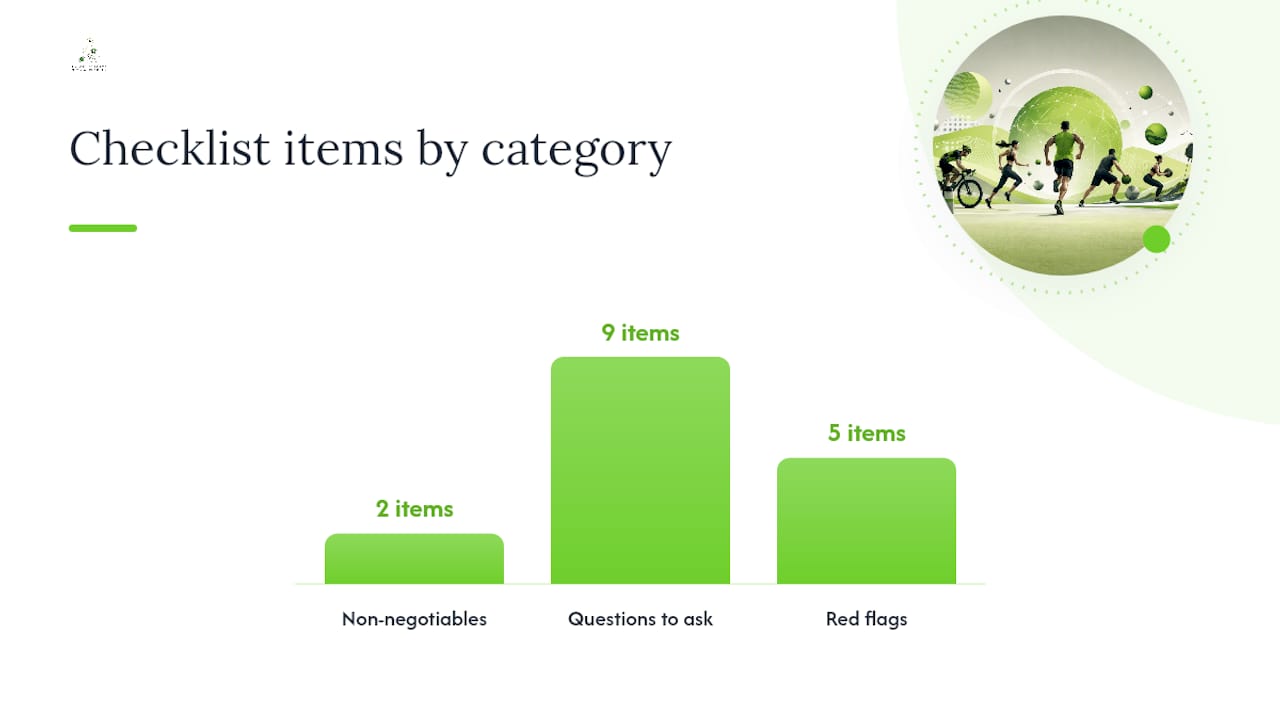
Start with two non-negotiable questions: Does this provider hold a CMPC or a clinical license? And can they show you concrete outcome metrics? Everything else is secondary.
Questions to ask any provider:
- What credential do you hold, and can I verify it through AASP or a state licensing board?
- What specific methods do you use, and is there peer-reviewed evidence behind them?
- How do you measure progress? What does success look like at week four and week ten?
- Do you use objective assessments (QEEG, psychometric tools, biofeedback data)?
- What is your referral policy if my needs fall outside your scope?
- Do you work with athletes at my competitive level?
- Can you share a sample session plan or program outline?
- What is your confidentiality and data privacy policy, including any device or session recordings?
Red flags to walk away from:
- No measurable outcomes defined upfront
- Vague method descriptions ("we use mindset work" with no specifics)
- No referral policy or refusal to discuss clinical boundaries
- Mixing clinical treatment language without holding a license
- Pressure to commit to a long program before a discovery call
Pro Tip: To verify a CMPC credential, search the AASP directory by name. The CMPC is the only NCCA-accredited certification in North America for mental performance consulting, so it's the clearest single signal of formal training.
What can you expect from each alternative category?
Neuroscience-based neurotraining
This approach trains the nervous system directly rather than coaching cognitive habits alone. Robertsneurotraining's Alpha Imprinting protocol uses QEEG brain scans, light therapy, and audio-visual devices to identify and clear the neurological patterns behind performance anxiety, mental blocks, and post-injury fear responses.
- Strengths: Objective baseline data (QEEG), measurable nervous system outcomes, addresses trauma-related blocks that standard mental skills coaching misses
- Limitations: Specialized scope; not a substitute for clinical mental health treatment when symptoms are severe
- Who it suits: Elite and professional athletes dealing with performance blocks, injury recovery, or trauma responses that haven't responded to traditional coaching
CMPC-certified mental performance consultants
CMPCs complete formal education in sport psychology, supervised applied hours, ethics training, and a certification exam through AASP. Their toolkit typically includes CBT-based techniques, imagery, self-talk training, and frameworks like the 4 C's (Challenge, Control, Commitment, Confidence). Mental toughness is a trainable skill set, not a fixed trait, and CMPCs are trained to build it systematically.
- Strengths: Accredited training, ethical standards, broad applicability across sports and athlete levels
- Limitations: Not licensed to treat clinical mental health conditions; scope is performance, not therapy
- Who it suits: Competitive athletes at any level who want structured mental skills development without clinical needs
Licensed sport psychologists
These practitioners hold doctoral-level clinical or counseling psychology licenses and often carry the CMPC as well. They can treat diagnosed conditions (anxiety disorders, PTSD, depression) alongside performance goals, which makes them the right call when clinical symptoms are present. APA Division 47 publishes the peer-reviewed evidence base their methods draw from.
- Strengths: Full clinical scope, can bill some insurance, research-backed interventions
- Limitations: Higher per-session cost; availability varies by region
- Who it suits: Athletes whose performance problems are entangled with clinical mental health symptoms
Remote coaching apps
Apps like Perform offer personalized visualizations, self-talk sessions, and live AI coaching. Perform's own App Store listing states clearly it does not replace a licensed psychologist. Research published in 2025 suggests apps can supplement coaching and increase practice consistency, but they are not a replacement for licensed clinical care. Sync is another subscription app targeting club and recreational athletes with audio courses and AI progress tracking.
- Strengths: Low cost, accessible anytime, good for daily mental skills practice
- Limitations: No clinical scope, no personalized assessment, quality varies widely
- Who it suits: Recreational to club athletes who want affordable daily practice between sessions with a human provider
What credentials and evidence should you verify?
The CMPC is the credential to prioritize for mental performance coaching. It is the only accreditation in North America backed by the NCCA, the same body that accredits nursing and athletic training certifications. That matters because it means the program meets independent standards for education, supervised practice, and ethics, not just a self-issued certificate.
Three organizations set the standards worth knowing:
- AASP (Association for Applied Sport Psychology): grants the CMPC, publishes ethical guidelines, and maintains the public Find a CMPC directory
- APA Division 47: the sport and exercise psychology division of the American Psychological Association; its journal is where peer-reviewed evidence for specific methods is published
- State licensing boards: govern licensed psychologists; verify through your state's psychology board website
Trust-signal checklist for your discovery call:
- Credential verified through AASP or state board (not just a website claim)
- Specific methods named with at least one research reference
- Objective assessment used (QEEG, psychometric tool, biofeedback) with sample outcome data available
- Clear referral policy for clinical issues stated upfront
- Client types served match your competitive level and sport
A provider who uses objective assessments like QEEG should be able to show you anonymized before-and-after data. If they can't, the assessment is decoration, not a diagnostic tool.
What do these alternatives typically cost, and how long do programs run?
Pricing varies significantly by delivery model and credential level.
| Format | Typical cost range | Typical length | Expected outcome |
|---|---|---|---|
| Single session (CMPC or licensed psychologist) | —/session | One-time or ongoing | Skill introduction, crisis support |
| a structured program typically lasting several weeks | — total | — weeks | Measurable mental skills improvement |
| 10-week intensive (neurotraining) | Program-based pricing | 10 weeks | Nervous system recalibration, performance block clearance |
| Team workshop | —/workshop | Half-day to multi-day | Team cohesion, shared mental skills framework |
| App subscription | $10/month | Ongoing | Daily practice consistency |
Performance coaching is rarely covered by standard medical insurance. If cost is a concern, a Flexible Spending Account (FSA) or Health Savings Account (HSA) may cover sessions with a licensed psychologist but not typically with a CMPC-only provider. Ask the provider directly before assuming coverage. For team workshop formats and program structures, request a written schedule with milestones before signing anything.
When should you seek clinical care instead of performance coaching?
Performance coaching addresses skill, consistency, and competitive readiness. It is not the right first call when clinical symptoms are present.
Seek a licensed mental health professional first if you notice:
- Suicidal thoughts or self-harm
- Severe trauma responses (flashbacks, dissociation, inability to function)
- Substance use affecting daily life
- Major mood disorders (severe depression, bipolar episodes) interfering with basic functioning
- Panic attacks that occur outside of sport contexts
Questions to ask any provider about scope:
- Are you a licensed psychologist or mental health professional?
- Do you have a referral network for clinical issues?
- Can you coordinate with my existing therapist or psychiatrist?
Pro Tip: Confirm your provider's confidentiality policy covers any device data collected (QEEG scans, audio-visual session recordings). Ask specifically: "What data do you store, who can access it, and how is it protected?" For more on trauma-informed practice in sport, the distinction between performance and clinical scope is covered in detail.
One safety reminder: if clinical risk is present, contact a licensed mental health provider or call 988 (the Suicide and Crisis Lifeline) before pursuing any performance coaching program.
A perspective on what actually separates good providers from great ones
The credential gap in this space is real, but it's not the whole story. Plenty of CMPC holders run generic programs that never touch the nervous system patterns driving an athlete's actual block. And plenty of well-credentialed clinicians have no idea what it feels like to compete at a level where a tenth of a second or a single mental hesitation ends a career.
What separates the providers worth your time is specificity: specific assessment data, specific methods tied to specific outcomes, and a clear line about what they won't treat. The providers who blur that line, who promise to handle everything from performance anxiety to clinical trauma without a referral policy, are the ones to avoid. The best alternatives to Protex Sports are the ones who know exactly what they do, can show you the evidence, and will tell you honestly when you need someone else.
Robertsneurotraining: a science-backed alternative worth considering
Robertsneurotraining offers something most alternatives don't: a direct line into the nervous system. Where traditional mental performance coaching works top-down (thought to behavior), the Alpha Imprinting protocol works bottom-up, using QEEG brain scans, light therapy, and audio-visual devices to identify and clear the neurological patterns behind performance anxiety, mental blocks, and post-injury fear responses. The 10-week Energy Optimization Program delivers this through telehealth, making it accessible regardless of where you train.
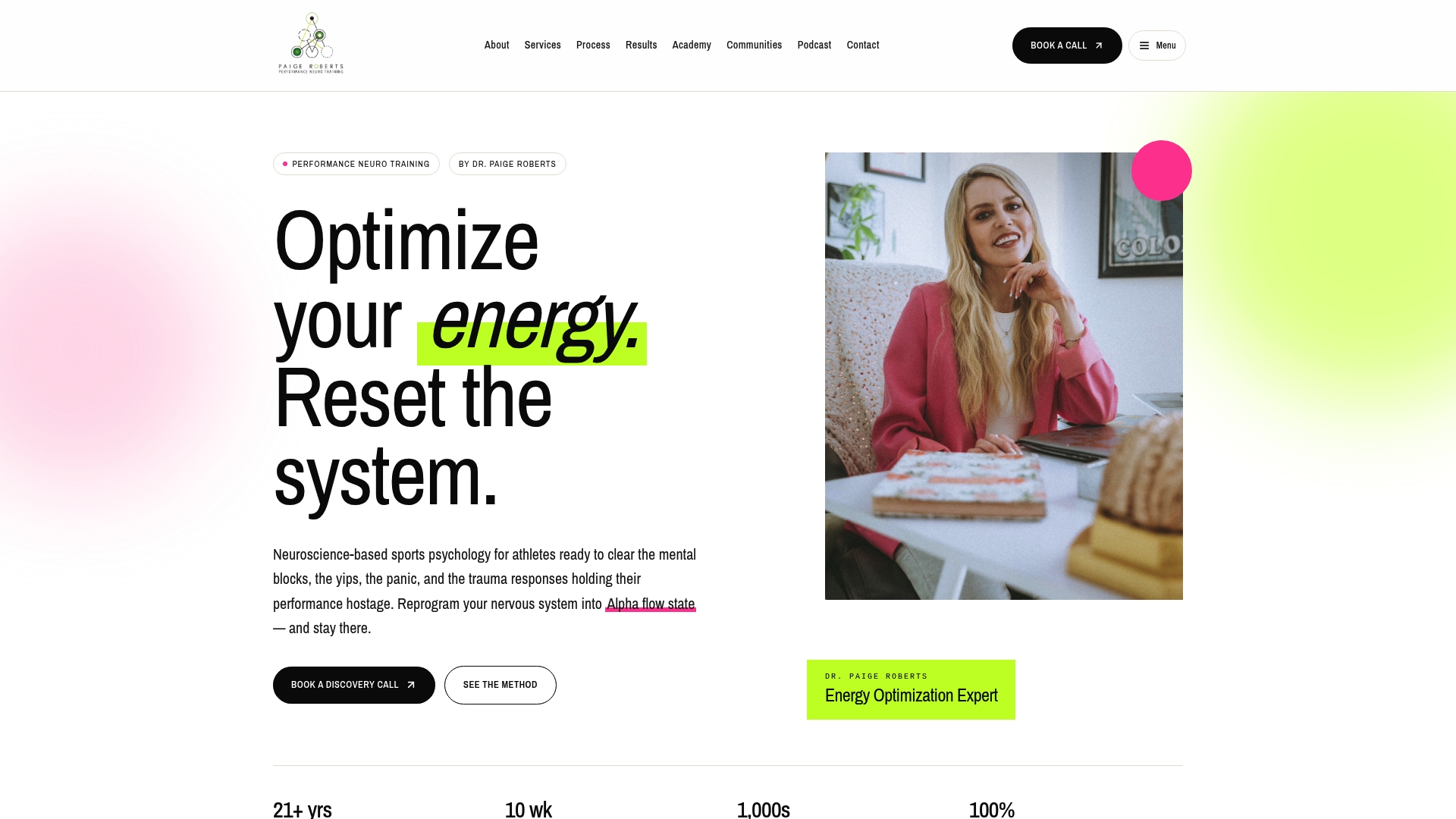
Athletes from Olympic podiums to professional leagues have used this approach to recover performance they thought was gone. If you're ready to find out whether it fits your situation, start with the Energy Optimization Workbook for a self-guided entry point, or visit Robertsneurotraining to book a discovery call directly.
Note: Robertsneurotraining's services are performance-focused. If clinical mental health symptoms are present, please consult a licensed mental health professional first.
Sources
- Sport, Exercise and Performance Psychology Journal
- The 4 Cs
- Quality of mobile apps for psychological skills training in sport
- Perform - AI Sport Psychology App - App Store