

What are the best alternatives to qpathlete.com for mental performance coaching?
The strongest qpathlete.com alternatives in 2026 center on neuroscience-based training and certified professional expertise, not generic wellness apps. Here are the options worth your attention:
- Performance Neuro Training by Dr. Paige Roberts — A neuroscience-driven program that retrains the nervous system to clear mental blocks tied to injury and trauma, using a proprietary method called Alpha Imprinting. Endorsed by Olympic medalists and major league professionals.
- CMPC-certified consultants via AASP — The CMPC directory connects athletes with credentialed mental performance specialists who have passed a rigorous national exam and met supervised-experience requirements.
- Sport science track consultants — Professionals trained through kinesiology or physical education programs who specialize in goal setting, focus, motivation, energy management, and confidence building without clinical licensure.
- Licensed clinical sport psychologists — For athletes dealing with diagnosable conditions alongside performance issues, a licensed psychologist with sport-specific training covers both needs.
- HTK Training — Hard to Kill Training provides mental performance and physical resilience work for tactical athletes and sports professionals seeking an alternative coaching model.
The credential to look for first is the Certified Mental Performance Consultant (CMPC) designation, administered by the Association for Applied Sport Psychology (AASP). It is the clearest signal that a coach meets a verified professional standard.
Mental performance coaching vs. clinical sport psychology: what's the difference?
These two services solve different problems, and mixing them up costs athletes time and money.
Mental performance coaching focuses on building skills: focus, confidence, arousal regulation, imagery, and goal setting. Per AASP guidance, Certified Mental Performance Consultants are not licensed to diagnose or treat clinical conditions. Their work is entirely performance-based, which means they are the right call when your issue is competitive anxiety, mental blocks, or inconsistent focus, not a diagnosable disorder.
Clinical sport psychology is healthcare. A licensed clinical sport psychologist holds a doctoral degree and a state license, which allows them to diagnose and treat conditions like depression, eating disorders, and clinical anxiety. Experts emphasize that athletes should clearly distinguish between needing mental health treatment and needing performance enhancement, because the two require different professionals.
The practical takeaway: if you are performing below your ability due to mental blocks, anxiety in competition, or trauma from injury, a mental performance coach is your starting point. If you are struggling with a mental health condition that affects your daily life, a licensed clinician is the right fit. Many athletes benefit from both, working with each professional in parallel.
How to find a qualified mental performance coach in the United States
The title "mental performance coach" is unregulated, which means anyone can use it. The CMPC credential is what separates professionals from self-appointed coaches.
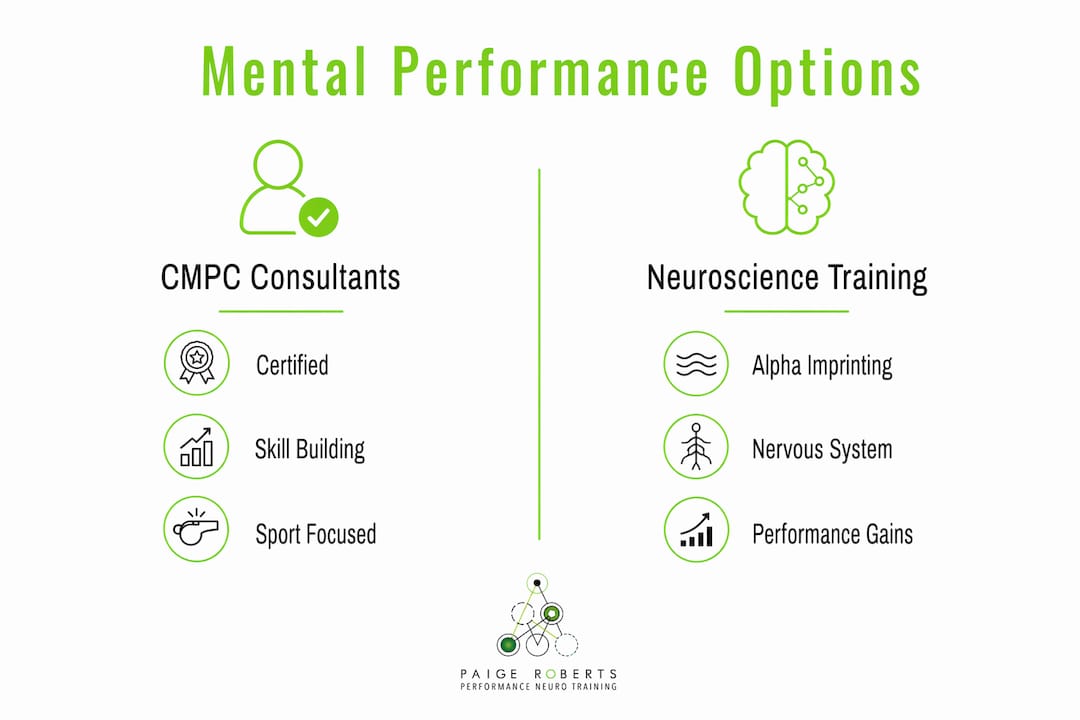
The CMPC certification is accredited by the National Commission for Certifying Agencies (NCCA) and requires specialized education, applied training under supervision, a national exam, adherence to a code of ethics, and ongoing professional development. The AASP maintains a searchable CMPC directory that lets you filter by location and sport specialization. As of 2026, this directory is the industry standard for finding vetted mental performance specialists in the United States.
Practical steps to verify a coach's credentials:
- Search the AASP CMPC directory at appliedsportpsych.org and confirm the consultant's listing is current.
- Ask directly: "Are you a Certified Mental Performance Consultant through AASP?" A legitimate CMPC will confirm without hesitation.
- Request information on their supervised experience hours and the populations they have worked with.
- Ask whether they hold any clinical licensure, which matters if your needs overlap with mental health treatment.
- Check for sport-specific experience relevant to your discipline.
Questions to ask before committing:
- What methods do you use, and what is the evidence base behind them?
- Have you worked with athletes at my competitive level?
- How do you measure progress, and what does a typical engagement look like?
- Do you refer out when a client's needs exceed your scope of practice?
Neuroscience-based alternatives: Performance Neuro Training and Alpha Imprinting
Most mental performance programs teach coping strategies. Performance Neuro Training, led by Dr. Paige Roberts, works at a different level: it targets the nervous system directly.

The program uses a proprietary technique called Alpha Imprinting to reprogram how the nervous system responds under competitive pressure. Rather than managing anxiety after it appears, Alpha Imprinting addresses the underlying neural patterns that trigger panic, freeze responses, and performance blocks, particularly those rooted in sports injuries and past trauma. The result, according to the program, is a state of flow that athletes can access consistently during competition.
Athletes at the Olympic and professional level have reported measurable performance improvements after working through the program. The approach is particularly relevant for athletes who have tried conventional mental skills training without resolving deep-seated anxiety or post-injury mental blocks.
Pro Tip: When evaluating any neuroscience-based mental performance program, ask specifically how the method addresses the nervous system versus cognitive reframing. Programs that work at the physiological level tend to produce faster, more durable results for trauma-related performance blocks.
What outcomes and timelines should athletes realistically expect?
Mental performance training is not a one-session fix. Results build over time, and the timeline depends heavily on program intensity and the nature of the athlete's specific challenges.
Athletes working with qualified mental performance coaches typically report improvements in focus, confidence, arousal regulation, and energy optimization over training periods ranging from weeks to several months. Neuroscience-based programs like Performance Neuro Training may produce faster shifts in anxiety response because they target the nervous system rather than relying solely on cognitive techniques.
Common measurable outcomes athletes track:
- Reduced pre-competition anxiety and panic responses
- Improved concentration and ability to refocus after errors
- Greater consistency in performance under pressure
- Faster recovery from injury-related mental blocks
- Stronger confidence in high-stakes situations
- Better energy management across training and competition cycles
Individual results vary based on how long the mental block has been present, the athlete's commitment to the process, and whether the program addresses the root cause or only the symptoms.
How do top alternatives to qpathlete.com compare on key features?
| Feature | CMPC-certified consultant | Performance Neuro Training | Licensed clinical sport psychologist |
|---|---|---|---|
| Credential standard | NCCA-accredited CMPC | Neuroscience-based, led by Dr. Paige Roberts | State-licensed doctoral degree |
| Scope | Mental skills training only | Nervous system retraining, trauma and injury blocks | Mental health treatment plus performance work |
| Best for | Focus, confidence, goal setting | Post-injury blocks, deep anxiety, flow state | Clinical conditions plus performance needs |
| Clinical diagnosis | No | No | Yes |
| Athlete testimonials | Varies by consultant | Olympic medalists, major league professionals | Varies by clinician |
| Availability | AASP directory, nationwide | robertsneurotraining.com | State-licensed, varies by location |
The right choice depends on what is actually holding you back. A CMPC covers the majority of performance-related mental skills work. Performance Neuro Training fills a specific gap for athletes whose blocks are rooted in injury trauma or deep nervous system patterns. A licensed clinician is the appropriate route when a diagnosable mental health condition is part of the picture.
How to evaluate and choose among mental performance training providers
Credentials come first, but they are not the whole picture. A CMPC with no experience in your sport is a weaker fit than one who has worked extensively with athletes at your level.
Cost varies widely and is rarely published upfront. Individual sessions with CMPC-certified consultants typically run in the range that reflects a specialized professional service, comparable to working with a licensed therapist or specialized coach. Program-based offerings like Performance Neuro Training may structure pricing differently, so contacting the provider directly is the most reliable way to get accurate figures. Some providers offer packages, others bill per session, and a few work with sport organizations on a retainer basis.
Athlete feedback is worth seeking out, but look for specifics. Generic praise tells you little. Testimonials that describe a particular problem solved, such as returning to peak performance after an injury or eliminating pre-competition panic, carry more weight than broad endorsements.
Red flags to watch for when selecting a mental performance training service
Not every provider offering mental performance coaching delivers what they promise. A few warning signs are worth knowing before you commit.
Avoid any provider who claims to treat clinical mental health conditions without holding a state license. Per AASP guidance, mental performance coaches are not qualified to diagnose or treat diagnosable disorders, and a coach who blurs that line is operating outside their scope. Similarly, be cautious of programs that promise specific performance outcomes in a fixed number of sessions without any assessment of your individual situation.
Lack of verifiable credentials is a serious concern. If a coach cannot point you to a CMPC listing, a university affiliation, or a clear professional background, that absence matters. The AASP CMPC directory exists precisely because the title is unregulated. Use it. Also watch for providers who discourage you from seeking a second opinion or who pressure you into long-term commitments before demonstrating any results.
Robertsneurotraining: a neuroscience-first path for athletes ready to go deeper

Most mental performance programs teach you to manage what is happening in your head. Robertsneurotraining works on what is happening in your nervous system, and that distinction matters for athletes whose blocks run deeper than mindset tips can reach. Dr. Paige Roberts built the Performance Neuro Training process specifically for athletes dealing with performance anxiety, post-injury mental barriers, and trauma responses that conventional coaching has not resolved. The method, Alpha Imprinting, has been used by Olympic medalists and major league professionals to return to and surpass their pre-injury performance levels. If you are an athlete who has already tried the standard mental skills toolkit and still feel stuck, this is a different kind of work. Visit robertsneurotraining.com to learn about the process and reach out directly to discuss whether it fits your situation.
Key Takeaways
The most effective qpathlete.com alternatives combine verified credentials like the CMPC designation with methods that address the root cause of an athlete's mental performance blocks, not just the symptoms.
| Point | Details |
|---|---|
| CMPC is the credential standard | The AASP's CMPC designation, accredited by the NCCA, is the clearest marker of a qualified mental performance consultant. |
| Coaching vs. clinical care | Mental performance coaches build skills; licensed clinicians treat diagnosable conditions. Knowing which you need saves time and money. |
| Neuroscience-based methods go deeper | Programs targeting the nervous system directly, like Alpha Imprinting, address trauma and injury-related blocks that cognitive techniques often miss. |
| Red flags are avoidable | Unverifiable credentials and scope-of-practice violations are the two most common problems. Use the AASP directory to verify any coach before committing. |
| Robertsneurotraining | Dr. Paige Roberts' Performance Neuro Training uses Alpha Imprinting to retrain the nervous system, with results reported by Olympic medalists and major league professionals. |