
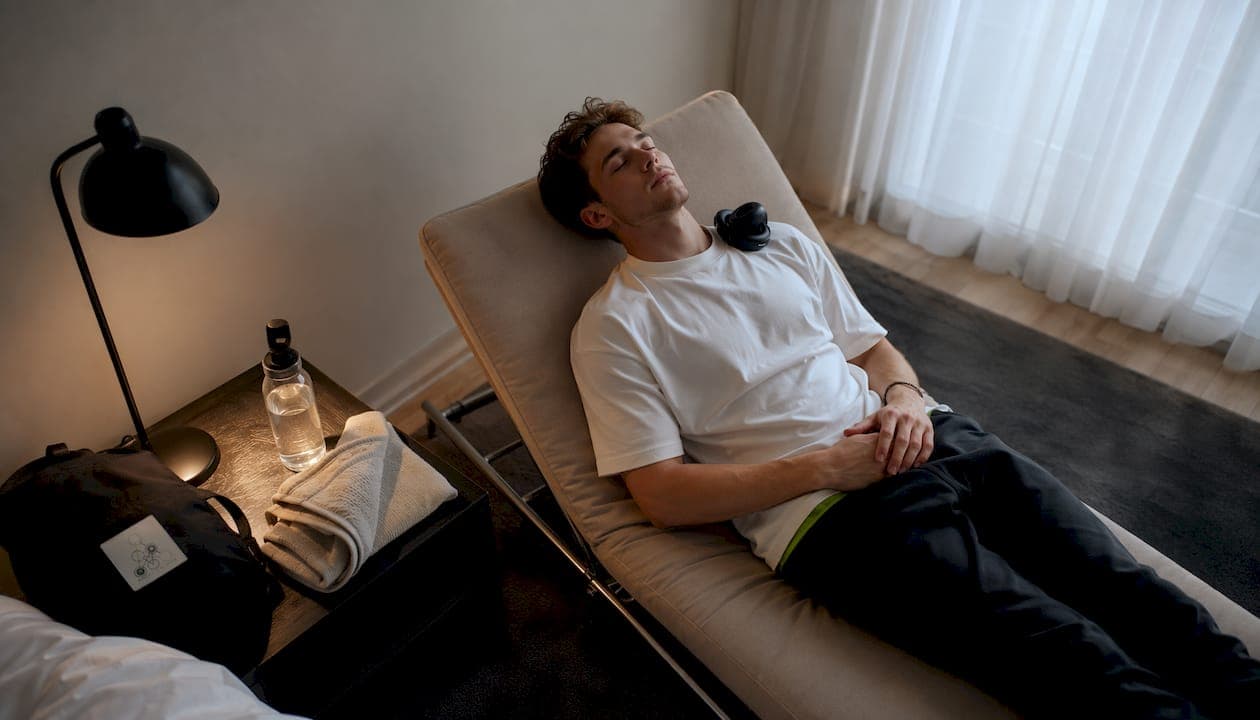
The fastest way to reduce sensory overload post concussion is to remove yourself from the stimulus, not fight through it. Move to a dim, quiet space. Put on sunglasses or a hat, use earplugs or noise-canceling headphones, drink water, and eat a small protein snack. Then use 3-3-3 breathing: inhale for 3 counts, hold for 3, exhale for 3. Repeat until the acute spike passes. Moderate overload often begins to subside in 20–60 minutes after these measures.
Grab these immediately:
- Sunglasses or a wide-brim hat
- Earplugs or noise-canceling headphones
- Water bottle and a protein snack (nuts, jerky, bar)
- Hat or hood to reduce peripheral visual input
- A pre-written note for coaches: "Sensory overload — need 30 minutes in a quiet space"
Red flag: Seek emergency care immediately if you experience loss of consciousness, repeated vomiting, one pupil larger than the other, seizure, slurred speech, or rapidly worsening confusion. These are not rest-and-recover situations.
Table of Contents
- How do you manage the first 24–48 hours after a concussion?
- What self-regulation techniques actually work during sensory overload?
- What environmental changes reduce light and noise triggers fast?
- How do you rebuild sensory tolerance with a graded exposure plan?
- When should you see a specialist for persistent sensory sensitivity?
- How Performance Neuro Training addresses sensory overload
- Your 7-day starter plan and printable checklist
- What does the clinical evidence say about sensory sensitivity after concussion?
- Key Takeaways
- What athletes often get wrong about sensory recovery
- Performance Neuro Training for athletes recovering from concussion
- Useful sources and further reading
How do you manage the first 24–48 hours after a concussion?
Relative rest for the first 24–48 hours is the clinical standard. That means reducing activities that spike symptoms, not locking yourself in a dark room. Total sensory deprivation beyond that initial window is actively discouraged because it can lower your tolerance further, making re-exposure harder when you do return.
| Timeframe | Recommended Activity | What to Avoid |
|---|---|---|
| — | Rest, hydrate, sleep, dim lighting | Screens, loud environments, intense reading |
| 24–48 hours | Short walks, gentle stretching | Sprinting, contact, bright/crowded spaces |
| 48 hours–2 weeks | Gradual light activity (stationary bike, easy swim) | Return to full practice or competition |
| 2–4 weeks | Progressive return to sport with symptom monitoring | Skipping symptom checks |
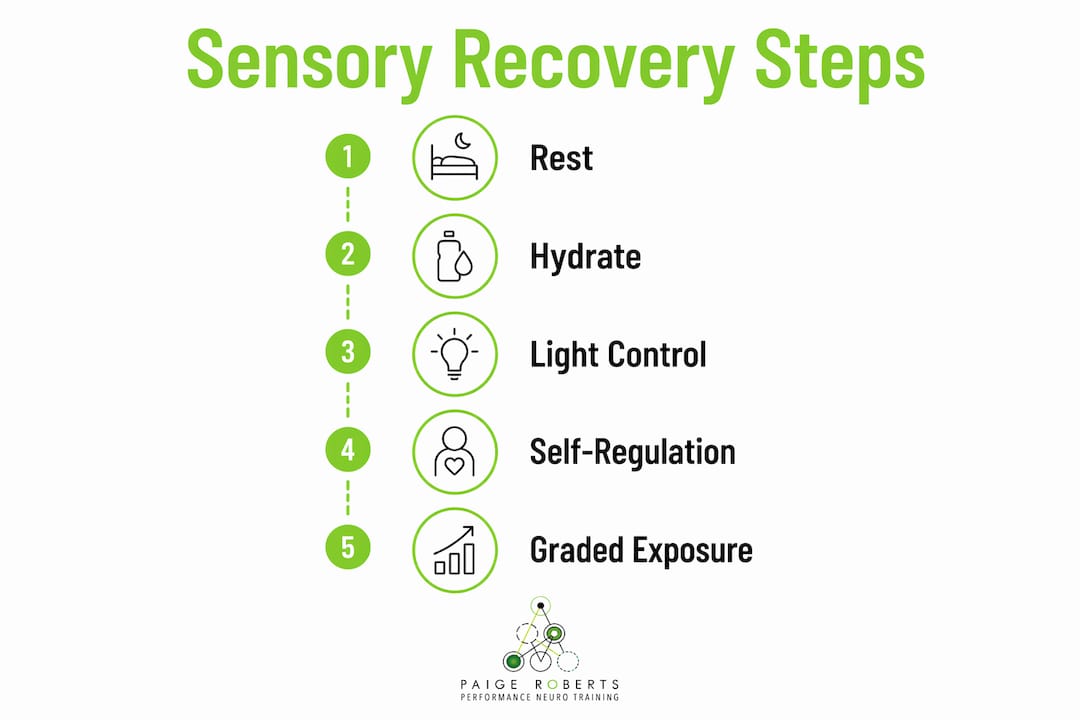
Most athletes return to work or school within 2–4 weeks with proper management. The key word is proper. Rushing the first 48 hours almost always extends the total recovery timeline.
Pro Tip: Ask your athletic trainer to shorten practice exposure in 10-minute blocks during the first week back. Symptom spikes after a block tell you exactly where your current threshold sits, which is far more useful than guessing.
What self-regulation techniques actually work during sensory overload?
The athletes who recover fastest are the ones who practice calming strategies before they need them. When your nervous system is already flooded, learning a new technique is nearly impossible. Build these into your off-field routine now.
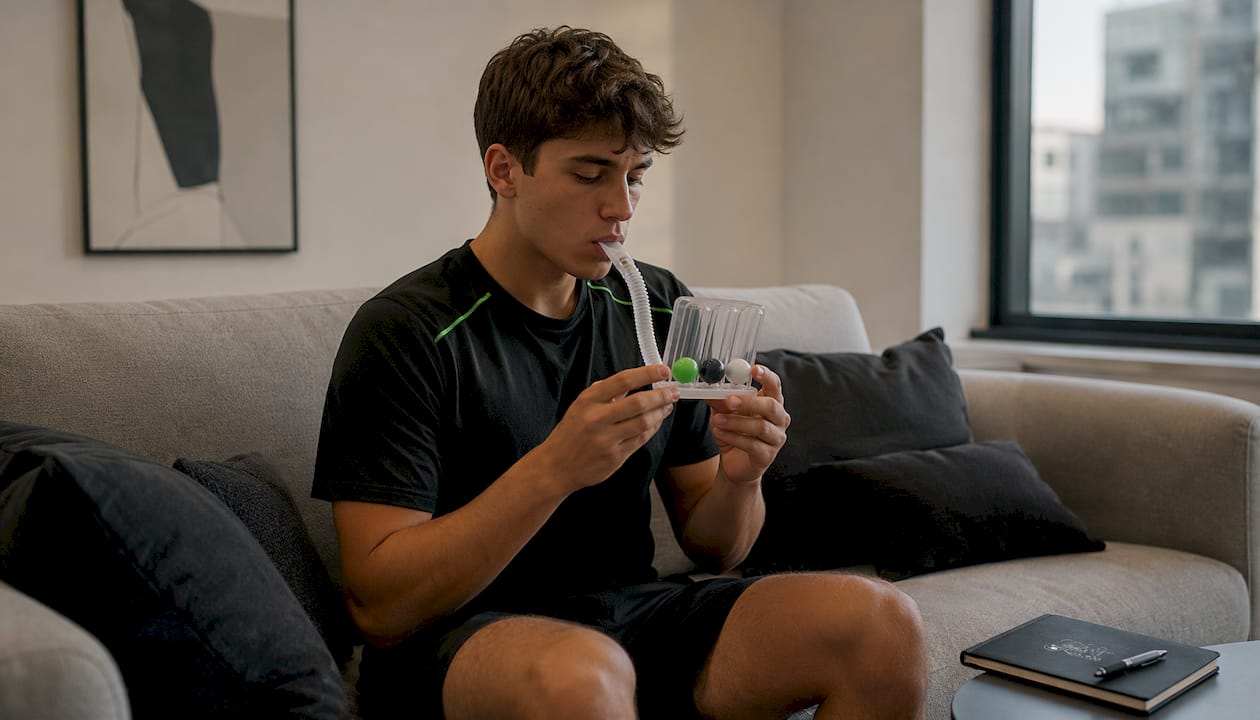
- 3-3-3 breathing (serial three): Inhale 3 counts, hold 3, exhale 3. Run three full cycles. This is your fastest reset.
- Box breathing: Inhale 4, hold 4, exhale 4, hold 4. Use this for sustained regulation during longer overload episodes. Breathing protocols embedded in warm-ups preserve cognitive bandwidth during re-exposure.
- Guided imagery: Close your eyes, picture a familiar low-stimulus environment (your bedroom, a quiet trail). Engage each sense deliberately: what do you hear, smell, feel? Run 60–90 seconds.
- Sensory switching: Apply firm pressure to your forearm or chew something strong-flavored (gum, a mint). Redirecting one sensory channel can interrupt the overload cascade.
- Body scan: Starting at your feet, mentally check each body part for tension. Consciously release it. Takes about 90 seconds and grounds attention in the body rather than the overwhelm.
Practice goal: 3 rounds daily, 3 minutes each, during your normal recovery window. Off-ice, off-field, before bed. Frequency matters more than duration.
Pro Tip: Embed one breathing round into your existing pre-competition warm-up, right after dynamic stretching. Your nervous system will start associating that cue with regulation, so it fires automatically under game-day pressure, not just in a quiet room.
What environmental changes reduce light and noise triggers fast?
Reducing lights, noise, and screen time in the first days after a concussion is standard clinical advice. The practical execution matters as much as the principle.
Device and screen adjustments:
- Drop screen brightness to 30% or lower; enable Night Shift or a blue-light filter app
- Increase font size so your eyes work less hard
- Set your phone to grayscale mode (reduces visual complexity)
- Use dark mode on every app you can
- Cap screen sessions at 10–15 minutes with a 5-minute eyes-closed break
Environment and gear:
- Wear FL-41 tinted lenses (rose-tinted, designed for light sensitivity) rather than standard dark sunglasses indoors
- Use low-wattage warm-bulb lamps instead of overhead fluorescents
- Choose soft, seamless clothing; avoid tags and tight waistbands that add tactile noise
- Keep a concussion recovery kit in your locker: earplugs, sunglasses, a hat, and a small snack
The goal is temporary protection, not permanent avoidance. Use protective gear aggressively in the acute window, then begin weaning it as symptoms allow. Staying behind sunglasses indefinitely delays re-tolerance.
How do you rebuild sensory tolerance with a graded exposure plan?
Re-tolerance is built by scaled exposure, not avoidance. The nervous system needs controlled doses of the stimulus it is struggling with, paired with recovery windows, to rebuild its filtering capacity.
- Micro-exposure (Days 1–3): 5 minutes of mild sensory input (a quiet podcast, soft indoor lighting without sunglasses). Stop at the first symptom increase. Rest until baseline returns.
- Short practice blocks (Days 4–7): 10–15 minutes of light team activity in a low-noise setting. One block per session, one session per day.
- Progressive crowd and noise reintroduction (Week 2): Attend practice as an observer before participating. Sit near the edge of the space. Wear earplugs if needed, then try without.
- Light competition simulation (Week 3): Controlled scrimmage, limited duration, with a teammate monitoring your symptoms.
- Full return to competition: Only after completing the prior steps symptom-free and with clinician clearance.
| Stage | Sensory Load | Duration | Stop Rule |
|---|---|---|---|
| Micro-exposure | Very low | 5 min | Any symptom increase |
| Short practice blocks | Low | 10–15 min | Headache, dizziness, or nausea |
| Progressive reintroduction | Moderate | 30 minutes | Symptoms above 3/10 (recovery may take 20–60 minutes post-trigger) |
| Competition simulation | High | — | Any neurological sign |
Think of your daily sensory capacity as a budget. High-load activities (crowded gyms, loud arenas, screen-heavy film sessions) draw from the same account as physical training. Schedule them around your recovery windows, not on top of them.
When should you see a specialist for persistent sensory sensitivity?
Seek specialist assessment if symptoms persist beyond 2–4 weeks, worsen instead of plateau, or include any of the following:
- Balance problems or dizziness that does not improve with rest
- Worsening headaches or new vomiting after the first 48 hours
- Vision changes: double vision, tracking difficulty, or eye pain
- Cognitive symptoms (memory gaps, word-finding problems) that are not improving
- Anxiety or emotional dysregulation that feels disproportionate to the situation
Vestibular rehabilitation, vision therapy, and cervical physical therapy are the three most common specialist interventions for persistent post-concussion sensory sensitivity. Vestibular rehab targets balance and spatial disorientation. Vision therapy addresses oculomotor dysfunction (tracking, convergence). Cervical physio treats neck-origin contributions to headache and dizziness, which are frequently overlooked.
Multidisciplinary concussion clinics coordinate all three under one roof and add neuropsychological evaluation when cognitive symptoms are prominent. Telehealth evaluations are increasingly available for initial triage and follow-up, though vestibular and oculomotor testing typically requires an in-person visit.
Pro Tip: Ask specifically for a vestibular and oculomotor evaluation at your first specialist appointment. Many standard concussion assessments skip these, and unaddressed vestibular dysfunction is one of the most common reasons athletes plateau in recovery.
How Performance Neuro Training addresses sensory overload
Performance Neuro Training offers a neuroscience-based pathway to retrain nervous-system tolerance and restore performance readiness after concussion. The program, led by Dr. Paige Roberts at Robertsneurotraining, pairs clinical-grade assessment with athlete-specific retraining protocols.
- Alpha Imprinting: A proprietary protocol that reprograms nervous-system responses to sensory triggers, clearing the anxiety and panic patterns that amplify overload after head injury.
- Energy Optimization Program: A 10-week structured program targeting nervous-system regulation, sensory tolerance, and performance readiness, delivered via telehealth so athletes can work from anywhere.
- QEEG assessment: Quantitative EEG brain mapping identifies which neural patterns are dysregulated post-injury, allowing the program to target the specific circuits driving sensory sensitivity.
- Telehealth delivery: Sessions are conducted remotely, removing the barrier of finding a local specialist with sports-psychology and neurotraining expertise.
"After my concussion, I couldn't handle the noise of a crowded arena. Working through the nervous-system retraining protocols changed how my brain responded to that environment. I returned to competition with a level of focus I hadn't had before the injury." — Athlete, Robertsneurotraining program
Your 7-day starter plan and printable checklist
Immediate checklist (first 48 hours):
- Move to a low-stimulus space; dim lights, reduce noise
- Use earplugs, sunglasses, and a hat as needed
- Hydrate (water, electrolytes) and eat a protein-rich snack
- Begin 3-3-3 breathing; practice 3 rounds
- Notify your coach and athletic trainer in writing
- Document symptoms: time, type, severity (1–10), trigger
7-day starter plan:
- Day 1–2: Rest, hydrate, sleep 8–9 hours. No screens beyond 15 minutes. Three breathing rounds daily.
- Day 3: Add a 10-minute walk. Continue breathing practice. Log symptoms morning and evening.
- Day 4–5: Short micro-exposure sessions (5 minutes of mild sensory input). Rest between. Add guided imagery once daily.
- Day 6: 15-minute light activity block. Check symptom log for trends. Communicate with medical staff.
- Day 7: Review your sensory budget. Plan Week 2 exposure blocks based on what your symptom log shows.
Keep somatic coping strategies in your toolkit for days when emotional responses amplify sensory sensitivity.
What does the clinical evidence say about sensory sensitivity after concussion?
Sensory sensitivity after concussion is a neurological symptom caused by a temporarily reduced ability to filter sensory input, often linked to vestibular, oculomotor, or cervical dysfunction. The brain's filtering mechanisms are disrupted, so stimuli that were previously background noise now register as foreground threats.
Prolonged dark-room isolation beyond the acute window is not recommended because it can reduce sensory tolerance rather than restore it. Gradual, guided re-exposure is the evidence-backed approach.
| Clinical Benchmark | Timeframe | Source |
|---|---|---|
| Relative rest recommendation | First 24–48 hours | CDC |
| Typical return to school/work | 2–4 weeks | CDC |
| Specialist referral threshold | Symptoms beyond 2–4 weeks | CDC/Mayo Clinic |
Nutrition and hydration matter more than most athletes expect. Dehydration lowers the sensory threshold, meaning the same stimulus hits harder. Prioritize water and electrolytes throughout recovery. Sleep is equally critical: poor sleep quality raises cortisol, which amplifies sensory reactivity. A consistent sleep schedule, a cool dark room, and no screens 60 minutes before bed are non-negotiable during recovery.
Clinical note: This article is general information, not medical advice. Confirm your specific recovery plan with a qualified clinician or concussion specialist.
Key Takeaways
Sensory overload after concussion responds best to immediate stimulus reduction, practiced self-regulation, and a graded re-exposure plan that treats daily sensory capacity as a finite budget.
| Point | Details |
|---|---|
| Relative rest window | Limit sensory input for the first 24–48 hours, then begin gradual reintroduction. |
| Practice regulation when well | Rehearsing breathing and imagery before symptoms appear makes them automatic under load. |
| Graded exposure rebuilds tolerance | Scale sensory input in small, timed blocks with clear stop rules and recovery windows. |
| Seek specialist care at 2–4 weeks | Persistent symptoms warrant vestibular, oculomotor, or multidisciplinary evaluation. |
| Robertsneurotraining | Performance Neuro Training uses Alpha Imprinting and QEEG assessment to retrain nervous-system tolerance for athletes post-concussion. |
What athletes often get wrong about sensory recovery
The conventional wisdom says rest more, shield more, wait it out. That advice is half right. The acute window demands protection. But the athletes who stall in recovery are almost always the ones who stay in protective mode too long, treating every sensory stimulus as a threat rather than a training signal.
What gets overlooked is that the nervous system is plastic. It adapts to what you expose it to. Prolonged avoidance teaches it that the stimulus is dangerous. Controlled, progressive exposure teaches it the opposite. The same principle that underlies athletic training applies here: you do not build capacity by staying comfortable.
The other thing most guides miss is the emotional layer. Anxiety about symptoms amplifies them. An athlete who is afraid of the noise in an arena will experience that noise as more intense than an athlete who has practiced regulation and trusts the process. Nervous-system retraining addresses both the sensory filtering problem and the anxiety response simultaneously, which is why a neuroscience-based approach to concussion rehabilitation tends to outperform rest-only protocols for competitive athletes.
Performance Neuro Training for athletes recovering from concussion
Concussion recovery does not have to mean sitting out and waiting. Robertsneurotraining works with competitive athletes and high performers who need a structured, neuroscience-based path back to full performance, not just symptom management.
The Energy Optimization Program is a 10-week protocol that targets nervous-system regulation, sensory tolerance, and performance readiness. Sessions run via telehealth, so you work with Dr. Paige Roberts from wherever you train. QEEG brain mapping is available to identify the specific neural patterns driving your symptoms. Alpha Imprinting addresses the anxiety and panic responses that keep sensory overload active long after the physical injury has healed.
Athletes at every level, from collegiate competitors to Olympic medalists, have used this program to return to competition with sharper focus and greater resilience than before their injury. Book a session to start your evaluation.
Useful sources and further reading
- CDC: What to do after a concussion (HEADS UP)
- CDC: Traumatic brain injury recovery guidance
- CDC: Recovery tips (PDF)
- Mayo Clinic: Concussion symptoms and causes
- Mayo Clinic: Concussion diagnosis and treatment
- Cleveland Clinic: Sensory overload
- Robertsneurotraining: Concussion recovery program
- Robertsneurotraining: Neurological training post-concussion
Confirm your individual recovery plan with a licensed clinician or concussion specialist before returning to sport.