
Trust is the primary driver of collective efficacy in team sports, and research on female rugby players published in the Graduate Journal of Sports Science, Coaching, Management, & Rehabilitation confirms that team trust directly predicts collective efficacy, which in turn multiplies performance outcomes. This is not a soft leadership concept. It is a measurable, trainable mechanism.
- Collective efficacy (the team's shared belief in its ability to succeed) is the cognitive bridge between trust and results, grounded in Bandura's social cognitive theory.
- Communication and decision-making sharpen when athletes trust each other's competence and intentions, reducing hesitation under pressure.
- Resilience in competition rises when athletes feel psychologically safe enough to recover from mistakes without fear of blame.
Robertsneurotraining's Alpha Imprinting and Energy Optimization Program address the neurological layer of this equation, targeting the anxiety and trauma responses that block trust from forming in the first place.
Table of Contents
- How does trust actually drive collective athletic performance?
- Cognitive trust vs. affective trust: what coaches need to know
- Practical steps coaches can take to build and sustain trust
- How do you measure trust and collective efficacy in your team?
- When do neuroscience-based interventions fit into trust-building?
- Field-ready drills your team can run this week
- Key Takeaways
- A practitioner's perspective on trust and team performance
- What Robertsneurotraining offers teams ready to go deeper
- Useful sources
How does trust actually drive collective athletic performance?
The mechanism is not abstract. Team trust predicts collective efficacy, and collective efficacy predicts performance. That two-step pathway means trust works through the team's shared belief system, not around it.
Collective efficacy as the mediator. When athletes trust their teammates' competence and reliability, they form a stronger shared conviction that the group can execute under pressure. A study of 597 volleyball players using hierarchical linear modeling found that team trust amplifies the positive effect of transformational coaching on cohesion. The coach's leadership matters more when the team already trusts each other.
Communication and shared mental models. Trust reduces the cognitive cost of information sharing. Athletes who trust their teammates share tactical reads faster, correct errors without defensiveness, and build shared mental models that speed collective decisions in real time. Research on 690 elite Spanish athletes across 59 clubs found that trust mediates the relationship between teammate trust, coach trust, and team cohesion in determining performance.
Conflict reduction and interdependence. High trust correlates with lower relationship conflict and higher willingness to depend on teammates, both of which are necessary for coordinated play in high-interdependence sports. A meta-analysis of 55 studies across 3,671 teams confirmed a large, positive relationship between team trust and performance, moderated by team size and type.
Key implication for coaches: Cognitive trust (competence-based) is the entry point. Build it first through consistent, fair, and technically credible behavior. Affective trust follows.
Cognitive trust vs. affective trust: what coaches need to know
These are not interchangeable. They develop in sequence, and conflating them leads to wasted effort.
Cognitive trust is rational. Athletes extend it when they observe that a coach or teammate is competent, consistent, and fair. It answers the question: Can I count on this person to do their job? Frontiers in Psychology research on collegiate sports found cognitive trust to be the sole significant mediator between transformational coaching and task cohesion. Affective trust, by contrast, did not independently predict task cohesion under pressure.
Affective trust is emotional. It develops once cognitive trust is established and reflects genuine care, benevolence, and a sense of belonging. It deepens team bonds but cannot substitute for the competence-based foundation.
Coaching behaviors that build each type:
- Cognitive trust: Consistent game plans, transparent selection criteria, honest performance feedback, and demonstrated technical expertise.
- Affective trust: Shared rituals (pre-game routines, post-practice check-ins), acknowledging personal milestones, and creating space for bounded vulnerability.
A survey of 26 professional basketball teams found that vertical trust (coach-to-athlete) typically ranks higher than horizontal trust (athlete-to-athlete), and that psychological safety strongly associates with coach trust. This means the coach's behavior sets the ceiling for the whole team's trust culture.
Pro Tip: Vulnerability exercises work only after cognitive trust is established. Pushing emotional sharing too early, before athletes believe in each other's competence, produces discomfort rather than bonding. Sequence matters.
Practical steps coaches can take to build and sustain trust
Structure beats inspiration here. Consistent, scheduled behaviors outperform one-off team-building events.
Prioritized routine by timeframe:
- Daily: Brief, honest post-practice feedback. Name one thing done well, one area to improve. Keep it specific and role-relevant.
- Weekly: Role-clarity check-in (5 minutes). Each athlete states their primary responsibility for the next game. Misalignments surface early.
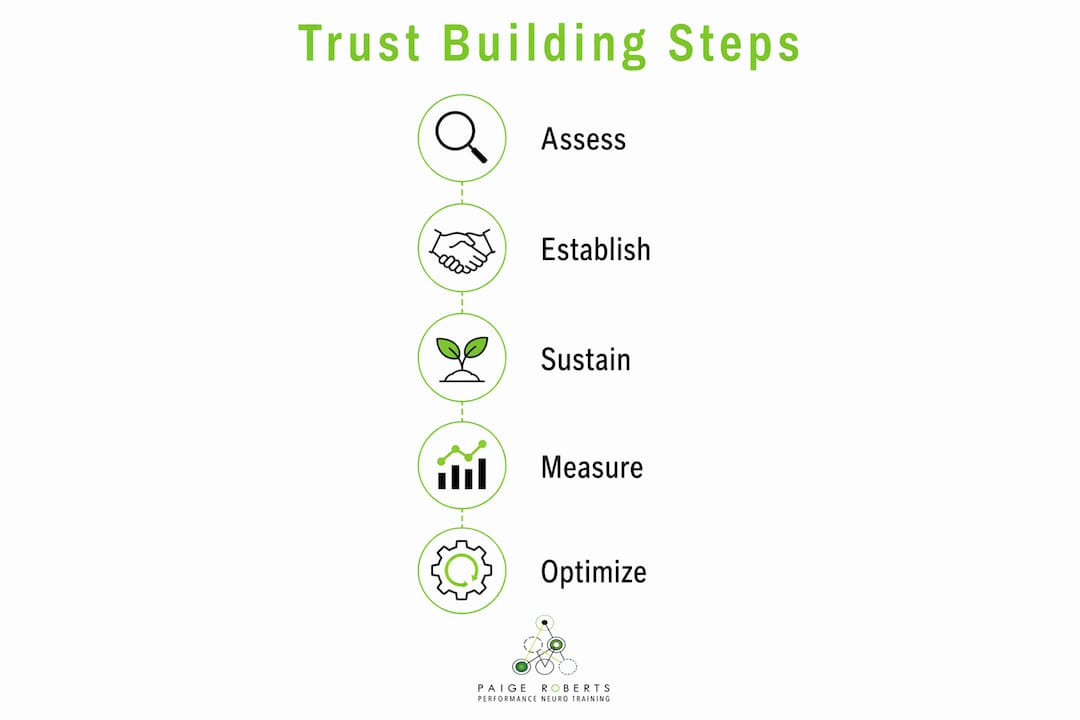
- Monthly: Structured team debrief using a short trust and cohesion pulse survey (see Section 5). Review trends, not just scores.
- Early season: Focus entirely on cognitive trust. Demonstrate competence, set clear expectations, and enforce fair rotation policies.
- Mid-season: Introduce affective trust activities once the team shows stable task cohesion. Shared meals, recovery rituals, and peer recognition.
- After a trust breach: Acknowledge it within 24 hours. Name what happened without blame, state the corrective step, and follow through visibly.
Research with 709 athletes across 74 basketball teams showed that consensus about trust in the coach amplifies performance effects. One outlier who distrusts the coach can suppress the whole team's performance gains. Address distrust outliers directly rather than hoping they self-correct.
| Metric | What It Measures | Recommended Cadence |
|---|---|---|
| Team Trust Scale | Cognitive and affective trust among teammates | Monthly |
| Collective Efficacy Questionnaire for Sport | Shared belief in team capability | Pre- and post-competition blocks |
| Psychological Safety Pulse (3-item) | Willingness to take interpersonal risk | Weekly |
| Role Clarity Index (coach-designed) | Alignment on individual responsibilities | Bi-weekly |
How do you measure trust and collective efficacy in your team?
The Team Trust Scale and Collective Efficacy Questionnaire for Sport are the two validated instruments with the strongest applied sport evidence. Both are deployable in practice settings without specialized software.
Sample weekly pulse (3–5 items, 1–5 scale):
- "I trust my teammates to execute their roles under pressure."
- "I feel comfortable raising a concern with my coach or a teammate."
- "Our team has a clear, shared plan for this week's competition."
- "I believe our team can handle unexpected challenges during a game."
- "My role on this team is clear to me right now."
Aggregate scores at the team level, not just individually. For trust to function as a team-level variable, you need reasonable consensus across athletes. High dispersion (some athletes scoring 5, others scoring 1) signals a subgroup problem, not a team-average problem. Address the outliers, not just the mean.
Pro Tip: Collect surveys anonymously and share aggregated results with the team. Transparency about trust data itself builds trust. Athletes who see their coach taking the data seriously respond with greater candor over time.
When do neuroscience-based interventions fit into trust-building?
Behavioral methods work for most teams. But some athletes carry nervous system reactivity, trauma responses, or performance anxiety that behavioral trust-building alone cannot reach. That is where neuroscience-based approaches become relevant.
What Robertsneurotraining's core methods address:
- Alpha Imprinting: A proprietary protocol that reprograms nervous system patterns linked to performance anxiety, mental blocks, and trauma-related reactivity. Useful when an athlete's fear response is triggering in competition despite strong cognitive trust with teammates.
- QEEG brain scans: Objective neurological assessment that identifies dysregulation patterns invisible to behavioral observation. Provides a baseline and tracks change over a training program.
- Energy Optimization Program: A 10-week structured program targeting energy dysregulation, recovery, and sustained performance output at the individual and team level.
Triage criteria for neuroscience referral:
- Persistent individual anxiety or freeze responses that survive standard mental skills training
- Concussion recovery where cognitive trust has stalled due to neurological symptoms
- Affective trust that remains flat despite months of consistent cognitive trust-building
- Athletes reporting trauma-related reactivity that surfaces in high-pressure competition
The integration sequence is: behavioral trust-building first, neuroscience assessment when progress stalls, then team-level reinforcement once individual reactivity is resolved. Robertsneurotraining also offers trauma-informed frameworks for coaches working with athletes who carry prior stressors into team settings.
Field-ready drills your team can run this week
Short, structured, and repeatable. These drills work in a 10–20 minute block during practice.
- Pressure communication drill: Two athletes execute a tactical sequence while a third introduces a distraction (noise, false instruction). Debrief: what information got through, what got lost?
- Role-clarity rotation: Each athlete explains another's role back to them in 60 seconds. Gaps in understanding surface immediately.
- Accountability circle: After a scrimmage, each athlete names one thing they could have done better. Coach models first to set the tone.
- Bounded vulnerability check-in: One sentence per athlete: "Something that affected my energy this week was ___." Keep it brief and professional. No pressure to go deep.
- Trust fall variation (sport-specific): In pairs, one athlete calls a play blind; the other executes it without questioning. Builds reliance on verbal cues.
- Shared-goal sprint: Team writes one collective goal for the next competition on a whiteboard. Every athlete signs it. Revisit after the game.
- Debrief without blame: After a loss, coach leads a structured review: what the team controlled, what it did not, and one adjustment. No individual callouts.
Pro Tip: Run the bounded vulnerability check-in at the end of practice, not the beginning. Athletes need the physical warm-up to lower their guard. Starting cold with emotional sharing often produces surface-level responses that undermine the exercise.
Key Takeaways
Trust raises collective efficacy, which directly multiplies team athletic performance, and coaches who build cognitive trust first, measure it consistently, and address neurological blocks when needed will see the fastest, most durable gains.
| Point | Details |
|---|---|
| Cognitive trust comes first | Build competence-based trust before attempting emotional bonding; sequence determines success. |
| Collective efficacy is the mechanism | Trust raises team performance by strengthening shared belief in the group's ability to execute. |
| Measure both trust dimensions | Use the Team Trust Scale and Collective Efficacy Questionnaire for Sport monthly to track real progress. |
| Repair breaches within 24 hours | Acknowledge, name the corrective step, and follow through visibly to prevent trust erosion. |
| Robertsneurotraining for persistent blocks | When anxiety or trauma responses stall trust development, Alpha Imprinting and QEEG protocols offer a targeted next step. |
A practitioner's perspective on trust and team performance
The research on cognitive trust as the gateway to affective trust matches what I see consistently in applied work with competitive athletes. Coaches often want to skip straight to team bonding, retreats, and vulnerability exercises because those feel meaningful. The problem is that athletes who do not yet believe in each other's competence experience those exercises as awkward at best and manipulative at worst.
The sequence I prioritize: establish behavioral consistency and technical credibility first, then introduce structured vulnerability once athletes have evidence that their teammates can be counted on. That is not a slow approach. It is a faster one, because it does not require rebuilding trust after a premature emotional exercise backfires.
Neuroscience-based methods like Alpha Imprinting fit precisely at the point where behavioral work stalls. When an athlete's nervous system is running a threat response in competition, no amount of team bonding resolves it. That requires working at the neurological level, and that is where Robertsneurotraining's protocols are most relevant. The ethical boundary is clear: neurotraining complements, not replaces, licensed clinical care for athletes dealing with clinical-level trauma or mental health conditions.
What Robertsneurotraining offers teams ready to go deeper
Most trust-building programs stop at behavior. Robertsneurotraining goes to the nervous system, which is where performance anxiety, trauma reactivity, and energy dysregulation actually live. For teams that have done the behavioral work and still have athletes who freeze, overthink, or lose access to their skills under pressure, the 10-week Energy Optimization Program provides a structured, neuroscience-backed path forward.
Services available for teams and coaches include Alpha Imprinting sessions (individual and group formats), QEEG brain scan assessments, team workshops on psychological safety and energy management, and the full Energy Optimization Program. These are best suited for high-stakes squads dealing with persistent anxiety, teams needing faster trust repair after a difficult season, and athletes in concussion recovery. To request a team consultation or access the Energy Optimization Workbook, visit Robertsneurotraining directly and book a discovery call.
Useful sources
- J18: Team trust as a predictor of collective efficacy in female rugby players — Graduate Journal of Sports Science, Coaching, Management, & Rehabilitation. The primary study establishing collective efficacy as the mediator between team trust and performance; also the source for the Team Trust Scale and Collective Efficacy Questionnaire for Sport deployment guidance.
- Frontiers in Psychology (2026): Transformational leadership, cognitive trust, and task cohesion — Structural analysis showing cognitive trust as the sole significant mediator between coach leadership and task cohesion; foundational for the cognitive→affective sequence argument.
- Journal of Applied Sport Psychology: Trust in the leader and team performance — Moderated-mediation study with 709 athletes on 74 basketball teams; evidence that consensus about coach trust amplifies performance effects.
- Journal of Sports Sciences: Team trust and cohesion in volleyball — Hierarchical linear modeling with 597 volleyball players showing team trust amplifies transformational leadership effects on cohesion.
- Trust spectrum in professional basketball teams — Survey of 26 European professional basketball teams; evidence for vertical vs. horizontal trust distinction and the psychological safety link.
- Trust and performance meta-analysis (55 studies, 3,671 teams) — Confirms a large, positive relationship between team trust and performance across business teams; useful cross-domain validation.
- Building Winning Teams: Trust, Conflict, and Performance in Sports Organizations — IJESA 2023 review covering the trust-conflict-performance triad in sports teams; source for the opening blockquote and emotional trust mechanisms.
- Team psychological safety best practices for sports teams — Robertsneurotraining guide on implementing psychological safety; practical follow-up for coaches running trust drills.
- Shared mental models in sports: a coach's guide — Explains how shared mental models accelerate in-game decision-making; directly supports the communication and trust mechanisms section.