
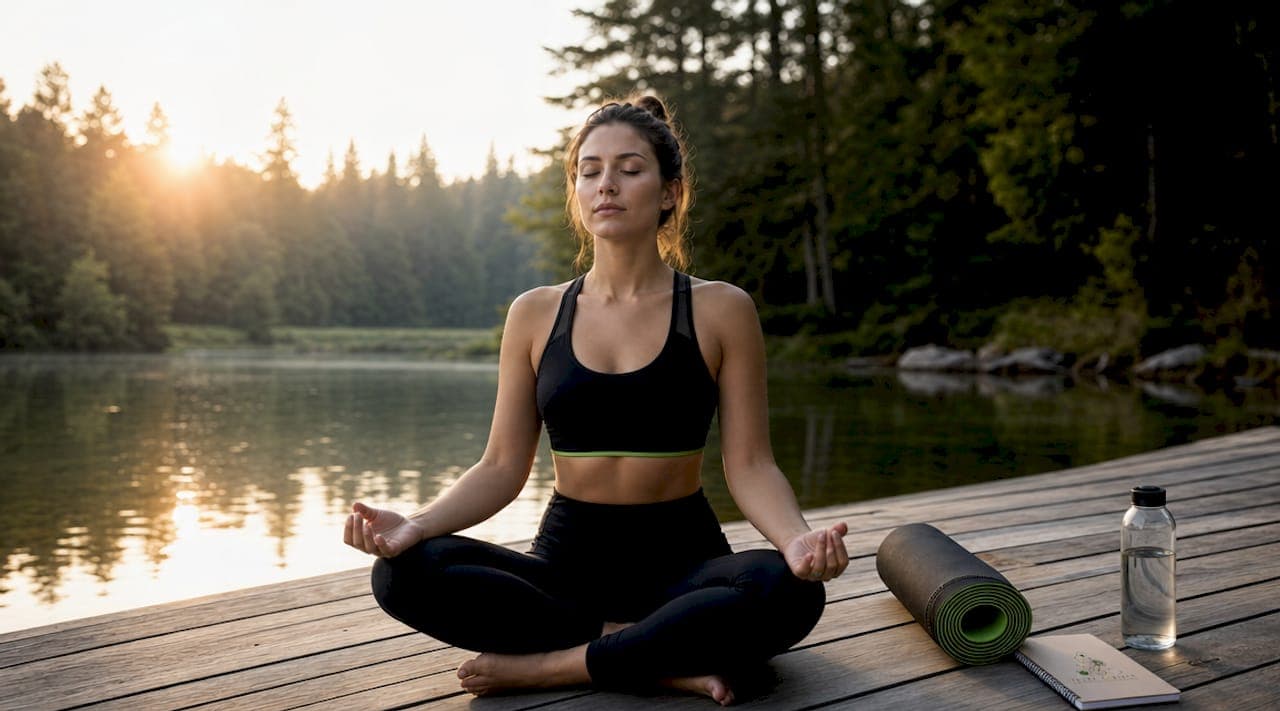
Routine nervous system preparation is the deliberate practice of stabilizing your autonomic and psychological state before competition to enhance athletic performance and reduce anxiety. The autonomic nervous system (ANS) governs your heart rate, muscle coordination, decision-making speed, and stress response. When it is dysregulated under competitive pressure, even a physically primed athlete loses precision and composure. The role of routine nervous system preparation is to shift that balance before it costs you. Techniques like slow-paced breathing (SPB), Tai Chi, and psychological skills training now have measurable physiological evidence behind them, including improvements in heart rate variability (HRV) and vagal tone that directly predict performance quality.
How does routine nervous system preparation improve athletic performance?
Nervous system readiness is not the same as physical recovery. Readiness reflects current autonomic and psychological states, and it predicts immediate performance capacity far better than muscle soreness scores or sleep hours alone. This distinction matters because it means you can actively shift your readiness state in the minutes and hours before competition, not just over days of rest.
The ANS operates on a spectrum between sympathetic dominance (fight-or-flight) and parasympathetic dominance (rest-and-recover). Excess sympathetic activation from pre-competition stress reduces motor neuron recruitment efficiency, impairs coordination, and clouds decision-making. A well-regulated ANS, by contrast, supports force production, reaction time, and emotional control simultaneously.
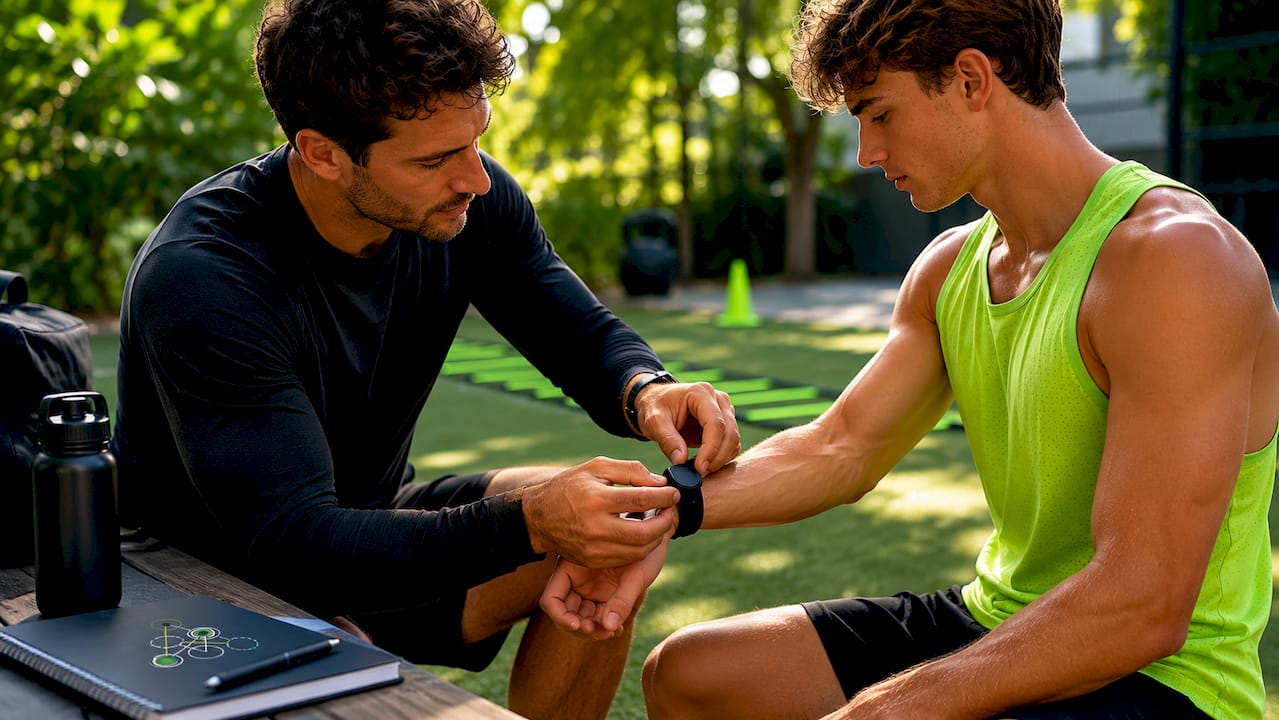
The physiological markers that confirm nervous system readiness are measurable. HRV, the variation in time between heartbeats, is one of the most reliable indicators. SPB practiced at 4 to 6 breaths per minute with longer exhalation phases elevates vagal tone and HRV, correlating directly with improved mental clarity and relaxation during performance. In golf research, athletes who integrated SPB into their pre-shot routine showed better motor consistency under pressure than those who did not. The same principle applies across sports that require precision under stress.
Psychological readiness is inseparable from this process. When the ANS is balanced, the prefrontal cortex operates more effectively, supporting focus, impulse control, and adaptive thinking. Athletes who train daily nervous system habits report fewer intrusive thoughts during competition and faster recovery from errors. The benefits of nervous system training are not abstract. They show up in swing mechanics, sprint starts, and penalty kicks.
Pro Tip: Track your HRV each morning using a wearable device like a WHOOP or Garmin. A consistent downward trend in the days before competition signals that your nervous system preparation routine needs to be more deliberate, not more intense.
Key performance mechanisms activated by routine preparation include:
- Increased parasympathetic tone, which lowers resting heart rate and improves oxygen efficiency
- Enhanced motor neuron recruitment through reduced sympathetic interference
- Improved emotional regulation via prefrontal cortex activation
- Faster cognitive processing and reduced decision fatigue under pressure
- Greater consistency in muscle activation patterns across repeated movements
What are effective techniques for preparing the nervous system before competition?
The most evidence-supported techniques for nervous system readiness share one feature: they are repeatable, trainable, and measurable. Spontaneous relaxation attempts before competition rarely work because the nervous system responds to learned patterns, not one-time intentions.
-
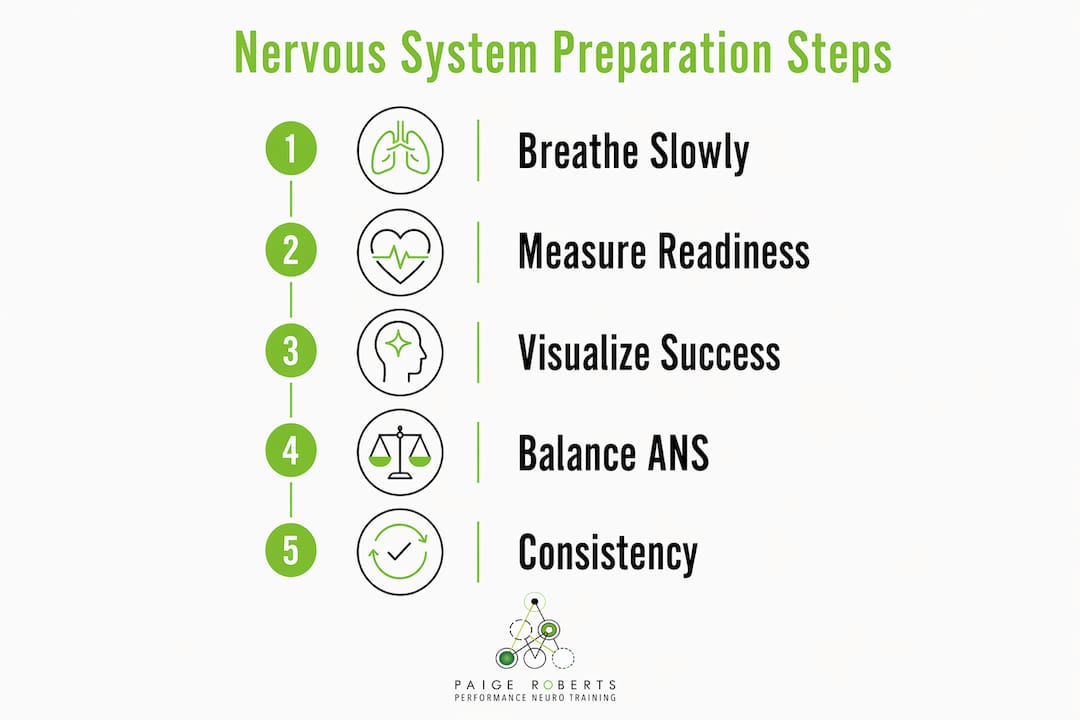
Slow-paced breathing (SPB). Target 4 to 6 breaths per minute with an extended exhalation phase. Controlled breathing at slow rates modulates HRV beneficially, while rapid breathing or hyperventilation causes hypocapnia that actively undermines autonomic balance. The exhalation phase is the parasympathetic trigger. Shortening it defeats the purpose. Practice this for 5 to 10 minutes before warm-up, not just in the final seconds before performance.
-
Tai Chi and movement-based regulation. Eight weeks of Tai Chi training in competitive athletes produced measurable reductions in salivary cortisol, improved HRV, and enhanced both mental toughness scores and flow experience before competition. Tai Chi works partly by training the body to move with controlled breath and attention simultaneously, which builds the same ANS regulation skills needed under competitive pressure. Even abbreviated Tai Chi sequences of 10 to 15 minutes can serve as a pre-competition protocol.
-
Mindfulness and cognitive-behavioral strategies. These are most effective when matched to anxiety subtype. Imagery and relaxation techniques reduce cognitive anxiety more effectively, while mindfulness-based approaches target somatic anxiety symptoms like muscle tension and elevated heart rate. Using the wrong tool for your anxiety type produces weak results. Identifying whether your pre-competition anxiety is primarily mental (worry, negative self-talk) or physical (tension, nausea) determines which technique to prioritize.
-
Psychological skills training (PST). PST encompasses routines like pre-performance cue words, attentional focus protocols, and visualization sequences. These work best when rehearsed in practice until they become automatic. The goal is a routine that requires no conscious effort to execute, freeing mental bandwidth for actual performance.
Pro Tip: Build your nervous system preparation routine into practice sessions first. If you only use SPB or visualization before real competitions, the technique will not be automatic enough to override stress arousal when it matters most.
Why is routine consistency more effective than sporadic preparation?
The word "routine" is not incidental. Consistency is the mechanism. Structured daily routines reduce anxiety and depression by decreasing decision fatigue and improving predictability in behavioral patterns. This is not a motivational claim. It reflects how the nervous system learns to anticipate and prepare for demands based on repeated environmental cues.
When an athlete follows the same preparation sequence before every competition, the nervous system begins to associate that sequence with readiness. The routine itself becomes a physiological trigger. Heart rate settles. Muscle tension drops. Attention narrows appropriately. This is the importance of routine preparation made concrete: the body learns what is coming and prepares accordingly.
Contrast this with ad hoc preparation. An athlete who tries a breathing exercise for the first time the morning of a major competition gets minimal benefit. The technique has no learned association with performance readiness. The nervous system treats it as novel input rather than a familiar signal.
"Readiness states shift rapidly via nervous system regulation, unlike structural recovery which requires longer timelines." This means a well-designed pre-competition routine can meaningfully change your performance state in under 30 minutes, but only if the routine has been trained consistently.
Disrupted routines produce measurable consequences. Athletes who report sudden changes to their pre-competition schedule, travel disruptions, or forced warm-up modifications consistently show higher anxiety scores and reduced performance consistency. The predictability of the routine is part of its protective function. It signals safety to the nervous system and reduces the cognitive load of preparing to compete.
Daily nervous system habits also compound over time. The impact of routines on health extends beyond competition day. Athletes who practice SPB, mindfulness, or Tai Chi regularly show structural improvements in autonomic regulation, not just acute shifts. These athletes recover faster between competitions and show lower baseline cortisol levels across a season.
How do you tailor nervous system routines to different athletes and anxiety profiles?
One routine does not fit every athlete. Matching preparation techniques to an athlete's anxiety profile and competitive level improves intervention effectiveness significantly. A junior athlete experiencing pre-competition worry needs a different approach than an elite sprinter managing somatic tension before a final.
The table below outlines how preparation techniques align with different athlete profiles:
| Athlete profile | Best-fit techniques | Primary target |
|---|---|---|
| Junior or developing athlete | Simple SPB, cue words, short visualization | Cognitive anxiety, confidence building |
| Semi-elite with somatic anxiety | Tai Chi, progressive muscle relaxation, mindfulness | Physical tension, arousal regulation |
| Elite athlete with cognitive anxiety | Imagery, PST routines, attentional focus protocols | Negative self-talk, focus disruption |
| Post-injury athlete with trauma response | Neuroscience-based reprogramming, Alpha Imprinting | Nervous system dysregulation, fear response |
Biofeedback tools like HRV monitors give athletes objective data on whether their chosen technique is actually shifting their autonomic state. Without feedback, athletes often persist with techniques that feel comfortable but produce no measurable change. Skill quality matters more than quantity. One well-trained SPB protocol practiced daily outperforms five loosely applied techniques used inconsistently.
For coaches working with teams, nervous system training methods need to account for individual variation within group settings. A team warm-up that includes two minutes of synchronized slow breathing serves the group while still activating individual ANS regulation. The key is building the habit structure first, then refining technique selection based on athlete response over time.
Pro Tip: Ask athletes to rate their pre-competition anxiety as either "mental" (worry, distraction) or "physical" (tension, nausea) before selecting a preparation technique. This single question improves technique matching and accelerates results.
Key takeaways
Routine nervous system preparation is the most direct method athletes have to shift their autonomic state before competition, and its effectiveness depends entirely on consistent, personalized practice.
| Point | Details |
|---|---|
| ANS balance drives readiness | Parasympathetic dominance improves coordination, focus, and motor consistency before competition. |
| SPB is the highest-evidence technique | Breathing at 4 to 6 breaths per minute with extended exhalation measurably raises HRV and vagal tone. |
| Consistency creates the physiological trigger | Routines must be trained in practice first to function as automatic readiness signals on competition day. |
| Anxiety subtype determines technique choice | Cognitive anxiety responds to imagery; somatic anxiety responds to mindfulness and physical regulation methods. |
| Tai Chi builds lasting autonomic resilience | Eight weeks of Tai Chi reduces cortisol and improves HRV, mental toughness, and flow in competitive athletes. |
What I've learned from working with athletes whose bodies were ready but whose nervous systems weren't
The most common mistake I see is athletes treating nervous system preparation as optional, something to add when there is extra time before a competition. After years of working with athletes from developing competitors to Olympic medalists, I can tell you that physical readiness without nervous system readiness produces inconsistent results at best and complete performance collapse at worst.
I have worked with athletes who were physically recovered, technically sharp, and strategically prepared. They still froze, rushed, or fell apart under pressure. The missing piece was always the same: their autonomic state was dysregulated, and they had no trained routine to correct it. The neuroscience behind sports psychology makes this clear. A dysregulated nervous system overrides skill.
What I have also found is that athletes tend to overcomplicate their routines when they first start. They layer five techniques together, practice them inconsistently, and then conclude that "the mental stuff doesn't work for me." The truth is that one well-practiced technique, done daily, produces more reliable results than a complex protocol used sporadically. Start with SPB. Train it until it is automatic. Then build from there.
The athletes I have seen make the biggest gains are not the ones with the most sophisticated routines. They are the ones who treat nervous system preparation with the same seriousness they give to physical training. It is not supplementary. It is foundational.
— Paige
Build your nervous system preparation program with Robertsneurotraining
Athletes who are serious about managing competition anxiety and optimizing readiness need more than generic breathing tips. Robertsneurotraining, led by Dr. Paige Roberts, offers a neuroscience-based program specifically designed to train the nervous system for athletic performance. The program includes Alpha Imprinting, a method that reprograms nervous system responses to clear mental blocks, trauma responses, and performance anxiety at their source.
Whether you are a professional athlete dealing with recurring anxiety before competition or a developing athlete building your first preparation routine, Robertsneurotraining provides personalized protocols grounded in the latest research on autonomic regulation and nervous system readiness. The results speak through the athletes who have used it, including Olympic medalists who credit the program with measurable performance improvements.
FAQ
What is routine nervous system preparation for athletes?
Routine nervous system preparation is the consistent practice of techniques like slow-paced breathing, Tai Chi, and psychological skills training to regulate the autonomic nervous system before competition. The goal is to shift from sympathetic dominance to a balanced autonomic state that supports coordination, focus, and emotional control.
How does slow-paced breathing improve nervous system readiness?
SPB at 4 to 6 breaths per minute with extended exhalation elevates vagal tone and HRV, which are direct markers of parasympathetic activation and stress resilience. Hyperventilation produces the opposite effect by causing hypocapnia that disrupts autonomic balance.
Why does consistency matter more than the technique itself?
The nervous system learns through repetition. A routine practiced consistently before competition becomes a physiological trigger for readiness, while a technique used for the first time under pressure produces minimal benefit because the learned association has not been established.
How do I choose the right technique for my anxiety type?
Imagery and relaxation reduce cognitive anxiety more effectively, while mindfulness-based methods target somatic symptoms like tension and elevated heart rate. Identifying whether your anxiety is primarily mental or physical is the first step in selecting the right preparation technique.
Can nervous system routines help athletes recovering from injury?
Yes. Athletes returning from injury often carry trauma responses and fear patterns that disrupt autonomic regulation even after physical recovery is complete. Neuroscience-based approaches like those used at Robertsneurotraining specifically address these nervous system patterns to restore performance confidence and reduce anxiety responses tied to past injury.