

Nervous system retraining is the process of using neuroplasticity to shift the body's chronic stress response patterns and restore physiological balance. This is why healing from trauma, anxiety, or chronic illness is not purely a mental exercise. The nervous system controls every signal your body uses to determine whether you are safe or in danger, and those signals directly shape your immune function, energy production, and emotional capacity. Without addressing this control system at the root, symptom relief stays temporary. Approaches like vagus nerve activation, Somatic Experiencing, and Alpha Imprinting work precisely because they target the autonomic nervous system where survival patterns are stored, not just where they are thought about.
Why healing involves nervous system retraining
The nervous system is not a passive responder. It is the body's primary decision-maker for survival, and when it learns that the world is dangerous, it holds that lesson with remarkable stubbornness. Adult neuroplasticity is measurable and ongoing, which means the nervous system can be structurally reorganized at any age. This is the scientific foundation that makes retraining possible and necessary.
Neuroplasticity is not a metaphor. When you repeatedly experience a new pattern of safety, calm, or regulated arousal, neurons form new connections. Over time, those connections become the default. Repeated signals of safety create new neural pathways, gradually weakening the old survival circuits that kept you locked in fight, flight, or freeze. This is the core mechanism behind every effective trauma recovery approach.
The distinction between regulation and retraining matters here. Regulation means calming yourself in the moment. Retraining means changing the baseline your nervous system returns to after stress. Both are useful, but only retraining produces lasting change. Think of regulation as turning down the volume on a blaring alarm. Retraining is rewiring the alarm system itself so it stops going off without cause.
Pro Tip: Extended exhale breathing, where your exhale is longer than your inhale (for example, 4 seconds in and 7 seconds out), can shift vagal tone within minutes. This is one of the fastest entry points into nervous system retraining you can practice anywhere.
Initial regulation shifts begin within weeks, but lasting resilience typically requires 6 to 12 months of consistent practice. That timeline is not a discouragement. It is a realistic map that helps you stay the course when progress feels slow.
What nervous system dysregulation actually looks like
Dysregulation is not just feeling stressed. It is a full-body state that impairs your ability to think, connect, and recover. Chronic stress limits access to the cerebral cortex, the part of the brain responsible for reasoning, problem-solving, and emotional nuance. When survival physiology takes over, higher cognitive functions go offline. This is why people in chronic stress often describe feeling foggy, reactive, or unable to make decisions.
The concept of the window of tolerance, developed by Dr. Dan Siegel, describes the zone of arousal in which you can function effectively. Trauma and chronic stress shrink this window. Outside it, you are either hyperaroused (anxious, reactive, overwhelmed) or hypoaroused (shut down, numb, exhausted). Healing through neural pathways means gradually widening that window so more of life fits inside it without triggering a survival response.
Dysregulation shows up across multiple systems simultaneously:
- Physical: Chronic fatigue, digestive issues, muscle tension, disrupted sleep, frequent illness
- Emotional: Emotional flooding, numbness, irritability, difficulty feeling safe even in neutral situations
- Cognitive: Brain fog, poor concentration, hypervigilance, intrusive thoughts
- Behavioral: Social withdrawal, avoidance, difficulty completing tasks, compulsive habits
One of the most important insights in nervous system and trauma recovery is that relaxation cannot be forced. Chronic stress is not a failure of willpower. The nervous system is often stuck in vigilance from early life conditioning, and telling yourself to calm down does not reach the autonomic level where the pattern lives. That is exactly why somatic, body-based retraining is required.
Evidence-based techniques for retraining the nervous system
The most effective approaches to nervous system retraining work directly with the body, not around it. Somatic, trauma-informed therapies that engage body sensations alongside cognition accelerate healing in ways that talk therapy alone cannot replicate. Modalities with strong research backing include Somatic Experiencing, EMDR (Eye Movement Desensitization and Reprocessing), Sensorimotor Psychotherapy, and Polyvagal-informed therapy.
Here is a practical framework for building a retraining practice:
- Start with vagus nerve activation. Techniques like extended exhale breathing, humming, gargling, and cold water on the face stimulate the vagus nerve and shift the autonomic state toward parasympathetic activation. Vagal tone shifts are measurable within 3 to 10 minutes of consistent practice.
- Add somatic movement. Yoga, walking, and gentle shaking practices help discharge stored survival energy from the body. These are not just exercise. They are neurological inputs that signal safety through movement.
- Work with a trained therapist. Self-regulation practices are powerful, but professional support through Somatic Experiencing or EMDR provides titrated exposure to difficult material in a contained, safe environment.
- Build consistency over intensity. Ten minutes of daily practice rewires more than a single two-hour session once a week. The nervous system learns through repetition, not volume.
- Support the biology. Sleep, nutrition, and social connection are not optional add-ons. They are the substrate on which retraining happens. A chronically sleep-deprived nervous system cannot consolidate new patterns effectively.
Pro Tip: If you are working with a coach or therapist, ask specifically about Polyvagal Theory and state-dependent techniques. The right technique depends entirely on whether your system is currently hyperaroused or hypoaroused. Applying an activating technique to an already anxious system can worsen symptoms.
For athletes and high performers, nervous system reprogramming adds a layer of specificity: retraining targets the performance-specific survival responses that show up as mental blocks, panic, or freeze states during competition.
How retraining improves mental and physical performance
The benefits of nervous system healing extend well beyond symptom relief. A retrained nervous system is a more capable one. The table below compares a dysregulated state with a retrained one across key performance dimensions.
| Dimension | Dysregulated state | After retraining |
|---|---|---|
| Stress recovery | Slow, incomplete return to baseline | Faster recovery, wider window of tolerance |
| Immune function | Elevated inflammation, frequent illness | Reduced inflammatory load, stronger response |
| Cognitive capacity | Brain fog, poor decision-making | Clearer thinking, improved focus |
| Emotional regulation | Flooding or numbness | Flexible response, access to nuance |
| Energy production | Chronic fatigue, poor sleep | Improved mitochondrial efficiency, deeper rest |
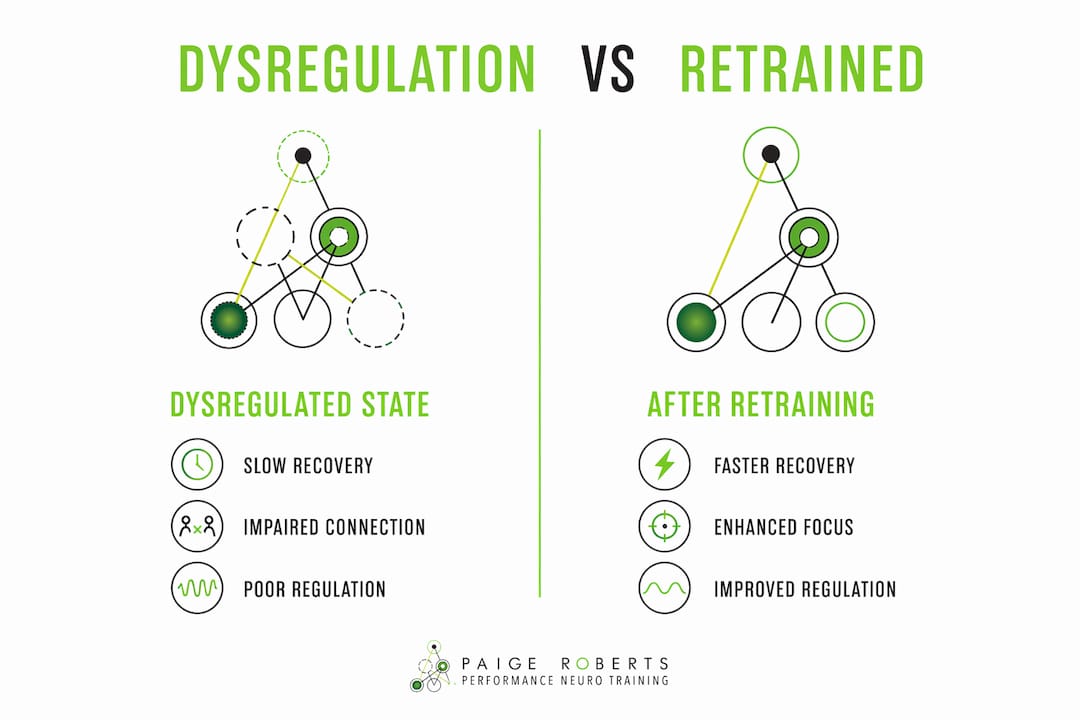
Healing aims to build the capacity to process difficult emotions and return to baseline, not to eliminate all stress. This distinction matters enormously for performance. Psychological flexibility and strong vagal tone are what allow athletes, executives, and anyone under sustained pressure to recover quickly and stay functional under load.
Training the nervous system toward safety signals rather than simply reducing threat allows a natural return to homeostasis and reduces systemic inflammation. For people managing chronic illness, this shift in inflammatory and detoxification pathways can produce measurable physical improvements. For athletes, it translates directly into faster recovery and the ability to access flow states during competition. Research underlying programs like the Dynamic Neural Retraining System (DNRS) suggests that positive affect reinforces reward circuits alongside reducing threat responses, which accelerates the retraining process.
For a structured approach to applying these principles before training or competition, peak performance preparation offers a practical starting point.
Common misconceptions that slow down healing
Nervous system retraining is widely misunderstood, and those misunderstandings cause people to quit before results arrive or to use techniques that make things worse.
- "It should work faster." Retraining is not a quick fix. The patterns being changed were often built over years or decades. Six to 12 months of consistent practice is a realistic minimum for lasting change, not a sign that something is wrong.
- "I just need to think differently." Retraining is a somatic process, not a cognitive one. Positive thinking does not reach the autonomic nervous system. Body-based inputs like breathing rhythms and sensory grounding are what actually rewire autonomic baselines.
- "One technique works for everyone." Identifying your current nervous system state before choosing a technique is not optional. Applying a calming technique to a shutdown system, or an activating technique to an anxious one, can be counterproductive.
- "Feeling worse means it's not working." Healing trajectories are rarely linear. Temporary increases in sensitivity or heightened emotional awareness during retraining reflect nervous system recalibration, not failure.
Pro Tip: Track your nervous system state in the morning before choosing your daily practice. A simple 1 to 10 scale for arousal level takes 30 seconds and ensures you are applying the right tool for your current state.
Key takeaways
Healing requires nervous system retraining because the autonomic nervous system holds survival patterns that no amount of cognitive effort alone can reach or resolve.
| Point | Details |
|---|---|
| Neuroplasticity makes retraining possible | Adult nervous systems can form new neural pathways at any age through consistent, repeated practice. |
| Regulation and retraining are different | Regulation calms the moment; retraining changes the baseline your system returns to after stress. |
| Somatic methods outperform cognitive ones | Breathing, movement, and body-based therapies rewire autonomic patterns more effectively than thinking alone. |
| Timeline is 6 to 12 months | Initial shifts appear in weeks, but lasting resilience requires months of dedicated, consistent practice. |
| State-matching techniques matter | Choosing the right technique for your current arousal state prevents worsening symptoms and accelerates progress. |
What I've learned from working at the nervous system level
Most people come to nervous system work expecting it to feel like learning a skill. It does not. It feels more like slowly convincing a frightened animal that the cage door is open. The nervous system does not respond to logic. It responds to repeated experience. That is the part that surprises people most, and it is the part that changes everything once they accept it.
In my work at Robertsneurotraining, the athletes who make the fastest progress are not the ones who practice the hardest. They are the ones who practice the most consistently and who stop fighting their own physiology. They learn to read their state before training, adjust their approach accordingly, and treat nervous system preparation as part of the performance itself, not a warm-up they skip.
The other thing I want to say plainly: healing is not about achieving permanent calm. Calm is not the goal. Flexibility is. A well-trained nervous system moves in and out of stress states with ease. It gets activated, and it recovers. That capacity, more than any single technique, is what separates people who thrive under pressure from those who get stuck in it. Start small. Build the habit. The nervous system will follow.
— Paige
Start your nervous system retraining with Robertsneurotraining
If this article resonated with you, the next step is working with a program built specifically around these principles.
Robertsneurotraining, led by Dr. Paige Roberts, applies neuroscience-based methods including Alpha Imprinting to retrain the nervous system at the autonomic level. The program is designed for athletes and high performers dealing with anxiety, mental blocks, trauma responses, and performance limitations. Whether you are recovering from injury or working to expand your capacity under pressure, the approach is individualized, evidence-informed, and built for lasting change. Explore how nervous system optimization can shift your performance and well-being from the inside out.
FAQ
What is nervous system retraining?
Nervous system retraining is the use of neuroplasticity-based, somatic practices to shift the body's chronic stress response patterns and rebuild a regulated autonomic baseline. It targets the autonomic nervous system directly through body-based inputs like breathwork, movement, and sensory grounding.
How long does it take to retrain the nervous system?
Initial shifts in regulation are often noticeable within weeks, but lasting resilience typically requires 6 to 12 months of consistent practice. The timeline depends on the depth of dysregulation and the consistency of the retraining approach.
Why doesn't willpower or positive thinking fix nervous system dysregulation?
The autonomic nervous system operates below conscious control. Cognitive effort alone cannot reach the survival circuits stored in the body, which is why somatic, body-based methods are required for genuine retraining.
What techniques are most effective for nervous system healing?
Extended exhale breathing, vagus nerve stimulation, Somatic Experiencing, EMDR, and Polyvagal-informed therapy are among the most research-supported methods. The most effective technique depends on your current arousal state, whether hyperaroused or hypoaroused.
Can nervous system retraining improve athletic performance?
Yes. Retraining expands the window of tolerance, reduces performance anxiety, and supports faster recovery from stress. Athletes who address nervous system dysregulation report improved access to flow states and reduced mental blocks during competition.