
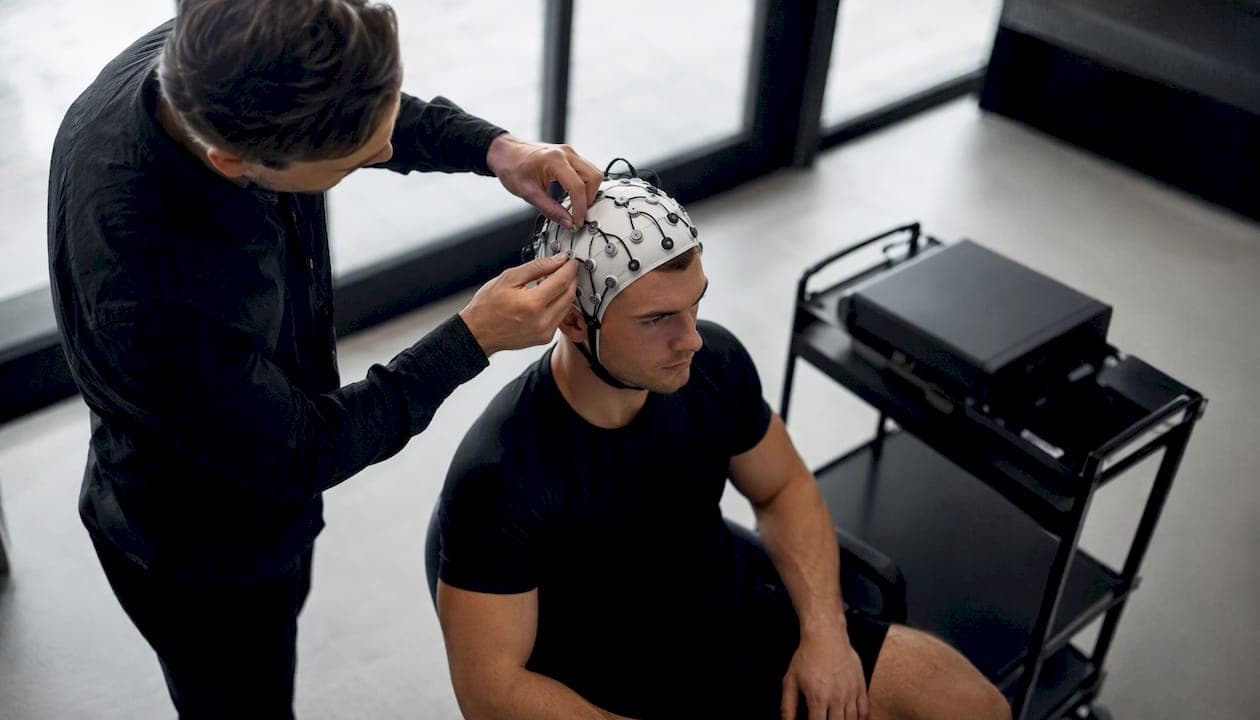
Performance Neuro Training, led by Dr. Paige Roberts, is the top neuroscience-based sports-psychology option available in the U.S. right now. The program uses a proprietary method called Alpha Imprinting to retrain the nervous system at the neural level, not just the cognitive one. If you're a competitive athlete, coach, or high performer who has hit a wall that physical training alone can't break through, this is the approach worth your attention.
Three outcomes athletes consistently report after completing the program:
- Performance recovery after injury or trauma: the nervous system stops replaying the threat signal, so the body can compete freely again.
- Anxiety and panic reprogramming: persistent pre-competition panic responses are addressed at their neurological root, not managed around.
- Consistent flow under pressure: athletes describe entering competition states more reliably, with less mental interference.
Key Takeaways
Neuroscience-based nervous-system training, led by Performance Neuro Training and the Alpha Imprinting protocol, is the most direct route for competitive athletes whose performance ceiling is neurological, not physical.
| Point | Details |
|---|---|
| Start with QEEG measurement | Objective brain mapping at intake is non-negotiable; it sets the baseline every outcome metric is measured against. |
| Meta-analysis effect size | A pooled SMD of 1.26 supports EEG-NFB for attention and motor control, but high heterogeneity means protocol quality matters. |
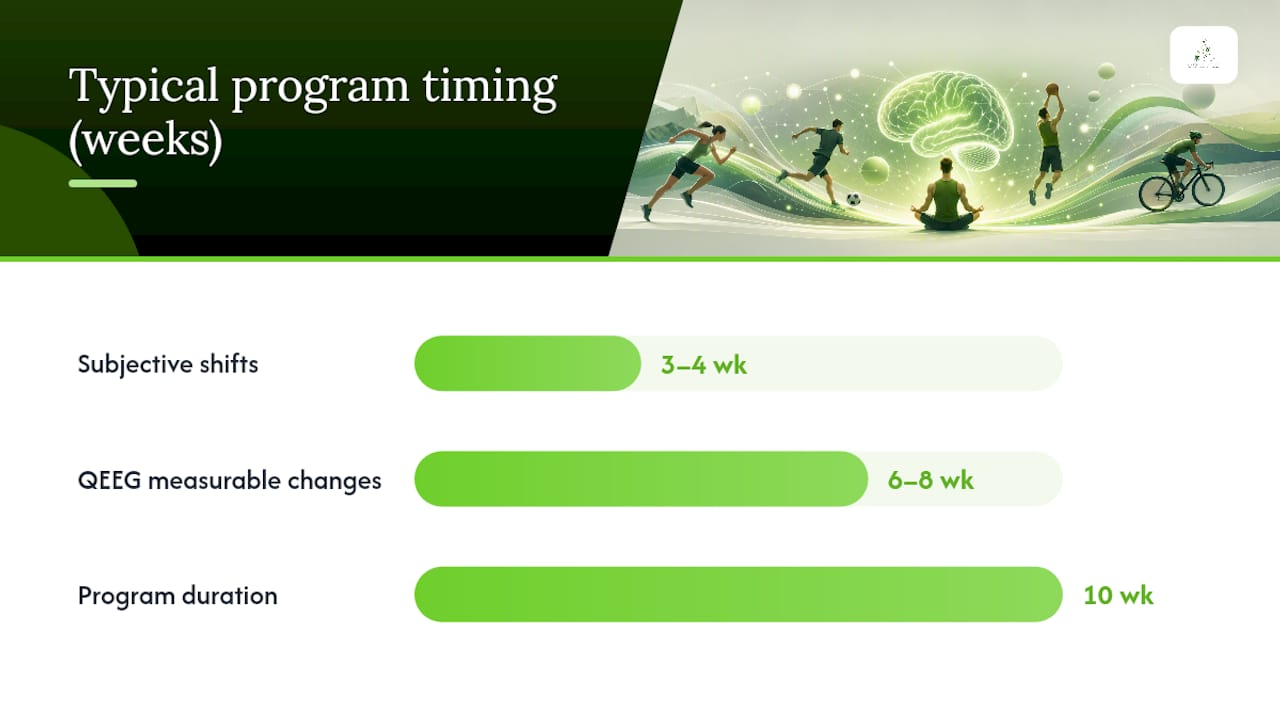
| Timeline to results | Subjective shifts appear in weeks 3–4; measurable QEEG outcome changes typically emerge by weeks 6–8. |
| Vet credentials carefully | Require PhD-level or clinical licensure, transparent protocol documentation, and task-driven qEEG, not resting-state only. |
| Recommended U.S. option | Robertsneurotraining's Performance Neuro Training uses Alpha Imprinting, QEEG baselines, and telehealth delivery for athletes at every competitive level. |
Table of Contents
- Who should consider neuroscience-based sports psychology?
- What does "neuroscience-based" sports psychology actually mean?
- What does the research actually show?
- What does a typical program look like?
- How do you choose the right provider?
- When nervous-system training is the right next step
- Performance Neuro Training is the recommended U.S. option
- Research and reading for coaches and sports scientists
- Sources
Who should consider neuroscience-based sports psychology?
This is not a starting point for every athlete. It's the right next step for a specific group.
Primary candidates:
- Elite competitors whose physical conditioning is strong but performance plateaus persist
- Team athletes dealing with trauma responses, panic, or nervous-system dysregulation after injury
- Coaches purchasing group workshops or cohort programs for their roster
- High performers outside sport (surgeons, founders, executives) managing performance under extreme pressure
- Athletes in post-concussion recovery who need neurological, not just physical, rehabilitation
Situations that justify the investment:
- You've plateaued despite consistent physical training and standard mental-skills work
- You experience panic, freeze responses, or anxiety that appears specifically in competition
- You're recovering from a sports injury and notice performance anxiety or avoidance behaviors
- A concussion or traumatic event has disrupted your competitive baseline
If you're new to mental performance work entirely, traditional psychological skills training (goal setting, imagery, self-talk) is a reasonable starting point. Nervous-system training delivers the most when those foundational tools have already been tried and the ceiling is still there.
What does "neuroscience-based" sports psychology actually mean?
Traditional mental-skills coaching works at the cognitive level: change the thought, change the behavior. Neuroscience-based nervous-system training goes one layer deeper. It targets measurable neural regulation using tools like QEEG brain mapping, EEG neurofeedback, and proprietary protocols like Alpha Imprinting. The goal is not to think differently about pressure. It's to change how the nervous system responds to it.
The psychomotor efficiency hypothesis offers the clearest theoretical frame: elite performance isn't about more neural effort, it's about less unnecessary neural noise. Training that reduces that noise lets athletes sustain focus and motor precision longer, especially under competitive stress.
Core methods used in this approach:
- Alpha Imprinting: a proprietary protocol that uses targeted neural stimulation to reprogram trauma and anxiety responses stored in the nervous system
- EEG neurofeedback (NFB): real-time brainwave training that teaches the nervous system to self-regulate toward performance states
- QEEG baseline and task-driven assessment: brain mapping at rest and during sport-specific tasks to identify performance bottlenecks; task-driven qEEG is especially informative because anxiety and fatigue patterns often only appear during active performance conditions
- Neuroathletics drills: sensory-integration and eye-tracking exercises that improve motor coordination and movement precision
- Light and audio-visual in-home protocols: devices that extend nervous-system training between sessions
Pro Tip: For coaches combining nervous-system work with traditional psychological skills training, sequence matters. Run the nervous-system protocol first to clear the neural interference, then layer in cognitive strategies. Carryover is significantly stronger in that order.
What does the research actually show?
The evidence is promising and growing, but it's not uniform. A meta-analysis of EEG neurofeedback in athletes reported a large pooled effect size (SMD = 1.26; 95% CI: 1.05–1.45) across outcomes including attention, motor control, and anxiety regulation. That's a substantial signal.
A systematic review of RCT studies found consistent links between EEG neurofeedback and improved attentional control and motor performance, while flagging inconsistent target-selection and the absence of standardized protocols as the field's primary limitation.
On the measurement side, a QEEG study of professional female soccer players found that brain metrics taken before competition correlated with actual competitive performance at r ≈ .58 and rs ≈ .63. That's a meaningful correlation, and it supports using QEEG not just as a diagnostic tool but as a performance estimator.
Methodological caveats every buyer should know:
- Most studies use small samples and short follow-up windows
- Sham-controlled and double-blind trials are rare in this literature
- A scoping review of 48 EEG-NFB studies found limited use of modern spectral analysis methods and inconsistent blinding reporting
- Effect sizes vary by sport, protocol, and outcome measure
Realistic expectation: the evidence supports meaningful gains in attention, anxiety regulation, and motor control. It does not guarantee uniform results across all athletes or all protocols.
What does a typical program look like?
Most neuroscience-based programs open with a QEEG assessment, then build a session protocol around what the scan reveals. Here's what the standard structure looks like:
| Component | Details |
|---|---|
| Intake and QEEG | Brain mapping at rest and during sport-specific tasks; establishes baseline |
| Session frequency | Typically 2–3 sessions per week during the active training phase |
| Session length | 45 minutes per session |
| Program duration | 10 weeks for a structured program; shorter intensives available |
| In-home protocols | Light therapy and audio-visual devices used between sessions |
| Delivery modes | Telehealth, in-person, or hybrid depending on provider |
For athletes integrating sports recovery alongside nervous-system training, physical and neural recovery work best when scheduled together rather than treated as separate tracks.
What to bring to your first consult:
- A clear description of the specific performance problem (not just "anxiety" — when does it appear, what does it feel like, how long has it persisted?)
- Any prior mental-skills work you've done and its results
- Medical history relevant to concussion, injury, or trauma
- Performance data or coach feedback if available
Most athletes notice subjective shifts (calmer pre-competition state, reduced freeze responses) within the first 3–4 weeks. Measurable changes on QEEG outcome metrics typically appear by weeks 6–8.
How do you choose the right provider?
The single most important vetting criterion is this: the provider must use objective measurement (QEEG baseline and outcome tracking), follow a transparent and repeatable protocol, and hold relevant clinical credentials. Any program that can't show you what it measures and how it tracks change is not ready for elite athletes.
Selection checklist:
- PhD-level training or clinical licensure in neuropsychology or a related field
- Use of QEEG at intake and at outcome (not just self-report)
- Published or documented protocol with clear session structure
- Familiarity with sham-controlled evidence and honest communication about its limits
- Sport-specific application experience
Questions to ask in a consult:
- What does your intake assessment measure, and how do you use it to build my protocol?
- Do you use task-driven qEEG, or only resting-state scans?
- How do you define and track a successful outcome for my sport?
- What does the research behind your specific protocol show?
- Can you share de-identified case data or outcome metrics from similar athletes?
Red flags: vague outcome language ("you'll feel better"), no objective baseline, resistance to sharing protocol details, or credentials that don't include clinical neuropsychology training.
Credentials that matter:
- PhD in psychology or neuropsychology: signals research-level understanding of brain-behavior relationships
- Clinical licensure: means the practitioner can assess and treat, not just coach
- Neuropsychology training: specific to brain-function assessment and intervention, not just general mental performance
When nervous-system training is the right next step
The athletes who get the most from this work are not the ones who lack mental toughness. They're the ones whose nervous systems are stuck in a protective pattern that mental toughness can't override. Cognitive reframing doesn't reach a freeze response. Visualization doesn't clear a trauma loop. That's the gap nervous-system training fills.
Expect two kinds of change: subjective (feeling calmer, more present, less reactive) and measurable (QEEG metrics shifting toward performance-state patterns, coach-reported behavioral changes). Both matter. The measurable ones are what separate a real protocol from a placebo. For athletes using neuroscience-based recovery after injury, the timeline to measurable change is typically 6–10 weeks.
Performance Neuro Training is the recommended U.S. option
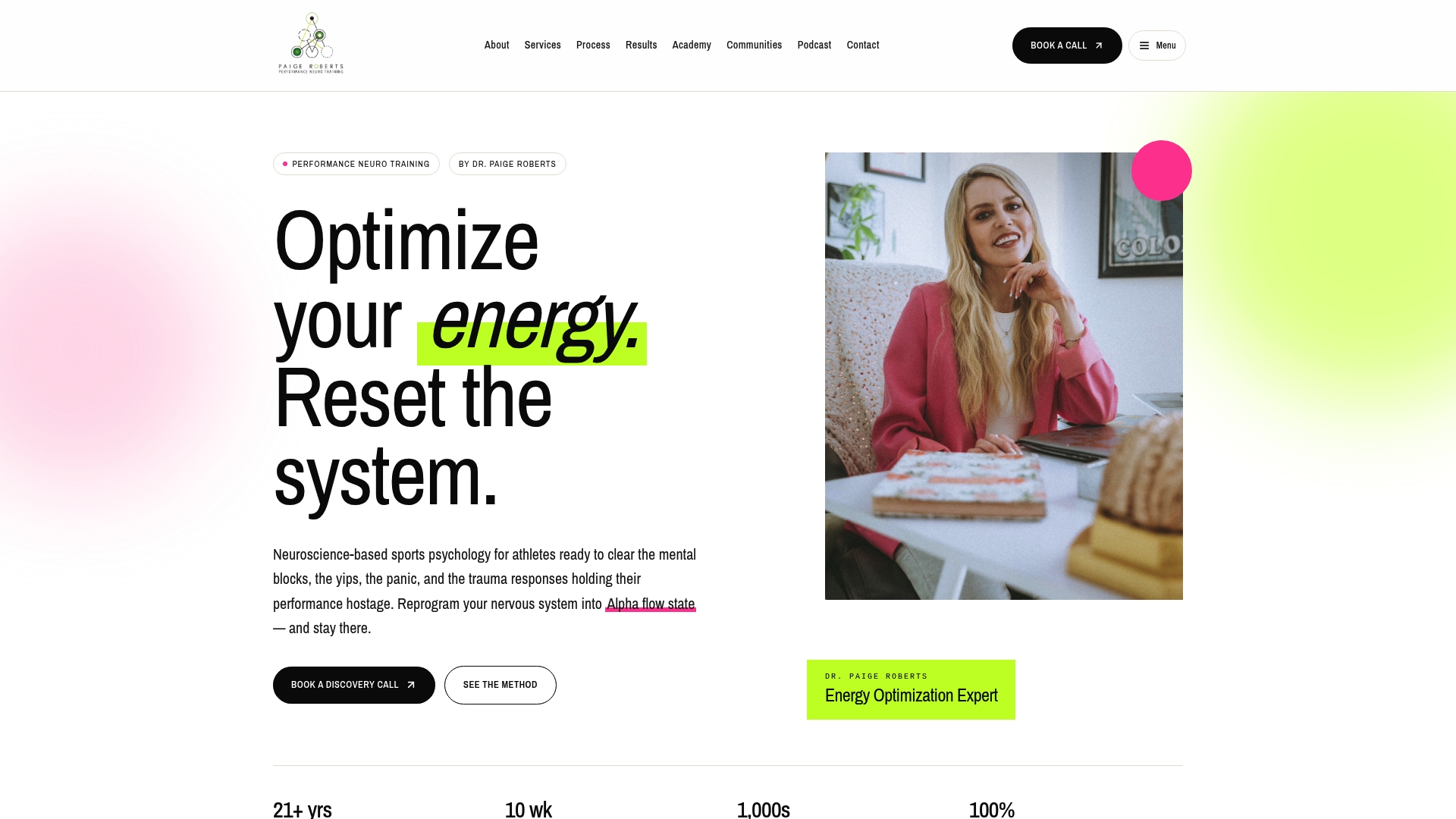
Performance Neuro Training, built around the proprietary Alpha Imprinting protocol, is the recommended choice for competitive athletes and coaches in the U.S. seeking neuroscience-based nervous-system training. It combines QEEG baselines, telehealth and in-person delivery, and sport-specific application pages for athletes in baseball, tennis, lacrosse, equestrian, and more.
What sets it apart from generic mental-performance coaching:
- Best for: performance recovery, post-concussion return-to-sport, persistent competition anxiety, and flow training
- Core protocol: Alpha Imprinting plus EEG neurofeedback and QEEG outcome tracking
- Delivery: telehealth, in-person, or hybrid; in-home devices extend training between sessions
- Evidence level: evidence-informed, with QEEG-based objective outcome measures
- Fee model: fee-for-service; 1:1 sessions, 10-week programs, group workshops, and cohort engagements
Book an initial consult at Robertsneurotraining. The first session includes intake and QEEG assessment so you leave with a clear picture of what's driving the performance gap, not just a general plan.
Research and reading for coaches and sports scientists
The sources below back the claims in this article and are worth reading in full if you're evaluating a program or building a case for team investment.
- EEG neurofeedback systematic review (Frontiers in Psychology, 2024) — supports the psychomotor efficiency rationale and flags the need for standardized protocols in RCT studies.
- EEG-NFB meta-analysis in athletes (BHK, 2025) — reports SMD = 1.26 for attention, motor control, and anxiety outcomes; also documents high heterogeneity (I² = 94.1%).
- QEEG and competitive performance in soccer players (PubMed) — demonstrates that pre-competition brain metrics correlate with on-field performance at r ≈ .58 and rs ≈ .63.
- EEG-NFB scoping review (MDPI Bioengineering, 2024) — documents methodological gaps across 48 studies, including limited sham controls and inconsistent spectral analysis.
- Task-driven qEEG in Division I college athletes (IJSPT) — makes the case for functional, sport-task qEEG over resting-state scans for identifying performance-relevant neural patterns.
- Neurobiology and psychology in team sports (Barça Innovation Hub) — supports integrated neurobiology-plus-psychology approaches for recovery and flow in team contexts.
This article is general information, not a substitute for advice from a qualified doctor. Consult a qualified healthcare professional about your own circumstances before acting on anything here.
Sources
- Frontiers | Evaluating EEG neurofeedback in sport psychology: a systematic review of RCT studies for insights into mechanisms and performance improvement
- Quantitative EEG in sports: performance level estimation of professional female soccer players