
For US athletes and high performers looking for BrainTrainUK alternatives, the four categories worth your time are: clinician-led qEEG programs (best for sport-specific performance and recovery), consumer EEG headbands (best for at-home meditation and sleep), research-grade EEG platforms (best for developers and researchers), and app-first brain-training subscriptions (best for casual cognitive habit-building). Among clinician-led options, Robertsneurotraining stands out for athletes because it combines qEEG brain mapping, the proprietary Alpha Imprinting protocol, and sport-specific telehealth sessions into one program. If you want a consumer device to try first, Muse or Mendi are the most accessible starting points. If you need clinical-grade oversight for ADHD, anxiety, or post-concussion recovery, Myndlift or BrainMaster with a certified clinician is the right path.
Table of Contents
- What are the best BrainTrainUK alternatives for US buyers?
- How do these alternatives actually differ in hardware and training?
- Who is each option actually best for?
- What does each option cost, and is it available in the US?
- How do you choose between these options?
- Do brain-training apps actually work the same way as neurofeedback?
- What should you try first?
- Key Takeaways
- What most people miss when comparing these options
- Robertsneurotraining: clinician-led performance neurotraining for athletes
- Useful sources for further research
What are the best BrainTrainUK alternatives for US buyers?
| Category | Best for | Hardware type | Guidance level | Evidence/oversight | Pricing shape | US availability | Ease of use |
|---|---|---|---|---|---|---|---|
| Clinician-led qEEG programs (e.g., Robertsneurotraining) | Athletes, high performers, concussion recovery | Clinical EEG cap or qEEG system | Clinician-led, individualized | qEEG intake, published protocols, clinician review | Per-session or program fee; no device purchase required | Telehealth nationwide | Moderate; onboarding consult required |
| Consumer EEG headbands (Muse, Mendi) | Meditation, sleep, stress reduction | Single-channel or 4-channel headband | Self-guided app | Limited peer-reviewed evidence; no clinician | Device purchase in a moderate price range plus optional subscription | Retail and direct ship | Very easy; app-driven |
| App-first brain training (BrainHQ, Lumosity, Elevate) | Cognitive habit, processing speed | No hardware | Self-guided | BrainHQ cites 100+ published studies; others vary | Free tier or a low-cost subscription | App stores, US libraries | Very easy |
| Research-grade EEG platforms (Neurosity, BrainMaster) | Developers, researchers, advanced clinicians | Multi-channel EEG cap or amplifier | Developer/clinician-dependent | High signal fidelity; SDK access | Device at a higher price point; no subscription required | Direct purchase | Complex; technical setup |
| Hybrid clinic + app (Myndlift) | Clinical ADHD, anxiety, remote neurofeedback | Consumer EEG headband + clinician portal | Remote clinician review | Clinician-assigned protocols; cost varies by model | Device + monthly clinician fee | US-wide via telehealth | Moderate |
| Neurable | Focus, workplace productivity | In-ear EEG | Self-guided | Early-stage; limited published trials | Device pricing not publicly listed | US availability limited | Easy once set up |
If your primary goal is measurable athletic performance, prioritize the "Guidance level" and "Evidence/oversight" columns. If budget or convenience is the deciding factor, the pricing and ease-of-use columns tell you the most.
How do these alternatives actually differ in hardware and training?
The gap between a consumer headband and a clinical EEG system is not just price. It is what you can actually measure and act on.
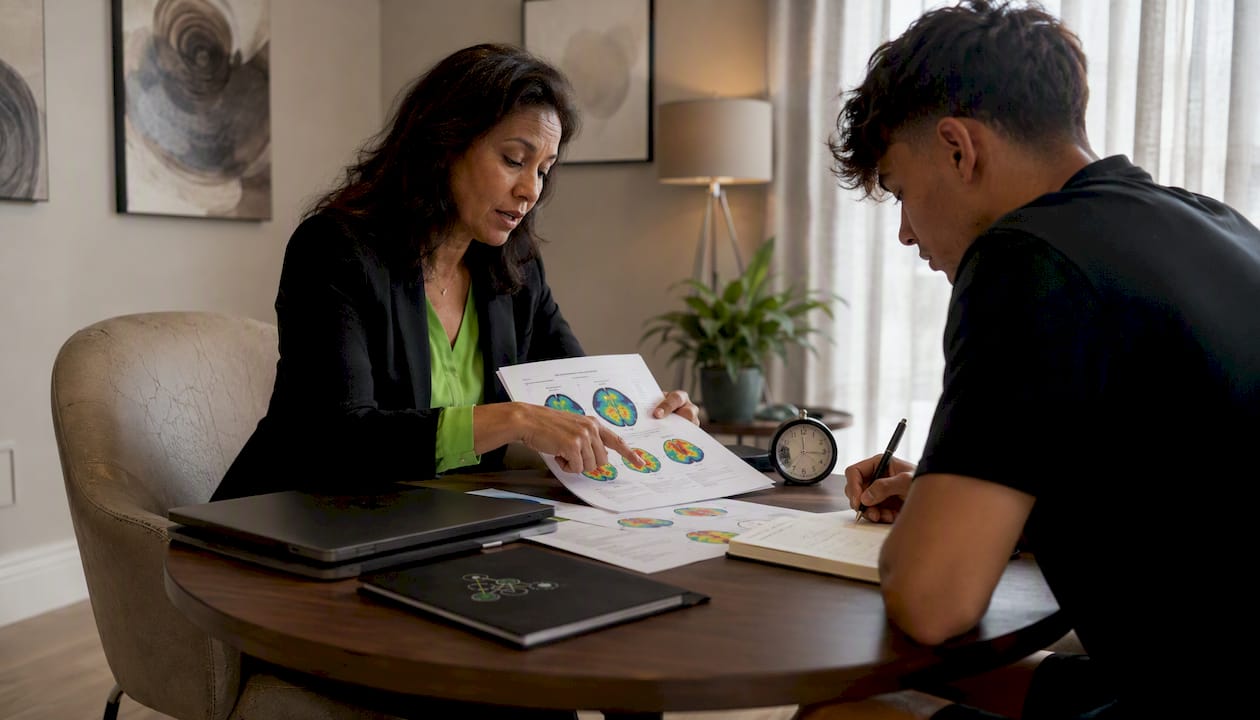
A single-channel headband like Muse reads from one or two scalp sites. That is enough to detect broad relaxation states and give you real-time audio feedback during meditation. It is not enough to map the full-brain activity patterns that clinicians use to identify dysregulation in specific regions. Multi-channel clinical systems, like those used in qEEG assessments, record from 19 or more sites simultaneously, giving a practitioner a full topographic map of your brain's electrical activity. That map is what makes individualized protocol design possible rather than a generic "calm your brain" loop.
Protocol design is where the real differences show up. App-driven platforms like Lumosity or Elevate run you through gamified cognitive tasks: memory sequences, processing speed drills, attention exercises. These are cognitive practice tools. Neurofeedback, by contrast, trains brainwave oscillations directly. You are not practicing a skill; you are conditioning your nervous system to produce specific frequency patterns associated with focus, calm, or recovery. The two approaches are complementary, but they are not interchangeable.
Clinician involvement changes everything about how results are interpreted. A self-guided headband gives you a score. A clinician-led program gives you a protocol adjusted session by session based on how your nervous system is actually responding. Myndlift sits in the middle: a consumer headband paired with a remote clinician who reviews your data and adjusts your training remotely. BrainMaster and Neurosity sit at the research end, offering raw EEG access and SDK integrations that are genuinely useful for researchers and advanced practitioners but require technical fluency most consumers do not have.
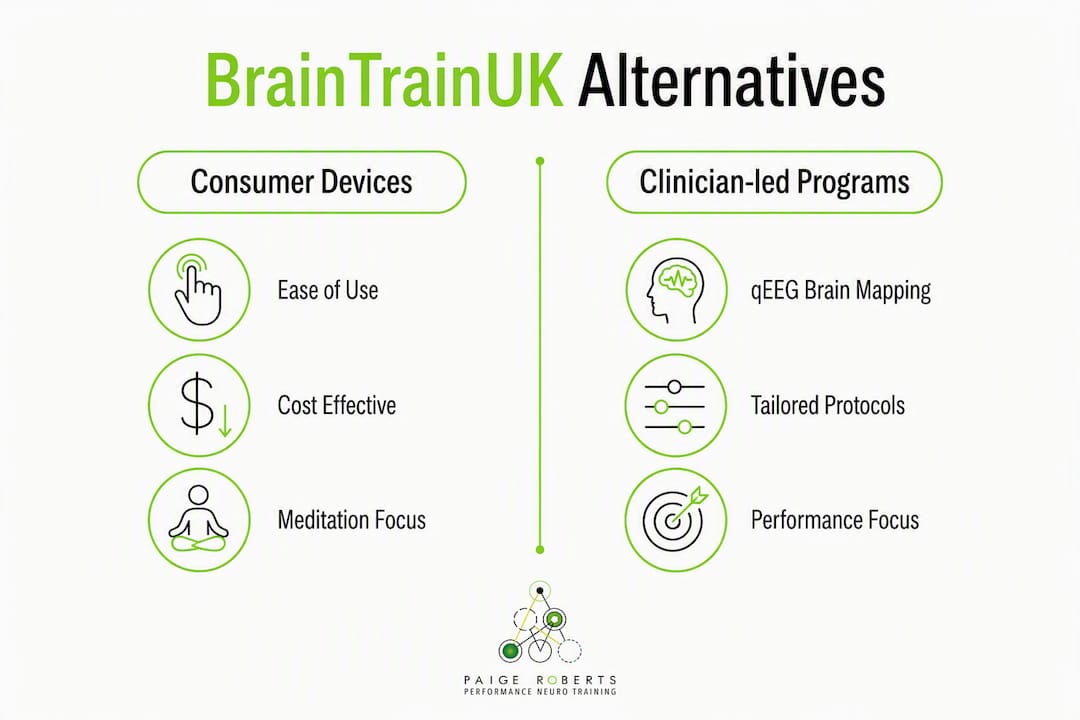
Pro Tip: Before buying hardware, decide whether you want physiological modulation (neurofeedback, which trains brainwave patterns) or cognitive practice (apps, which train task performance). They serve different goals. Buying a headband when you actually need a clinician-led protocol is a common and expensive detour.
Who is each option actually best for?
Athletes and high performers are the clearest case for clinician-led programs. Sport-specific performance anxiety, mental blocks after injury, and trauma responses require targeted nervous system work, not a generic relaxation app. Robertsneurotraining's neuroscience-based training for athletes addresses exactly this: the program uses qEEG mapping and Alpha Imprinting to identify and retrain the specific dysregulation patterns that show up as performance anxiety or post-injury hesitation. Olympic-level and professional athletes benefit most from this level of specificity.
Meditation and sleep users are well-served by consumer headbands. Muse's real-time audio feedback during meditation sessions gives beginners a concrete signal to work with. Mendi's forehead sensor focuses on prefrontal blood flow rather than EEG, which makes it simpler but also more limited. Neither replaces a clinical program, but both are reasonable starting points for someone whose goal is stress reduction or better sleep habits.
Clinical populations (ADHD, anxiety, PTSD, post-concussion) need clinician oversight. Myndlift's model, where a certified neurofeedback practitioner assigns and monitors your protocol remotely, is the most accessible clinical-grade option for US users who cannot access an in-person clinic. BrainMaster is more commonly found in clinical settings where a practitioner operates the system directly.
Developers and researchers will find Neurosity the most relevant platform. Its Crown headset provides raw EEG access, a developer SDK, and integrations with productivity tools. It is not a therapeutic device; it is a research and development platform.
For users who are unsure, combining a consumer headband for daily habit-building with periodic clinician check-ins is a reasonable middle path. The headband keeps you engaged between sessions; the clinician catches what the app cannot.
What does each option cost, and is it available in the US?
Insurance coverage for neurofeedback varies by state and plan, with some Medicare Advantage plans and institutional programs providing access on a case-by-case basis. Most consumers pay out of pocket.
| Category | Typical device cost | Subscription / session fee | Trial / return policy | US availability |
|---|---|---|---|---|
| Clinician-led qEEG programs | None (clinic-owned hardware) | Per-session or program fee without specific amounts | Consult-first; limited refunds | Telehealth nationwide |
| Consumer EEG headbands (Muse, Mendi) | Device at a consumer-friendly price range | Optional app subscription | 30-day satisfaction guarantee typical | Retail + direct ship |
| App-first brain training (BrainHQ, Lumosity, Elevate) | None | Free tier or a low-cost subscription | Free trial common | App stores; BrainHQ available at many US libraries |
| Research-grade platforms (Neurosity, BrainMaster) | Device at a professional price range | None required | Varies; limited consumer return windows | Direct purchase |
| Hybrid clinic + app (Myndlift) | Consumer headband included | Monthly clinician fee on top of device | Consult-first model | US-wide telehealth |
A few notes worth knowing before you commit:
- Consumer headbands typically offer 30-day satisfaction guarantees; clinic-based programs generally do not, so ask about their cancellation policy before your first paid session.
- BrainHQ is available through hundreds of US public libraries at no cost, making it the lowest-barrier entry point for app-based cognitive training.
- Some apps like Elevate and Kognify offer free tiers that let you evaluate the platform before paying.
- Insurance reimbursement for neurofeedback is inconsistent. Some plans cover it under specific diagnostic codes; most do not. Always verify with your insurer before assuming coverage.
How do you choose between these options?
Start with your goal, not the technology. The right sequence:
- Define your goal clearly. Is it athletic performance recovery, clinical symptom management, meditation habit, or cognitive skill-building? Each maps to a different category.
- Assess whether you need a clinician. If you are dealing with a clinical diagnosis (ADHD, PTSD, post-concussion), self-guided apps are not sufficient. You need a provider who can interpret your data and adjust your protocol.
- Check hardware fidelity requirements. A single-channel headband cannot produce the data a clinician needs for individualized protocol design. If you are paying for clinician oversight, confirm they are using multi-channel EEG, not a consumer headband.
- Verify evidence level. Ask providers directly: do they use qEEG intake? Can they show you published protocols or peer-reviewed support for their approach?
- Confirm trial and refund terms before paying. Consumer devices typically offer 30-day returns. Clinic programs rarely do. Know this before you start.
- Check US availability and delivery. Most app-based platforms are immediately available. Research-grade hardware ships direct. Telehealth clinic programs are available nationwide.
Questions to ask any provider:
- Do you conduct a qEEG assessment before designing my protocol?
- What are your clinician's credentials and neurofeedback certifications?
- Can I access my own session data and progress metrics?
- What is your cancellation and refund policy?
- How do you measure and report progress?
Red flags to watch for:
- No clear pricing published anywhere
- Claims of clinical-grade results from a single-channel consumer device
- No clinician oversight for a program targeting clinical symptoms
- No trial period or refund option on a device purchase
- Progress metrics that are vague (e.g., "you'll feel better") rather than measurable
For athletes comparing performance psychology providers, the absence of qEEG intake is the single biggest red flag. Without a baseline brain map, you are guessing at the protocol.
Do brain-training apps actually work the same way as neurofeedback?
They do not, and the distinction matters more than most product marketing suggests.
Brain-training apps use digital tasks to practice cognitive skills; neurofeedback trains brainwave oscillations directly using real-time EEG signals. The core problem with app-based training is what researchers call the "transfer problem": improving at a specific game task does not automatically transfer to real-world performance. The Stanford Longevity Institute notes that consistent, long-term engagement matters most for any cognitive training to produce lasting effects, and that short or infrequent use significantly reduces the likelihood of durable gains.
BrainHQ is the strongest evidence case for app-based cognitive training, with over 100 published research papers and institutional use in sports and medical settings. That is a meaningful evidence base. Lumosity and Elevate are more consumer-oriented, with less rigorous published support, though both are accessible and well-designed for daily habit-building. High attrition is a real pattern across digital brain-training programs, and short daily sessions of 5–15 minutes are the most consistently recommended format for maintaining engagement.
For clinical intervention, app-based training is not a substitute for neurofeedback or clinician-led programs. For athletic performance, clinician-led neurotraining with sport-specific protocols is the approach with the clearest rationale. For meditation and sleep, consumer headbands with real-time feedback outperform passive apps. For general cognitive habit-building, BrainHQ or Elevate are practical, low-cost options.
The practical recommendation: treat apps and neurofeedback as tools for different jobs. An athlete using BrainHQ for processing speed drills while also working with a clinician on nervous system regulation is using both correctly. Choosing one and expecting it to do the other's job is where people get disappointed.
What should you try first?
For athletes and high performers, the answer is a clinician-led program with qEEG intake. Robertsneurotraining is the recommended starting point: the combination of qEEG brain mapping, Alpha Imprinting, and sport-specific telehealth sessions is purpose-built for the performance and recovery challenges athletes actually face. Book a consult to establish your baseline before committing to any hardware purchase.
If budget is the constraint right now, start with BrainHQ through your local library (free) or a Muse headband with a 30-day return window. Use that period to assess whether self-guided training is enough, or whether you need the individualized protocol design that only a clinician can provide.
For clinical symptoms, go directly to a clinician. Do not start with a consumer device and work your way up; the delay costs you time and the device data will not be actionable without professional interpretation.
Key Takeaways
Clinician-led qEEG programs with sport-specific protocols are the most effective alternative to BrainTrainUK for US athletes, while consumer headbands and app-based tools serve distinct, narrower goals.
| Point | Details |
|---|---|
| Match tool to goal | Choose neurofeedback for physiological training; choose apps for cognitive skill practice. They are not interchangeable. |
| Clinician oversight is non-negotiable for clinical cases | ADHD, PTSD, and post-concussion recovery require a certified practitioner, not a self-guided app or consumer headband. |
| qEEG intake separates individualized from generic programs | Providers who skip qEEG assessment are delivering one-size-fits-all protocols regardless of what they charge. |
| Consumer devices offer 30-day returns; clinics typically do not | Confirm refund and cancellation terms before your first paid session with any provider. |
| Robertsneurotraining for athletes | Combines qEEG, Alpha Imprinting, and sport-specific telehealth for performance recovery and mental block resolution. |
What most people miss when comparing these options
The conversation around brain-training alternatives almost always gets stuck on hardware specs and app ratings. That framing misses the actual question, which is: what does your nervous system need, and who is qualified to figure that out?
Consumer headbands are genuinely useful tools. A Muse session before bed is a reasonable relaxation habit. BrainHQ's processing speed exercises have real published support. None of that is in dispute. But there is a category of athlete, the one dealing with performance anxiety that resurfaces after injury, the one who freezes at critical moments despite physical readiness, the one whose body simply will not cooperate under pressure, for whom a $200 headband and a subscription app are not even in the right conversation. The nervous system dysregulation driving those patterns requires a clinician who can read a qEEG, identify the specific frequency imbalances, and design a protocol that targets them directly.
What I see consistently is athletes spending months cycling through consumer devices and app subscriptions before arriving at clinician-led work. The devices are not wrong; the sequencing is. If your goal is performance recovery after injury or clearing a mental block that has persisted through conventional sports psychology, start with the assessment. The hardware question resolves itself once you know what you are actually training.
Robertsneurotraining: clinician-led performance neurotraining for athletes
Most brain-training tools hand you a device and a score. Robertsneurotraining hands you a clinician, a qEEG brain map, and a protocol designed around your specific nervous system.
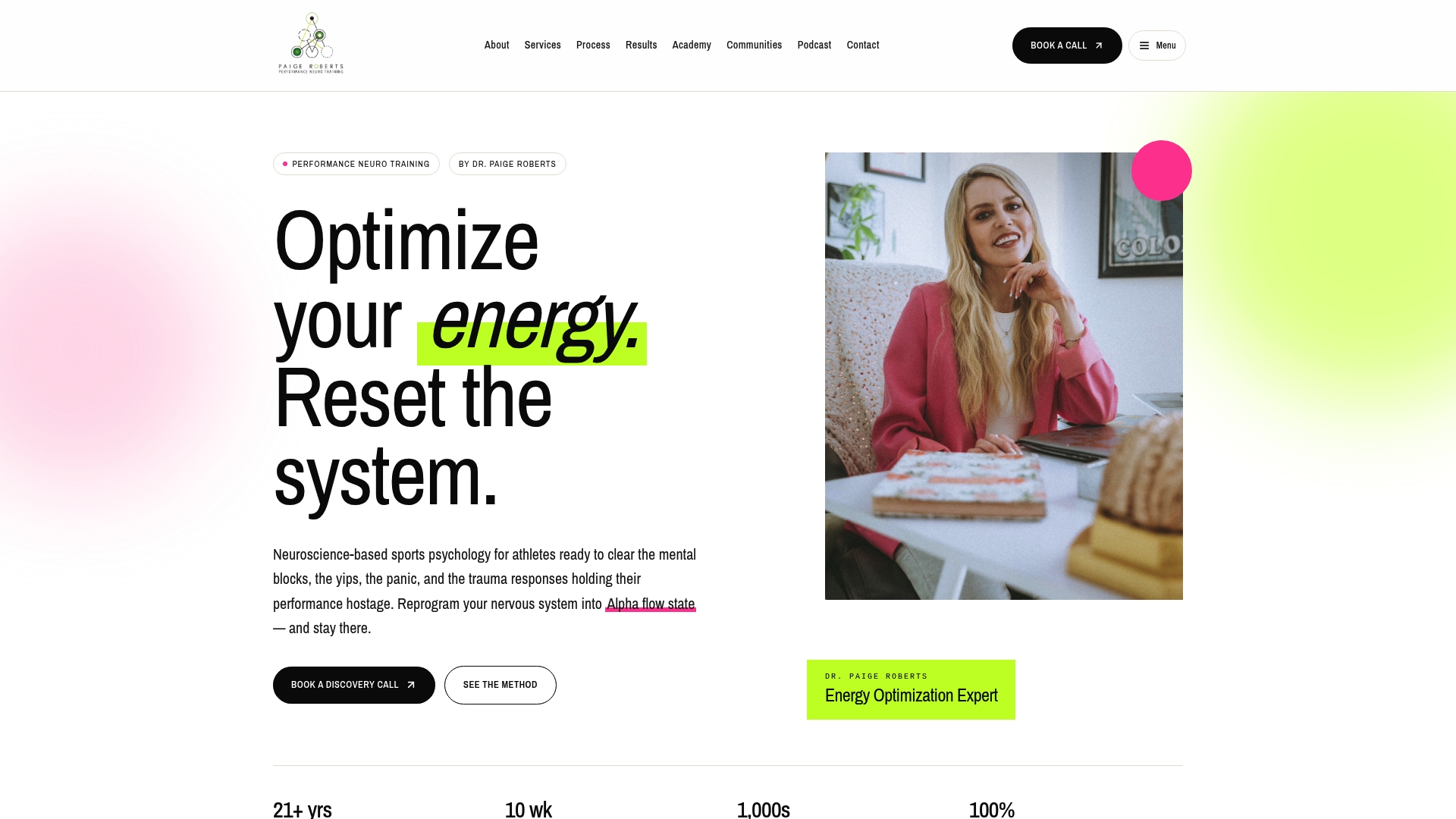
The Performance Neuro Training services include 1:1 telehealth coaching, qEEG brain scanning, the proprietary Alpha Imprinting protocol, and the 10-week Energy Optimization Program. Athletes at every level, from competitive amateurs to Olympic medalists, have used this program to resolve performance anxiety, clear post-injury mental blocks, and return to a consistent state of flow during competition. The program is available nationwide via telehealth, so geography is not a barrier.
If you are ready to move past self-guided tools and work with a clinician who specializes in athletic nervous system training, review the process and book a consult to get started.
Useful sources for further research
- BrainFutures: Neurofeedback Info for Providers — Authoritative resource on insurance coverage patterns and clinical neurofeedback standards in the US.
- Stanford Longevity Institute — Research roundup on cognitive training evidence, engagement requirements, and realistic expectations for brain-training programs.
- Neurosity: Best Brain Training Apps Guide — Independent comparison of consumer EEG headsets and app-based platforms, including hardware trade-offs.
- Kognify Brain Training Games — Free-tier brain training option; useful for evaluating app-based cognitive tools at no cost.
- Elevate Brain Training App (App Store) — Well-reviewed consumer app for focus, memory, and processing speed with a free entry tier.
- Robertsneurotraining — Clinician-led performance neurotraining for athletes; qEEG intake, Alpha Imprinting, and sport-specific telehealth programs available nationwide.