
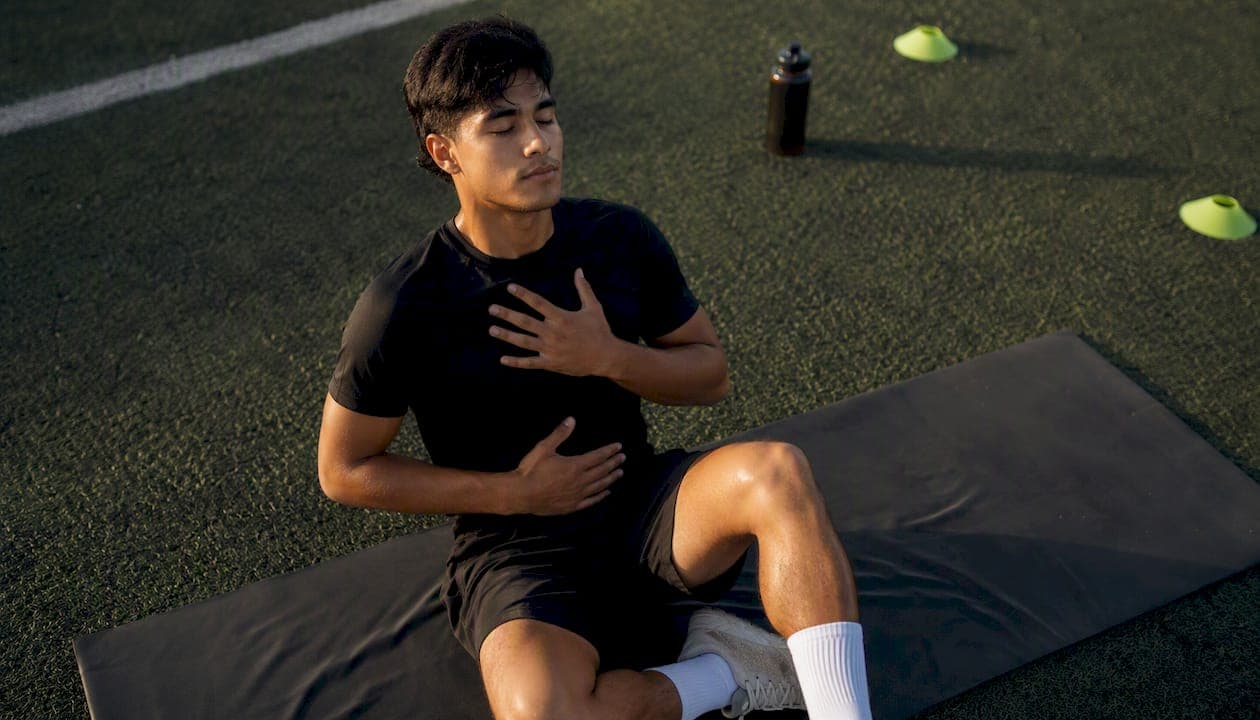
You can eliminate group performance anxiety by following a staged, neuroscience-led protocol: stabilize autonomic state first, process trauma-linked memory networks second, then retrain nervous-system responses through graded exposure, HRV biofeedback, and targeted neurofeedback. This is not a breathing-exercise fix. Many performance blocks in athletes carry subcortical trauma signatures similar to PTSD, which means talk-based methods alone rarely resolve them. The sequence matters. EMDR combined with graded exposure has eliminated specific performance blocks and restored competition performance in documented sport cases. Performance Neuro Training, led by Dr. Paige Roberts, delivers this protocol through Alpha Imprinting, a proprietary nervous-system reprogramming method.
Immediate first actions for any coach or clinician:
- Run a 3–6 minute group resonance breathing session before the first clinical intake
- Collect baseline RMSSD (resting HRV) for every athlete using a validated wearable
- Have the team clinician complete a safety screen for trauma indicators before any processing work begins
Key Takeaways
A staged neuroscience-led protocol combining stabilization, EMDR trauma processing, graded exposure, and neurofeedback is the most evidence-supported approach to eliminating sport-specific group performance anxiety.
| Point | Details |
|---|---|
| Sequence is non-negotiable | Stabilize autonomic state before any trauma processing; graded exposure follows EMDR, not the reverse. |
| RMSSD is your primary metric | Track resting HRV from intake; a consistent upward trend across sessions signals genuine nervous-system change. |
| Clinical supervision is required | EMDR and neuromodulation require licensed clinical oversight; coaches plan exposure, clinicians run processing. |
| Dose and domain matter | Brief, frequent biofeedback sessions reduce anxiety; longer neurofeedback protocols improve performance outcomes. |
| Robertsneurotraining | Delivers QEEG assessment, Alpha Imprinting, and HRV-tracked programs for athletes and teams with performance blocks. |
Table of Contents
- Who this protocol is for, and what it does not cover
- How to eliminate group performance anxiety step by step
- What the evidence says about each core intervention
- How to run this program for a full team
- Which metrics tell you the protocol is working
- Side effects, contraindications, and when to escalate
- A step-by-step case: from blocked to competition-ready
- Why choose a neuroscience-led specialist for performance blocks
- Why nervous-system training changes everything
- Ready to start Performance Neuro Training with your team?
- Primary sources and further reading
- Sources
Who this protocol is for, and what it does not cover
This guide is written for coaches, competitive athletes, and sports teams dealing with nervous-system performance blocks: anxiety, panic, or motor disruption that appears specifically in competition or high-stakes practice contexts and does not resolve with standard mental skills training.
It is NOT a guide for general stage fright, public-speaking anxiety, or CBT-based breathing routines for solo performers. Those are different problems with different populations. Every intervention described here targets sport-specific blocks with trauma-linked mechanisms.
Safety boundaries:
- EMDR and trauma processing require a licensed clinical psychologist or equivalent. Coaches do not run these sessions.
- Neuromodulation (tDCS, taVNS) requires medical clearance. Contraindications include implanted electronic devices and seizure history.
- Monitor athletes for fatigue, sleep disturbance, and derealization after any processing session.
This guide omits pharmacologic protocols, jurisdictional regulatory guidance, and general CBT for non-sport anxiety.
Pro Tip: Before starting any trauma-processing work, have athletes complete a validated screening questionnaire (such as the PCL-5 for trauma symptoms) so the clinician can triage who needs clinical-led EMDR versus who benefits from HRV biofeedback alone.
How to eliminate group performance anxiety step by step
A six-stage sequence ordered by physiological logic. Each stage builds on the one before it.
-
Stabilization. Open every group session with resonance breathing (roughly 6 breaths per minute) and brief HRV biofeedback. This activates the vagal brake, lowers sympathetic arousal, and creates the physiological safety needed for deeper work. Vagal tone research confirms resonance breathing and taVNS raise RMSSD and improve cognitive control under pressure.
-
Assessment and framing. Collect baseline RMSSD, SUD (Subjective Units of Distress) scores for specific competition triggers, and validated anxiety scales. Optional QEEG screening identifies dysregulated frequency bands. The clinician builds individual case formulations from this data.
-
Trauma processing. A licensed clinician leads EMDR or equivalent memory reprocessing for athletes whose blocks have trauma-linked origins. This is the stage most programs skip, and skipping it is why those programs plateau.
-
Graded exposure. Reintroduce competition contexts hierarchically, from low-stakes practice drills up to simulated competition, while tracking SUD scores at each step. Progress only when SUD drops to a manageable level at the current tier.
-
Nervous-system retraining. Targeted neurofeedback (Alpha/SMR protocols for precision sports; alpha modulation for team athletes under social evaluation pressure), HRV training, and Alpha Imprinting sessions. Optional adjuncts: taVNS or tDCS where clinically appropriate.
-
Reintegration and maintenance. Return to full practice and competition with a home HRV routine, scheduled booster sessions every 4–6 weeks, and coach-led exposure planning built into the training calendar.
| Stage | Primary Tool | Who Leads |
|---|---|---|
| Stabilization | Resonance breathing, HRV biofeedback | Coach or clinician |
| Assessment | RMSSD, SUD, optional QEEG | Clinician |
| Trauma processing | EMDR | Licensed clinician only |
| Graded exposure | Hierarchical drills, SUD tracking | Coach + clinician |
| Nervous-system retraining | Neurofeedback, Alpha Imprinting | Clinician |
| Reintegration | Home HRV, booster sessions | Athlete + coach |
Pro Tip: Schedule Stage 3 (trauma processing) on low-training-load days. Post-EMDR cognitive fatigue is real, and placing a processing session before a high-intensity practice session undermines both.
What the evidence says about each core intervention
EMDR and graded exposure work through memory reconsolidation: the traumatic performance memory is activated, then reprocessed so it no longer triggers a full sympathetic alarm response. A sport-specific case study documented elimination of a performance block after EMDR plus graded exposure, with measurable SUD reductions and restored competition motor control. A second intervention series confirmed clinically meaningful improvements and stressed that clinical psychologist involvement is non-negotiable.
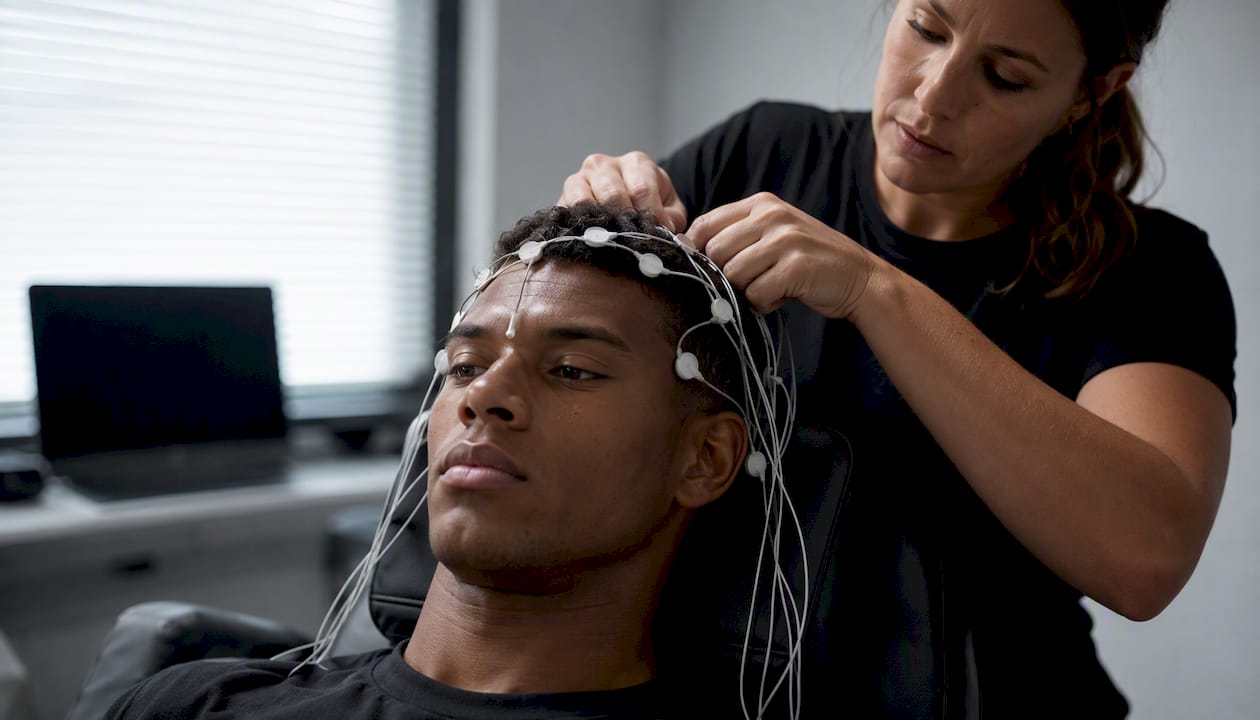
HRV biofeedback and resonance breathing raise vagal tone (tracked via RMSSD), reduce anxiety, and improve cognitive control. A 2025 Bayesian meta-analysis found biofeedback training produces statistically significant anxiety reductions and performance improvements, with effects that are dose-dependent. Brief, frequent sessions (3–5 times per week) tend to drive anxiety reduction; longer protocols benefit specific performance outcomes.
Neurofeedback and Alpha Imprinting target dysregulated brain frequency bands. A systematic review of 24 studies found neurofeedback improves attention, reaction time, emotion regulation, and sport-specific skills when protocols are tailored to the sport. Alpha/SMR training suits precision sports; alpha modulation helps team athletes managing anxiety under social evaluation. Typical course: 8–12 sessions.
tDCS and taVNS are emerging adjuncts. An RCT in collegiate athletes found a 10-day tDCS protocol targeting the DLPFC reduced pre-competitive anxiety scores on the BAI versus sham. Effects are promising but require medical oversight and should not replace the core protocol.
Pro Tip: For EMDR therapy referrals, confirm the clinician has sport-specific experience. A general trauma therapist unfamiliar with athletic performance contexts may miss the sport-specific memory networks driving the block.
How to run this program for a full team
Roles. The clinician owns trauma processing and neurofeedback. The coach owns exposure planning and on-field session design. The athletic trainer coordinates physical load so processing sessions never land on high-intensity training days.
A literature review on mental health in team sports identifies stigma as a primary barrier to help-seeking. Address this before intake by framing the program as performance optimization, not mental health treatment, and keeping individual session content strictly confidential.
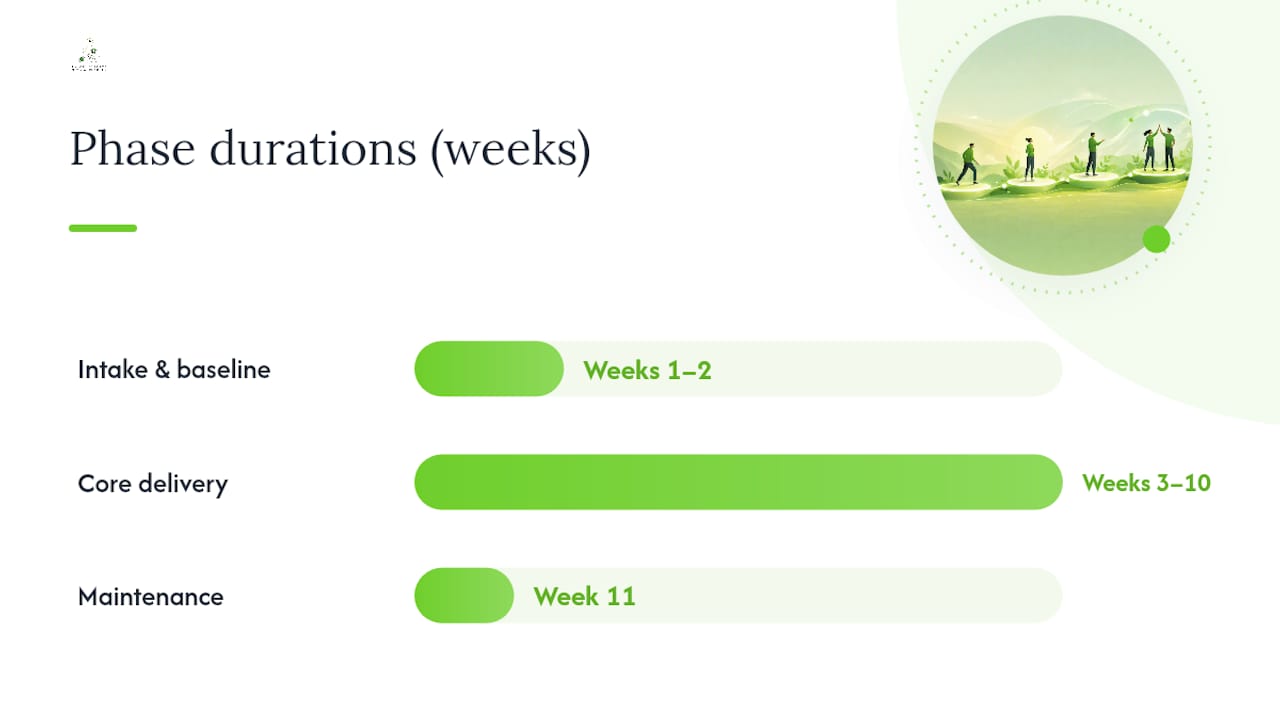
| Phase | Weeks | Activities |
|---|---|---|
| Intake and baseline | 1–2 | RMSSD, SUD, QEEG (optional), case formulation |
| Core delivery | 3–10 | Alternating clinical sessions and on-field exposure |
| Maintenance | 11 | Booster sessions, home HRV, coach-led exposure |
Pro Tip: Obtain written consent from each athlete that explicitly separates clinical confidentiality from coach-facing performance data. Athletes are more honest in sessions when they know their trauma history stays with the clinician.
Which metrics tell you the protocol is working
Primary physiological metric: RMSSD (resting HRV). A consistent upward trend across the program indicates improving vagal tone and reduced baseline sympathetic load.
Subjective metrics: SUD scores at each exposure tier. Meaningful progress means SUD drops to 2 or below before advancing to the next tier. Validated anxiety scales (the BAI is a practical choice) provide a standardized pre/post comparison.
Performance metrics: Sport-specific stats (accuracy, reaction time, error rate under pressure) tracked across practice and competition. Pair these with athlete-reported confidence ratings.
- Baseline RMSSD collected before Session 1
- SUD scores logged at every exposure session
- BAI or equivalent administered at intake, mid-program, and discharge
- Sport performance stats reviewed at weeks 6 and 12
- Athlete-reported readiness scores before each competition
A meaningful clinical signal is a consistent upward RMSSD trend combined with SUD reductions across the full exposure hierarchy. One good session is noise. A pattern across 4–6 sessions is signal.
Side effects, contraindications, and when to escalate
EMDR risks: Emotional and cognitive fatigue are common after processing sessions. Sleep disturbance in the 24–48 hours following a session is reported frequently. Both are normal and temporary. They require post-session recovery time, not discontinuation.
Neuromodulation contraindications:
- tDCS and taVNS are contraindicated for anyone with implanted electronic devices (pacemakers, cochlear implants)
- Seizure history requires explicit medical clearance before any neuromodulation
- Skin irritation at electrode sites is the most common minor side effect of tDCS
Escalation triggers:
- Increased dissociation or derealization that persists beyond 48 hours post-session
- Any expression of suicidality or self-harm
- Persistent functional decline across two or more consecutive sessions
Refer immediately to a licensed mental health clinician for any escalation trigger. The coach's role is to flag and refer, not to manage clinical crises.
A step-by-step case: from blocked to competition-ready
This is an anonymized composite illustrating the protocol in practice.
-
Intake. A collegiate team sport athlete presents with a specific motor block under competition pressure. Baseline RMSSD is low; SUD for the competition trigger scores 8/10. No prior trauma processing history.
-
Stabilization (weeks 1–2). Group resonance breathing sessions before practice. Individual HRV biofeedback twice weekly. RMSSD begins trending upward by week 2.
-
EMDR processing (weeks 3–5). Clinician identifies the target memory network (a prior high-stakes competition failure with somatic residue). Three EMDR sessions. SUD for the primary trigger drops from 8 to 3. The athlete reports the memory "feels further away."
-
Graded exposure (weeks 4–6, overlapping). Coach designs a hierarchy: solo skill drill under observation → small-group scrimmage → full practice simulation → controlled competition. SUD tracked at each tier. Athlete advances when SUD holds below 3.
-
Neurofeedback (weeks 6–9). Eight Alpha Imprinting sessions targeting alpha/SMR bands. Attention and motor control under pressure improve measurably by session 6.
-
Reintegration. Athlete returns to full competition in week 10. RMSSD is consistently higher than baseline. SUD for the original trigger is 1/10. Performance stats return to pre-block levels.
Why choose a neuroscience-led specialist for performance blocks
Generic sports psychology programs rarely include trauma processing or neurofeedback. That gap matters because performance blocks with trauma-linked origins do not respond to visualization or positive self-talk alone.
What to look for in a provider:
- Licensed clinical credentials with documented experience in sport performance blocks
- A measurement plan that includes HRV (RMSSD) and SUD tracking from intake
- Demonstrated EMDR training and clinical supervision for trauma processing
- Neurofeedback protocols tailored to the sport, not generic relaxation protocols
- Transparent scope of practice: they know when to refer out
Questions to ask before booking:
- "How do you measure progress, and what does a successful outcome look like?"
- "Who supervises the trauma processing component?"
- "Have you worked with athletes in my sport or at my competitive level?"
- "What happens if symptoms worsen during the program?"
Pro Tip: A provider who cannot answer the measurement question specifically ("we track RMSSD and SUD across the exposure hierarchy") is likely running a wellness program, not a clinical performance protocol. The difference matters for outcomes.
Performance Neuro Training with Dr. Paige Roberts integrates QEEG-informed assessment, Alpha Imprinting, HRV biofeedback, and graded exposure into a structured program. The intake and session process is designed to move from assessment to active nervous-system retraining without the gaps that generic programs leave open.
Why nervous-system training changes everything
Most coaches I speak with have tried the standard toolkit: visualization, confidence scripts, pre-competition routines. Those tools have value. But when an athlete's block is rooted in a stored trauma state, no amount of positive framing reaches the subcortical circuitry driving the response. The nervous system does not respond to logic. It responds to physiological input.
The shift I see consistently in athletes who go through a full nervous-system protocol is not just reduced anxiety. It is a qualitative change in how they experience competition pressure. The threat signal quiets. Motor patterns that were disrupted under pressure become available again. Team cohesion often improves as a side effect, because athletes who are no longer managing private panic have more cognitive bandwidth for each other.
The case for measurement-driven adoption is straightforward: if you are not tracking RMSSD and SUD across the program, you cannot distinguish a real nervous-system shift from a placebo response. Coaches who partner with clinicians and commit to the metrics get durable results. Those who run the breathing exercises alone and call it done are solving a different problem than the one their athletes actually have.
Ready to start Performance Neuro Training with your team?
Robertsneurotraining delivers what this protocol describes: clinician-led, measurement-driven nervous-system reprogramming for athletes and teams. The difference from a standard sports psychology program is concrete. You get QEEG-informed assessment, Alpha Imprinting sessions that directly retrain the frequency bands driving anxiety and motor disruption, and a structured exposure plan built around your training calendar, not a generic 8-week template.
Olympic medalists have gone through this program. So have collegiate teams and professional athletes managing blocks that years of conventional mental skills work could not resolve. The full services overview covers 1:1 Alpha Imprinting, team workshops, and the 10-week Energy Optimization Program.
To book an intake or request a team workshop, bring your baseline HRV data if you have it, a brief description of the performance context where the block appears, and any prior mental performance history. That is enough to start.
Primary sources and further reading
- Preliminary evidence for EMDR and graded exposure in sport performance blocks (Vernon)
- Performance blocks in sport: EMDR intervention series (Bennett)
- Vagal strategies and human performance: HRV biofeedback and taVNS review (PMC)
- Biofeedback training, anxiety, and athletic performance: 2025 Bayesian meta-analysis (Frontiers)
- Neurofeedback protocols in sport: systematic review (Brain Sciences)
- tDCS and pre-competitive anxiety in collegiate athletes: RCT (Nature Scientific Reports)
- Trauma-related mechanisms in sport performance blocks
- Mental health in team sports: etiology, barriers, and interventions
- Unresolved trauma and athletic performance (Robertsneurotraining blog)
- Polyvagal theory in sports: HRV and team applications
- Routine nervous-system preparation for peak performance
- Biofeedback therapy overview (MindShift Wellness Center)
This article is general information, not a substitute for advice from a qualified doctor. Consult a qualified healthcare professional about your own circumstances before acting on anything here.
Sources
- Preliminary evidence for the treatment of performance blocks in sport (Vernon)
- Performance blocks in sport (Bennett dissertation)
- Vagal strategies and human performance (review) - PMC12289630
- The effects of biofeedback training on athletes’ mental health and performance: a systematic review and Bayesian meta-analysis
- Neurofeedback training protocols in sports: a systematic review of recent advances in performance, anxiety, and emotional regulation