
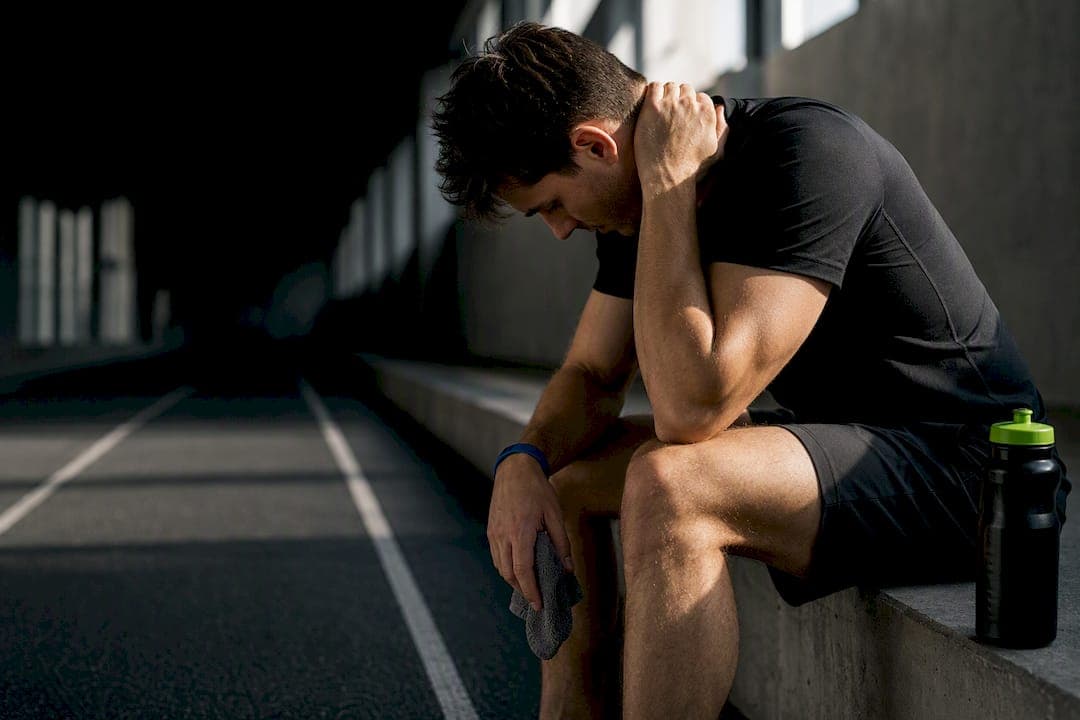
If your headache during training comes from anxiety or nervous-system dysregulation, a short round of paced breathing, a jaw and neck release, and one brief reappraisal phrase will usually stop it within minutes and keep it from building into a longer episode. If it keeps returning across sessions, that pattern is worth tracking rather than pushing through.
TL;DR:
- Headaches caused by training anxiety are linked to low heart rate variability and sympathetic nervous system dominance, not dehydration or physical injury.
- Confirm the pattern with field checks like pre- and post-session RMSSD readings, breathing rate, and tension points before using relaxation protocols.
- Immediate relief techniques include slow breathing, jaw and shoulder release, and mental reappraisal during a headache’s onset, while longer-term layers build tolerance gradually.
- Persistent or severe symptoms, especially with neurological signs or injury, require medical evaluation instead of self-managed breathing techniques.
- Optimizing sleep, hydration, and environment can lower stress thresholds, making nervous-system retraining more effective over time.
Table of Contents
- The neuroscience: how anxiety and autonomic dysregulation create training-time headaches
- Monitoring: field-friendly checks to confirm an anxiety-driven pattern
- Actionable protocols and drills to stop headaches and build tolerance
- Triage and communicating with clinicians: red flags and documentation
- Dietary and hydration factors that compound training headaches
- Environmental triggers worth checking before you blame your nerves
- How sleep quality and fatigue set up training headaches
- Telling tension, migraine, and exertional headaches apart
- Medication for training headaches: what to know before you reach for it
- Why we treat these headaches as a nervous-system training problem
- Getting coached support for anxiety-driven training headaches
- Sources
- FAQ
The neuroscience: how anxiety and autonomic dysregulation create training-time headaches
A tension headache that shows up mid-set or right before a big rep is rarely about the muscle you are working. It is more often a signal from the autonomic nervous system, the network that governs heart rate, breathing, and blood flow without you deciding any of it. When performance anxiety spikes, the sympathetic branch takes over, pulling resources away from calm regulation and into a fight-or-flight state. That shift shows up physically as shallow breathing, a tightened jaw, and gripped shoulders and neck muscles, the same muscles that refer pain into the head and temples.
Reduced heart rate variability (HRV) is one of the clearest fingerprints of this state. A narrative review on cardiovascular autonomic regulation links performance anxiety in athletes to lower vagally mediated HRV and sympathetic dominance, and recommends psychophysiological assessment alongside psychological evaluation for better individualized care. Practitioners following this framework often see tension headaches resolve as athletes shift from sympathetic dominance back toward parasympathetic balance.
This matters for what this article covers and does not cover:
- Anxiety-driven headaches build from nervous-system arousal, muscle tension, and HPA-axis activation, not from dehydration or heat strain.
- HRV, breathing rate, and subjective tension are useful, trainable markers of this pattern.
- Purely exertional or vascular headaches tied to blood flow changes during intense exercise are a separate issue and are not the focus here.
Understanding the mechanism changes the fix. You are not managing a structural injury. You are retraining a nervous system that has learned to overreact to training stress.
Monitoring: field-friendly checks to confirm an anxiety-driven pattern
Before committing to a protocol, it helps to confirm the pattern rather than guess at it. A few field-friendly checks give you real data without needing a lab.
- Take a resting RMSSD reading with a chest strap or wearable for one to two minutes before your session, then repeat right after a headache starts.
- Rate perceived anxiety on a 0 to 10 scale at the same two points, so you have a subjective marker alongside the HRV number.
- Scan your jaw, neck, and shoulders for tension and note where it concentrates, since referred tension pain often starts in one of these three spots.
- Count your breathing rate for 30 seconds; a rate consistently above 15 to 16 breaths per minute during work you have handled calmly before is a useful flag.
- Run a two-minute paced-breathing probe and recheck all four markers; a clear shift toward calmer readings is a strong sign the headache is autonomic, not structural.
A narrative review of cardiovascular autonomic regulation points to short RMSSD sampling as a practical, noninvasive way to detect sympathetic dominance in the field. Treating each biofeedback session as both a diagnostic probe and a short therapeutic trial gives you information and relief at the same time.
Pro Tip: Log your RMSSD and anxiety score in the same notes app you use for training, so the pattern across weeks is visible at a glance instead of scattered across memory.
Actionable protocols and drills to stop headaches and build tolerance
The goal is not a single trick. It is a layered set of tools you can deploy in the moment, during a session, and across weeks, so the nervous system gradually stops treating training intensity as a threat.
Immediate relief, 60 to 120 seconds. When a headache starts building, slow your breathing to roughly five to six breaths per minute, a pace often called resonance breathing because it syncs with the body's natural cardiovascular rhythm. Pair it with a deliberate jaw drop and a shoulder roll to release the neck and jaw tension that feeds referred head pain. Add a short reappraisal cue, three or four words such as "this is just arousal," to interrupt the mental spiral before it compounds the physical one. This combination targets both the physiological loop and the cognitive mislabeling that keeps it going.
Session primers, 5 to 15 minutes. Before a demanding set or a high-stakes rep, run a short HRV coherence breathing block, a few minutes of progressive muscle release through the neck and shoulders, and a brief focused-attention drill such as counting breaths or naming five things you can see. These primers lower baseline arousal so a spike in training intensity does not immediately tip into a stress response.
- Use the same primer sequence every session so your nervous system learns to associate it with a calmer state.
- Keep primers short enough that they fit into a normal warm-up without disrupting your training plan.
- Track whether headache frequency drops on days you run the primer versus days you skip it.
Multi-week plan. Daily short HRV biofeedback sessions, five to ten minutes, build the foundation. Layer in CBT-style reappraisal practice, actively questioning the meaning you assign to a racing heart or tight chest, and graded exposure to training arousal, meaning you deliberately practice staying in slightly uncomfortable intensity while running your downregulation tools. A Bayesian network meta-analysis comparing sport psychology interventions found that CBT, relaxation and arousal-reduction techniques, and mindfulness-based approaches all reduce competitive anxiety, with CBT showing the highest probability of being most effective, and with interventions delivered during regular training outperforming those saved for right before competition. Set a weekly target, such as three primer sessions and daily logging, rather than an open-ended goal.
Pro Tip: Run your reappraisal cue out loud during low-stakes training reps first, so it becomes automatic before you need it under real pressure.
Integration matters as much as the tools themselves. Immediate downregulation belongs in the moment a headache starts. Session primers belong in warm-up and between demanding sets. The multi-week plan belongs in your regular training calendar, not bolted on the week before a competition. More detail on building this into a training week is covered in this nervous system training program guide.

Triage and communicating with clinicians: red flags and documentation
Most anxiety-driven training headaches respond to the protocols above, but some symptoms need medical evaluation before you try to manage anything yourself.
- Sudden, severe head pain unlike anything you have felt before, sometimes described as a thunderclap headache.
- Any neurologic symptom alongside the headache, including vision changes, slurred speech, numbness, or confusion.
- Fainting, near-fainting, or loss of consciousness during or after training.
- A headache that worsens steadily over days rather than resolving with rest or downregulation.
- New headaches following a head injury or collision during training.
Any of these warrants prompt evaluation rather than a breathing drill. For headaches that fit the anxiety-driven pattern but persist despite consistent practice, bring documentation to your appointment: HRV logs, the timing of episodes relative to training load, and notes on how symptoms responded to your downregulation protocol. This gives a clinician real data instead of a vague description. The IOC consensus statement on mental health in elite athletes frames performance anxiety as a continuum that can meaningfully impair training and recommends early identification and intervention as part of standard athlete care. A combined approach, sports medicine ruling out structural causes alongside a nervous-system specialist addressing the anxiety component, is often the most efficient path to a real answer.
Dietary and hydration factors that compound training headaches
Diet and hydration rarely cause an anxiety-driven headache on their own, but they lower the threshold at which one appears. Skipping meals before a session drops blood sugar, which itself triggers a mild stress response and makes the nervous system more reactive to training intensity. Caffeine works both ways: a moderate, consistent dose can sharpen focus, but a much higher dose than you are used to, or withdrawal from a regular habit, can trigger head pain and jitteriness that mimics or worsens an anxiety-driven headache.
Under-hydration adds another layer of physical stress on top of an already activated nervous system, even when it is not the primary driver of the headache. A practical approach is steady, not aggressive: eat something with protein and carbohydrates in the two to three hours before training, keep caffeine intake consistent day to day rather than variable, and sip water through the session rather than loading up right before or drinking very little throughout.
Electrolyte balance matters most in long or hot sessions, where sodium loss through sweat can add fatigue and irritability on top of existing tension. None of this replaces the nervous-system work described above, but a body under nutritional stress has less capacity to regulate an anxious mind, so tightening these basics gives your downregulation protocols a better chance to work.
Environmental triggers worth checking before you blame your nerves
Training environments carry their own headache triggers that are easy to mistake for a purely psychological pattern. Harsh overhead lighting or glare off a gym floor can strain the eyes and trigger tension building at the temples, especially in a facility with mixed natural and fluorescent light. Poor air circulation, a common issue in crowded weight rooms or enclosed studios, raises carbon dioxide levels and can produce a dull, pressing headache that feels similar to an anxiety-driven one.

Temperature extremes add stress the nervous system has to manage alongside training demand. A room that runs too hot forces the body to work harder at regulating its core temperature, while a cold space can tighten neck and shoulder muscles before you even start warming up. Strong scents from cleaning products, shared equipment, or nearby locker rooms can also provoke headaches in people sensitive to them.
None of these triggers rule out an anxiety-driven pattern, since a body already under sympathetic activation is more sensitive to every one of them. Before assuming your headache is purely autonomic, check the room: adjust lighting if you can, step toward better airflow, and dress for the actual temperature rather than the one you expect. If a headache reliably shows up in one specific facility or time slot, the environment is worth ruling out first.
How sleep quality and fatigue set up training headaches
Poor sleep is one of the most reliable amplifiers of an anxiety-driven headache, because a fatigued nervous system has less capacity to regulate itself under training stress. Sleep is when the parasympathetic system does much of its restorative work, and cutting that process short leaves the sympathetic branch more dominant the next day, which is exactly the state that produces tension headaches during hard efforts.
Cumulative fatigue across a training block compounds the effect. An athlete running a sleep debt over several days often reports that headaches, which were manageable early in the week, become harder to shake by the end of it. This is not a separate issue from the anxiety-driven pattern described earlier. It is the same autonomic system starting each session from a worse baseline.
Consistent sleep timing, even more than total hours, tends to support steadier HRV and a calmer baseline going into training. Athletes who track both sleep and morning HRV often notice the two move together, with a poor night showing up as a lower reading and a harder time initiating the downregulation protocols later that day. If headaches cluster during heavy training weeks or after travel and disrupted sleep, treat sleep repair as part of the headache plan, not a separate wellness goal running alongside it.
Telling tension, migraine, and exertional headaches apart
Getting the type right matters because the fix is different for each one. A tension-type headache, the pattern most closely tied to anxiety and autonomic dysregulation, usually feels like a band of pressure across the forehead or a tight grip at the base of the skull, and it tends to build gradually alongside rising stress or muscle tension rather than appearing all at once.
A migraine has different features: often one-sided, throbbing, sometimes paired with nausea, light sensitivity, or visual disturbances beforehand. Migraines can be triggered or worsened by stress, but they involve a distinct neurological process and usually need their own management plan, sometimes including medication prescribed specifically for migraine.
An exertional headache is the physical, exercise-triggered pattern this article deliberately sets aside. It tends to hit during or right after intense physical effort itself, often described as a pulsing pain tied to increased blood flow, and it is a different mechanism from the anxiety-driven pattern covered here. If your headache pattern includes migraine features, such as visual aura or one-sided throbbing, or shows the sudden onset typical of an exertional headache, that distinction should guide you toward the right kind of evaluation rather than assuming every training headache is autonomic. Keeping a simple log of where the pain sits, how it built, and what else came with it makes this distinction much easier to spot over time.
Medication for training headaches: what to know before you reach for it
Over-the-counter pain relievers can offer short-term relief, but they treat the symptom, not the nervous-system pattern producing it. Frequent use, more than a couple of times a week over several weeks, carries real risks, including rebound headaches that occur when the medication itself starts triggering more frequent pain as it wears off. This is a recognized issue with regular use of common pain relievers and is worth discussing with a doctor if you find yourself reaching for medication before most sessions.
If you already take medication for a diagnosed migraine or another headache condition, keep following that plan and loop in your prescribing clinician rather than adjusting the dose on your own based on training-related headaches. Combining an anxiety-driven tension headache with an existing migraine diagnosis is common, and untangling which is which benefits from professional input rather than guesswork.
For an occasional headache that breaks through despite downregulation work, an appropriately dosed over-the-counter option used according to label instructions is a reasonable short-term tool. It should not become the default response to a headache pattern that shows up multiple times a week, since that frequency points to something worth addressing at the nervous-system level instead of managing session by session. If pain relievers are becoming a regular part of your routine, that is itself a signal to escalate to a clinician rather than to increase the dose.
Why we treat these headaches as a nervous-system training problem
Most training headaches we see in anxious or high-pressure athletes are not injuries waiting for rest. They are a nervous system stuck in a pattern, and patterns can be retrained. The conventional advice, hydrate more and stretch the neck, treats the downstream symptom while leaving the sympathetic overdrive underneath completely untouched.
Some practitioners build their approach around that distinction. QEEG brain scans can map how an athlete's nervous system is functioning, and techniques such as Alpha Imprinting may work to recondition automatic stress responses rather than managing them after the fact. HRV biofeedback and CBT-style reappraisal can fit naturally alongside that work, providing athletes both an immediate tool and a longer arc of change.
The practical sequence is simple: monitor your pattern, try the immediate and session-level protocols consistently for a few weeks, and if headaches persist or intensify, escalate to a full assessment rather than assuming more willpower will fix it.
— Paige
Getting coached support for anxiety-driven training headaches
Self-managed breathing drills and reappraisal cues work for a lot of athletes, but some patterns are stubborn enough to need a guided reset. Roberts Neurotraining built its programs around exactly that gap between what a self-help routine can shift and what a nervous system stuck in chronic sympathetic dominance actually needs.
QEEG brain scans give a concrete picture of how your nervous system is regulating arousal, which turns a vague sense of "I get anxious before big sessions" into specific data a coach can work with. The 12-Week Energy Optimization Program builds on that assessment with structured, progressive work rather than a single technique repeated indefinitely, and Group & Team Alpha Imprinting sessions bring the same recalibration work to a full roster at once. For athletes who want individualized attention, One on One Mentoring pairs the protocols in this article with direct coaching on pacing and progression.
An initial assessment typically starts with a conversation about your training history and headache pattern, followed by a QEEG scan if that level of detail is useful for your case. Early sessions focus on building the immediate downregulation skills you can use right away, while the longer program layers in the deeper retraining work. If your headaches are occasional and responding well to the drills above, self-managed practice may be enough for now. If they are frequent, worsening, or tied to a broader pattern of performance anxiety, a coached program gives you a faster, more structured path back to training without the interruption.
Sources
The claims here draw on a systematic review and Bayesian meta-analysis on biofeedback training, a network meta-analysis of sport psychology interventions, and the IOC mental health consensus statement. For general anxiety education, see this overview of anxiety symptoms and management.
This article is general information, not a substitute for advice from a qualified doctor. Consult a qualified healthcare professional about your own circumstances before acting on anything here.
- Comparative effects of different sport psychology interventions on anxiety in competitive athletes: a Bayesian network meta-analysis
- Cardiovascular autonomic regulation and performance anxiety in athletes: a narrative
- Mental health in elite athletes: International Olympic Committee consensus statement (2026)
FAQ
Can anxiety really cause a headache during exercise?
Yes. Performance anxiety activates the sympathetic nervous system and reduces heart rate variability, which increases muscle tension in the neck, jaw, and shoulders, a pattern linked to tension-type headaches during training according to research on autonomic regulation and performance anxiety. This is a different mechanism from a headache triggered purely by exertion or dehydration.
How do I know if my headache is anxiety-driven or something else?
Check whether it builds gradually alongside rising tension or stress, sits as a band of pressure rather than a one-sided throb, and improves within a few minutes of slow breathing and muscle release. A headache with sudden severe onset, visual changes, or one-sided throbbing points toward a different type and requires medical evaluation rather than a self-managed breathing drill.
What is HRV biofeedback and does it actually help?
HRV biofeedback trains you to slow your breathing to a pace, often around five to six breaths per minute, that improves heart rate variability and shifts the nervous system out of sympathetic dominance. A systematic review and meta-analysis found that biofeedback training produces meaningful anxiety reductions and can improve some sport performance outcomes.
Should I take medication for a training headache?
Occasional use of an over-the-counter pain reliever taken as labeled is reasonable for a headache that breaks through despite downregulation work. Frequent use, more than a couple of times weekly, risks rebound headaches and is a signal to address the underlying nervous-system pattern with a clinician rather than increasing medication.
When should I see a doctor about headaches during training?
See a doctor promptly if a headache is sudden and severe, comes with neurologic symptoms like vision changes or confusion, or follows a head injury. For a recurring pattern that fits the anxiety-driven type but does not improve with consistent practice, bring an HRV and symptom log to a combined sports medicine and nervous-system evaluation.