

Yes, noise sensitivity is a common concussion symptom. Roughly 59% of mild traumatic brain injury survivors report some degree of it, with rates falling from about 45% acutely to 28% by 12 months. Start with short-term coping: cut unnecessary noise exposure, pace your day around quieter stretches, and use slow breathing when a sound spikes your symptoms. If the problem is severe, doesn't ease within a few weeks, or comes with hearing changes, ask your doctor for an audiology referral and keep a short log of what triggers it.
TL;DR:
- Most noise sensitivity after concussion improves within weeks to a few months, with rates dropping from 45% initially to 28% at one year, but some cases persist longer.
- Objective assessments like loudness discomfort level testing and speech-in-noise tests help distinguish concussion-related sound issues from other ear conditions or misophonia.
- Treatment should include graded sound exposure, psychological support, and addressing mood disorders, rather than constant overprotection or avoidance of normal environments.
- Persistent noise sensitivity often correlates with repeated concussions, lower loudness discomfort thresholds, and unmanaged depression or anxiety, requiring tailored, multidisciplinary care.
- Routine auditory screening at every concussion follow-up is essential to detect and manage sound intolerance early, preventing long-term or chronic issues.
Table of Contents
- What Noise Sensitivity, Hyperacusis, and Tinnitus Actually Mean
- Why Concussion Disrupts How Your Brain Processes Sound
- How Long Sound Sensitivity After Concussion Typically Lasts
- How Clinicians Test for Noise Sensitivity and What the Results Mean
- Managing Sound Sensitivity: From Immediate Relief to Structured Rehab
- When to See a Specialist and How to Prepare
- Where Nervous-System Rehab Fits for Persistent Sound Sensitivity
- Medications for Noise Sensitivity: What Actually Helps
- How Sound Sensitivity Disrupts Daily Life
- Is It Concussion or Something Else? Ruling Out Other Causes
- The Vestibular Connection: Why Dizziness and Sound Sensitivity Travel Together
- Can Noise Sensitivity Become a Permanent Problem?
- Why Auditory Screening Needs to Be Routine, Not an Afterthought
- Getting Started With Nervous-System Rehab for Sensory Overload
- Authoritative Studies and Clinical Resources
- Sources
- FAQ
What Noise Sensitivity, Hyperacusis, and Tinnitus Actually Mean
Patients often use these three words interchangeably, but they describe different problems, and the distinction changes how a clinician treats you.
Noise sensitivity is a broad, reactive discomfort with sound that would not have bothered you before your injury. A crowded restaurant or a blaring TV feels like too much, even though the volume itself is objectively normal.
Hyperacusis is more specific and more physical: a reduced tolerance for loudness, sometimes with actual pain or a startle response at volumes other people find unremarkable. It's the difference between "that's a lot" and "that hurts."
Tinnitus is a perceived sound (ringing, buzzing, hissing) that has no external source. It can exist independently of noise sensitivity, or it can show up alongside it, and concussion history is linked to higher rates of tinnitus reporting, particularly in people with repeated head injuries.
Patients conflate these three because they overlap in daily life. A slamming door might trigger a startle (hyperacusis), leave a ringing behind (tinnitus), and make you dread the next loud noise (sensitivity). Untangling them starts with a simple journal. For each episode, note:
- The type of sound (voices, mechanical, music, sudden vs. sustained)
- Approximate volume (soft, moderate, loud)
- The setting (crowded room, car, workplace)
- Your immediate reaction (pain, anxiety, startle, nothing)
- How long the discomfort lasted and what you avoided afterward
That log becomes useful data. Clinicians treating this symptom rely on the same categories doctors use in structured screening, and showing up with specifics beats trying to describe it from memory.
Why Concussion Disrupts How Your Brain Processes Sound
Noise sensitivity after concussion isn't imagined discomfort. It has a measurable physiological basis, and understanding it helps explain why generic advice ("just avoid loud places") often backfires.
A concussion can disrupt the central auditory pathway, the chain of connections running from the ear through the brainstem to the temporal lobe and thalamus, then out to the auditory cortex. When that chain gets jarred, the brain's normal volume control, its auditory gain, can overcorrect. Sounds that used to register as background noise start registering as threats.
The evidence: Concussed athletes with sound complaints show measurably lower loudness discomfort thresholds (LDLs) than uninjured athletes, along with higher scores on validated hyperacusis questionnaires. This isn't self-report bias. LDLs are an objective psychoacoustic measurement, and the same research found that LDL changes affect hyperacusis both directly and indirectly, through their relationship with depressive symptoms.
Three mechanisms tend to compound each other:
- Sensory gating breakdown. The brain normally filters out irrelevant sensory input; concussion can weaken that filter, so more sound "gets through" than it should.
- Autonomic dysregulation. A jarred nervous system can sit in a heightened alert state, making the body treat ordinary noise like a threat signal rather than background information.
- Mood interaction. Depression and anxiety don't just accompany noise sensitivity, they appear to amplify it, based on the mediation findings linking LDLs, mood, and hyperacusis scores.
This is why treating noise intolerance after concussion as a purely mechanical hearing problem misses half the picture. The auditory system, the autonomic nervous system, and mood regulation are tangled together, and a treatment plan usually needs to touch more than one thread.
How Long Sound Sensitivity After Concussion Typically Lasts
Most people improve, and the timeline data backs that up. Around 45% of mTBI patients report noise sensitivity shortly after injury, and that number drops to roughly 28% by the 12-month mark. That's real progress for the majority.
But "most" isn't "all." A meaningful minority carry symptoms well past the one-year point, and some cohorts report aural complaints persisting beyond six years. If you're at month four and still struggling, you are not an outlier, you're in the slower-recovery group, and that group deserves a different plan than "wait it out."
Several factors correlate with a longer road:
- Repeated concussions. Cumulative head injury exposure is associated with higher rates of self-reported auditory dysfunction and stronger links to depression and anxiety among people who report tinnitus.
- Measurable LDL reductions. Objectively lower loudness discomfort thresholds predict a rougher course, not just a louder complaint.
- Comorbid mood disorders. Depression and anxiety appear to interact with the auditory symptom itself, not just ride alongside it.
- Delayed or absent screening. Reviews of concussion protocols note that auditory symptoms are frequently under-assessed in standard follow-up, which means people with a slower trajectory sometimes go months without anyone flagging the problem formally.
The honest takeaway: expect meaningful improvement within weeks to a few months for most cases, but don't assume persistence past that window means something is permanently wrong. It usually means the case needs more structured evaluation, not more patience.
How Clinicians Test for Noise Sensitivity and What the Results Mean
Getting an accurate picture requires more than "does noise bother you?" Here's the sequence a thorough workup typically follows.
- Structured symptom screening. Many clinics use items from the Rivermead Postconcussion Symptoms Questionnaire, which asks patients to rate sensitivity to noise on a numeric scale alongside other post-concussion symptoms like headache and dizziness. A positive or worsening score on that item is usually the trigger for a referral.
- Audiology referral. If screening flags a problem, the next step is a formal audiology visit rather than continued monitoring in a general medical setting.
- Pure-tone audiogram. This checks for baseline hearing loss and rules out a purely peripheral (ear-based) explanation for the complaint.
- Loudness discomfort level (LDL) testing. This measures the exact volume at which sound becomes uncomfortable, giving an objective number rather than a subjective description.
- Speech-in-noise testing. Because auditory processing deficits can exist even with a normal audiogram, this test catches functional problems, like difficulty following conversation in a noisy room, that a standard hearing test would miss entirely.
- Validated hyperacusis questionnaires. These standardized tools quantify severity and give clinicians a baseline to track improvement or decline over time.
Abnormal LDLs don't automatically mean permanent damage. They mean the auditory system's tolerance has shifted, and that shift is the target for treatment, whether that's graded sound exposure, psychological support, or a combination. Low LDLs combined with high depression scores usually point toward a case that needs mental health support layered onto the audiology plan, not audiology alone.
Managing Sound Sensitivity: From Immediate Relief to Structured Rehab
Treatment for noise sensitivity after concussion works best as a layered plan: something for today, something for the next few weeks, and something for the cases that don't resolve on their own.
Immediate coping (the next few days)
Start simple. Reduce exposure to genuinely loud or chaotic environments while you're symptomatic. Pace your day so you're not stacking noisy commitments back to back. In truly loud settings, filtered earplugs or earmuffs are appropriate, and slow, controlled breathing during a spike in symptoms helps calm the autonomic overreaction that's often part of the picture.
The mistake most people make: overprotection
This is where good intentions backfire. Wearing earplugs constantly, even in quiet rooms, seems protective, but research on sound tolerance after head injury suggests the opposite effect: prolonged avoidance in low-noise settings can train the auditory system to become even less tolerant of normal sound. Hearing protection belongs in genuinely loud environments, not as a default filter on daily life.
Pro Tip: Reserve earplugs and noise-cancelling headphones for specific loud events, concerts, construction, crowded stadiums, rather than wearing them through an ordinary quiet afternoon. Constant use trains your brain to expect protection, which can make unprotected moments feel worse.
Graded sound exposure
The alternative to avoidance is controlled reintroduction. A simple structure looks like this: begin with brief, low-level exposure to background sound once daily, then gradually extend the duration and vary the sound types over the following weeks, only progressing if discomfort doesn't spike. This isn't something to freelance without guidance if your case is severe. Coordinate the pace with an audiologist or therapist so the exposure builds tolerance instead of triggering a setback.
Therapies with real evidence behind them
- Cognitive behavioral therapy (CBT) has support for treating hyperacusis-related distress, especially when anxiety or depressive symptoms are tangled up with the sound intolerance.
- Audiology-directed sound therapy uses structured, supervised exposure protocols rather than a patient guessing at their own pace.
- Vestibular and neurologic rehabilitation matters when dizziness or balance problems accompany the noise sensitivity, which is common given how closely the vestibular and auditory systems share real estate in the inner ear and brainstem.
Device guidance that actually holds up
Noise-cancelling headphones are useful for travel or unavoidable loud environments, but they're not a long-term coping tool for ordinary life. Filtered earplugs (the kind that reduce volume without fully blocking sound) tend to work better for situational use because they don't eliminate the auditory information your brain needs to recalibrate. Sound generators, low-level white or pink noise, can help some patients tolerate quiet rooms without full silence, which itself can feel oppressive to a sensitized auditory system.
Don't ignore the mood component
Because depression and anxiety measurably interact with hyperacusis severity, treating those conditions isn't a side project, it's part of the auditory treatment plan. Sleep hygiene matters here too: poor sleep worsens both mood and sensory tolerance, creating a loop that's hard to break without addressing sleep directly. Gradual social re-engagement, rather than isolating at home where it's quiet, helps prevent the avoidance spiral that keeps sensitivity elevated longer than it needs to be. Athletes managing this alongside a return-to-play timeline may find it useful to review a structured plan for reducing sensory overload built specifically around training and competition environments.
When to See a Specialist and How to Prepare
Certain signs mean this isn't a "wait and see" situation. Get evaluated promptly if you notice asymmetric hearing loss (one ear clearly worse than the other), a sudden change in hearing or sound tolerance, any new neurologic signs like severe balance loss or vision changes, or a functional decline serious enough that you're missing work or avoiding normal activities.
Different specialists handle different pieces:
- An audiologist measures loudness discomfort thresholds and runs sound therapy programs.
- An ENT rules out structural or medical ear problems that could explain the symptom independently of the concussion.
- A neurologist or concussion clinic manages the broader brain recovery picture and coordinates the overall timeline.
- A mental health referral matters whenever depression or anxiety scores are elevated alongside the auditory complaint.
Before any appointment, bring your symptom log, specific examples of triggering sounds, any prior imaging or hearing test results, and a clear statement of what you want out of the visit, whether that's a diagnosis, a treatment plan, or clearance to return to a noisy work environment.
Where Nervous-System Rehab Fits for Persistent Sound Sensitivity
Standard audiology and behavioral care cover most cases well. But for athletes and high performers whose noise sensitivity is tangled up with broader autonomic dysregulation, poor sleep, anxiety spikes before competition, difficulty settling after a game, a nervous-system-focused approach can address the regulation piece that a hearing test alone won't touch.
A practice led by an experienced practitioner works from this angle. The core idea: if a concussion has left your nervous system stuck in a heightened alert state, that dysregulation shows up as sensory gating problems, sound sensitivity being one common expression. A proprietary protocol aims to help reprogram that stuck response pattern, working alongside, not instead of, medical and audiology care.
A few programs map directly onto sensory-overload goals:
- QEEG brain scans give a data-informed picture of nervous-system activity that can inform a personalized rehab plan.
- The 12-Week Energy Optimization Program is a structured engagement for athletes rebuilding tolerance and performance capacity after injury.
- Light Therapy consults address sensory regulation from a different sensory channel, useful for the many patients whose noise sensitivity overlaps with light sensitivity.
Some athletes have reported performance improvements using these protocols. An initial consult typically involves reviewing concussion history, current symptoms, and existing medical care, then mapping which combination of tools might fit the situation. This route is intended to complement audiology and medical follow-up, not replace the screening and testing described earlier in this article.
Medications for Noise Sensitivity: What Actually Helps
There's no single approved drug for post-concussion noise sensitivity itself, which surprises a lot of patients expecting a prescription fix. Medication in this space tends to target the conditions that ride alongside the sensitivity rather than the sound intolerance directly.
When depression or anxiety are elevated, and the research consistently shows those conditions interacting with hyperacusis severity, treating the mood disorder with standard antidepressant or antianxiety medication can indirectly ease the auditory symptom's intensity. The same applies to sleep: if insomnia is part of the picture, addressing it can lower overall sensory reactivity.
Migraine-preventive medications sometimes come into play too, since post-concussion headache and noise sensitivity frequently overlap, and some patients find that controlling headache frequency reduces sound intolerance as a side benefit. There is no strong evidence for a dedicated "noise sensitivity pill," and clinicians generally treat medication as a supporting tool alongside behavioral therapy and graded exposure rather than a stand-alone fix. Anyone considering medication should discuss it with the physician managing their concussion care rather than pursuing it independently, since the right choice depends heavily on which comorbid symptoms are present.
How Sound Sensitivity Disrupts Daily Life
The functional cost of this symptom is easy to underestimate until you're living it. Grocery stores, open-plan offices, restaurants, and family gatherings all become calculations: how loud will it be, how long can I tolerate it, what's my exit plan.
Work performance often takes a direct hit. Open offices, ringing phones, and overlapping conversations become genuinely exhausting rather than mildly annoying, and some people quietly start avoiding meetings or requesting quieter workspaces without fully explaining why. Social withdrawal follows a similar pattern: skipping a birthday dinner at a loud restaurant seems like a small accommodation, but repeated over months, it erodes relationships and reinforces isolation.
Sleep suffers too, particularly for people whose tinnitus intensifies in quiet bedrooms, creating a frustrating catch. The environment meant to be restful becomes the environment where the symptom is loudest. For athletes, the impact hits training and competition directly. Crowd noise, whistles, and locker room chaos are unavoidable parts of the sport, and struggling with them can feel like it's undermining recovery in a way that's hard to explain to coaches or teammates who don't see the internal experience.
None of this is exaggeration or fragility. It's a predictable consequence of a nervous system that's temporarily, or in slower cases persistently, processing sound as a threat rather than information.
Is It Concussion or Something Else? Ruling Out Other Causes
Not every case of new noise sensitivity after a head bump is concussion-related, and assuming it is can delay the right diagnosis.
Age-related hearing loss, for instance, sometimes surfaces around the same time as an unrelated head injury purely by coincidence, and a pure-tone audiogram will usually catch that distinction quickly. Meniere's disease produces episodic sound sensitivity paired with vertigo and fluctuating hearing loss, a pattern distinct from the steadier, injury-linked sensitivity most concussion patients describe. Migraine disorders independently cause phonophobia (sound sensitivity) as a core feature, sometimes without any head trauma at all, which is why a headache history matters during evaluation.
Then there's misophonia, an intense emotional or aversive reaction to specific trigger sounds like chewing or tapping. It's a different mechanism (an emotional/attentional response, not necessarily a lowered volume tolerance) and it can exist independently of any brain injury. The practical distinguishing factor for concussion-related noise sensitivity is timing: it appears or worsens in the days to weeks following a documented head injury, and it typically travels alongside other post-concussion symptoms like headache, fatigue, or light sensitivity rather than showing up in isolation. That symptom cluster, combined with a documented injury timeline, is what separates concussion-driven sensitivity from an unrelated auditory or neurological condition.
The Vestibular Connection: Why Dizziness and Sound Sensitivity Travel Together
The inner ear does double duty: it handles hearing and balance in structures that sit millimeters apart and share overlapping neural pathways into the brainstem. That anatomy explains why vestibular dysfunction and noise sensitivity show up together so often after concussion.
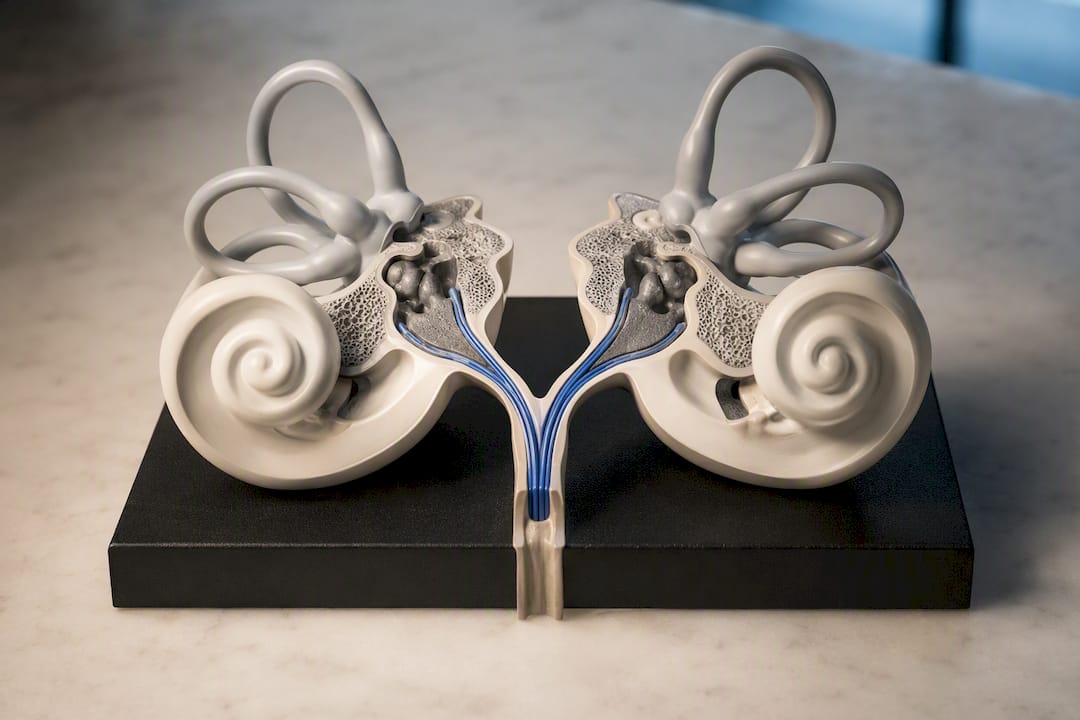
Damage or disruption to the vestibular system can amplify how the brain processes competing sensory input generally, not just balance signals. A patient with vestibular dysfunction is frequently dealing with a nervous system already working overtime to reconcile conflicting motion and position signals, and adding a flood of ambient sound on top of that can push the whole system past its tolerance threshold faster than either problem would alone.
This is why comprehensive concussion assessment increasingly includes vestibular screening alongside auditory testing, rather than treating them as unrelated complaints. A patient who reports dizziness in crowded, noisy environments specifically, versus quiet crowded rooms or noisy but still rooms, is giving useful diagnostic information about which system is driving the discomfort. Vestibular rehabilitation therapy, focused on retraining the brain's balance and motion processing, sometimes reduces auditory sensitivity as a secondary benefit, which is one more reason multidisciplinary care outperforms treating the ear in isolation.
Can Noise Sensitivity Become a Permanent Problem?
For most people, no. The drop from roughly 45% prevalence at baseline to 28% at the one-year mark shows the trend runs toward improvement, not permanence, for the majority of concussion patients.
But chronic cases exist, and some long-term cohorts report aural symptoms persisting beyond six years post-injury. The factors that predict this longer path tend to cluster: repeated concussions rather than a single event, objectively low LDLs on testing rather than mild subjective complaints, and unmanaged depression or anxiety running alongside the physical symptom. People who hit all three risk factors are the ones who most need structured, multidisciplinary follow-up rather than a "give it time" approach.
The reassuring piece of the long-term picture is that chronic doesn't mean untreatable. Even patients with symptoms well past the one-year mark often respond to the same tools used earlier in recovery: audiology-guided graded exposure, CBT for the distress and mood components, and, for cases where autonomic dysregulation seems to be driving the ongoing sensitivity, nervous-system-focused rehabilitation. The goal at that stage shifts slightly, from "wait for it to resolve" to "actively rebuild tolerance," and that shift alone changes outcomes for a meaningful number of long-haul patients.
Why Auditory Screening Needs to Be Routine, Not an Afterthought
Concussion protocols have gotten good at catching cognitive symptoms and balance problems. Auditory symptoms still slip through the cracks far too often, and that gap has a real cost: patients spend months attributing their noise intolerance to "just being tired" or "stress" when a two-minute screening question would have flagged it early.
My take is straightforward: every concussion follow-up visit should include a direct question about noise tolerance, the same way it already asks about headache and dizziness. When a patient answers positive, that should trigger audiology referral as a default, not a maybe. The workflow that works best is simple. Screen at every follow-up. If positive, refer for LDL testing and a hyperacusis questionnaire. Build a combined plan from there, graded exposure through audiology, CBT if mood symptoms are present, and nervous-system rehab when autonomic dysregulation looks like the driver. Recheck at defined intervals, not "come back if it's still bad," because vague follow-up timing is exactly how chronic cases get discovered too late.
— Paige
Getting Started With Nervous-System Rehab for Sensory Overload
If standard audiology care hasn't fully resolved your sound sensitivity, especially if it's tangled up with anxiety, sleep problems, or trouble getting back to full training intensity, One approach addresses the problem from the nervous system perspective rather than the ear alone.
The practice offers a few entry points depending on what you need. The 12-Week Energy Optimization Program is the core rehab engagement for athletes rebuilding tolerance and performance capacity after concussion. A QEEG brain scan gives a data-informed baseline of nervous-system activity before building a personalized plan. Light Therapy consults address sensory regulation through a different channel for patients whose light and sound sensitivity overlap. And one-on-one mentoring is available for athletes who want individualized guidance without committing to the full program upfront.
This approach fits best for athletes and high performers whose sensory overload is interfering with training, competition, or daily performance, and who want a plan that works alongside their existing medical and audiology care rather than around it. If you're weighing your visibility and recruiting timeline while managing recovery, these athlete career strategies are worth a look too. An initial consult starts with a review of your concussion history and current symptoms. From there, book a first session through the services page to see which program fits your recovery stage.
Authoritative Studies and Clinical Resources
For readers who want to go deeper into the research behind this article, or clinicians looking for citable sources:
- Prevalence data on mTBI auditory symptoms, covering the 45% to 28% decline over 12 months.
- Sensitivity to sounds in sport-related concussed athletes, the primary source on LDLs and hyperacusis in athletes.
- Concussion management guidelines neglect auditory symptoms, the clinical review behind the screening recommendations in this article.
- Long-term auditory processing findings after mTBI, covering speech-in-noise deficits despite normal audiograms.
- Associations between concussion history and tinnitus, on cumulative injury exposure and neurobehavioral links.
This article is general information, not a substitute for advice from a qualified doctor. Consult a qualified healthcare professional about your own circumstances before acting on anything here.
Sources
- PubMed: Prevalence data on mTBI auditory symptoms (2021)
- Sensitivity to sounds in sport-related concussed athletes: a new clinical presentation of hyperacusis (PMC)
- Concussion management guidelines neglect auditory symptoms (PMC)
- Associations between football-related exposures, concussion history, tinnitus, and neuropsychological health outcomes (PubMed, 2026)
FAQ
How long does noise sensitivity last after a concussion?
For most people, it improves substantially within weeks to a few months. Prevalence data shows roughly 45% of patients report it initially, dropping to about 28% by the one-year mark, though a minority experience symptoms well beyond that window.
Can you watch TV when you have a concussion?
Yes, but keep the volume low and take breaks if the sound or screen brightness triggers discomfort. If normal TV volume feels unbearable, that's worth mentioning at your next follow-up as a sign your noise tolerance needs formal evaluation.
What are the common symptoms of a concussion?
Common symptoms include headache, dizziness, fatigue, difficulty concentrating, light sensitivity, and noise sensitivity, along with mood changes like irritability or anxiety. Noise sensitivity specifically affects a large share of patients, yet it's often under-screened compared to symptoms like headache or memory trouble.
Can I take a nap after a concussion?
Rest, including napping, is generally fine and often recommended in the first day or two after injury, as long as you're also being monitored for worsening symptoms. Extended, excessive sleep beyond the acute period isn't typically advised, since gradual, guided return to normal activity tends to support recovery better than prolonged inactivity.