
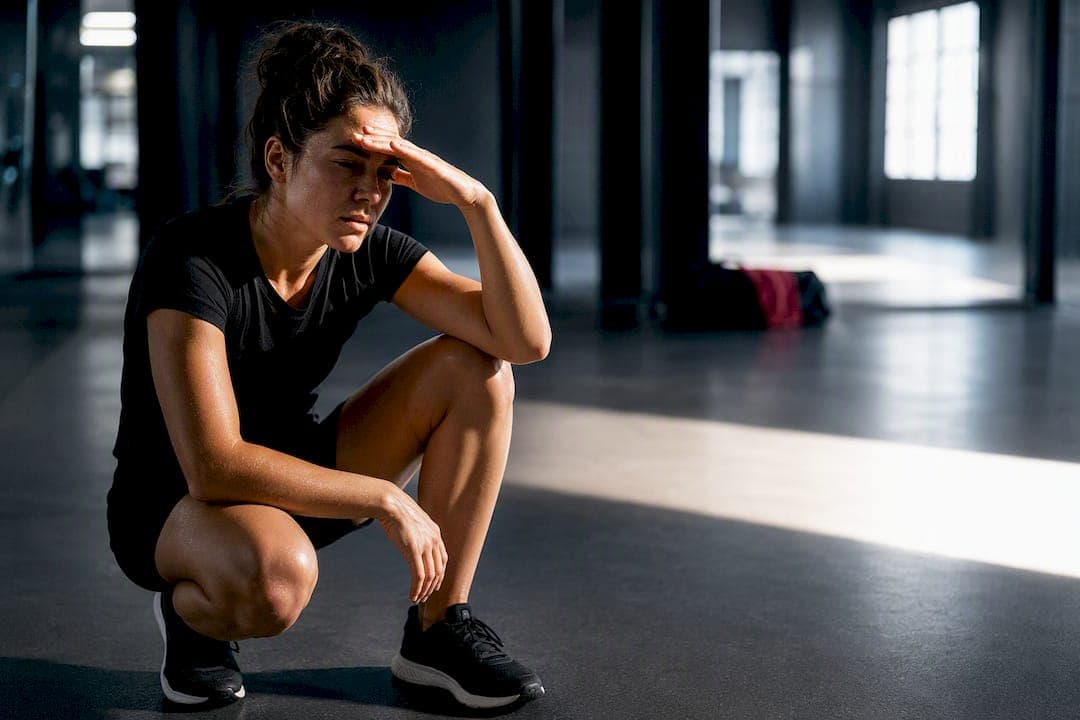
Light sensitivity after concussion is common, not a sign that something is seriously wrong. Most people improve within weeks to a few months by cutting glare exposure, trying tinted lenses, and pacing screens and activity instead of avoiding light entirely. Get urgent evaluation if symptoms suddenly worsen, if you lose consciousness or feel confused, notice vision changes, or develop new weakness or numbness.
TL;DR:
- Light sensitivity after concussion typically improves within one to three months, but persistent symptoms can last longer, especially with heavy screen use.
- Blue-rich and flickering light environments, such as fluorescent lighting and screens, often trigger stronger reactions and should be minimized whenever possible.
- Testing should focus on vision, eye coordination, contrast sensitivity, and dry eye evaluation to determine underlying causes of photophobia.
- Using tinted lenses, especially FL-41 filters that block blue light, can provide relief but should be tested under supervision to find the best fit.
- Gradual sensory reintroduction and nervous system retraining may help improve tolerance when traditional visual therapies are insufficient.
Table of Contents
- What Does Light Sensitivity Feel Like After a Concussion?
- Why Does Concussion Cause Light Sensitivity?
- What Tests Diagnose Light Sensitivity After Concussion?
- How Do You Treat Light Sensitivity From a Concussion?
- How Long Does Light Sensitivity Last After Concussion?
- Retraining the Nervous System Behind the Overload
- A Complementary Path for Athletes Managing Sensory Overload
- Sources
- FAQ
What Does Light Sensitivity Feel Like After a Concussion?
Photophobia after concussion rarely shows up alone. It travels with headaches, nausea, watering eyes, trouble focusing, and sometimes visual distortion, like halos around lights or a sense that the room is subtly moving. The discomfort ranges from a mild ache behind the eyes to genuine pain that makes reading, driving, or grocery shopping feel impossible.
There's a real difference between photosensitivity and photophobia, and it matters for how you describe your symptoms to a clinician. Photosensitivity is discomfort or squinting in bright conditions. Photophobia is pain, an actual aversive reaction that can trigger nausea or a headache spike within seconds of walking into a lit room.
Certain environments make it worse:
- Fluorescent office lighting and its invisible flicker
- Phone and computer screens, especially at close range
- Glare off pavement, snow, or car windshields
- Flickering or high contrast visual patterns, like scrolling social feeds or crowded grocery aisles
Keep a simple log for a week: what time of day symptoms spike, which lighting setup triggered it, and how long relief takes once you leave the environment. That log becomes genuinely useful once you sit down with a specialist, because "light bothers me" tells a clinician almost nothing, but "fluorescent lights at my desk trigger a headache within 20 minutes" tells them exactly where to start.
Why Does Concussion Cause Light Sensitivity?
The short answer: your brain's filtering system gets overwhelmed. Under normal conditions, the thalamus screens out irrelevant visual information before it reaches the cortex. After a concussion, that filter often becomes less efficient, and the cortex ends up processing raw, unfiltered visual input, which the brain interprets as overload or even pain. Neuro-optometry guidance frames this as a processing problem, not primarily an eye disease, and that distinction changes how it should be treated.
Blue-heavy light tends to be the worst offender. A subset of retinal cells called intrinsically photosensitive retinal ganglion cells, or ipRGCs, contain melanopsin and respond strongly to blue wavelengths around 480 nanometers. That's part of why fluorescent and blue-rich light provokes stronger reactions than warmer, dimmer light, and why filters designed to block that specific band, like FL-41, tend to help.
Vision and balance systems get tangled up in this too. Vestibular and oculomotor dysfunction, things like poor convergence or slow tracking, force the eyes and brain to work harder just to stabilize images, which compounds light intolerance. Autonomic nervous system dysregulation adds another layer, since a dysregulated stress response can amplify sensory input across the board, not just vision.
Not every case traces back to the brain injury itself. Migraine biology overlaps heavily with post-concussion photophobia, and some patients had migraine tendencies before their injury that simply got activated. Certain medications cause light sensitivity as a side effect. Dry eye, worsened by reduced blink rate during screen use, adds irritation on top of neurological sensitivity. And anxiety or post-traumatic stress responses can heighten sensory vigilance generally, making light feel more threatening than it did before the injury.
What Tests Diagnose Light Sensitivity After Concussion?
A thorough history usually matters more than any single test. A specialist wants to know when symptoms started, what makes them better or worse, and whether they've changed since the injury.
- Refraction and visual acuity check to rule out an uncorrected vision problem hiding underneath the photophobia.
- Oculomotor and binocular vision testing, evaluating convergence, vergence, and accommodation, since misalignment or poor tracking often coexists with light intolerance.
- Contrast sensitivity testing, which measures how well you distinguish subtle differences in shading, often reduced after concussion.
- Pupil and light reflex assessment, checking how quickly and evenly your pupils respond to light changes.
- Dry eye evaluation, since surface irritation can mimic or worsen photophobia.
Depending on findings, you may get referred to a neuro-optometrist for vision-specific rehabilitation, a vestibular therapist if dizziness or balance problems show up, or a neurologist if headache patterns suggest a migraine phenotype. Bring your trigger log, note your daily screen time, and if possible, photos of the lighting setups that give you the most trouble. Specific details shorten the path to the right treatment plan.
How Do You Treat Light Sensitivity From a Concussion?
Start with the free changes before spending money on anything. Swap overhead fluorescent bulbs for warmer and dimmer lighting where you can control it. Add an anti-glare screen protector or matte filter to your phone and laptop, bump up display contrast slightly, and force yourself to take a 20 to 30 second visual break every 20 minutes or so. A brimmed hat cuts overhead glare outdoors without the drawback of full darkening. None of this fixes the underlying problem, but it lowers the daily load while your nervous system recovers.
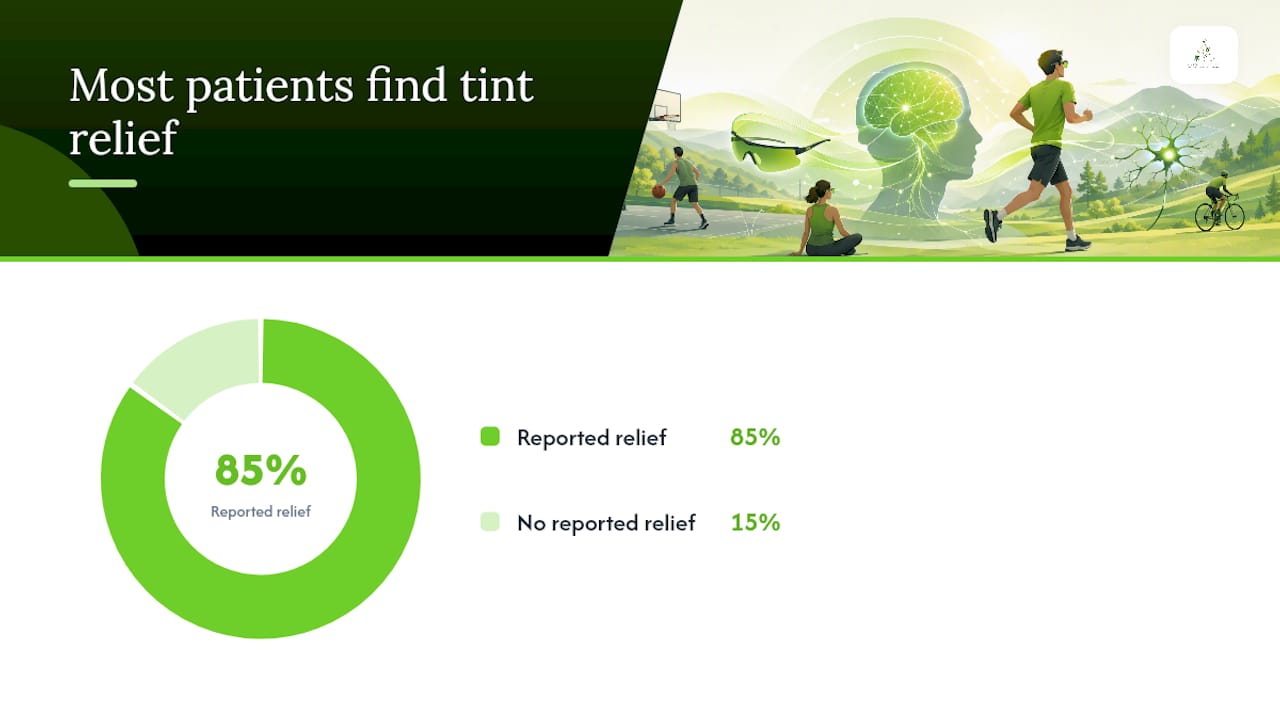
Tinted lenses are where the evidence gets genuinely interesting. In one clinical study, 85% of postconcussion patients with photophobia reported relief from one or more colored lens options, with blue, green, red, and purple tints each helping different individuals. FL-41 lenses, a rose-tinted filter that blocks light around the 480 nanometer range tied to ipRGC activation, have shown up repeatedly in case reports as a source of measurable relief. The catch is that no single tint works for everyone, so a clinic-based trial where you test several colors under supervision beats guessing at a drugstore rack.
Pro Tip: Resist the urge to wear the darkest sunglasses you own indoors, all day, every day. Constant heavy darkening trains your visual system to expect low light and can make you more reactive when you eventually step into normal conditions. A lighter tint used strategically, paired with gradual light reintroduction, tends to serve recovery better than total avoidance.
Beyond lenses, several rehabilitation approaches address the mechanics behind the sensitivity rather than just filtering the symptom:
- Binasal occlusion, a partial visual field block used to ease binocular strain in some patients
- Prism and vergence therapy, retraining eye teaming and focus coordination
- Oculomotor exercises, typically guided by a neuro-optometrist, to rebuild tracking and convergence
- Vestibular therapy, using graded exposure to movement and visual stimulation for anyone whose light sensitivity comes bundled with dizziness or balance trouble
- Lubricating eye drops, a low-effort adjunct when dry eye is compounding the irritation
Because binocular vision dysfunction and light sensitivity so often travel together, treating them jointly tends to produce better functional outcomes than chasing photophobia in isolation. Worth noting: there's still no large randomized controlled trial that definitively ranks these treatments against each other. Current recommendations come from case series, cohort data, and professional consensus, which means your provider may need to try more than one approach before landing on what actually works for you. For a structured way to reduce visual strain while easing back into normal routines, a plan built around gradual sensory reintroduction can help you avoid overcorrecting into total avoidance. If you're using any light-based device at home as part of your recovery routine, it's worth understanding contraindications for light therapy before adding it to your protocol.
How Long Does Light Sensitivity Last After Concussion?
Most people see real improvement within the first month. One registry analysis of service members found photophobia prevalence dropped from roughly 20% at 30 days post-injury to around 7% by the 12-month mark, a steep early decline followed by a smaller group of persistent cases.
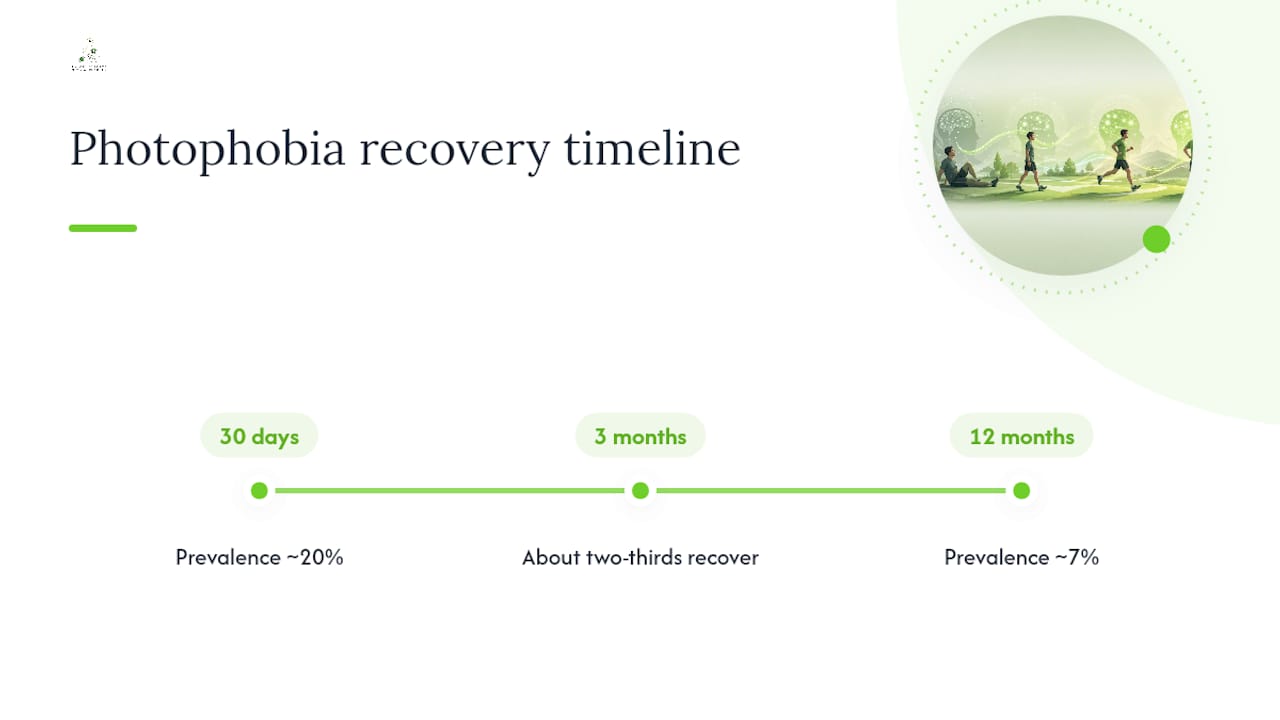
Separate research tracking onset and recovery found that about two-thirds of patients recover within three months of when photosensitivity first appeared, though habitual heavy screen users tend to develop symptoms earlier and recover more slowly than people who use screens less. That's a modifiable factor, not a fixed prognosis. If you're glued to a phone for hours a day, planning a deliberate, gradual reduction and reintroduction of screen time is one of the more actionable levers you actually control. Headaches and dizziness commonly show up alongside photophobia in these cohorts, so don't be surprised if your care plan addresses more than just your eyes.
Retraining the Nervous System Behind the Overload
Photophobia often signals that the brain is burning extra processing energy just to manage ordinary sensory input. Vision and vestibular therapy target the mechanical side of that overload, but attention control and pacing matter just as much, especially for athletes trying to return to a visually chaotic environment like a stadium or a fast-moving field.
Training the nervous system to tolerate graded sensory exposure, rather than flooding it or avoiding it entirely, mirrors the way structured rehabilitation approaches sensory overload more broadly after concussion. Attention-control drills and paced return-to-training protocols don't replace vision or vestibular care. They complement it, giving the nervous system a chance to rebuild tolerance instead of staying stuck in a defensive, hypersensitive state. For competitive athletes, that overlap between sensory recovery and performance readiness is often where the slowest progress happens, and where a nervous-system-focused approach earns its place alongside standard medical care.
— Paige
A Complementary Path for Athletes Managing Sensory Overload
If you're an athlete or performer still feeling foggy, overloaded, or off under bright lights and crowd noise even after your vision and vestibular symptoms have settled, that lingering sensitivity often lives in the nervous system's stress response, not just the eyes. There are neuroscience-based programs designed to retrain nervous system responses using a method called Alpha Imprinting, alongside light therapy, telehealth coaching, and QEEG brain scans that map nervous system functioning.
This isn't a replacement for the neuro-optometry, vestibular therapy, or neurology care described above. It's a layer that sits on top of it, focused specifically on the panic, hypervigilance, and performance anxiety that concussion recovery can leave behind long after the medical charts look clean. Sport-specific programs exist for equestrian, baseball, tennis, and lacrosse athletes navigating this exact return-to-performance gap. If your medical team has cleared the physical piece and you're still not feeling like yourself under competitive pressure, explore the Alpha Imprinting program and book a consultation to see if nervous-system retraining fits your recovery plan.
This article is general information, not a substitute for advice from a qualified doctor. Consult a qualified healthcare professional about your own circumstances before acting on anything here.
Sources
- Post-concussion Syndrome Light Sensitivity: A Case Report and Review of the Literature
- Optometrists
- Cohort study describing the prevalence, comorbidities and recovery of photophobia following mTBI
FAQ
How long does light sensitivity last after a mild concussion?
Most people improve substantially within one to three months, though a registry study found prevalence dropped from about 20% at 30 days to roughly 7% at 12 months, meaning a minority still experience symptoms a year out.
Can concussion symptoms show up later, after a delay?
Yes. Light sensitivity and other symptoms can emerge days or even weeks after the initial injury rather than immediately, which is why tracking symptom timelines matters even if you felt fine right after impact.
Is it safe to watch TV after a concussion?
Screen use isn't dangerous, but heavy habitual screen exposure has been linked to earlier symptom onset and slower recovery, so shorter sessions with frequent breaks are safer than extended, uninterrupted viewing.
What is post-concussion syndrome?
Post-concussion syndrome refers to symptoms, including headache, dizziness, and light sensitivity, that persist well beyond the typical recovery window rather than resolving within the first few weeks after injury.