

Healing sports trauma in the nervous system is the missing step that keeps physically recovered athletes stuck, anxious, and reinjured. The nervous system, not just damaged tissue, drives how fast and how fully you recover from sports injury. Between 43% and 81% of athletes experience significant reinjury anxiety even after the physical injury has healed. That statistic reveals a clear pattern: the body heals, but the nervous system stays locked in protection mode. Nervous system rehabilitation, the clinical term for what athletes often call "mental recovery," is now recognized as a core pillar of sports trauma recovery alongside physical therapy and nutrition.
How does nervous system trauma affect sports injury recovery?
The nervous system acts as the body's threat detector, and a sports injury triggers it hard. After an acute injury, the brain learns to associate certain movements, positions, or environments with danger. That learning does not automatically switch off when the tissue heals.
Pain is a nervous system output, not simply a signal of tissue damage. This concept, called central sensitization, means the nervous system can keep generating pain and protective responses long after the original injury is gone. Athletes experience this as persistent stiffness, flinching, or a deep reluctance to load the injured area at full intensity.
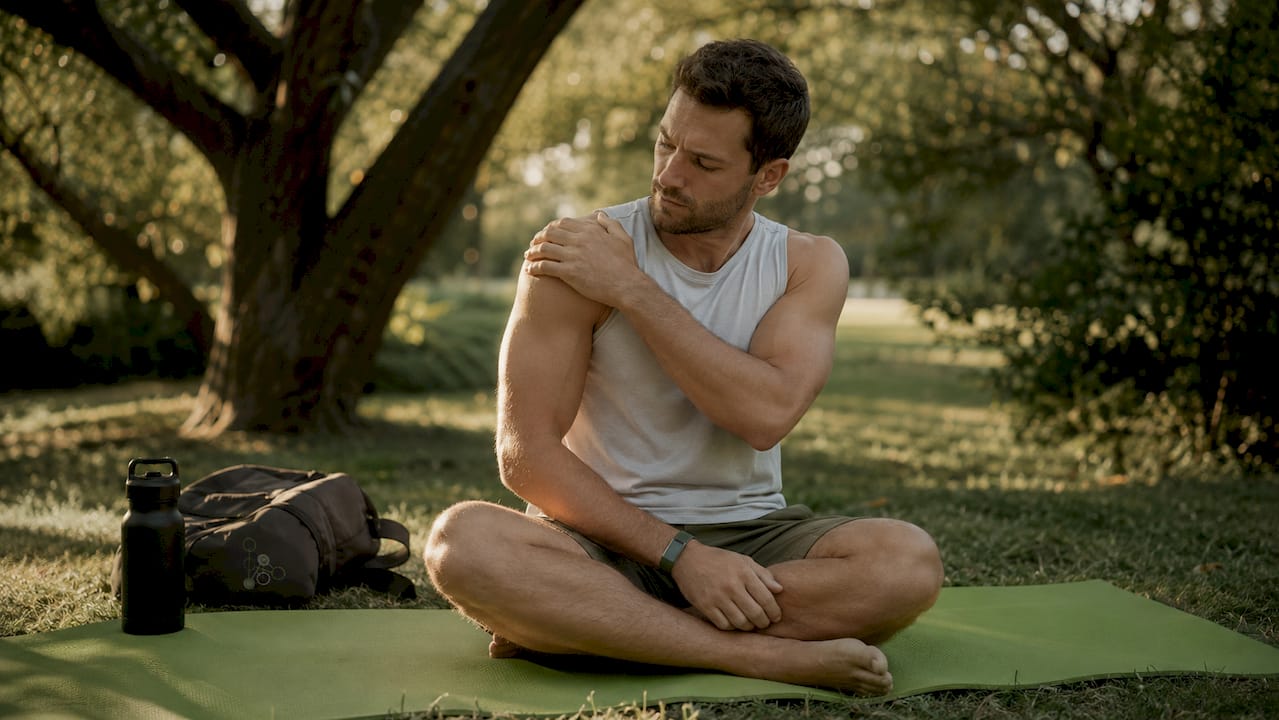
Muscular guarding is one of the most common and least discussed consequences. The nervous system maintains subconscious tension around the injured area as a protective measure. Over time, that guarding restricts movement, alters biomechanics, and creates secondary pain patterns that look like new injuries but are actually learned protective patterns.
Common signs that your nervous system is still dysregulated after a sports injury include:
- Persistent pain or tightness despite clean imaging results
- Heightened anxiety or panic before returning to the sport
- Avoidance of specific movements or positions that feel "risky"
- Sleep disruption, fatigue, and elevated resting heart rate
- Loss of confidence or identity as an athlete
"Athletes who return with high fear and low psychological readiness have a significantly greater risk of reinjury within the first year. Physical clearance is not the same as nervous system clearance."
The role of nervous system healing in athletes is not optional. It is the foundation on which every other recovery strategy depends.
What are the prerequisites for healing nervous system trauma?
Before any targeted nervous system work begins, three foundational conditions must be in place: early movement, basic physiological support, and psychological readiness.
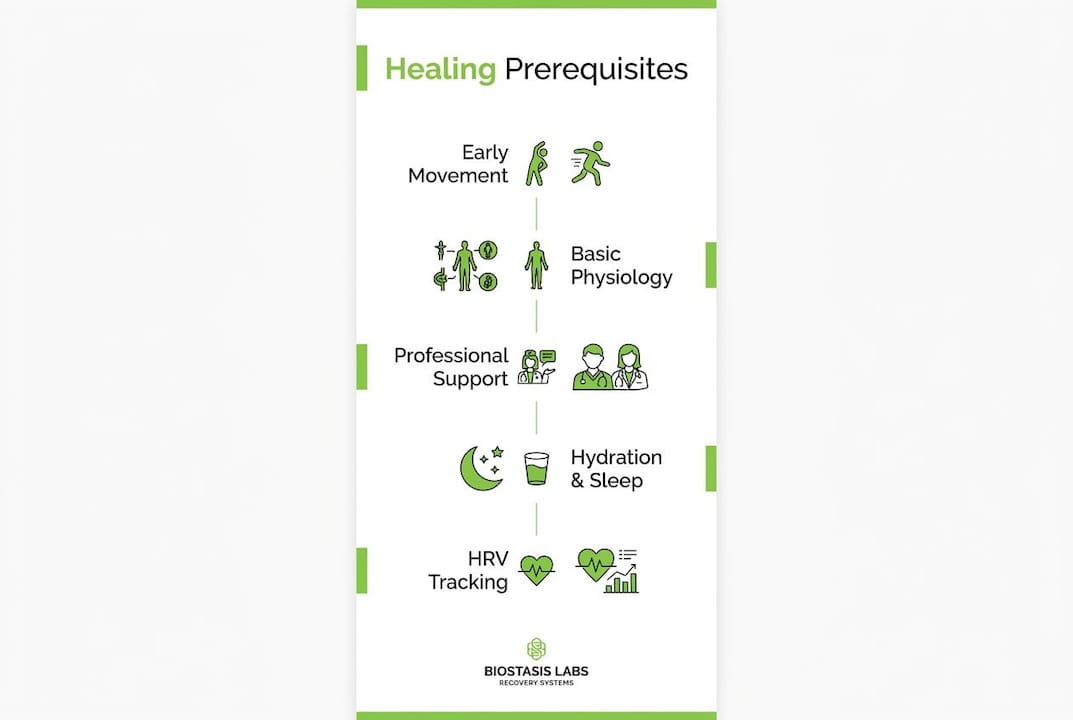
Starting structured rehabilitation within 2 days of injury leads to return to sport 20 days sooner than waiting 9 days. Early, controlled movement sends safety signals to the nervous system and prevents the brain from over-encoding the injury as catastrophic. Prolonged rest, by contrast, reinforces the threat response.
The physiological basics matter more than most athletes realize. Quality sleep, adequate protein and hydration, and managed stress levels all directly influence whether the nervous system can shift from sympathetic "fight-or-flight" mode into parasympathetic repair mode. Without that shift, tissue remodeling slows regardless of how good your physical therapy program is.
The table below outlines the key tools athletes use to support nervous system rehabilitation:
| Tool | Purpose |
|---|---|
| Diaphragmatic breathing | Activates parasympathetic state to reduce threat response |
| Visualization and mental rehearsal | Builds neural pathways for confident movement before physical execution |
| Mindfulness practice | Reduces pain catastrophizing and improves body awareness |
| Heart rate variability (HRV) tracking | Provides objective data on autonomic nervous system recovery |
| Neurotraining programs | Systematically reprogram threat-detection patterns in the nervous system |
Professional support accelerates every stage of this process. Physical therapists manage tissue loading, sport psychologists address fear-avoidance patterns, and specialized neurotraining programs like those at Robertsneurotraining target the deeper nervous system reprogramming that standard rehab does not reach.
Pro Tip: Track your HRV each morning before training. A consistently low or declining HRV score signals that your nervous system has not recovered, even if you feel physically ready. Adjust training load accordingly.
Step-by-step guide to retrain your nervous system after sports trauma
Nervous system retraining follows a logical sequence. Skipping steps prolongs recovery and increases reinjury risk.
Step 1: Map your triggers and protective patterns
Start by identifying which movements, environments, or situations spike your anxiety or pain. Keep a simple daily log noting what you were doing, what you felt, and how intense the response was. This is not about dwelling on pain. It is about gathering data so you can work systematically rather than reactively.
Step 2: Apply graded exposure to feared movements
Gradual exposure is the gold standard for recalibrating threat detection. Begin with a movement that feels only mildly threatening, perform it repeatedly until the nervous system habituates, then progress to the next level. This process directly rewires the brain's threat map.
"The nervous system must shift from sympathetic fight-or-flight to parasympathetic rest and repair for effective tissue remodeling. Graded exposure is one of the most direct ways to initiate that shift."
Step 3: Use breathing to downshift your stress response
Box breathing (4 counts in, 4 counts hold, 4 counts out, 4 counts hold) activates the vagus nerve and moves the nervous system toward parasympathetic dominance within minutes. Practice this before and after any movement that triggers anxiety. Mental skills like breath control reduce pain catastrophizing and improve rehabilitation outcomes, making this one of the highest-return habits in sports trauma recovery.
Step 4: Use imagery and mental rehearsal daily
Mental rehearsal activates the same neural pathways as physical movement. Spend 10 minutes each day vividly imagining yourself performing the feared movement with confidence, control, and no pain. Athletes who practice imagery consistently build neural confidence before they ever attempt the movement at full intensity.
Step 5: Adhere to your rehab program with pacing
Consistency beats intensity in nervous system rehabilitation. Missing sessions or swinging between overtraining and rest disrupts the nervous system's ability to build new, stable patterns. Work with your physical therapist to set weekly targets and communicate openly when anxiety or pain spikes unexpectedly.
Step 6: Communicate with your support team
Fear of reinjury is the most common psychological barrier to returning to sport. Naming that fear to your coach, therapist, or neurotraining specialist removes its power and opens the door to targeted intervention. Silence about psychological symptoms is one of the most common reasons athletes stall in rehab.
Pro Tip: Learn to distinguish neuroplastic pain from reinjury pain. Neuroplastic pain tends to move, vary in intensity, and spike in response to stress or anxiety rather than specific physical load. Reinjury pain is typically sharp, localized, and worsens with direct mechanical stress. When in doubt, consult your physical therapist before modifying your program.
Common pitfalls that slow nervous system healing
Most athletes who stall in recovery make one of a predictable set of mistakes. Recognizing these patterns early saves weeks of lost training time.
- Mistaking guarding for new injury. Muscular guarding feels like damage, but it is the nervous system protecting tissue that has already healed. Stopping all activity in response reinforces the threat signal and prolongs the protective pattern.
- Ignoring psychological symptoms. Fear of reinjury does not resolve on its own. Athletes who dismiss anxiety as weakness allow it to compound into full fear-avoidance behavior, which significantly delays return to sport.
- Overtraining without regulation. Overtraining symptoms often mask nervous system fatigue rather than a lack of fitness. Pushing harder when the nervous system is already dysregulated deepens the problem. Recovery requires nervous system regulation, not just reduced volume.
- Relying solely on physical rehab. Physical therapy addresses tissue. It does not reprogram the threat-detection patterns that drive guarding, anxiety, and avoidance. Athletes who skip the psychological and neurological layers of recovery consistently underperform their physical readiness.
- Using subjective feeling as the only readiness measure. Feeling ready and being ready are not the same thing. Objective metrics like HRV and electrodermal activity track nervous system recovery far more accurately than how an athlete feels on a given morning.
Pro Tip: If nervous system dysregulation persists beyond 8 weeks of consistent rehab, seek a specialist in the biopsychosocial model of injury recovery. The biopsychosocial injury model integrates physical, psychological, and neurological factors and is the current standard of care for complex sports trauma cases.
Gym anxiety is a real and well-documented barrier for returning athletes. Understanding how anxiety affects training is a practical first step toward addressing it before it derails your rehab.
How does nervous system integration improve long-term performance?
Nervous system healing is not just about getting back to where you were. It is the mechanism through which athletes return stronger, more resilient, and less likely to get hurt again.
Psychology-integrated, nervous system-informed rehab significantly improves rehab adherence and reduces recovery times compared to standard care. Better adherence means more consistent loading, which produces stronger tissue adaptation and more stable movement patterns.
The table below contrasts standard physical rehab with an integrated nervous system approach:
| Factor | Standard physical rehab | Nervous system-integrated rehab |
|---|---|---|
| Pain management | Tissue-focused treatment | Addresses central sensitization and guarding |
| Return-to-sport criteria | Physical clearance only | Physical plus psychological readiness |
| Reinjury risk reduction | Moderate | Significantly reduced through threat-detection retraining |
| Performance ceiling | Returns to pre-injury baseline | Expands beyond pre-injury baseline via neuroplasticity |
| Adherence support | Exercise prescription | Mental skills, neurotraining, and coach communication |
Neuroplasticity, the brain's ability to form new neural connections, means the nervous system can be actively trained to support higher performance, not just recover from injury. Robertsneurotraining's approach targets this directly, using structured nervous system reprogramming to help athletes reach states of flow and peak output that standard rehab never addresses.
What I've learned from working with athletes on nervous system recovery
The single most common mistake I see is athletes treating nervous system recovery as a bonus, something to add after the "real" rehab is done. That framing costs athletes months of progress and, in many cases, leads directly to reinjury.
Every athlete I have worked with who struggled to return to sport had one thing in common: their nervous system was still in protection mode, even when their body was physically cleared. The tissue had healed. The threat response had not. No amount of additional physical therapy resolves that. It requires direct, targeted nervous system work.
What actually moves the needle is combining graded exposure with consistent mental rehearsal and real-time nervous system regulation tools like breathing and HRV monitoring. Athletes who commit to this combination do not just return to sport. They return with a level of body awareness and mental control they did not have before the injury.
The psychological effects of sports injury are real, measurable, and treatable. Treating them as secondary to physical rehab is a clinical error that the biopsychosocial framework has definitively corrected. My strong recommendation: start nervous system work on day one of rehab, not after physical clearance.
— Paige
Robertsneurotraining's Alpha Imprinting for sports trauma recovery
Athletes who have completed standard physical rehab but still feel stuck, anxious, or unable to perform at full intensity are the exact athletes Robertsneurotraining was built for.

Robertsneurotraining's Alpha Imprinting method directly targets the nervous system patterns that physical therapy cannot reach: the threat-detection loops, muscular guarding, and performance anxiety that keep athletes below their potential. Alpha Imprinting works by reprogramming the nervous system at a neurological level, clearing the protective patterns that block flow states and confident movement. Olympic Medalists and professional athletes across major leagues have used this method to return stronger and perform beyond their pre-injury baseline. If you are ready to address the nervous system layer of your recovery, explore the full range of neurotraining services available through Robertsneurotraining.
FAQ
What does it mean to heal sports trauma in the nervous system?
Healing sports trauma in the nervous system means retraining the brain's threat-detection patterns that persist after physical injury heals. This includes resolving central sensitization, muscular guarding, and fear-avoidance behaviors that block full recovery and performance.
How long does nervous system rehabilitation take after a sports injury?
The timeline varies by injury severity and how early nervous system work begins. Athletes who start structured rehab within 2 days of injury return to sport 20 days sooner than those who delay, making early intervention the single most impactful timing decision.
Can fear of reinjury be treated, or does it go away on its own?
Fear of reinjury does not reliably resolve without targeted intervention. It is the most common psychological barrier to returning to sport and requires mental skills training, graded exposure, or specialized neurotraining to address effectively.
What is the difference between neuroplastic pain and reinjury pain?
Neuroplastic pain is generated by the nervous system and tends to vary in intensity, move around, and spike with stress rather than physical load. Reinjury pain is sharp, localized, and worsens with direct mechanical stress on the injured area. Consult a physical therapist if you cannot distinguish between the two.
How does Robertsneurotraining's Alpha Imprinting differ from standard sports psychology?
Alpha Imprinting targets the nervous system directly at a neurological level, reprogramming threat-detection and protective patterns rather than addressing thoughts and emotions alone. This makes it effective for athletes who have completed standard rehab but remain stuck below their pre-injury performance level.