
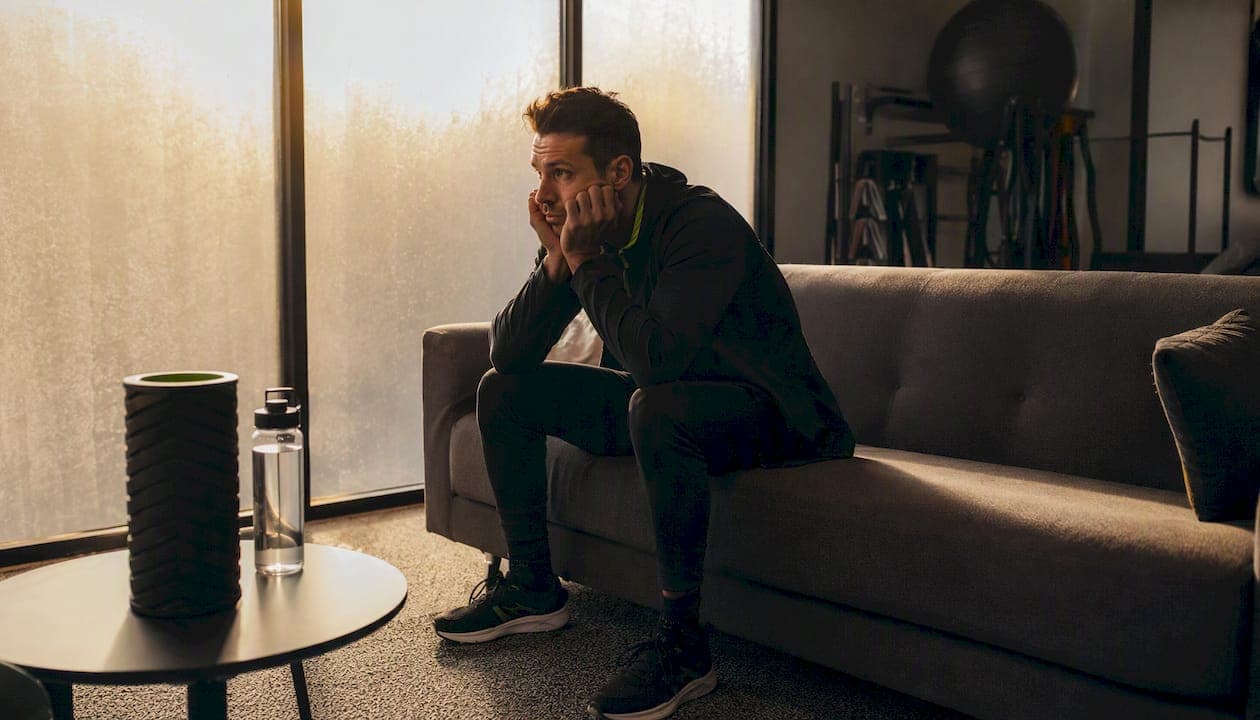
After a concussion, the most common performance-specific mental issues that athletes face are performance anxiety, sudden motor freezing (the yips), loss of flow and automaticity, impaired split-second decision-making under pressure, and fear-driven avoidance of previously automatic movements. These are not failures of willpower. They are involuntary nervous-system responses that require targeted retraining, not more mental toughness.
Here is what to do first:
- Monitor observable signs at practice: hesitations, flinching, inconsistent execution of previously automatic skills, and disproportionate breathing or blanking in specific contexts.
- Track HRV where a wearable is available. Performance anxiety is strongly linked to reduced heart-rate variability, making HRV a practical, non-invasive window into autonomic state.
- Apply a simple downregulation tactic before high-stakes reps: slow exhale breathing (4 counts in, 6 counts out) to shift the nervous system toward parasympathetic tone.
- Pause high-pressure reps and prioritize referral when motor freezing persists, worsens under competition conditions, or starts affecting the athlete's identity and confidence.
Robertsneurotraining, led by Dr. Paige Roberts, uses the proprietary Alpha Imprinting method to address exactly these nervous-system-level performance blocks in competitive athletes across the United States.
Pro Tip: Don't wait for a formal diagnosis of "performance anxiety" before acting. If an athlete's execution is inconsistent in ways that weren't there before the concussion, the nervous system is already signaling a problem.
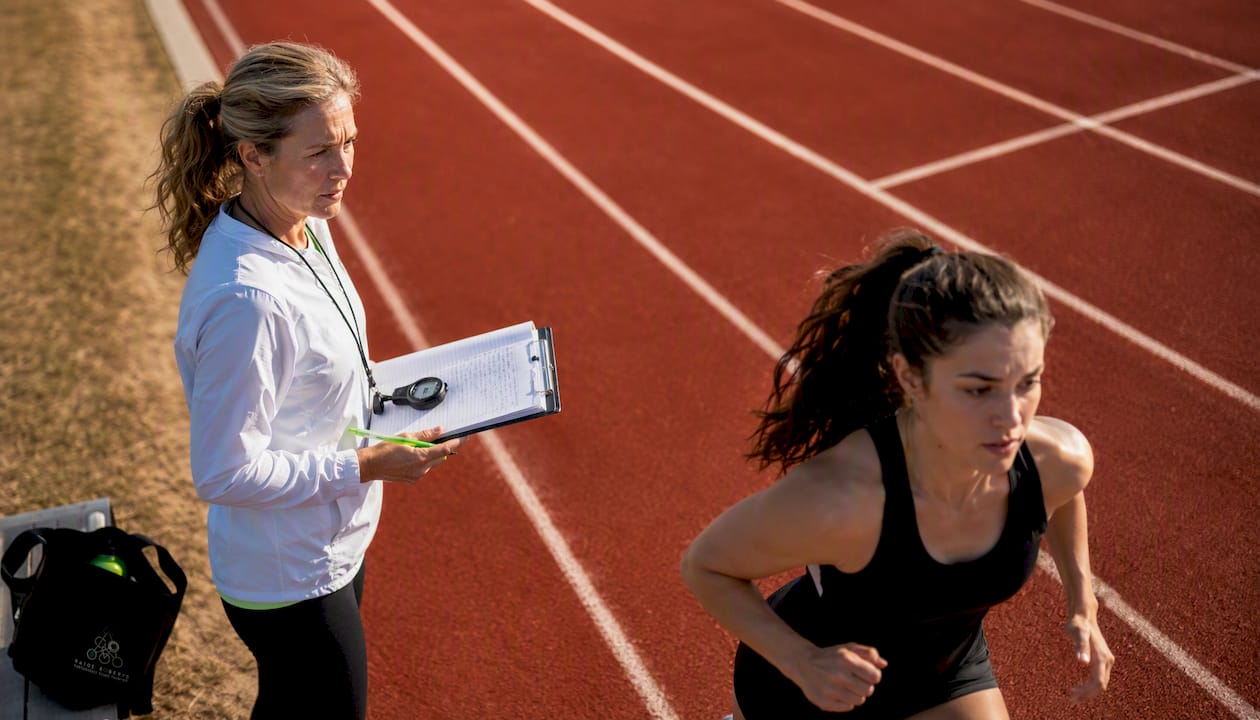
Table of Contents
- What do common post-concussion performance issues actually look like?
- How does concussion actually produce these performance blocks?
- How can coaches spot these issues during practice and competition?
- What approaches actually work for post-concussion performance problems?
- A 6-step field protocol to begin recovery-focused training
- What does recovery typically look like, and how long does it take?
- When should you refer to a nervous-system specialist?
- Key Takeaways
- The part most coaches miss about post-concussion performance
- Robertsneurotraining: nervous-system recovery for athletes after concussion
- Selected sources and further reading
What do common post-concussion performance issues actually look like?
These problems show up in practice and competition as specific, observable behaviors, not vague complaints about confidence or focus.
- Performance anxiety / choking under pressure: A pitcher who throws strikes in the bullpen but loses command the moment a runner reaches base. A gymnast who executes a routine cleanly in warm-up, then stiffens on the first pass in competition. The body knows the skill; the nervous system overrides it.
- Motor freezing / locked movements (yips): A golfer who freezes mid-stroke on short putts. A quarterback whose release suddenly feels foreign. Performance blocks typically show locked or frozen movements and temporary loss of fine or gross motor control, often with a subconscious component tied to anxiety.
- Loss of flow and automaticity: A soccer player who used to read the game instinctively now consciously thinks through every touch. That internal narration kills timing. Flow, the state where performance feels effortless and automatic, depends on the prefrontal cortex stepping back. After concussion, it often won't.
- Impaired split-second decision-making: A basketball guard who hesitates a half-beat too long on a drive, or a lacrosse midfielder who second-guesses a pass they would have made without thinking six months ago. The delay is small. The competitive cost is not.
- Fear-driven avoidance: A wide receiver who subtly adjusts routes to avoid contact situations. A wrestler who pulls out of takedown attempts at the last moment. These are subconscious protective behaviors, not conscious choices, and coaches often misread them as effort or attitude problems.
These are performance-specific mental problems after concussion. They are distinct from general cognitive or medical concussion symptoms like headaches or sleep disruption.
How does concussion actually produce these performance blocks?
The mechanism is neuropsychiatric, not just psychological. Concussion can create a syndrome that combines autonomic dysregulation with subconscious threat learning, and that combination disables the automatic performance pathways athletes depend on.
Here is the chain: the injury shifts the autonomic nervous system toward sympathetic dominance. Parasympathetic tone drops. HRV decreases, and that reduction is directly associated with impaired decision-making under pressure. Simultaneously, the brain encodes the injury context, the sport environment, as a threat. When the athlete returns to that environment, the subconscious threat detection fires before conscious thought can intervene. The prefrontal cortex, which governs precise motor execution and calm decision-making, goes offline. The body reverts to a freeze or fight response.
Concussion is best understood in many cases as a neuropsychiatric syndrome: symptom inventories overlap significantly with anxiety and depression measures, and the behavioral effects, including performance blocks, reflect that overlap rather than a simple structural injury.
This is why standard mental coaching, visualization, and positive self-talk often fail to move the needle. They operate at the conscious level. The threat response is subconscious and autonomic. You cannot think your way out of a freeze response. You have to retrain the nervous system to recognize the competitive environment as safe, which is a different process entirely. Understanding how neurological patterns shift after injury is the starting point for building a recovery plan that actually works.
How can coaches spot these issues during practice and competition?
Observable signs coaches should watch for:
- Sudden hesitations or micro-pauses before previously automatic movements
- Abnormal muscle activation: jerks, flinches, or visible stiffening in specific skill contexts
- Consistent decision delays in situations the athlete handled fluently before the concussion
- Disproportionate physiological signs: rapid shallow breathing, blanking, or a glassy look during drills
- Avoidance of specific positions, contact scenarios, or high-stakes reps without a clear physical reason
In warm-ups: Watch for inconsistency between low-stakes and high-stakes reps. An athlete who looks fine in individual drills but locks up in small-sided or competitive scenarios is showing a pressure-specific response.
During film review: Look for movement hesitations or route adjustments that weren't present before the injury. Subconscious avoidance often shows up on film before the athlete or coach consciously notices it.
Pro Tip: Pull the athlete from high-stakes reps, not from all activity. Removing them from competition-intensity situations while keeping them in low-threat skill work preserves progress and avoids the mood and confidence costs of full rest.
What approaches actually work for post-concussion performance problems?
Effective interventions target the autonomic nervous system and subconscious threat memories, not just conscious mindset.
- Nervous-system reprogramming (Alpha Imprinting): — Targets the subconscious patterns driving freeze responses and avoidance, re-patterning the nervous system to recognize competitive contexts as safe.
Sequencing matters more than method selection. Establish nervous-system regulation first, then apply graded exposure and performance-specific drills. Attempting exposure work on an unregulated nervous system accelerates the threat response rather than resolving it.
The practical implication: don't rush an athlete back into high-pressure reps because they are medically cleared. Medical clearance addresses structural recovery. Autonomic and subconscious re-patterning is a separate process. For a deeper look at healing sports trauma in the nervous system, the sequencing principle applies regardless of the specific method used.
Pro Tip: Brief rest (24–48 hours) followed by carefully graded activity outperforms prolonged isolation. Extended rest worsens mood and can deepen the threat association with sport contexts.
A 6-step field protocol to begin recovery-focused training
- Baseline observation and HRV snapshot. Record the athlete's resting HRV for 3–5 consecutive mornings. Note specific skill contexts where performance breaks down.
- Downregulation drill before every session. Five minutes of slow exhale breathing (4 in, 6 out) or box breathing before any performance-specific work.
- Controlled graded exposure session. Reintroduce the problematic skill in a zero-stakes context: solo, no audience, no score, no coach feedback beyond safety.
- Re-associate the motor pattern under low-threat conditions. Add a partner or small group, still no competitive pressure. Repeat until execution is consistent and HRV remains stable.
- Incremental pressure reintroduction. Add one pressure variable at a time: time constraint, then audience, then competitive scoring. Move to the next variable only when the previous one no longer triggers hesitation.
- Track metrics and decide on referral. After two to three weeks, assess: Is HRV trending up? Is execution consistent under moderate pressure? If not, refer to a nervous-system specialist.
Measurement checklist for each session:
- Morning HRV (wearable or app-based)
- Subjective readiness score (1–10, athlete self-report)
- Observable hesitations or freezes during target skill
- Heart rate at rest vs. during skill execution
- Athlete-reported confidence in the specific movement
What does recovery typically look like, and how long does it take?
| Phase | Typical Timeframe | Key Milestone |
|---|---|---|
| Initial regulation | Weeks 1–2 | Stable resting HRV; athlete can downregulate on demand |
| Low-threat skill rehearsal | Weeks 2–4 | Consistent execution in zero-stakes drills |
| Moderate pressure reintroduction | Weeks 4– | Clean execution with a partner or small group |
| Simulated competition | Weeks 8– | Successful pressured reps in practice scenarios |
| Full return to competition | variable timeframe | No avoidance, consistent performance under match pressure |
These ranges assume a single concussion with no major complicating factors. Recovery varies significantly based on:
- Pre-injury mental health history. Pre-existing anxiety or depression is associated with longer concussion recovery in some cohorts and directly affects the depth of the threat-learning response.
- Number of prior concussions. Repeated concussions compound autonomic dysregulation and psychiatric symptom burden.
- Severity of the performance block. Entrenched motor freezing or identity-level avoidance takes longer to re-pattern than mild hesitation.
The most common pitfall: rushing return-to-play because the athlete feels fine at rest. Autonomic dysregulation and subconscious threat responses are not detectable at rest. They surface under pressure.
When should you refer to a nervous-system specialist?
Refer when you see:
- Motor freezing that persists despite two to three weeks of basic regulation and graded exposure
- Performance that worsens as competitive pressure increases, rather than improving
- Avoidance behaviors that are expanding to new contexts or skills
- Identity-level impact: the athlete is questioning whether they want to continue competing
- Stalled progress after following a structured protocol
Questions to ask a specialist before committing:
- Do you have specific experience with performance blocks after concussion, not just general sports psychology?
- What autonomic metrics do you use, and how do you track progress?
- How do you sequence regulation work versus performance-specific exposure?
- Are you familiar with nervous-system reprogramming approaches such as Alpha Imprinting or equivalent methods?
- What measurable outcomes should we expect, and over what timeframe?
What to bring to a referral:
- Video clips of the performance issue in practice and competition
- HRV logs from the past two to three weeks
- A brief written timeline: when the concussion occurred, when the performance issue appeared, what has been tried
- Medical clearance documentation
Key Takeaways
Post-concussion performance blocks are nervous-system problems, not willpower problems, and they require autonomic regulation before any performance-specific work can stick.
| Point | Details |
|---|---|
| Nervous system, not mindset | Freezing, avoidance, and loss of flow are autonomic responses, not attitude or effort failures. |
| Regulate before you expose | Establish HRV stability and parasympathetic tone before reintroducing competitive pressure. |
| Monitor with HRV | Morning HRV and observable hesitations are your two most practical progress markers. |
| Refer when progress stalls | Persistent motor freezing or worsening under pressure after two to three weeks signals specialist need. |
| Robertsneurotraining's approach | Alpha Imprinting targets subconscious threat patterns driving performance blocks, with telehealth access across the United States. |
The part most coaches miss about post-concussion performance
The conventional framing treats post-concussion performance problems as a confidence issue, something to be coached through with encouragement, visualization, and gradual exposure. That framing is not wrong, exactly. It is just incomplete in a way that costs athletes months.
What gets missed is the subconscious layer. An athlete can believe, consciously and genuinely, that they are ready to compete. They can want to execute. And the nervous system will still fire a freeze response the moment the competitive context triggers the threat memory encoded during or after the injury. Confidence work does not reach that layer. Exposure alone does not reach it either, not reliably, not fast enough.
The athletes who recover fastest are the ones whose programs address the autonomic and subconscious components directly, not as an afterthought after the "real" physical and cognitive work is done, but as the first priority. Regulation before exposure. Subconscious reprocessing before competitive pressure. That sequencing is not a nice-to-have. It is the difference between an athlete who recovers in three months and one who is still managing the same freeze response two years later.
Robertsneurotraining: nervous-system recovery for athletes after concussion
Athletes who have been medically cleared but still can't perform the way they did before their concussion need a different kind of help than standard sports psychology provides. That is exactly the gap Robertsneurotraining fills.
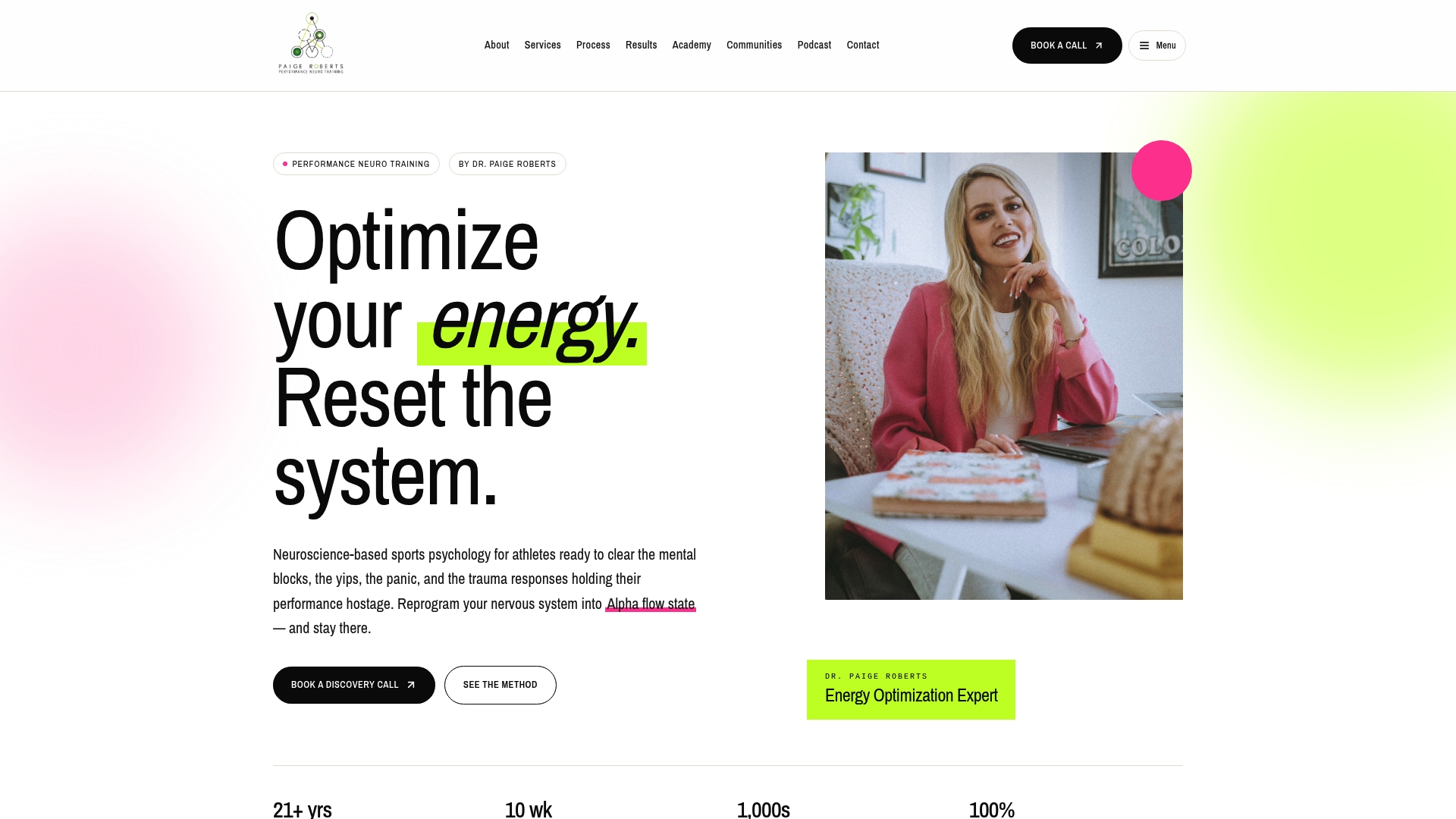
Dr. Paige Roberts' proprietary Alpha Imprinting method works directly on the subconscious nervous-system patterns driving performance blocks, freeze responses, and fear-driven avoidance. Services include 1:1 intensive sessions, a 10-week Energy Optimization Program, team workshops, and telehealth access for athletes across the United States. Progress is tracked with HRV monitoring and observable performance milestones, so you know what is changing and why. Olympic medalists have used this approach to break through performance blocks that traditional sports psychology couldn't resolve.
To start, visit the concussion recovery page at Robertsneurotraining, review the service options, and request an initial evaluation. Bring your HRV logs, a brief symptom timeline, and any video of the performance issue. The first session focuses on identifying the specific autonomic and subconscious patterns at play, so the work is targeted from day one.
Selected sources and further reading
- Performance blocks in sport: recommendations for treatment and implications for sport psychology practitioners — Bennett; foundational paper on motor freezing, yips, and EMDR-based treatment sequencing.
- Cardiovascular Autonomic Regulation and Performance Anxiety in Athletes: A Narrative Review — narrative review supporting HRV as an autonomic monitoring tool and linking autonomic imbalance to performance anxiety.
- Neuropsychiatry of sport-related concussion — neuropsychiatric framing of concussion; recovery variability and pre-injury mental health factors.
- Healing The Mind: Concussion Recovery in Athletes — graded activity vs. prolonged rest; practical recovery guidance.
- Sport-related head injury and performance anxiety — links head injury to performance anxiety and emotional response in athletes.
- Neurological Training Post-Concussion: 9 Key Benefits — program-level outcomes and protocol rationale from Robertsneurotraining.
- What Is Nervous System Reprogramming for Athletes — explains the rationale and methods behind Alpha Imprinting and nervous-system re-patterning.