
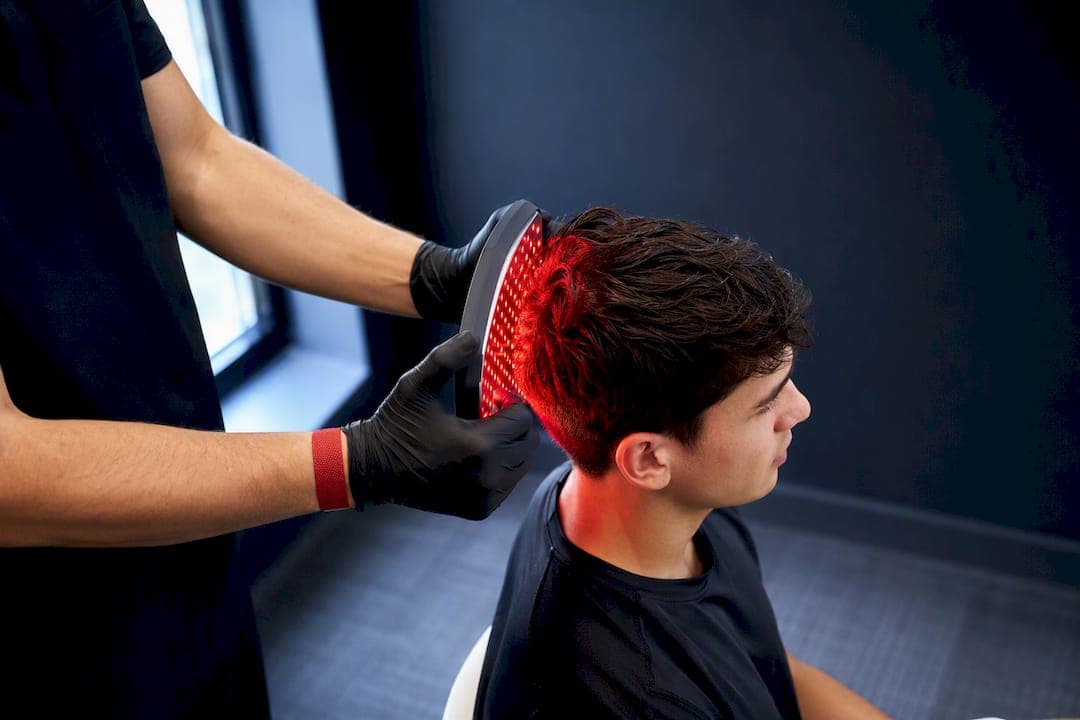
Red light concussion therapy, more precisely called photobiomodulation (PBM), shows real but limited promise: pilot studies and case series report symptom improvement in some patients with persistent post-concussion symptoms, while randomized trials have produced mixed results regarding advantages over sham treatment. It is not an approved or standard concussion treatment. Think of it as an adjunct worth discussing with a clinician, not a substitute for standard recovery care. This article breaks down the evidence, the biology, safety limits, and realistic treatment parameters.
TL;DR:
- Most current evidence for red light therapy in concussion treatment is based on small pilot studies and case series, with mixed results in larger randomized trials.
- Near-infrared wavelengths (810-850 nm) penetrate the skull deeper and are more effective than visible red light in targeting brain tissue, but device output and treatment parameters vary widely.
- Safe use requires avoiding the acute phase within 48 to 72 hours post-injury, and it should only be used under clinician supervision, especially for individuals with contraindications or active health conditions.
- Most protocols involve multiple sessions over six weeks, with 40-minute treatments at three times weekly, reflecting doses tested in foundational studies.
- Currently, red light therapy for concussion remains an adjunct within a broader recovery plan, not a standalone or proven cure, with ongoing research aiming to clarify its efficacy.
Table of Contents
- Does Red Light Therapy Actually Help With Concussions?
- How Does Red Light Therapy Work on an Injured Brain?
- Is Red Light Therapy Safe After a Concussion?
- What Are the Standard Treatment Parameters Used in Studies?
- Where Can You Actually Access Red Light Therapy for Concussion?
- How Does Red Light Therapy Fit Into Standard Concussion Care?
- How Roberts Neurotraining Approaches PBM in Concussion Recovery
- Who Should Actually Consider Trying This Right Now?
- Ready to Explore a Guided Approach to Concussion Recovery?
- Sources
- FAQ
Does Red Light Therapy Actually Help With Concussions?
The honest answer sits between hope and hype. Photobiomodulation, sometimes called red light therapy or low-level light therapy, has produced enough consistent biological signals and patient-reported improvement to justify continued research. It has not produced the kind of clean, repeatable, large-scale trial data that would let a doctor call it proven.
That gap between plausible mechanism and confirmed outcome is exactly where most emerging brain injury treatments live for years before (or instead of) graduating to standard care. Photobiomodulation for concussion is roughly a decade into that process. Some of the earliest human data came from Boston, where researchers first ran transcranial LED sessions on patients with mild traumatic brain injury (TBI) who had stopped improving through conventional rehab.
What early pilot studies found
The 2014 study by Naeser and colleagues remains the most cited human pilot in this field. Researchers treated a small group of patients with chronic mild TBI using 18 transcranial LED sessions delivered over about six weeks. Several participants reported improved sleep, mood, and cognitive function, and some showed measurable gains on neuropsychological testing.
The sample was small, roughly a dozen participants, and the design was open protocol, meaning there was no sham comparison group and no blinding. That matters because expectation alone can move self-reported symptom scores. Still, the pilot gave the field its first concrete signal that transcranial light exposure, delivered consistently over weeks, correlated with something measurable in a chronic, treatment-resistant population.
- Naeser's protocol used near-infrared LEDs applied to specific scalp locations tied to the injury pattern.
- Sessions ran on a set schedule (commonly three times weekly).
- Outcomes tracked included cognitive testing and patient self-report, not just subjective impression.
- Improvements appeared gradually across the six-week course, not after a single session.
Why randomized trials tell a different story
Open pilots tend to look better than blinded trials, and PBM followed that pattern. A randomized, double-blind, placebo-controlled trial published in 2023 tested PBM against a sham device in patients with persistent post-concussion symptoms and did not find a clear advantage for active treatment over placebo.
"Mixed evidence" in practice means this: some outcome measures moved in the expected direction, others did not, and the overall statistical picture did not clear the bar for confidently recommending PBM as effective. This is common in early-stage brain injury research. Sham devices in PBM trials often produce a low level of light or warmth themselves, which can blur the line between active and control conditions. Placebo response in concussion symptom scales, which lean heavily on self-report, also tends to run high regardless of the intervention being tested.
Statistic callout: The foundational human pilot on transcranial LED therapy for chronic mild TBI involved roughly 11 participants over an 18-session, six-week course. That is the scale most current clinical PBM protocols still trace back to.
Institutional programs are still testing this
Case series and small clinical programs at institutions including VA Boston and the University of Utah have run PBM protocols for patients with repetitive head impacts and lingering post-concussion symptoms, reporting positive outcomes at the case level according to a Concussion Alliance summary of light therapy research. Case series are useful for generating hypotheses and refining dosing, but they are not a substitute for controlled trials, since there's no comparison group to rule out natural recovery or placebo effect.
A newer, more rigorous wave of research is already underway. A registered trial (NCT06239818) is currently studying PBM in adolescent athletes at risk for delayed recovery, using MRI to measure functional and structural brain connectivity alongside behavioral outcomes. That is a meaningfully different design than the 2014 pilot: it pairs imaging biomarkers with clinical scores, which could finally clarify whether reported symptom relief tracks with actual changes in brain tissue or blood flow.
If you want to see what active PBM research looks like right now, ClinicalTrials.gov lists registered studies by condition and location, and it is the most reliable way to check whether a claim about "clinically proven" red light therapy has real trial backing behind it.
How Does Red Light Therapy Work on an Injured Brain?
The mechanism starts inside the mitochondria, the energy-producing structures in every cell. Red and near-infrared light, typically in the 600 to 1200 nanometer range, gets absorbed by an enzyme called cytochrome c oxidase sitting in the mitochondrial membrane. That absorption is believed to boost the cell's production of ATP, the molecule that powers nearly everything a neuron does to repair and maintain itself.
A concussed brain often runs an energy deficit. The injury disrupts normal metabolism, and cells that would otherwise repair themselves efficiently are working with a smaller energy budget. The theory behind PBM is straightforward: if you can nudge mitochondrial output upward in the affected tissue, you may be supporting a recovery process that is already underway but starved for resources.
Blood flow and inflammation
Beyond the mitochondrial effect, PBM is thought to trigger nitric oxide release in blood vessel walls, which causes vasodilation and can increase local cerebral blood flow. More blood flow to an injured region means more oxygen and glucose delivery, and better clearance of metabolic waste products that build up after trauma.
Preclinical research and some human imaging studies also point to anti-inflammatory signaling and increased brain-derived neurotrophic factor (BDNF), a protein tied to neuroplasticity and the brain's capacity to form new connections during recovery. None of this is settled science in humans. Much of the strongest mechanistic data still comes from animal models and cell cultures, with human evidence lagging behind, particularly for the neuroplasticity and BDNF claims.
Why wavelength choice is not cosmetic
Visible red light around 630 to 660 nanometers does not travel far through skull bone. Near-infrared light in the 810 to 850 nanometer range penetrates considerably deeper, which is why nearly every serious transcranial protocol for brain injury uses NIR wavelengths rather than visible red for the actual cranial application.
This distinction gets blurred constantly in consumer marketing. A red light panel marketed for skin or muscle recovery, glowing visibly red, is very likely not delivering meaningful energy to cortical tissue, regardless of how it looks or how warm it feels on the scalp.
- Cytochrome c oxidase absorption drives the proposed ATP increase.
- Nitric oxide release supports vasodilation and improved local blood flow.
- BDNF and anti-inflammatory signaling appear in preclinical and some human imaging work.
- Near-infrared (810 to 850 nm) penetrates skull far better than visible red (630 to 660 nm).
- Only a small fraction of delivered light, often estimated in the low single digits as a percentage, actually reaches the cortical surface, so device output matters enormously.
Is Red Light Therapy Safe After a Concussion?
Safety data from the clinical trials conducted so far is reassuring on the surface. Low-level PBM devices used in these studies are non-thermal, meaning they don't heat tissue the way surgical or high-power lasers do, and reported adverse events across research cohorts have been minimal. That said, "minimal reported harm in small research cohorts" is not the same as "proven safe for everyone," and the distinction matters when a marketing page glosses over it.
The regulatory gap nobody explains clearly
Here is where a lot of confusion comes from. Many consumer LED devices carry FDA clearance, but that clearance almost always covers general wellness or low-risk cosmetic use, not a specific claim to treat concussion or traumatic brain injury. No PBM device currently carries FDA approval specifically for concussion treatment. A device being legally sold does not mean it has been evaluated and approved for the condition a seller is implying it treats.
That gap is exactly why clinical oversight matters. A clinician can put the marketing claim in context, check whether a device's output matches anything used in published research, and monitor for a reaction that a home user might miss or misattribute.
When PBM should be avoided or delayed
- Avoid PBM in the acute phase, generally the first 48 to 72 hours after injury, when the priority is rest, monitoring, and ruling out more serious injury.
- Photosensitivity conditions, including certain skin disorders and some medications, are a contraindication and should be flagged to a provider before starting.
- Pregnancy warrants caution and a direct conversation with a physician, since cranial PBM has not been studied in pregnant patients.
- Active cancer, particularly near the treatment site, needs medical clearance, since light-based therapies that affect cell metabolism carry theoretical concerns for tumor tissue.
- Implanted electronic devices, such as pacemakers or neurostimulators, should prompt a check with the device manufacturer and treating physician before any light therapy near the device.
- If you take photosensitizing medications (certain antibiotics, some acne treatments) the same caution applies whether the light exposure is for a concussion protocol or any other use, since the risk comes from the medication, not the injury being treated.
Unregulated clinics are a real risk in this space. High-power therapeutic lasers, sometimes marketed alongside consumer LED panels, operate at intensities that require real safety protocols and trained operators. A clinic that cannot describe its device's wavelength, power density, or cite a published protocol it is following is not one to trust with a brain injury.
Pro Tip: Ask any provider offering PBM for concussion to show you the specific wavelength and power density their device delivers at the scalp, not just the marketing name of the device. If they can't answer, that's your answer.
What Are the Standard Treatment Parameters Used in Studies?
Most published human protocols cluster around a fairly narrow set of parameters, which is useful to know if you're evaluating whether a clinic's offering resembles anything actually studied.
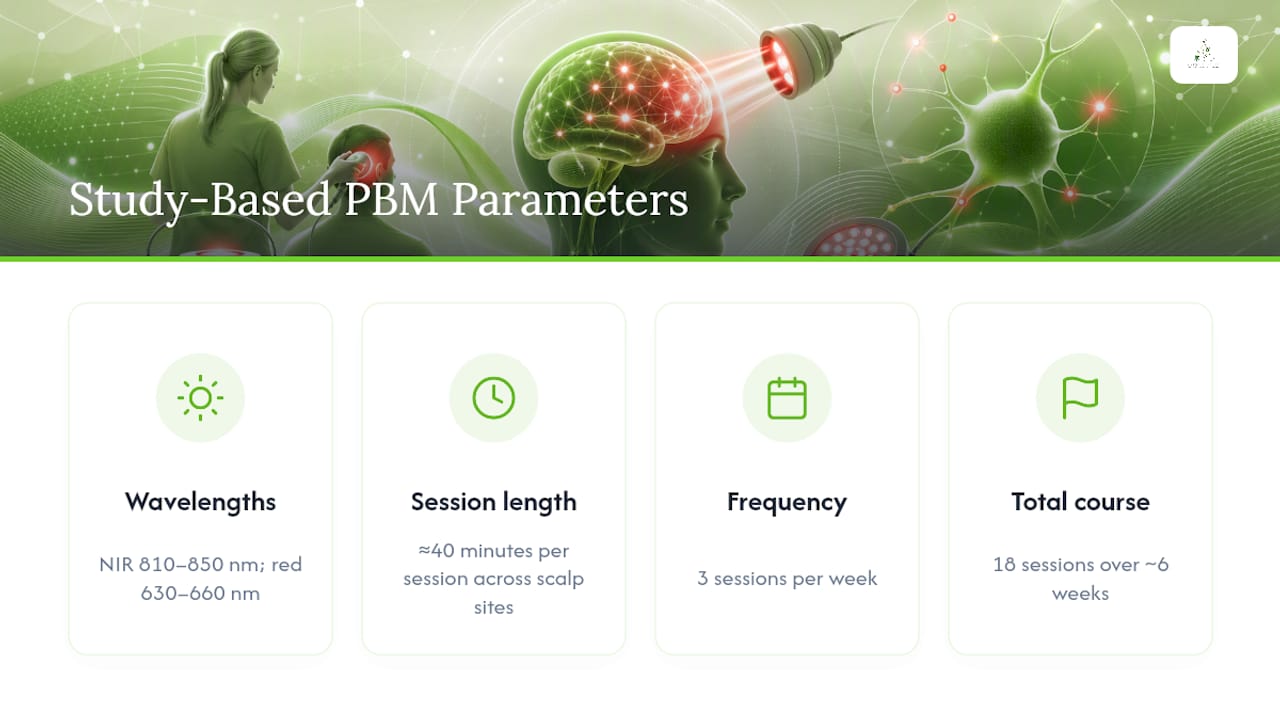
Near-infrared wavelengths in the 810 to 850 nanometer range dominate transcranial protocols because of their superior skull penetration compared to visible red light in the 630 to 660 nanometer range. Session length in the foundational Naeser pilot ran around 40 minutes, applied across multiple scalp locations corresponding to the injury pattern. Treatment frequency in that protocol was three sessions per week, and the full course ran 18 sessions across roughly six weeks.
Why consistency shows up again and again
A single session of PBM is not what generated the reported improvements in any published human study. Every protocol with a positive signal involved a sustained course delivered over multiple weeks, not a one-time exposure. That is worth repeating because home-device marketing often implies fast results from occasional use, which does not match how the underlying research was actually structured.
Statistic callout: Estimates suggest only a small fraction of light delivered at the scalp, often in the low single-digit percentage range, reaches the cortical surface. That number varies by device, wavelength, and scalp location, which is why replicating a study's exact equipment matters more than matching its general description.
Delivery methods vary
Transcranial arrays, panels or helmet-style devices positioned against the scalp, are the most common delivery method in published research. Some protocols use intranasal probes, delivered through the nasal cavity, on the theory that this route reaches deeper brain structures with less bone interference, though this approach has less published human data behind it than transcranial application.
Devices also differ in whether they deliver continuous or pulsed light. Some researchers argue pulsing changes how tissue responds at the cellular level, but there is no settled consensus on optimal pulse frequency for concussion specifically. Every element of this remains experimental, which is a meaningful reason protocols vary this much between clinics and research programs.
- Transcranial near-infrared (810 to 850 nm) is the dominant wavelength choice in published concussion protocols.
- Visible red (630 to 660 nm) has limited use in cranial applications due to shallow skull penetration.
- Session length in foundational pilot work ran around 40 minutes per session.
- Frequency of three sessions weekly, over a six-week course, appears repeatedly in the literature.
- Power density and percent transmission through skull vary by device and measurement method, so exact numbers should be treated as estimates, not guarantees.
- Delivery methods include transcranial panels, helmet arrays, and, less commonly, intranasal probes.
Athletes and active patients who want a deeper look at how wavelength and dosing choices intersect with sport-specific recovery can find more detail in how light and audio-visual neuromodulation may support an injured nervous system.
Where Can You Actually Access Red Light Therapy for Concussion?
Three general paths exist right now, and each comes with a different tradeoff between supervision, cost, and evidence quality.
- Clinical or research-program access. Programs affiliated with hospitals or universities, including trial sites and specialized concussion clinics, offer supervised dosing with devices that match published research specs, plus formal outcome measurement through symptom scales, neuropsych testing, or imaging.
- Registered clinical trials. Enrolling in an active trial, such as the adolescent athlete study currently recruiting, typically means no cost for the treatment itself, rigorous monitoring, and contribution to the evidence base, though eligibility criteria can be strict and trials are not available everywhere.
- Consumer home devices. Home LED panels are convenient and lower cost, but most deliver lower power output than clinical-grade equipment, and penetration to cortical tissue is uncertain without documented specs, which makes replicating a study's actual protocol difficult.
Before committing to a clinic offering PBM for concussion, ask directly: What is the device's wavelength and measured power density at the scalp? What credentials does the treating staff hold? What outcome measures will track whether it's working? Was their protocol tested against a sham condition, or is it based purely on open-label experience? A clinic that answers these clearly is operating closer to the research literature than one that leans on testimonials alone.
Expected timelines in published protocols run four to six weeks minimum before meaningful change shows up on symptom scales or neuropsych testing, roughly matching the course length used in the founding pilot studies. Outcomes get measured through standardized post-concussion symptom scales, cognitive testing batteries, and, in the more advanced current trials, MRI connectivity imaging rather than symptom report alone.
How Does Red Light Therapy Fit Into Standard Concussion Care?
PBM works as a supplement to established rehabilitation, not a replacement for it. Graded return-to-activity protocols, vestibular and vision therapy for balance and eye-tracking deficits, and cognitive pacing to manage exertion all remain the backbone of evidence-based concussion recovery. Institutional and clinical leaders consistently frame PBM as adjunctive given how many overlapping systems, vestibular, ocular, cognitive, and autonomic, contribute to concussion symptoms.
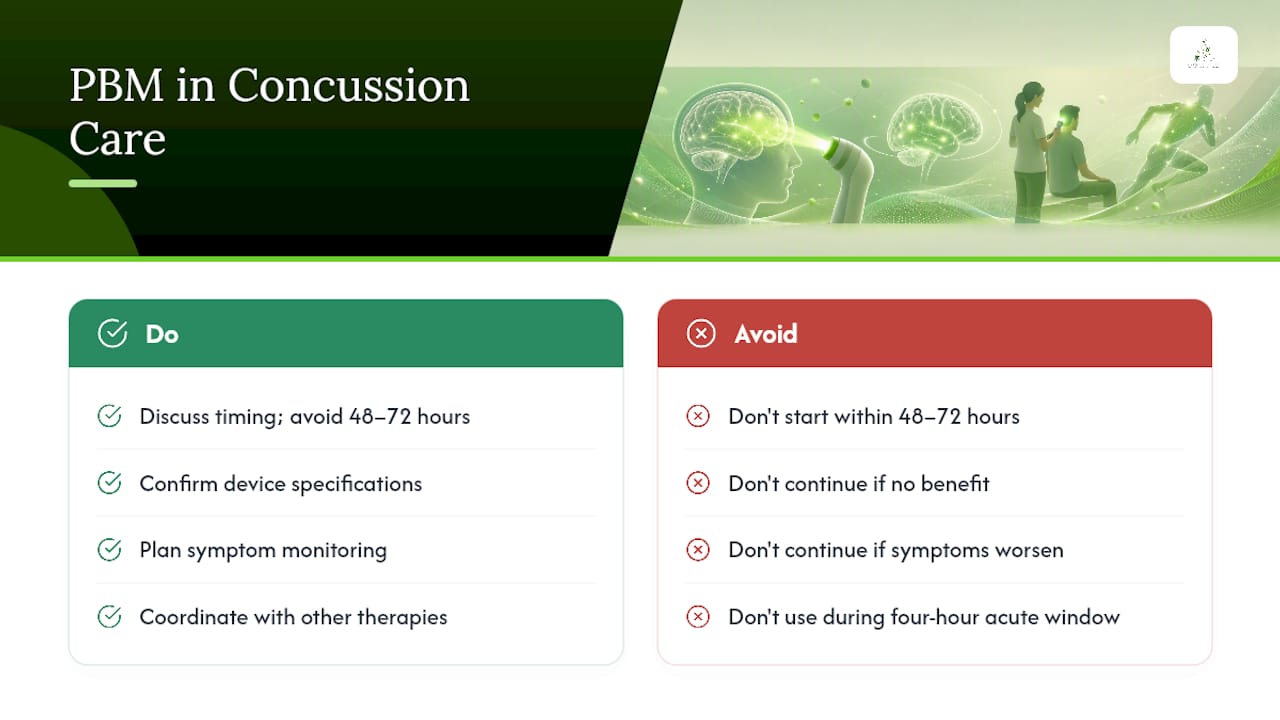
A useful conversation with a provider considering PBM should cover six things: timing relative to injury (avoiding the acute 48 to 72 hour window), the exact device specifications being used, a plan for monitoring symptoms across the course of treatment, a realistic timeline for expecting change (typically four to six weeks), a full contraindication screen, and how PBM will be coordinated with any vestibular, vision, or cognitive therapy already underway.
Stopping rules matter as much as starting criteria. If a full planned course produces no measurable change, if new symptoms emerge, or if existing symptoms worsen, that is the signal to stop and reassess with the treating clinician rather than continuing indefinitely on hope.
One acute-care point deserves mention regardless of any light therapy discussion: the so called four hour rule refers to the acute observation window after a head injury where new or worsening symptoms, such as repeated vomiting, worsening headache, or confusion, warrant immediate medical evaluation rather than waiting to see if they pass. PBM has no role in that acute window.
Pro Tip: If a provider suggests starting PBM before your acute symptoms have stabilized, ask why. Every published protocol with reported benefit was applied to patients well past the acute phase, often months into persistent symptoms.
How Roberts Neurotraining Approaches PBM in Concussion Recovery
Some programs treat photobiomodulation as one tool inside a larger nervous-system retraining framework rather than a standalone fix. The program's core method, Alpha Imprinting, works on the premise that concussion recovery often stalls not purely from tissue damage but from a nervous system stuck in a heightened stress or protective state, something light therapy alone cannot resolve.
A typical assessment blends telehealth consultation with objective screening, sometimes including brain mapping where appropriate, to understand how an individual's nervous system is currently regulating itself. When PBM fits the picture, it may be layered in through in-home light and audio-visual devices, monitored remotely, alongside retraining work that addresses anxiety, performance blocks, or trauma responses that can compound physical recovery.
What a prospective participant might expect includes an initial consult covering symptom history, injury timeline, and safety screening for PBM contraindications; a discussion of whether brain assessment tools make sense for their specific case; a plan that treats PBM as adjunct, not the centerpiece, of a broader retraining protocol; and ongoing monitoring to track whether the combined approach is producing measurable change.
More detail on the underlying rehabilitation framework is available in Roberts Neurotraining's neuroscience-based approach to concussion rehabilitation.
Who Should Actually Consider Trying This Right Now?
The best current candidate for PBM is someone with persistent post-concussion symptoms, months out from injury, not weeks, who has already worked through standard rehab without full resolution and has access to supervised care. This is not a first-line treatment, and anyone offering it as one is ahead of the evidence.
Research is heading toward individualized dosing and imaging-based outcome tracking, which should eventually answer whether reported symptom relief reflects real physiological change or expectation. Larger randomized trials with connectivity imaging, like the current adolescent athlete study, will matter more than another small open pilot. Until then, the honest position is shared decision-making: weigh a plausible mechanism and encouraging pilot data against inconsistent trial results, and choose with a clinician who will tell you what is known and what is still a guess.
— Paige
Ready to Explore a Guided Approach to Concussion Recovery?
Unlike a standalone light panel bought online with no supervision or protocol behind it, Robertsneurotraining builds photobiomodulation into a full nervous-system retraining plan, so you're not guessing whether a device is doing anything or whether your stalled recovery is actually a stress-response problem underneath the physical one.
An initial consult starts with a safety screen for contraindications, a review of your injury timeline and current symptoms, and an honest conversation about whether PBM fits your case as an adjunct, not a promised cure. From there, the Alpha Imprinting method addresses the nervous-system side of recovery that light alone cannot reach, whether you're an athlete working back toward competition in equestrian, baseball, tennis, or lacrosse, or a high performer trying to get back to full capacity. Readers who want to start building the groundwork on their own can also pick up the Energy Optimization Workbook. Book an initial consult to find out whether this combined approach fits where you are in recovery.
Sources
For readers who want to go straight to the primary literature: the foundational 2014 pilot study on transcranial LED therapy for chronic mild TBI, the 2023 randomized controlled trial that produced mixed results against sham, the Concussion Alliance overview of light therapy research, and the actively recruiting trial in adolescent athletes.
When reading any of these, remember the distinction that matters most: pilot and case series data can suggest a signal worth studying further, but only randomized, blinded trials with sham controls can tell you whether that signal survives once expectation and natural recovery are accounted for.
- Randomized, double-blind, placebo-controlled trial (2023) — PBM for post-concussion symptoms (PubMed 38109202)
- Significant improvements in cognitive performance post-transcranial red/NIR LED treatments in chronic mTBI (Naeser et al., 2014)
- Photobiomodulation trial for sports-related concussion (NCT06239818)
FAQ
Can I do red light therapy with a concussion?
It can be considered, generally once you are past the acute injury phase, and ideally under clinical supervision given that PBM is not FDA-approved specifically for concussion treatment, so discussing options like Brain Fog & Cognitive Decline Treatment in Dallas, TX may provide useful local clinical context. Discuss contraindications and realistic expectations with a provider first.
What is the 4-hour rule for concussion?
It refers to the acute observation window after head injury where worsening symptoms, such as repeated vomiting, increasing confusion, or severe headache, call for immediate medical evaluation rather than waiting. It has nothing to do with light therapy timing.
What helps heal a concussion faster?
Evidence-based recovery still centers on graded return-to-activity, adequate sleep, vestibular and vision therapy when indicated, and cognitive pacing to avoid symptom flare-ups. Photobiomodulation, when used, functions as an adjunct alongside these approaches, such as the nervous-system retraining Robertsneurotraining builds programs around, not a replacement for them.
When should you not do red light therapy?
Avoid it during the acute 48 to 72 hour window after injury, and use extra caution with photosensitivity conditions, pregnancy, active cancer near the treatment site, or implanted electronic devices like pacemakers. A clinician should clear any of these situations before starting a course.