
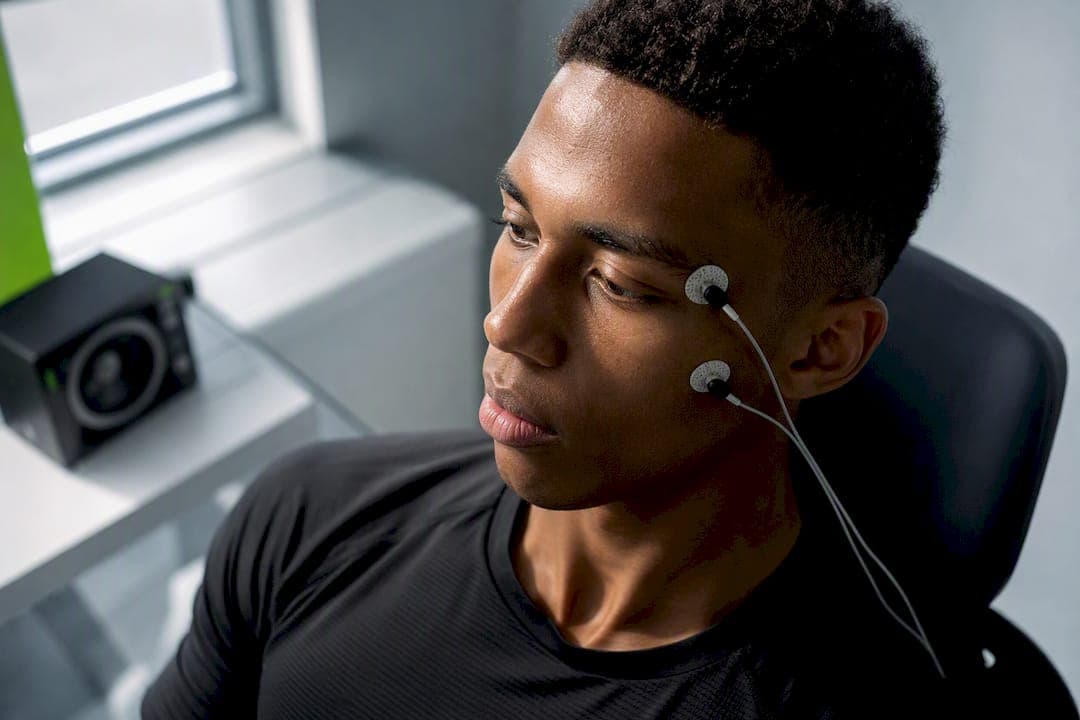
Athletes typically show reduced acoustic startle amplitude and higher prepulse inhibition compared with non-athletes, and this pattern carries real diagnostic weight. Sudden auditory startle can amplify fast dynamic contractions in tasks that reward raw ballistic output. After concussion, the reflex often flattens further and can stay suppressed after every clinical symptom clears, which is why researchers are treating it as an objective window into brainstem recovery.
TL;DR:
- Athletes generally exhibit lower baseline startle amplitudes than non-athletes, likely due to nervous system adaptations from sustained physical training.
- Controlled startle stimuli can reliably enhance ballistic force output during simple, pre-planned movements, but may disrupt reactive, decision-heavy sports tasks.
- Concussion-related startle suppression often persists beyond symptom clearance, indicating lingering brainstem dysfunction that standard assessments can miss.
- Proper measurement protocols, including acclimatization and precise EMG setup, are critical for reproducibly assessing startle responses in athletic populations.
- Applying startle reflex testing as part of athlete recovery offers objective insight into brainstem health when conventional tools yield ambiguous results.
Table of Contents
- What the Evidence Shows About Startle Response in Athletes
- How to Measure the Startle Reflex in Athletic Populations
- The Neural Circuits Behind Startle and Sensorimotor Gating
- When Startle Boosts Performance and When It Backfires
- Startle Suppression as a Window Into Concussion Recovery
- A Research Checklist for Studying Startle Response in Athletes
- Applied Interventions Aimed at Modulating Startle and Readiness
- Where ASR Testing Fits in Applied Athlete Assessment
- Bring Startle-Informed Assessment Into Your Program
- Sources
What the Evidence Shows About Startle Response in Athletes
The acoustic startle reflex (ASR) is the involuntary orbicularis oculi blink, and often broader postural response, triggered by a sudden loud sound. Researchers measure it with surface EMG over the eyelid muscle, and the literature on athletic populations has converged on a few durable findings even though sample sizes remain modest by clinical-trial standards.
A comparative study of healthy young adults and trained athletes found decreased startle amplitude in athletes relative to non-athlete controls, with some ASR parameters tracking measures of physical conditioning. That is not a small footnote. It suggests the nervous system's reflexive gain gets dialed down as a byproduct of sustained physical training, not just as a trait some people are born with.
Separately, prepulse inhibition and sensorimotor gating correlate with performance across a range of physical conditioning tests, reinforcing the idea that inhibitory motor control is not a side effect of athleticism. It may be a mechanism that supports it.
On the performance-enhancement side, controlled EMG work demonstrates that a startle probe delivered alongside a "go" cue increases peak velocity and peak rate of force development during fast dynamic contractions. That is a repeatable lab finding, not a one-off anomaly.
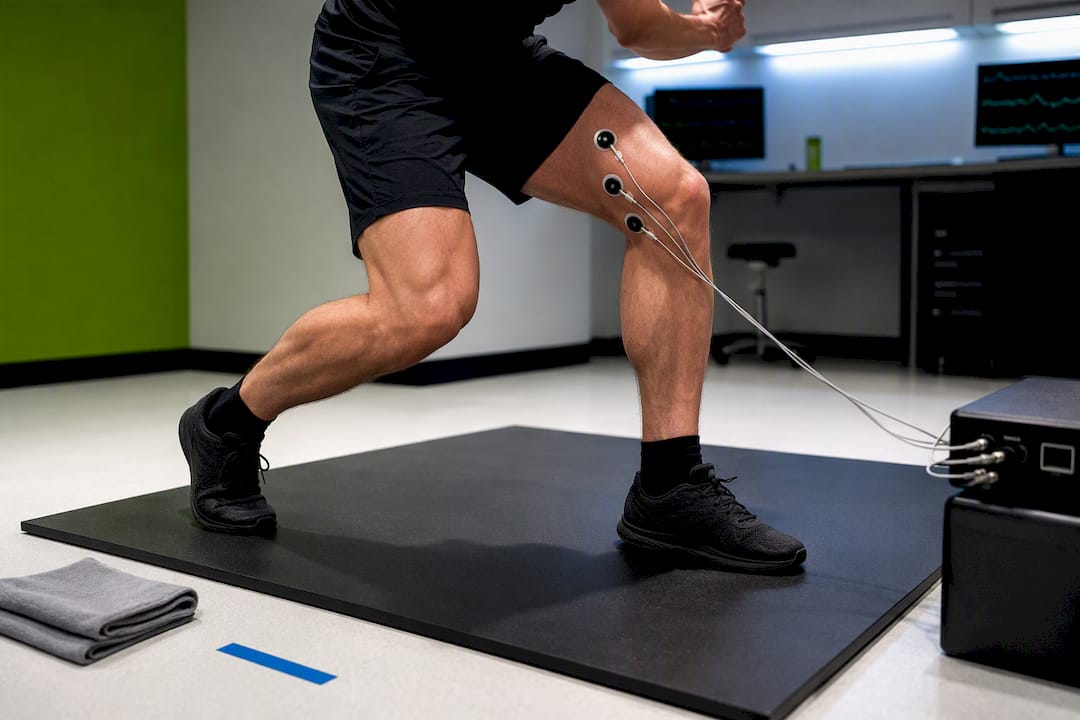
And on the clinical end, concussion research has documented general startle suppression in adolescent athletes that can outlast reported symptoms.
Here is where the three literatures agree, and where they still pull apart:
- Consistent finding: Trained athletes show lower baseline startle amplitude than untrained controls across multiple study designs.
- Consistent finding: A startle stimulus paired with a movement cue reliably potentiates simple ballistic force output.
- Consistent finding: Concussion suppresses ASR magnitude, sometimes for longer than clinical recovery timelines suggest.
- Divergent finding: The magnitude of athlete-versus-control differences varies substantially by sport and by how "athlete" gets operationally defined in each study.
- Divergent finding: Whether reduced ASR reflects central habituation, peripheral adaptation, or both is still contested.
Statistic Callout: Pilot data comparing adolescents with a concussion history to healthy controls, using 103 dB probes and orbicularis oculi EMG, found markedly lower mean startle magnitude in the concussion-history group. The effect held even though the sample was small, which is exactly why replication with larger cohorts matters.
How to Measure the Startle Reflex in Athletic Populations
Reproducibility in this field lives or dies on stimulus parameters and EMG hygiene. Get the protocol details wrong and you will measure equipment noise or habituation artifacts instead of a physiological signal.
Pro Tip: Run a full acclimatization block of at least five unrecorded startle probes before your data-collection trials begin. Skipping this step is the single most common reason ASR datasets show inflated early-trial amplitudes that look like real effects but are just habituation curves.
A workable measurement sequence looks like this:
- Set the probe intensity. Most published protocols use white-noise bursts in the range that potentiates measurable EMG responses, typically around 100 to 105 dB, delivered binaurally through headphones.
- Fix the stimulus duration. A 50 millisecond burst with a near-instantaneous rise time is standard. Slower rise times blunt the reflex and make cross-study comparison unreliable.
- Randomize inter-trial intervals. Spacing probes irregularly, usually somewhere between 10 and 20 seconds, prevents athletes from anticipating and voluntarily suppressing the blink.
- Place EMG electrodes over the orbicularis oculi, just below the lower eyelid, with a reference electrode nearby on unaffected tissue.
- Sample at 1,000 Hz or higher and apply a bandpass filter, commonly in the 20 to 500 Hz range, to isolate the blink component from movement artifact and 60 Hz line noise.
- Score onset latency, peak amplitude, and habituation slope across the trial block rather than relying on a single trial's raw value.
- Build in prepulse inhibition trials using multiple prepulse-to-pulse intervals, commonly 30, 60, and 120 milliseconds, since gating strength changes across that window and a single interval can't capture both transient and sustained inhibition.
Baseline normalization matters as much as the probe itself. Report the pre-stimulus EMG window (typically 50 to 100 milliseconds before probe onset) so amplitude values can be expressed as a ratio rather than a raw microvolt figure that varies by electrode impedance and skin preparation. Synchronizing the stimulus trigger to the EMG acquisition system with a TTL pulse keeps latency measurements precise down to the millisecond, which matters when you're comparing onset timing between an athlete group and a concussion-history group where differences can be subtle.
The Neural Circuits Behind Startle and Sensorimotor Gating
The acoustic startle reflex runs through a fast, phylogenetically old brainstem circuit: cochlear root neurons project to the caudal pontine reticular nucleus, which drives motor neurons controlling the eyelid and neck muscles in a matter of milliseconds. It is one of the fastest reflex arcs in the human nervous system, which is exactly why it makes such a clean readout of brainstem function.
Prepulse inhibition works on top of that circuit. A weaker sound delivered 30 to 500 milliseconds before the startling probe activates cortical and midbrain structures, including the pedunculopontine tegmental nucleus, that dampen the downstream reflex. Researchers treat PPI as a behavioral index of sensorimotor gating, the brain's capacity to filter irrelevant sensory input before it reaches motor output circuits.
That framing matters for athletes specifically:
- Gating efficiency and motor control overlap. Athletes who filter distracting sensory noise more efficiently tend to show tighter PPI, and sensorimotor gating measures correlate with performance across physical conditioning tests.
- Training appears to reshape baseline reflex gain. The lower resting ASR amplitude documented in trained populations is consistent with a nervous system that has adapted to suppress non-essential reflexive output, likely through repeated exposure to high-arousal, high-stimulus training environments.
- Emotional state modulates the circuit in sport-specific ways. Experimental work has found that an athlete's psychological state and moral identity can shape startle blink magnitude when confronted with unpleasant sport-related stimuli, which means task framing and emotional context are not noise to control away. They are part of the signal.
- Plasticity runs in both directions. Practitioners working directly with athletes have observed that startle amplitude is not a fixed trait; it can shift with targeted sensorimotor and nervous-system training over time, though this observation still needs controlled trial verification.
When Startle Boosts Performance and When It Backfires
Task structure decides whether a startle stimulus helps or hurts. That distinction gets lost in casual discussion of the phenomenon, and it shouldn't.
For simple, pre-planned ballistic movements, a startling stimulus delivered at the moment of the "go" cue reliably shortens reaction time and increases force output. The mechanism appears to be a kind of neural shortcut: the startle circuit accesses a pre-programmed motor plan faster than the cortex normally would, effectively releasing the movement early and with more initial drive.
Statistic Callout: In controlled EMG trials, a startle probe paired with the movement cue produced measurable increases in peak velocity and peak rate of force development compared to trials without the probe. The effect shows up specifically in fast, dynamic, pre-planned contractions.
Complex skill tasks tell a different story. Sports that demand real-time decision-making, like reading a defender's cut or adjusting a swing mid-flight, don't benefit from the same mechanism. A startle response during an open-skill task can hijack attention and disrupt the fine sequencing that coordinated movement requires, rather than potentiating it.
- Ballistic, pre-planned tasks (a sprint start, a maximal jump, a punch already loaded): startle tends to help.
- Reactive, decision-heavy tasks (return of serve, a defensive read, a combat-sport counter): startle tends to interfere.
- Timing matters within a single task. Facilitation is largest in the earliest phase of the movement and can turn into interference if the startle arrives mid-sequence rather than at initiation.
Researchers designing paradigms to test this distinction should compare simple reaction-time tasks against choice reaction-time tasks under identical probe conditions. That contrast is the cleanest way to isolate where startle helps from where it hurts.
Startle Suppression as a Window Into Concussion Recovery
Concussion research has produced some of the most clinically useful ASR findings in the entire field, because the reflex offers something rare: an objective, involuntary measure that doesn't depend on an athlete accurately self-reporting symptoms.
Adolescent athletes with a recent concussion show general startle suppression relative to healthy peers, and the effect can persist after the athlete is cleared through standard symptom-based return-to-play protocols. A separate pilot investigation using 103 dB probes and orbicularis oculi EMG found similarly suppressed startle magnitude in adolescents with a concussion history compared with controls who had never been concussed.
- Suppression can outlast symptoms. Athletes who report feeling normal can still show a blunted reflex, which points to lingering brainstem dysfunction that standard clinical checklists don't catch.
- Sample sizes remain small. Most of this work comes from adolescent cohorts in the tens rather than hundreds, so effect sizes need replication before ASR becomes a standardized clinical tool.
- Protocols are not yet uniform. Probe intensity, EMG placement, and scoring methods differ enough across studies that direct comparison is still difficult.
- There may be downstream injury implications. A pilot study exploring ASR and later musculoskeletal injury in adolescent athletes with a concussion history found lower ASR in athletes who went on to sustain musculoskeletal injuries, though the result did not reach statistical significance and needs a larger cohort to confirm.
The practical takeaway for clinicians and researchers: ASR testing should be considered a complement to existing concussion assessment and recovery protocols, not a replacement for symptom checklists or balance testing. Its value lies precisely in catching what those tools miss.
A Research Checklist for Studying Startle Response in Athletes
Designing a clean ASR study in an athletic population means controlling more variables than most first-time researchers expect. Here is a field-tested sequence.
Pro Tip: If you're comparing athletes to non-athletes, match groups on age, sex, and general activity level before you match on sport. Sport-specific comparisons without that baseline matching are the most common source of confounded ASR results in the current literature.
- Plan sample size around effect sizes reported in prior work. Given the modest sample sizes in existing concussion-suppression studies, plan for at least 20 to 30 participants per group to detect moderate effects with reasonable power, and recruit a matched non-athlete control group alongside your athlete cohort.
- Standardize the acoustic environment. Run sessions in a sound-attenuated room and calibrate probe intensity with a sound-level meter before every session, not just once at study setup.
- Screen hearing before enrollment. A brief audiometric check rules out participants whose baseline hearing threshold would distort probe perception, and it protects against repeated high-intensity probe exposure in anyone with existing auditory sensitivity.
- Run an acclimatization block. Five to ten unscored startle trials before data collection begins reduces the habituation artifact that inflates early-trial amplitude readings.
- Preprocess EMG consistently. Bandpass filter in the 20 to 500 Hz range, rectify the signal, and apply a consistent baseline correction window (50 to 100 milliseconds pre-stimulus) across every participant.
- Model habituation and prepulse inhibition separately. Mixing trial types without separating habituation curves from PPI trials muddies both measures. Use dedicated blocks for each.
- Report full stimulus parameters. Probe intensity, duration, rise time, inter-trial interval range, and total trial count all belong in your methods section, since omitting any one makes replication guesswork for the next researcher.
- Report electrode montage explicitly. State exact electrode placement relative to anatomical landmarks, not just "orbicularis oculi," since minor placement differences shift amplitude readings.
- Report effect sizes, not just p-values. Given how variable sample sizes are across this literature, standardized effect sizes let future meta-analyses actually pool your data.
- Disclose sport and training history in detail. "Athlete" is not a uniform category, and disclosing training volume, sport type, and competitive level lets other researchers judge how comparable your cohort is to theirs.
Teams working on applied nervous-system training protocols often pair this kind of ASR baseline with broader state-management assessment to see how arousal regulation interacts with reflexive gating over a training cycle.
Applied Interventions Aimed at Modulating Startle and Readiness
Performance Neuro Training, the practice led by Dr. Paige Roberts, works from the premise that the nervous system itself, not just muscle or technique, sets the ceiling on how an athlete performs under pressure. Its core protocol, Alpha Imprinting, aims to help the nervous system process and release lingering stress and trauma responses that can keep an athlete's threat-detection circuitry, the same brainstem machinery underlying the startle reflex, running hotter than it needs to.
That is a theoretical bridge worth stating plainly: if training-induced plasticity can lower baseline startle gain, as practitioners have observed anecdotally, then targeted nervous-system work aimed at reducing chronic threat activation could plausibly move the same dial. That connection has not been tested in a controlled ASR trial, and it should be.
Any practitioner running applied interventions like this should build in pre- and post-intervention ASR measurement using the standardized protocols outlined above, ideally with a waitlist or comparison group. Anecdotal improvement in an athlete's competitive flow state is meaningful to that athlete, but it does not substitute for a controlled trial when the goal is establishing whether an intervention reliably shifts a measurable physiological marker. Overgeneralizing from individual case outcomes, however compelling, is the fastest way to lose scientific credibility in this space.
Where ASR Testing Fits in Applied Athlete Assessment
Reflex testing earns its place in an athlete assessment battery when it answers a question other tools can't. If a coaching staff wants to know whether an athlete's mind is engaged in a task, ASR is overkill. When a clinician needs an objective marker of brainstem recovery after concussion, it's one of the few tools that doesn't rely on the athlete's own report.
The practical heuristic: add ASR testing when self-report and standard clinical batteries have already returned ambiguous results, not as a first-line screen for every athlete. It takes real equipment, a controlled acoustic environment, and technical EMG expertise, so it doesn't scale the way a symptom checklist does. Where it earns its cost is in the gray-zone cases, the athlete who feels fine but whose return-to-play decision carries real risk if something is still off underneath.
Balancing sensitivity against feasibility is the whole game here. A gold-standard measure nobody can run consistently is worth less than a slightly noisier measure applied at scale.
— Paige
Bring Startle-Informed Assessment Into Your Program
If you're evaluating an athlete's readiness or recovery, ASR testing gives you one data point, not a full picture of what their nervous system needs next. Robertsneurotraining works from the other end of that equation: helping the nervous system itself recalibrate so athletes stop running on chronic threat activation and start competing from a regulated baseline.
The 10-week Energy Optimization Program pairs telehealth sessions with QEEG brain scans to map where an athlete's nervous system is stuck, then applies the Alpha Imprinting protocol to clear the mental blocks and trauma responses that keep reflexive systems, including startle circuitry, on high alert. Teams and practitioners interested in piloting a collaboration typically start with a baseline assessment, move through a defined intervention window, and re-measure against that baseline to see what actually shifted. For programs interested in reactive-strength crossover work, the reactive neuromuscular training approach offers a useful applied complement on the physical training side.
If you want a practical starting point before booking a full program, the Energy Optimization Workbook walks through the same nervous-system principles Dr. Roberts uses with elite athletes, and it's the fastest way to see whether this approach fits your team's needs.
Sources
- Startle Auditory Stimuli Enhance the Performance of Fast Dynamic Contractions
- Can startle response magnitudes be used as a tool to predict sportive capacities? A comparative study between healthy young adults and athletes
- Associations between sensorimotor gating mechanisms and athletic performance in a variety of physical conditioning tests
- Concussion-Related General Startle Suppression in Adolescent Athletes