

Performance state management is the process of intentionally monitoring and adjusting an athlete's mental and physical condition to achieve peak performance and resilience under competitive pressure. Most athletes train their bodies relentlessly but leave their mental states to chance. That gap is where competitions are lost. Understanding what is performance state management gives you a concrete framework to close that gap, regulate your nervous system, and perform at your ceiling when it counts most.
What is performance state management in sports?
Performance state management is the systematic practice of recognizing, regulating, and shifting your mental and physical condition before and during competition. The industry term used across sports psychology and organizational performance research is performance management, but in athletic contexts it specifically refers to the real-time regulation of internal states that drive output. Robertsneurotraining defines this as training the nervous system to clear mental blocks, reduce anxiety responses, and access a state of flow on demand.
Three core states shape athletic output. The flow state produces peak focus, automatic execution, and high confidence. The anxious state triggers panic responses, muscle tension, and decision errors. The fatigued state reduces reaction time, lowers motivation, and increases injury risk. Each state has a distinct neurological signature. Recognizing which state you are in is the first skill every athlete must build.

Neuroscience research in sports psychology confirms that the nervous system drives these state shifts. Trauma responses, past injuries, and chronic stress can lock athletes into anxious or fatigued states even when physical fitness is high. That is why physical training alone never fully solves performance anxiety.
How do athletes monitor their performance states?
Monitoring starts with self-assessment. Athletes who track mood, energy, sleep quality, and pre-competition anxiety before each session build a personal baseline. That baseline reveals patterns, such as which conditions trigger anxious states and which conditions support flow.
Biofeedback tools add an objective layer. Heart rate variability (HRV) monitors, for example, measure the balance between the sympathetic and parasympathetic nervous systems. A low HRV reading before competition signals that the nervous system is under stress. That data tells you to apply a regulation technique before you compete, not after you underperform.
Coach observations provide a third monitoring channel. Continuous performance management with weekly or bi-weekly check-ins produces higher performance improvements than annual reviews alone. Short check-ins of 15–30 minutes focused on current focus, obstacles, and support give coaches real-time state data. That frequency catches problems early, before they compound into competition-day failures.
Practical state monitoring follows four steps:
- Log your pre-session state. Rate energy, focus, and anxiety on a 1–10 scale before every practice and competition.
- Review HRV or resting heart rate. Compare readings to your personal baseline, not population averages.
- Complete a brief coach check-in. Share your state rating and any obstacles. Keep it under 15 minutes.
- Apply a regulation technique. Use breathing, visualization, or movement to shift your state before the session begins.
Pro Tip: Set SMART goals for each competition, not just outcomes. SMART goal frameworks reduce pre-competition stress by giving your nervous system a clear, manageable target instead of an open-ended pressure to "win."
What performance management techniques build mental resilience?
Mental resilience is not a personality trait. It is a trained capacity built through repeated, deliberate practice of specific techniques. Mindset and purpose matter more than rigid processes in effective performance management. Treating state regulation as a checklist destroys trust and effectiveness. Treating it as a living practice builds both.
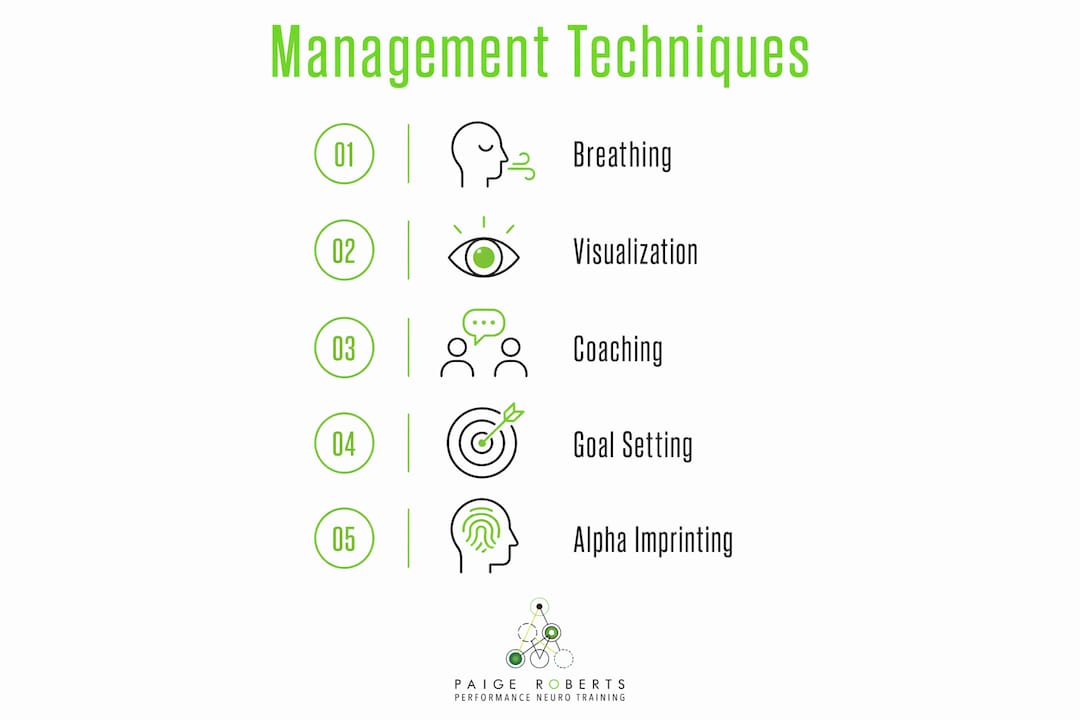
The table below summarizes the core techniques, their primary function, and their outcome for athletes.
| Technique | Primary function | Outcome for athletes |
|---|---|---|
| Diaphragmatic breathing | Activates parasympathetic nervous system | Reduces anxiety and muscle tension within minutes |
| Visualization | Rehearses neural pathways for execution | Builds confidence and reduces performance errors |
| SMART goal setting | Provides clear, measurable targets | Reduces stress and improves focus consistency |
| Continuous coaching check-ins | Delivers real-time feedback and support | Catches state problems before competition day |
| Alpha Imprinting (Robertsneurotraining) | Reprograms nervous system patterns | Clears mental blocks and trauma responses at the root |
Continuous performance management goes beyond annual appraisals. For athletes, this means ongoing coaching conversations tied to development, not just performance grades. Separating developmental coaching from formal grading reduces anxiety and creates space for honest discussion about mental state challenges.
Robertsneurotraining's Alpha Imprinting method targets the nervous system directly. Rather than managing symptoms of anxiety, it reprograms the underlying neural patterns that generate those symptoms. Olympic medalists who have used this approach report significant performance improvements, particularly in high-pressure competition environments.
Pro Tip: Apply diaphragmatic breathing for five minutes immediately after a poor performance, not before the next one. This resets your nervous system before anxiety has time to consolidate into a pattern.
How does state management adapt to different sports and athletes?
No universal formula exists for performance state management. Performance management must be tailored to context to support motivation and resilience effectively. An endurance runner managing a 26-mile race needs different state regulation skills than a baseball pitcher managing a three-second delivery window.
Key differences across sport types include:
- Endurance sports (marathon, cycling, triathlon): State management focuses on sustaining focus and managing fatigue signals over long durations. Pacing self-talk and dissociation techniques are most effective.
- Team sports (basketball, soccer, football): State management includes reading team energy, managing interpersonal stress, and recovering quickly from errors in front of teammates. Psychological safety within the team directly affects individual state regulation.
- Precision sports (golf, archery, shooting): State management centers on pre-shot routines, blocking external distractions, and controlling arousal to a narrow optimal window.
Individual differences matter as much as sport type. Athletes with ADHD, high sensitivity, or trauma histories require adjusted approaches. Robertsneurotraining's neurodiversity in sport framework recognizes these differences as assets when properly channeled, not deficits to suppress.
Co-creating goals with athletes increases buy-in and performance outcomes. When athletes actively shape their state management plan, they follow through. When plans are imposed, compliance drops and anxiety rises. Coaches who give athletes decision rights over their own development strategies see measurably better results.
Energy management practices also vary by athlete. Some athletes need activation techniques before competition. Others need calming techniques. Knowing which direction your nervous system needs to move is a core skill that develops through consistent self-monitoring and coaching feedback.
Key Takeaways
Performance state management is the most direct path to mental resilience, because it trains athletes to regulate their nervous system rather than simply endure pressure.
| Point | Details |
|---|---|
| Define your baseline states | Track energy, focus, and anxiety before every session to identify your personal state patterns. |
| Use continuous check-ins | Weekly or bi-weekly coaching conversations catch state problems before they reach competition day. |
| Apply SMART goal setting | Clear, measurable goals reduce pre-competition stress and give the nervous system a focused target. |
| Tailor techniques to your sport | Endurance, team, and precision sports each require different state regulation approaches. |
| Address root causes | Techniques like Alpha Imprinting target nervous system patterns directly, not just surface symptoms. |
Why most athletes manage states too late
Athletes almost always address mental state problems after they show up in results. A bad game, a missed qualifier, a panic attack mid-race. By then, the nervous system has already reinforced the pattern. I have worked with athletes at every level, from junior competitors to Olympic medalists, and the pattern is consistent. Physical preparation is meticulous. Mental state preparation is reactive.
The athletes who make the biggest gains are not the ones with the most talent. They are the ones who treat state regulation as a daily practice, not a crisis response. Building an elite athlete mindset requires the same repetition and specificity as building a physical skill. You would not skip strength training for six months and expect to be strong. The same logic applies to your nervous system.
The other mistake I see constantly is athletes trying to manage anxiety through willpower. Willpower is a conscious tool. Anxiety is a nervous system response. You cannot think your way out of a physiological state. You need techniques that speak the nervous system's language, such as breathwork, somatic regulation, and neural reprogramming. That is the entire premise behind what Robertsneurotraining does. The results speak for themselves.
— Paige
Robertsneurotraining and performance state management
Athletes who want to move beyond symptom management and address the root cause of performance anxiety have a clear path forward with Robertsneurotraining.
Dr. Paige Roberts combines QEEG brain scanning with Alpha Imprinting to map each athlete's nervous system patterns and reprogram the specific blocks limiting performance. This is not generic mental skills coaching. The full process is built around your nervous system, your sport, and your history. Athletes from major professional leagues and Olympic programs have used this approach to recover from injury-related mental blocks and reach new performance levels. If you are ready to train your nervous system the way you train your body, Robertsneurotraining is the place to start.
FAQ
What is performance state management?
Performance state management is the practice of monitoring and regulating an athlete's mental and physical condition to achieve peak performance under competitive pressure. It includes techniques like breathing, visualization, SMART goal setting, and nervous system training.
How do performance states affect competition outcomes?
Anxious or fatigued states impair decision-making, reaction time, and execution. Athletes in a flow state perform with greater consistency, confidence, and automatic skill execution.
What are the best techniques for managing performance states?
Diaphragmatic breathing, visualization, continuous coaching check-ins, and SMART goal setting are the most evidence-backed techniques. Robertsneurotraining's Alpha Imprinting method addresses nervous system patterns at a deeper level.
How often should athletes check in on their performance states?
Weekly or bi-weekly check-ins of 15–30 minutes produce better results than infrequent reviews. Consistent monitoring catches state problems before they affect competition performance.
Can performance state management be customized for different sports?
Yes. Endurance, team, and precision sports each require different regulation strategies. Individual factors like neurodiversity and trauma history also shape which techniques work best for each athlete.