

Performance energy optimization team strategies are deliberate methods that coordinate physical, mental, and emotional energy within sports teams to maximize collective output and resilience during competition. Most coaches track physical conditioning closely but leave mental and emotional energy unmanaged. That gap costs teams at the moments that matter most. The frameworks below give coaches a concrete system to close it.
1. What is performance energy optimization for sports teams?
Performance energy optimization is the practice of managing physical, mental, and emotional energy as one connected system. The term comes from organizational energy management, but elite sports teams have adapted it to cover everything from practice scheduling to nervous system recovery. The goal is simple: keep every athlete operating at peak capacity when competition demands it most.
Physical stamina, mental clarity, and emotional resilience are not separate concerns. Neglecting one energy dimension harms decision-making and overall performance across the other two. A player who is physically fresh but emotionally depleted will still make poor decisions under pressure.

2. Why single-owner accountability drives faster results
The single-owner accountability model assigns one person, typically a head coach or performance director, full responsibility for the team's energy management system. Implementations with a single accountable owner achieve measurable results 2.1 times faster than committee-based governance. That speed difference matters in a competitive season where every week counts.
Committee models create diffused responsibility. When everyone owns the energy plan, no one does. A single owner sets the schedule, reviews the data, and makes calls on recovery versus training load without waiting for group consensus.
- Assign one performance director or head coach as the energy accountability owner
- Give that person authority to adjust training loads, schedules, and recovery blocks
- Set weekly check-ins where the owner reports energy metrics to the full staff
- Review and revise the energy plan at least once per month
Pro Tip: Rotate the accountability role quarterly to build energy management literacy across your entire coaching staff, not just one person.
3. How integrated energy management enhances team performance
High performers balance mental clarity, physical stamina, and emotional resilience as a single energy system, not three separate wellness boxes to check. Coaches who treat them as separate programs miss the compounding effect of managing all three together. When all three dimensions are tracked and supported, team output rises faster than any single intervention can produce.
Mental energy governs decision quality and focus under pressure. Physical energy determines execution capacity. Emotional energy shapes trust, communication, and the willingness to push through adversity. A breakdown in any one of these areas pulls the others down with it.
Practical integration looks like this:
- Schedule high-stakes tactical sessions during peak cognitive hours, typically mid-morning, when mental sharpness is highest
- Use breathing exercises and brief mindfulness drills before emotionally charged practices or games
- Build physical recovery windows into the weekly calendar as non-negotiable blocks
- Track emotional tone in team meetings by having athletes rate their readiness on a simple 1–10 scale
- Debrief after losses with a structured emotional regulation protocol, not just a performance review
Pro Tip: Run a weekly energy audit across all three dimensions. A five-minute check-in at the start of each week catches fatigue before it becomes a performance problem.
Integrated packages of regulation, incentives, and information consistently outperform isolated efficiency measures. Applied to sports, that means combining structured recovery, emotional coaching, and physical load management into one coordinated plan rather than running each as a standalone program.
4. Which data monitoring methods improve team energy outcomes?
Benchmarking is the practice of measuring current energy output against a defined baseline, then tracking improvement over time. Systematic benchmarking can improve performance by up to 30%. Applied to sports teams, that means tracking athlete readiness scores, recovery quality, and mental load week over week to identify patterns and intervene early.
Key performance indicators worth tracking include daily readiness ratings, sleep quality scores, session rating of perceived exertion, and emotional tone assessments. These data points reveal which athletes are trending toward burnout before physical symptoms appear. Early detection is the entire point.
| Approach | Benchmarking-based method | Traditional coaching method |
|---|---|---|
| Data collection | Weekly readiness scores, RPE, sleep data | Coach observation and gut feel |
| Intervention timing | Proactive, based on trend data | Reactive, after performance drops |
| Accountability | Tracked against baseline metrics | Informal and inconsistent |
| Outcome visibility | Clear progress markers over time | Difficult to measure precisely |
AI-assisted optimization frameworks lower energy use and lifecycle costs in complex environments by 7–21%. Sports teams using wearable technology and readiness apps gain a similar advantage by catching fatigue patterns that no coach can see with the naked eye.
- Use wearable devices like WHOOP or Garmin to collect daily readiness data
- Log session RPE scores after every practice
- Review weekly trends as a coaching staff, not just individual game-day numbers
- Set a baseline in the first two weeks of a training block, then measure against it
5. What coaches can do to regulate collective emotional energy
A coach's emotional state sets the tone for the entire team. A leader's visible stress causes team members to tighten up, which decreases creativity and momentum. That contagion effect works in both directions. A calm, focused coach produces a calm, focused team.
Emotional regulation is a core leadership responsibility that directly influences team performance and trust. Coaches who manage their own stress actively, rather than just pushing through it, protect the psychological safety of the entire group. Psychological safety is the condition where athletes feel secure enough to take risks, communicate honestly, and recover quickly from mistakes.
Practical tactics for coaches include:
- Begin practice with a 60-second breathing reset to shift the group's nervous system state
- Celebrate small wins publicly and consistently to build positive emotional momentum
- Use structured reflection after difficult games rather than immediate emotional reactions
- Model calm under pressure by slowing your speech and body language during high-stress moments
"Energy management is not a wellness program. It is a leadership discipline that shapes every interaction, decision, and outcome on the field."
Teams that build psychological safety into their culture sustain collective energy through adversity better than teams that rely on talent alone.
6. How recovery and mental reprogramming sustain team energy
Recovery is not passive rest. Distinguishing energy from time is the key insight here. A team can have an open afternoon on the schedule and still burn through mental and emotional reserves if that time is filled with unstructured stress. Protected focus blocks and deliberate recovery rituals prevent that drain.
Mental reprogramming addresses the subconscious patterns that drain energy even when the body is rested. Athletes carrying unresolved performance anxiety, fear of failure, or trauma responses from past injuries spend enormous amounts of nervous system energy managing those internal states. Clearing those patterns through mental reprogramming frees up energy for actual performance.
Recovery strategies that work at the team level include:
- Schedule at least two protected recovery blocks per week with no tactical content
- Use guided visualization or breathwork sessions as active mental recovery tools
- Debrief competitions with a structured format that separates emotional processing from tactical review
- Address individual mental blocks through targeted mental performance coaching before they compound into team-wide energy problems
Pro Tip: Build recovery into your training block calendar the same way you schedule conditioning sessions. If it is not on the calendar, it will not happen consistently.
Effective energy management is a system of intentional scheduling, emotional tone regulation, and fatigue awareness. Teams that treat recovery as a performance tool, not a reward for hard work, sustain higher output across a full season.
Key takeaways
The most effective performance energy optimization approach combines single-owner accountability, integrated three-dimension tracking, and deliberate recovery to sustain team output across a full competitive season.
| Point | Details |
|---|---|
| Single-owner accountability | Assign one person to own the energy plan. It moves 2.1x faster than committee models. |
| Three-dimension integration | Manage mental, physical, and emotional energy together. Neglecting one pulls down the others. |
| Benchmarking drives improvement | Systematic tracking can improve performance by up to 30% over a training block. |
| Emotional contagion is real | A coach's visible stress tightens the whole team. Regulate your own state first. |
| Recovery is a performance tool | Protected focus blocks and mental reprogramming prevent burnout and free up energy for competition. |
What I've learned coaching teams through energy optimization
Most coaches I work with come in managing time. They build detailed practice schedules, track physical loads, and plan game-week routines down to the minute. What they are not managing is energy. Those are two very different things.
The biggest mistake I see is treating emotional exhaustion as a character issue rather than a performance variable. When an athlete goes flat in the fourth quarter, the instinct is to question their toughness. The real question is whether their nervous system had any reserves left to draw on. That distinction changes everything about how you intervene.
The second pattern I see constantly is ignoring the coach's own energy state. You cannot pour from an empty tank, and you cannot lead a high-energy team from a depleted nervous system. The leaders who get the best results are the ones who take their own recovery as seriously as their athletes' conditioning.
The teams that make the fastest gains are not the ones with the most talent. They are the ones where someone, usually the head coach or a performance director, decides to treat energy as a system and manages it with the same rigor they apply to physical training. That decision alone separates good teams from great ones.
— Paige
How Robertsneurotraining helps teams optimize performance energy
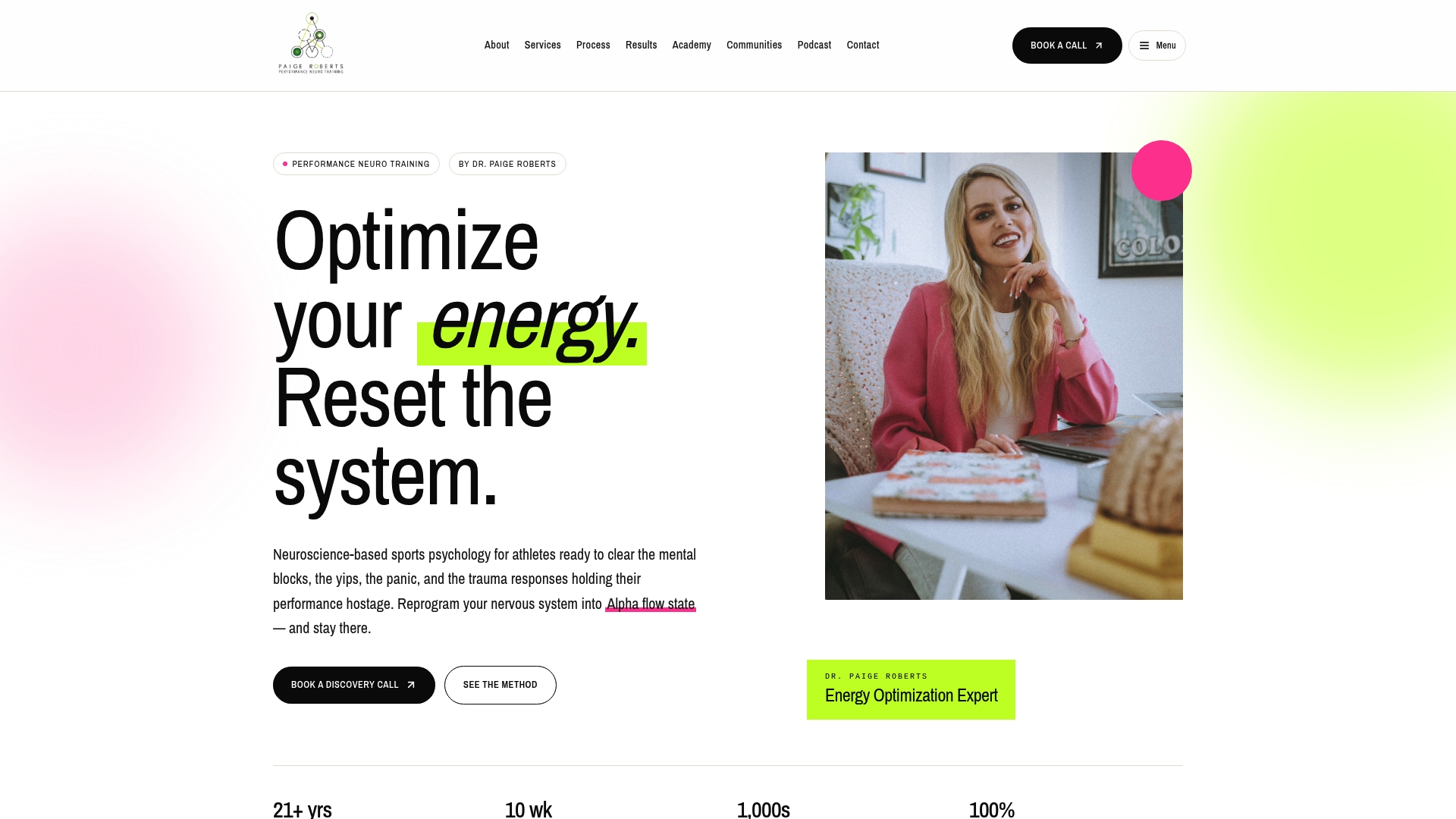
Robertsneurotraining, led by Dr. Paige Roberts, works directly with sports teams and coaches to build the mental and emotional side of their energy management system. The program uses Alpha Imprinting, a neuroscience-based method, to clear mental blocks, performance anxiety, and trauma responses that drain athlete energy before competition even begins.
Olympic Medalists and professional athletes across major leagues have used Robertsneurotraining to recover peak performance and sustain it under pressure. If your team is losing energy to anxiety, mental blocks, or unresolved injury responses, the neurotraining programs at Robertsneurotraining give you a direct path to fixing that at the nervous system level.
FAQ
What are performance energy optimization team strategies?
Performance energy optimization team strategies are coordinated methods that manage physical, mental, and emotional energy within a sports team to maximize collective output and resilience during competition. They go beyond physical conditioning to include emotional regulation, mental recovery, and accountability structures.
How does single-owner accountability improve team energy management?
Assigning one accountable owner to the energy management plan produces results 2.1 times faster than committee-based models. It removes diffused responsibility and gives one person the authority to act on energy data quickly.
Why does a coach's emotional state affect team performance?
A coach's visible stress causes athletes to tighten up, which reduces creativity and momentum across the whole team. Emotional regulation is a core coaching responsibility, not a personal wellness matter.
How often should teams audit their energy levels?
Teams should run a brief energy audit at the start of each week, covering mental, physical, and emotional dimensions. Weekly reviews catch fatigue trends early enough to adjust training loads before performance declines.
What role does mental reprogramming play in energy optimization?
Mental reprogramming clears subconscious patterns like performance anxiety and trauma responses that drain nervous system energy even when the body is physically rested. Addressing these patterns through targeted team mental training frees up energy reserves for competition.