
Neuroplasticity is defined as the brain's ability to reorganize its structure and connections in response to experience, training, and stress. The role of neuroplasticity in athlete development extends far beyond physical conditioning. It governs how athletes learn new skills, regulate pressure, recover from injury, and build the mental resilience that separates good competitors from great ones. A meta-analysis of 4,654 athletes confirmed a significant positive correlation (r=0.437) between resilience and athletic performance. That number tells coaches one thing clearly: resilience is not a personality trait. It is a trainable, measurable outcome of how the brain adapts.
How does neuroplasticity shape mental resilience in athletes?
Mental resilience in athletes is a direct product of neuroplastic change, not willpower alone. Resilience is a dynamic neurobiological process shaped by psychological and environmental factors, and it responds to targeted interventions including mindfulness, cognitive behavioral therapy (CBT), and acceptance and commitment therapy (ACT). Each of these methods works by strengthening neural connectivity between the brain's executive control centers and its emotional regulation regions. That structural change is what makes an athlete calmer under pressure, not just more motivated.
Psychological skills like self-efficacy, stress regulation, and attentional focus all improve through neuroplastic adaptation. Research on academy football players found that perceived social support indirectly increases resilience by building self-efficacy and psychological skills (β=0.226). The implication is significant: team environments and coaching relationships are not soft factors. They are neurological inputs that shape how an athlete's brain responds to adversity.

Coaches who understand this can design environments that actively build resilience rather than hoping athletes develop it on their own. Team psychological safety is one such environmental lever, creating the conditions where athletes take risks, receive feedback, and grow without fear of humiliation.
Traditional resilience models also tend to miss gender and cultural context. Socio-ecological and gender-responsive frameworks produce more sustainable mental health outcomes because they account for the different stressors athletes face based on identity and environment. Coaches working with diverse rosters need to apply resilience-building strategies that reflect those differences.
- Mindfulness and CBT strengthen neural pathways linking executive control to emotional regulation.
- Self-efficacy, built through social support and coaching feedback, is a neuroplastic outcome.
- Gender-responsive and culturally aware approaches produce more durable resilience gains.
- Psychological safety in team environments functions as a neurological input, not just a morale booster.
Pro Tip: Design training sessions that include deliberate failure scenarios followed by structured reflection. That cycle of stress and recovery is exactly what triggers the neuroplastic changes that build real mental toughness.
What brain changes does exercise produce in athletes?
Exercise-induced neuroplasticity produces concrete structural changes in the brain and nervous system. Neuroplasticity from training enhances cortico-spinal connectivity, improves coordination, and accelerates reaction time. These are not abstract benefits. They show up as faster decision-making on the field, cleaner technique under fatigue, and better proprioception during high-speed movement.
The type of sport an athlete plays determines which neuroplastic adaptations matter most. Open-skill sports like basketball, soccer, and tennis require neural optimization, which is the context-sensitive regulation of brain networks rather than a simple reduction in overall brain activity. Closed-skill sports like swimming or gymnastics rely more on synaptic consolidation and automatization of precise movement patterns. Coaches who treat all sports the same miss the neurological specificity that elite training demands.
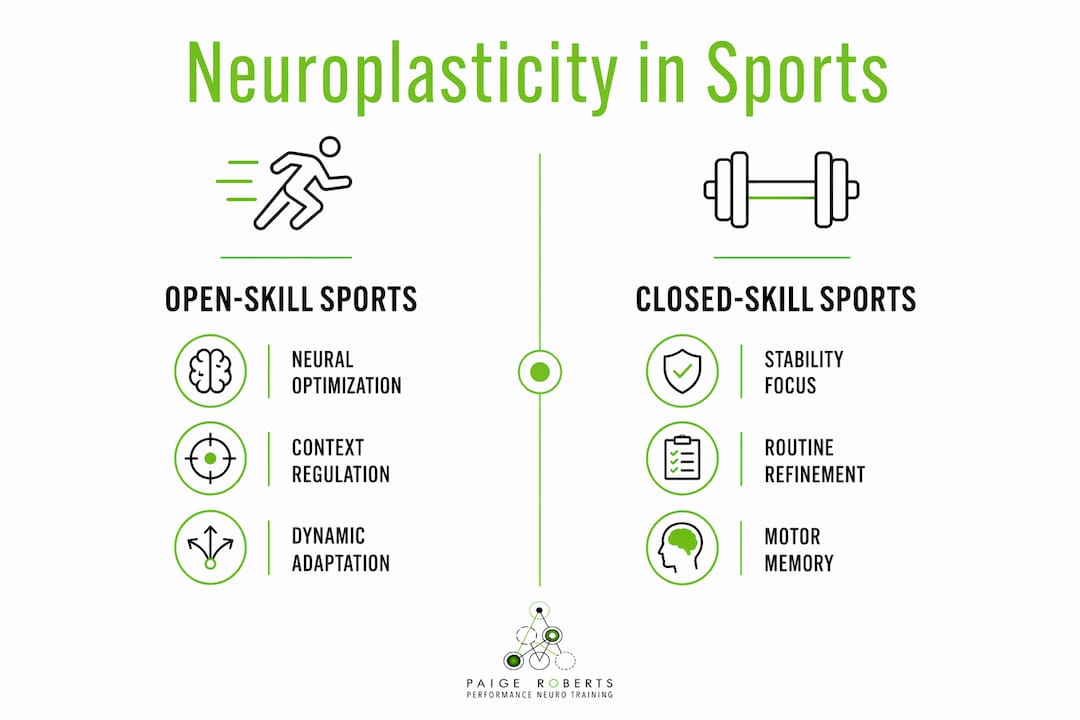
Neuroplasticity also progresses through distinct stages. Skill learning involves cerebellar sensory prediction in early phases, dopaminergic reinforcement during skill consolidation, and synaptic remodeling as movements become automatic. Each stage requires a different coaching approach.
| Sport type | Primary neuroplastic adaptation | Training focus |
|---|---|---|
| Open-skill (soccer, basketball) | Neural optimization, executive network regulation | Decision-making drills, variable practice |
| Closed-skill (swimming, gymnastics) | Synaptic consolidation, automatization | High-repetition, precision-focused practice |
| Mixed (tennis, martial arts) | Both optimization and consolidation | Contextual interference, scenario-based training |
Pro Tip: Match your training design to the neuroplastic stage your athlete is in. Early learners need immediate, specific feedback. Advanced athletes need reduced external cues so the brain can consolidate and automate the skill internally.
How does neuroplasticity support injury recovery?
Recovery from sports injury is as much a neurological process as a physical one. The brain must relearn motor patterns, rebuild confidence in the injured body part, and regulate the fear responses that often persist long after tissue has healed. Mental reprogramming is a core component of effective rehabilitation, not an optional add-on.
Athletic identity and sport confidence are two psychological resources that directly influence recovery speed and quality. Athletic identity and sport confidence mediate mental toughness and psychological readiness, both of which are critical for returning to competition. Athletes with a strong, stable sense of who they are as competitors recover faster because their nervous system stays oriented toward performance rather than threat.
Neuro-athletic training offers a practical tool for pre-competition and rehabilitation contexts alike. Neuro-athletic training acutely improves balance and technical skill for at least 30 minutes by priming neural circuits before competition or practice. That window of enhanced neural readiness is valuable during rehab because it allows athletes to practice movement patterns with better proprioceptive accuracy, accelerating motor relearning.
Practices like yoga also support this process. Yoga promotes injury recovery by combining controlled movement with breath regulation, which activates the parasympathetic nervous system and reduces the threat responses that slow neurological healing.
Key neuroplasticity principles for injury rehabilitation:
- Reintroduce movement patterns progressively to rebuild motor memory without reinforcing fear responses.
- Monitor athletic identity throughout rehab. A declining sense of self as an athlete signals psychological risk.
- Use neuro-athletic priming protocols before rehab sessions to maximize neural readiness.
- Apply mindfulness and ACT techniques to address avoidance behaviors tied to re-injury fear.
- Track sport confidence as a measurable recovery metric alongside physical benchmarks.
What training techniques best apply neuroplasticity principles?
Athletes and coaches can apply neuroplasticity principles directly through structured, evidence-based training methods. Mental performance optimization techniques including mindfulness, CBT, and nervous system reprogramming each target specific neural pathways that govern focus, stress response, and decision-making under pressure.
Mindfulness-based and CBT interventions enhance neural connectivity between executive control and emotional centers. That connectivity is what allows an athlete to stay composed when a game is on the line. These are not relaxation techniques. They are brain training methods with measurable structural effects.
Neuro-athletic training protocols use targeted sensory stimulation to prime neural pathways before competition or practice. The result is improved balance, sharper proprioception, and faster technical execution during the critical window that follows. Building gym confidence through progressive challenge and positive reinforcement also activates the dopaminergic reward circuits that drive neuroplastic consolidation.
Social and environmental factors amplify every individual technique. Psychological safety within a team, developmental coaching feedback, and consistent mentorship all function as neurological inputs that shape how an athlete's brain responds to training stress.
Best practices for applying neuroplasticity in daily training:
- Begin each session with a neuro-athletic priming protocol targeting balance and sensory systems.
- Use CBT or mindfulness exercises for 10–15 minutes before high-pressure practice scenarios.
- Structure skill practice in phases: feedback-heavy early work, then reduced cues for consolidation.
- Build psychological safety by separating performance evaluation from skill development sessions.
- Track mental performance metrics like self-efficacy and stress regulation alongside physical outputs.
- Apply nervous system reprogramming techniques to address performance anxiety and mental blocks directly.
Key Takeaways
Neuroplasticity is the biological foundation of athletic development, making mental resilience, skill acquisition, and recovery trainable outcomes rather than fixed traits.
| Point | Details |
|---|---|
| Resilience is measurable | A meta-analysis (r=0.437) confirms resilience directly correlates with athletic performance. |
| Sport type shapes brain adaptation | Open-skill sports need neural optimization; closed-skill sports need synaptic consolidation. |
| Recovery is neurological | Relearning motor patterns and rebuilding sport confidence are brain processes, not just physical ones. |
| Social environment matters | Team psychological safety and coaching relationships are neurological inputs that shape brain adaptation. |
| Neuroplasticity is trainable | Mindfulness, CBT, ACT, and neuro-athletic priming all produce measurable structural brain changes. |
What I've learned from watching coaches ignore the brain
Most coaches I work with are excellent at programming physical load. Where they consistently fall short is in recognizing that the brain adapts on a different timeline than muscle. You can build an athlete's squat in six weeks. Rewiring a fear response tied to a previous injury takes longer, and it requires a completely different set of tools.
The biggest mistake I see is treating mental training as a supplement to physical training. It is not. The nervous system is the system. Every physical output, from a sprint to a free throw, originates in neural firing patterns. When those patterns are disrupted by anxiety, trauma, or chronic stress, no amount of physical conditioning compensates for it.
What actually works is integrating neuroplasticity-informed methods from day one, not after an athlete is already struggling. That means building psychological skills alongside physical ones, monitoring athletic identity during rehab, and creating team environments where the brain feels safe enough to take risks and adapt. The science on this is no longer emerging. It is established. The gap is in application.
Coaches who understand how the brain learns, consolidates, and recovers will develop athletes that other coaches cannot explain. That is the competitive edge neuroplasticity offers, and it is available to anyone willing to take the brain as seriously as the body.
— Paige
How Robertsneurotraining trains the brain behind the athlete
Robertsneurotraining, led by Dr. Paige Roberts, applies neuroscience directly to athletic performance through methods designed to retrain the nervous system at its root. The program addresses mental blocks, performance anxiety, panic responses, and trauma patterns that physical training alone cannot resolve.

The flagship method, Alpha Imprinting, works by reprogramming the nervous system to clear the obstacles that prevent athletes from reaching a state of flow during competition. Robertsneurotraining also offers QEEG Brain Scans to assess neural efficiency and guide personalized training plans, along with support for neurodiverse athletes navigating ADHD, dyslexia, and high sensitivity as performance assets. Olympic medalists and professional league athletes have used these methods to achieve measurable performance gains. If you are ready to train the system that runs everything else, explore the full services at Robertsneurotraining.
FAQ
What is neuroplasticity in sports?
Neuroplasticity in sports is the brain's capacity to reorganize its neural connections in response to athletic training, skill practice, and psychological conditioning. It underlies every form of skill acquisition, mental resilience, and recovery an athlete experiences.
How does neuroplasticity aid athletes during injury recovery?
Neuroplasticity enables the brain to relearn motor patterns and rebuild sport confidence after injury. Neuro-athletic training can prime neural circuits to improve balance and technical skill for at least 30 minutes, accelerating motor relearning during rehabilitation.
What psychological skills benefit most from neuroplastic training?
Self-efficacy, stress regulation, and attentional focus all improve through neuroplastic adaptation. Mindfulness and CBT interventions strengthen the neural connections between executive control and emotional regulation, producing measurable gains in composure under pressure.
Does sport type affect how the brain adapts to training?
Yes. Open-skill sports like soccer require neural optimization, meaning context-sensitive regulation of brain networks. Closed-skill sports like gymnastics rely more on synaptic consolidation and movement automatization. Training design should reflect these differences.
How long does it take for neuroplasticity to improve athletic performance?
The timeline varies by skill complexity and training intensity. Early neuroplastic changes involving cerebellar sensory prediction appear quickly, while full synaptic consolidation and automatization of complex skills require sustained, stage-appropriate practice over weeks to months.