

Nervous system synchronization is defined as the process by which teammates align their brainwave activity, heart rate patterns, and movement timing to produce coordinated, anticipatory action. Research published in Team Performance Management links this alignment, known formally as inter-brain synchrony (IBS), to measurable gains in collective athletic output and reduced anxiety under competition pressure. When you synchronize nervous systems, team performance improves not because athletes think alike, but because their bodies begin to move and react as a single unit. This guide covers the science, the prerequisites, the training methods, and the common pitfalls so your team can apply these principles immediately.
How does nervous system synchronization affect team performance?
Interpersonal coordination predicts expert-rated team performance better than emotional positivity or mutual liking among teammates. That finding, drawn from flight crew studies, reframes what coaches should actually train. Liking your teammates matters less than moving and communicating with them in rhythm.
IBS refers to the moment-to-moment alignment of neural oscillations across two or more people engaged in a shared task. The prefrontal cortex governs decision-making and impulse control during high-pressure moments. The temporoparietal junction processes the intentions and predicted actions of others. When these regions fire in coordinated patterns across teammates, shared mental models form naturally, and mutual anticipation replaces reactive guessing.
Neural synchrony is not static. Effective teams display cyclic IBS patterns that evolve throughout a game rather than holding a rigid continuous alignment. This means a brief drop in synchrony during a chaotic play is not a failure. It is a normal feature of adaptive team function, provided the team can resynchronize quickly.
Heart rate variability (HRV) and movement phase relationships are the most measurable physiological markers of this alignment. Physiological synchrony markers like HRV can distinguish high-performing teams from low-performing ones in collaborative tasks. Coaches who track HRV during practice gain a non-invasive window into how well their athletes are cognitively aligned.
| Synchrony Feature | What It Measures | Why It Matters for Teams |
|---|---|---|
| Inter-brain synchrony (IBS) | Neural oscillation alignment across athletes | Supports shared mental models and anticipatory play |
| Heart rate variability (HRV) | Autonomic nervous system regulation | Indicates cognitive load and team stress alignment |
| Movement phase coordination | Relative timing of teammate movements | Predicts functional coordination beyond speed metrics |
| Temporoparietal junction activity | Processing of others' predicted actions | Enables mutual anticipation under pressure |
Pro Tip: Track HRV before and after practice sessions. A converging HRV trend across your team signals that nervous system alignment is building, not just fitness.
What prerequisites and tools does a team need before training synchrony?
Nervous system alignment does not emerge from drills alone. Teams need a foundation of trust, psychological safety, and shared physical readiness before synchronization training produces results.
Psychological safety is the belief that no teammate will be punished for a mistake or a missed cue. Without it, athletes default to self-protective behavior, which fragments coordination. Trust accelerates the speed at which teammates read each other's movement intentions, cutting the reaction gap that opponents exploit.
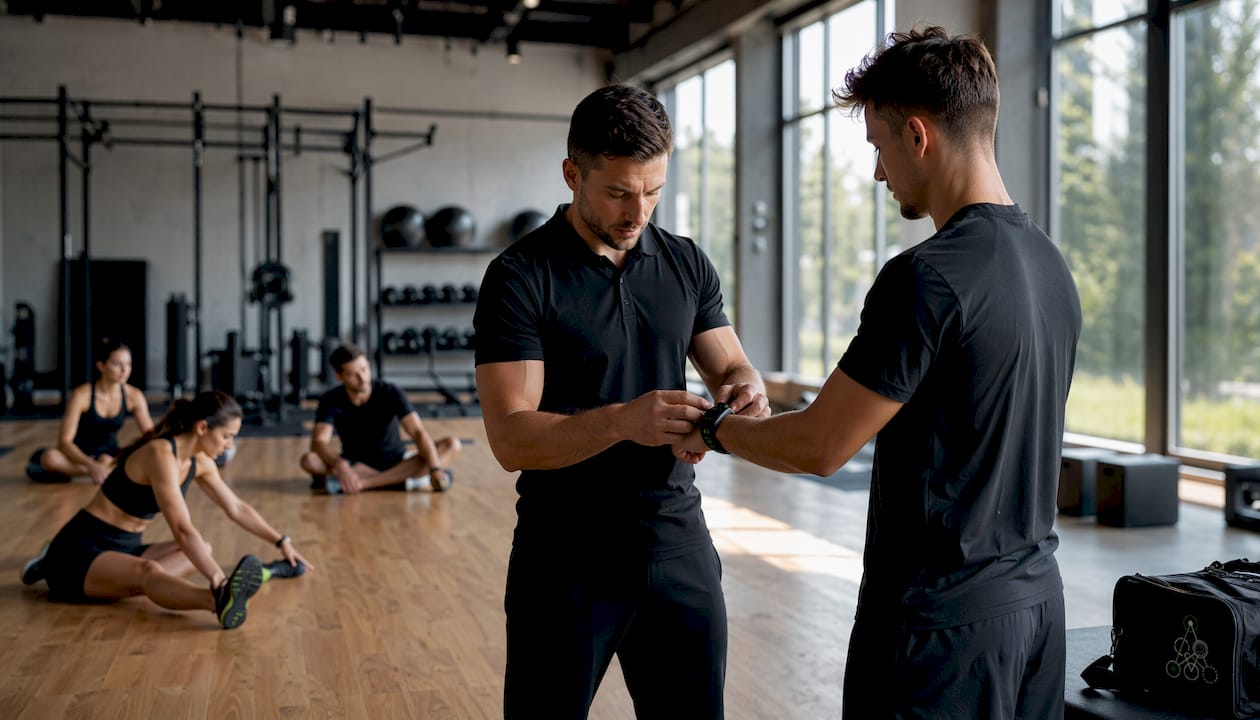
Physical warm-ups that include joint rhythmic activity, such as paired breathing or synchronized footwork patterns, prime the autonomic nervous system for alignment. These warm-ups are not optional extras. They shift the nervous system from a threat-detection state into a cooperative, anticipatory state before the first drill begins.
Physiological monitoring tools including heart rate monitors and HRV wearables give coaches real-time data on team cognitive alignment. Neurofeedback devices that track brainwave coherence are used at the elite level, though standard HRV monitors provide sufficient data for most teams.
Essential prerequisites and tools for nervous system alignment training:
- Psychological safety protocols: Establish clear team norms where mistakes during synchrony drills are treated as data, not failures.
- HRV wearables: Devices like chest-strap monitors or optical wrist sensors track autonomic alignment across the group in real time.
- Shared communication cues: Agree on verbal and nonverbal signals that anchor the team's attention to a common focal point before each drill.
- Rhythmic warm-up routines: Paired or group breathing exercises lasting 3–5 minutes before practice shift the nervous system toward cooperative readiness.
- Neurofeedback devices (advanced): EEG-based headsets measure brainwave coherence and can identify which athletes are lagging in neural alignment.
- Video review tools: Slow-motion footage of movement phase relationships reveals coordination gaps invisible at full speed.
A golf coach's approach to player coordination illustrates this well. Effective coaches build nervous system alignment by structuring repetition around timing cues, not just technique. The same principle applies across team sports.
How to train nervous system synchronization step by step
Structured coaching interventions raise movement synchronization probability among teammates by 70% or higher, facilitating proactive mutual anticipation during competition. That number reflects what targeted drills accomplish when they focus on timing and anticipation rather than isolated skill repetition.
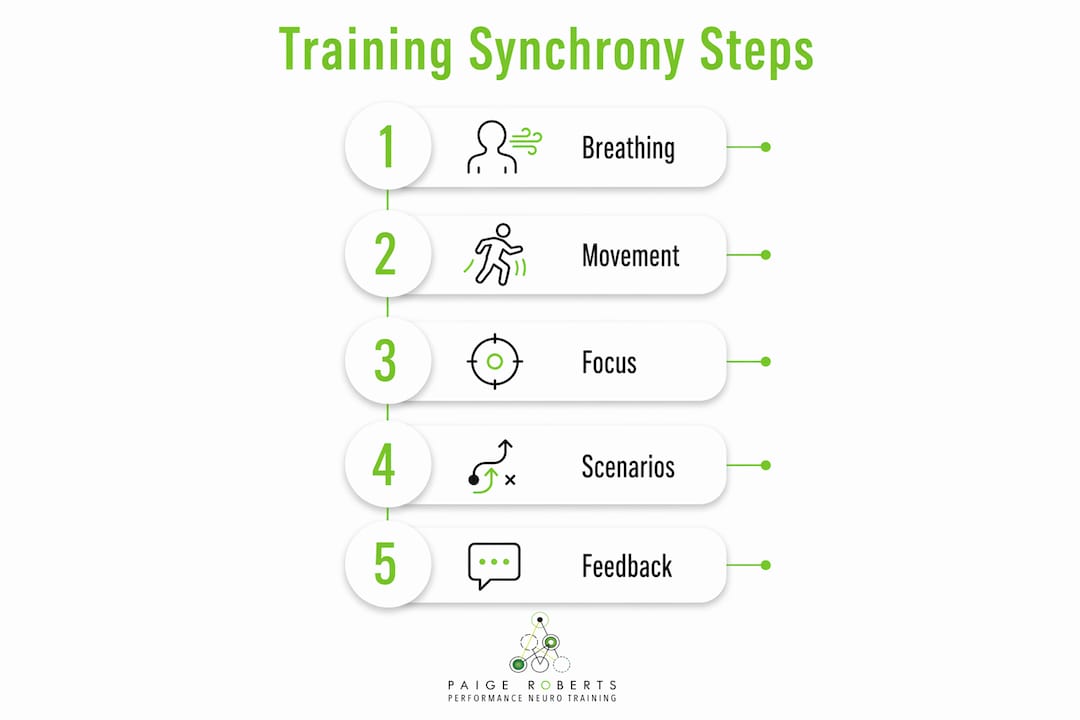
Step 1: Synchronized breathing drills Begin every session with 3–5 minutes of group breathing at a shared cadence. Inhale for four counts, exhale for six. This activates the parasympathetic nervous system and creates a shared physiological baseline across the team.
Step 2: Rhythmic movement coordination Run paired or small-group movement drills where athletes mirror each other's footwork, passing rhythm, or positional shifts. The goal is not perfect imitation. The goal is learning to read and predict a teammate's next move before it happens.
Step 3: Shared attentional focus exercises Use a single focal point, such as a ball, a zone on the field, or a coach's signal, to anchor the group's attention simultaneously. Shared vocalizations and verbal cues during these exercises, including call-and-response patterns, enhance interpersonal coordination and team performance.
Step 4: Scenario and anticipation drills Run situational drills where athletes must predict a teammate's decision before it is made. Training mutual anticipation reduces coordination gaps that opponents exploit. Rotate scenarios so athletes build anticipatory maps for multiple teammates, not just their closest partner.
Step 5: Physiological feedback review After each drill block, review HRV data as a group. Identify which athletes showed the highest alignment and which showed divergence. Use this as a coaching conversation, not a ranking exercise.
Pro Tip: Measure synchrony using relative phase of movement and temporal stability during live play, not just speed or distance covered. These metrics reveal functional coordination that standard stats miss.
| Training Method | Primary Benefit | Limitation |
|---|---|---|
| Synchronized breathing | Rapid parasympathetic alignment | Requires consistent pre-practice time |
| Rhythmic movement drills | Builds anticipatory movement reading | Needs small group sizes for accuracy |
| Shared attentional focus | Anchors collective neural attention | Less effective in noisy environments |
| Scenario anticipation drills | Reduces coordination gaps under pressure | Requires varied scenarios to generalize |
| HRV feedback review | Provides objective alignment data | Wearable cost and setup time |
What challenges arise when teams try to synchronize their nervous systems?
The most common mistake teams make is training reaction speed instead of anticipatory coordination. Reacting faster to what already happened does not close coordination gaps. Anticipatory synchronization requires athletes to predict what a teammate will do next, which demands a different training focus entirely.
A second frequent error is ignoring communication cadence. Teams that communicate only in crisis moments, rather than maintaining a steady rhythm of verbal and nonverbal cues, lose the physiological thread that keeps nervous systems aligned. Complex conversational dynamics, including shared laughter and call-and-response patterns, correlate with higher coordination in high-stakes environments.
Signs that synchrony has broken down during competition include:
- Athletes making decisions without reading teammate positioning
- Increased hesitation before passes, cuts, or defensive rotations
- Verbal communication dropping off under pressure
- HRV divergence across the team during a timeout measurement
- A general sense of "playing individually" despite physical proximity
When these signs appear, the fastest recalibration tool is a shared breathing reset. A 30-second group breath cycle during a timeout reactivates the parasympathetic baseline and re-anchors collective attention. It works because it addresses the physiological root of the breakdown, not just the tactical symptom.
"IBS fluctuations during teamwork are not signs of failure. They indicate a healthy, adaptive team capable of rapid resynchronization after disruptions. The goal is not to eliminate fluctuation but to shorten the time it takes to recover from it."
Investigating Interbrain Synchrony Under Teamwork Disruption
Adaptive IBS patterns improve resilience and cooperation under fluctuating task demands. Teams that accept this and train for rapid resynchronization outperform teams chasing a static, uninterrupted alignment that does not exist in real competition.
Key Takeaways
Synchronizing nervous systems in teams requires training anticipatory coordination, not just reaction speed, and the teams that master rapid resynchronization after disruptions consistently outperform those chasing static alignment.
| Point | Details |
|---|---|
| Coordination beats positivity | Interpersonal coordination predicts performance better than team liking or emotional positivity. |
| HRV tracks alignment | Heart rate variability data gives coaches a real-time, non-invasive measure of team cognitive alignment. |
| Anticipation is the target | Structured drills raise movement synchronization probability by 70%+ when focused on anticipatory coordination. |
| Fluctuation is normal | Cyclic IBS patterns are healthy; rapid resynchronization after disruption is the real performance skill. |
| Communication sustains sync | Consistent verbal and nonverbal cues throughout play maintain the physiological thread between teammates. |
Why anticipation training changed how I think about team performance
Most coaches I've worked with focus on reaction time. They run drills designed to make athletes respond faster to what's already happening. I understand the instinct. Speed is visible. Anticipation is not.
What I've seen over years of working with athletes at every level is that the teams who perform best under pressure are not the fastest reactors. They are the ones who have trained their nervous systems to predict what comes next. That shift, from reactive to anticipatory, is where nervous system alignment does its most important work. You can read more about the neuroscience behind this in the team performance neuroscience guide on the Robertsneurotraining blog.
The other thing I've learned is that athletes often resist the idea that a breathing exercise before practice matters. They want to get to the "real" work. But the nervous system does not care about your schedule. It needs a physiological signal that it is safe to cooperate rather than compete. That signal comes from shared rhythmic activity, not from a pep talk. Once teams experience what coordinated HRV feels like in their bodies, they stop skipping the warm-up.
Robertsneurotraining's approach, particularly the Alpha Imprinting method, addresses exactly this layer. It works at the nervous system level, not just the behavioral one. That is why the results hold under competition pressure, when behavioral strategies tend to fall apart.
— Paige
Robertsneurotraining and nervous system alignment for teams
Robertsneurotraining, led by Dr. Paige Roberts, applies neuroscience-based training to help athletes and teams build the nervous system foundation that competitive performance demands.
The Alpha Imprinting program targets the neural patterns that create mental blocks, performance anxiety, and coordination breakdowns. It works by reprogramming the nervous system at the source, not by layering coping strategies on top of unresolved stress responses. Teams that complete Alpha Imprinting report reduced anxiety, faster resynchronization after disruptions, and a clearer state of flow during competition. Athletes from Olympic medalists to major league professionals have used this method to enhance team cohesion and sustain high performance when it counts most.
FAQ
What is inter-brain synchrony in team sports?
Inter-brain synchrony (IBS) is the alignment of neural oscillation patterns across two or more athletes during shared activity. Research shows IBS fluctuates naturally during teamwork and supports anticipatory coordination rather than rigid simultaneous action.
How does HRV measure team nervous system alignment?
Heart rate variability reflects autonomic nervous system regulation and converges across teammates who are cognitively aligned. Coaches can use HRV wearables during practice to identify synchrony gaps and target them with specific drills.
How long does it take to improve team nervous system synchronization?
Structured coaching interventions focused on anticipatory coordination can raise movement synchronization probability by 70% or more. The timeline depends on practice frequency, but teams typically see measurable alignment gains within several focused training sessions.
What is the fastest way to recalibrate synchrony during a game?
A shared 30-second breathing reset during a timeout reactivates the parasympathetic nervous system and re-anchors collective attention. This addresses the physiological root of coordination breakdown rather than just the tactical symptom.
How does Alpha Imprinting support nervous system alignment in teams?
Alpha Imprinting, developed by Robertsneurotraining, reprograms the nervous system to clear anxiety responses and mental blocks that disrupt coordination. Athletes who complete the program report faster resynchronization and a more consistent state of flow during competition.