

The social nervous system in teams is the collective neurophysiological mechanism through which athletes and teammates regulate each other's autonomic states, enabling trust, synchronized performance, and mental resilience under pressure. This concept draws directly from Polyvagal Theory, developed by Dr. Stephen Porges, which maps how the autonomic nervous system shifts between states of safety, threat, and shutdown. For sports and performance teams, understanding social nervous systems means recognizing that your nervous system does not operate in isolation. Every interaction with a coach, teammate, or competitor sends biological signals that either pull your team toward calm, focused engagement or push it toward panic and disconnection. The practical stakes are high: teams that consistently access shared states of safety perform with greater cohesion, creativity, and resilience than those operating in chronic stress.
What is the social nervous system in teams, biologically?
Polyvagal Theory describes three autonomic states that govern how the nervous system responds to the environment: ventral vagal (social engagement and calm alertness), sympathetic (mobilization, fight or flight), and dorsal vagal (shutdown and disconnection). Each state shapes how an athlete perceives their teammates, processes information, and executes under pressure. The ventral vagal state is where peak performance lives. It is the state that allows a quarterback to read a defense calmly, a sprinter to stay loose at the start line, or a basketball team to execute a late-game play without freezing.
The biological pathway that enables this shared regulation is called the social engagement system. The social engagement system uses facial muscles, vocal prosody, head movements, and listening behaviors to communicate safety or threat to others. These cues are processed unconsciously by a mechanism Porges calls neuroception, the nervous system's continuous background scan for signals of danger or safety. A coach's calm tone before a penalty kick, a teammate's steady eye contact in a huddle, or a captain's relaxed posture on the sideline all send neuroception signals that can shift the entire team's autonomic state.
Here is how the three autonomic states map onto team performance:
- Ventral vagal state: Calm, connected, and alert. Athletes in this state access clear thinking, flexible decision-making, and genuine teamwork.
- Sympathetic state: High arousal, reactive, and tunnel-visioned. Useful for explosive effort but destructive when it tips into panic or aggression.
- Dorsal vagal state: Shutdown, disconnected, and flat. Athletes here appear checked out, unresponsive, or emotionally unavailable to their team.
Pro Tip: Watch your team's faces and vocal tone during high-pressure moments. Tight jaws, clipped speech, and averted eyes are visible signs that the team has shifted out of the ventral vagal state and into threat mode.
How does the social nervous system shape team dynamics?
High-performing teams access ventral vagal states more frequently than struggling teams, which translates directly into calm alertness, creative coordination, and flexibility under pressure. This is not a metaphor. It is a measurable physiological reality that researchers now track using heart rate variability (HRV) and electrodermal activity (EDA). When team members' physiological rhythms align, the group moves, decides, and responds as a unit rather than as a collection of stressed individuals.
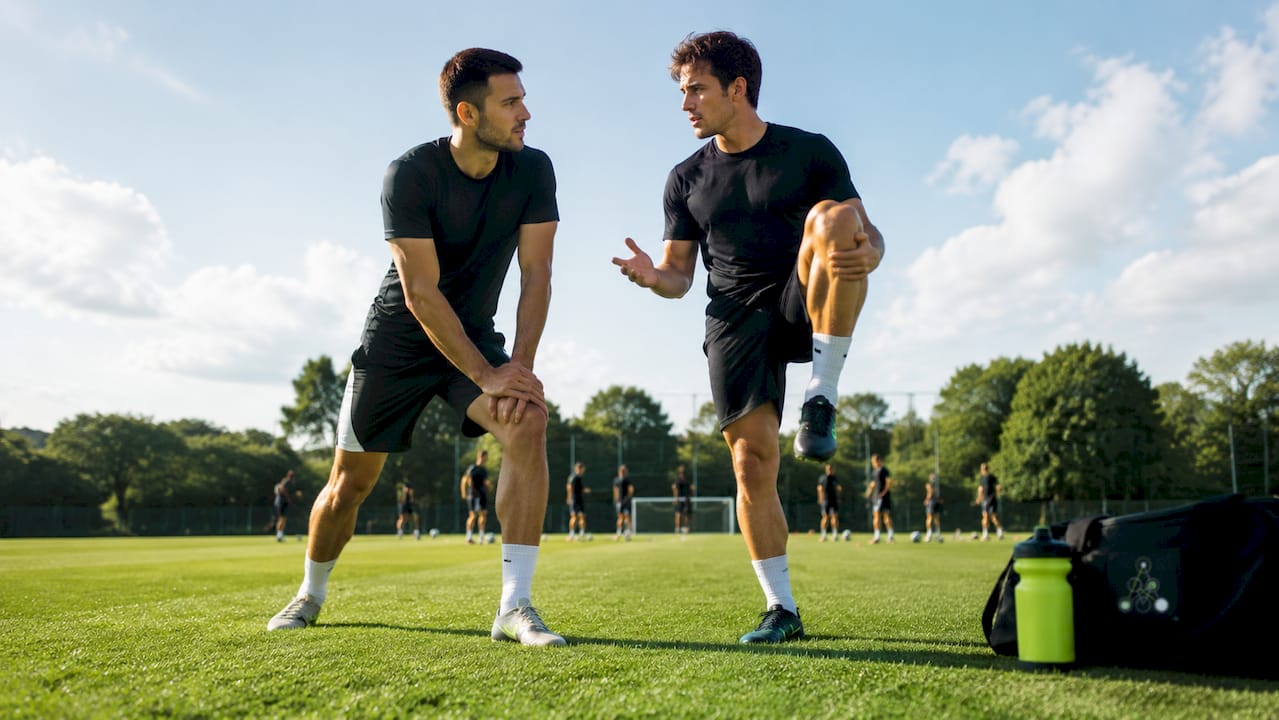
This phenomenon is called interpersonal physiological synchrony. Interpersonal synchrony measured by HRV and EDA correlates with group cohesion and collaboration in sports teams, providing objective markers for how groups shift between engagement and stress during real tasks. Think of it as a biological measure of team chemistry. When synchrony is high, trust is high. When synchrony breaks down, so does coordination.
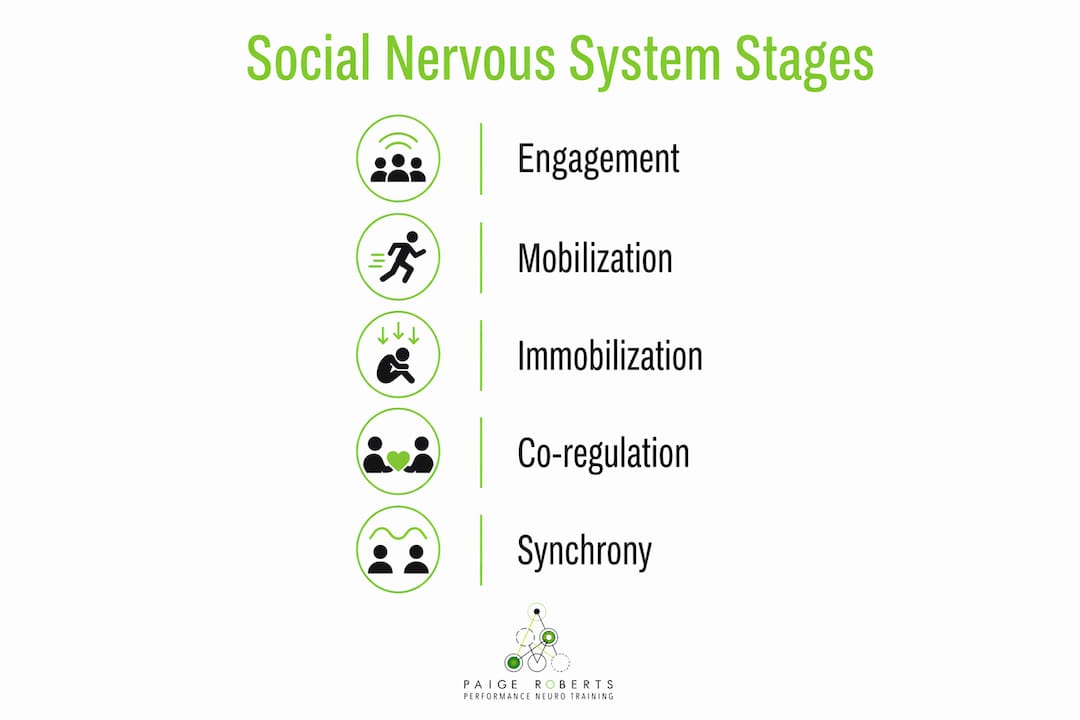
The process that creates synchrony is co-regulation. Co-regulation at the team level occurs through unintentional nervous system cues sent by coaches and teammates that influence each other's autonomic state. This means that a coach who walks into a locker room at halftime with a tight chest and clipped sentences is not just expressing stress. They are transmitting it. The team's nervous systems pick up those cues and respond in kind.
Four mechanisms drive team-level co-regulation in sports:
- Vocal prosody: The rhythm, pitch, and warmth of a coach's voice regulate the team's threat response more powerfully than the words themselves.
- Facial expression: Genuine calm on a leader's face signals safety to the team's neuroception system, even when the scoreboard is against you.
- Physical proximity and timing: Attunement in timing, such as a well-placed hand on a shoulder or a synchronized team ritual, reinforces shared safety states.
- Listening quality: Active, unhurried listening from a coach or captain signals that the environment is safe enough to think clearly and take risks.
"Teams with secure leadership that balances confidence and emotional availability show higher cohesion, better performance, and stronger psychological safety than those relying on rank or technical skill alone." — Brainz Magazine
This is why psychological safety in sports teams is not a soft concept. It is a direct product of the team's collective nervous system state.
What are the scientific debates around Polyvagal Theory?
Polyvagal Theory is widely used in sports psychology, trauma therapy, and performance coaching, but it is not without serious scientific challenge. An international expert evaluation in 2026 concluded that major tenets of Polyvagal Theory lack sufficient neurophysiological evidence and may be untenable. The core critique targets specific claims about vagus nerve evolution and the precise neural mechanisms Porges proposed. This does not mean the observable phenomena are false. It means the theoretical explanation for those phenomena remains contested.
For coaches and athletes, the distinction matters. Here is how to think about it clearly:
- What the evidence supports: Autonomic states are real and measurable. Co-regulation between people is real. Physiological synchrony in teams is real and trackable via HRV and EDA. These phenomena hold up under scrutiny.
- What remains contested: The specific neuroanatomical claims about vagal pathways and their evolutionary sequence are disputed by neurophysiologists who argue the evidence does not support Porges' mechanistic model.
- What this means for practice: Apply the framework as a useful map, not a settled fact. Use it to observe, describe, and intervene in team nervous system dynamics without treating every detail as proven science.
Pro Tip: When presenting social nervous system concepts to athletes or coaching staff, frame them as evidence-informed tools for understanding team energy and regulation. Avoid presenting Polyvagal Theory as established neuroscience law, since doing so can undermine your credibility with scientifically literate audiences.
Strong neuroscience-based sports psychology practice separates what is empirically solid from what is theoretically proposed. The practical applications of co-regulation and autonomic awareness remain valuable regardless of where the mechanistic debates land.
How can teams apply social nervous system principles in practice?
Applying social nervous system insights does not require a neuroscience degree. It requires coaches and team leaders to develop genuine self-awareness about their own autonomic state and its effect on the group. Because neuroception operates unconsciously, authentic safety cues work far better than scripted motivational language. A coach who is genuinely regulated sends a different biological signal than one who is performing calm while internally dysregulated.
Here are the most effective strategies for building a team's social nervous system capacity:
- Regulate yourself first: A coach or captain's nervous system sets the room's tone. Breathing practices, pre-game routines, and body awareness training help leaders arrive in a ventral vagal state before the team needs them.
- Create consistent safety rituals: Pre-game huddles, team breathing exercises, and shared physical warm-ups create predictable co-regulation moments that anchor the team's collective state.
- Train attunement, not just tactics: Practice interaction timing, listening quality, and eye contact as deliberately as you practice plays. Attunement is a trainable skill.
- Use HRV monitoring for team feedback: Physiological synchrony as a measurable proxy helps coaches assess how the team shifts between engagement and stress during training, offering data-driven insight into cohesion.
The table below compares reactive versus proactive approaches to team nervous system management:
| Approach | Reactive | Proactive |
|---|---|---|
| Timing | Responds to breakdown after it happens | Builds regulation capacity before pressure arrives |
| Focus | Manages symptoms (panic, conflict, shutdown) | Trains autonomic flexibility and co-regulation |
| Leader role | Crisis manager | Nervous system anchor and model |
| Measurement | Subjective observation | HRV and EDA synchrony tracking |
| Outcome | Short-term stabilization | Sustained cohesion and mental resilience |
Building collective mental resilience in sports teams is the direct downstream result of consistent, intentional social nervous system training. Teams that practice co-regulation as a skill, not just a concept, show up differently when the pressure is highest.
Key takeaways
The social nervous system in teams is a real, measurable, and trainable collective mechanism that determines whether athletes perform in a state of calm engagement or chronic threat response.
| Point | Details |
|---|---|
| Social nervous system defined | It is the collective neurophysiological process through which teammates regulate each other's autonomic states. |
| Three autonomic states | Ventral vagal, sympathetic, and dorsal vagal each produce distinct effects on team performance and cohesion. |
| Co-regulation is biological | Coaches and teammates unintentionally transmit nervous system cues that shift the group's collective state. |
| Science is evolving | Core Polyvagal Theory mechanisms are contested; apply autonomic regulation concepts as evidence-informed tools, not settled law. |
| Practical application | Regulate yourself first, build safety rituals, train attunement, and use HRV data to measure team synchrony. |
What I've learned coaching teams through the nervous system lens
Working with athletes across performance levels, I have seen the same pattern repeat: the team with the most talent often loses to the team with the most regulated nervous systems. That observation stopped surprising me years ago. What still surprises coaches is how little of this is conscious. A captain who walks into the locker room visibly tight, even without saying a word, can collapse a team's readiness in under two minutes. The nervous systems in that room are scanning constantly, and they respond to what is real, not what is said.
The most common misconception I encounter is that mental toughness means suppressing nervous system responses. It does not. It means developing the capacity to return to a regulated, connected state quickly, and to bring your team with you. That is a trainable skill, and it is exactly what separates athletes who perform under pressure from those who go through the motions hoping the anxiety passes.
I also want to be direct about Polyvagal Theory: I use its framework because it gives athletes and coaches a useful language for what they already experience. I do not present it as settled neuroscience, because the expert debates are real and ongoing. What I know from working with Olympic Medalists and professional athletes is that the phenomena are real, the results are measurable, and the training works. The theoretical scaffolding is secondary to what happens when an athlete finally learns to regulate their nervous system and feels their performance open up.
The coaches who get the best results are the ones who do the internal work themselves first. You cannot lead a team into a ventral vagal state from a sympathetic one. Your nervous system is the instrument. Learn to play it.
— Paige
Train your team's nervous system with Robertsneurotraining
Robertsneurotraining, led by Dr. Paige Roberts, applies neuroscience-based methods to help athletes and teams train the nervous system directly, targeting the mental blocks, performance anxiety, and trauma responses that disrupt collective performance. The program's Alpha Imprinting method reprograms autonomic patterns that keep athletes stuck in threat states, enabling the kind of calm, connected engagement that social nervous system research identifies as the foundation of peak performance. Whether you are a coach working with a professional roster or an athlete rebuilding confidence after injury, Robertsneurotraining's neurotraining program offers a structured path from chronic stress to flow. The results speak through the athletes who have used it, including Olympic Medalists who credit the approach with measurable performance breakthroughs.
FAQ
What is the social nervous system in a team context?
The social nervous system in teams is the collective neurophysiological process through which teammates and coaches regulate each other's autonomic states via unconscious cues including vocal tone, facial expression, and listening behaviors. It determines whether a team operates in a state of calm engagement or chronic threat response.
How does co-regulation work between teammates?
Co-regulation occurs when teammates and coaches unintentionally transmit autonomic state cues that shift each other's nervous systems toward safety or threat. Effective interaction quality, timing, and attunement during stress are the primary drivers of this process.
Can team nervous system states be measured objectively?
Yes. HRV and EDA measure interpersonal synchrony as objective markers of how teams shift between engagement and stress during real tasks, giving coaches data-driven insight into cohesion and collective regulation.
Is Polyvagal Theory scientifically proven?
Polyvagal Theory is widely applied but scientifically contested. A 2026 international expert evaluation found that core Polyvagal Theory claims lack sufficient neurophysiological support. The autonomic regulation phenomena it describes are real and measurable; the specific mechanistic explanations remain under debate.
What role does a coach play in team nervous system regulation?
A coach's autonomic state directly shapes the team's collective state through neuroception. Leaders who create authentic safety cues through genuine calm, attentive listening, and consistent behavior help teams access ventral vagal states where performance, trust, and cohesion are highest.