

Trauma shifts the nervous system into survival mode, and a nervous system in survival mode cannot learn. That single fact explains why athletes recovering from injury often seem resistant, disengaged, or unable to apply feedback — even when they desperately want to improve. Coachability, defined in 2025 Sports Medicine guidance as a malleable, multidimensional competency, drops sharply when physiological safety is absent. Three immediate consequences follow:
- Engagement collapses. An athlete in fight/flight/freeze cannot sustain the focused attention coaching requires.
- Feedback uptake stalls. Instructions that reach a dysregulated prefrontal cortex often feel threatening rather than helpful.
- Avoidance and re-injury risk rise. Protective behaviors that once kept the athlete safe now interfere with rehab compliance.
The sections below explain the neuroscience, show you what to look for in training, and give practical steps for restoring coaching readiness — including when to refer out.
Table of Contents
- Why trauma affects coachability at the neurological level
- What trauma-affected coachability looks like in training and rehab
- Evidence-based ways to restore coaching readiness
- How coaches should adapt their approach with trauma-affected athletes
- Realistic timelines for restoring coachability
- Performance Neuro Training and Alpha Imprinting in practice
- Key Takeaways
- The gap between wanting coaching and being able to use it
- Robertsneurotraining's Performance Neuro Training for injured athletes
- Sources and further reading
Why trauma affects coachability at the neurological level
When a threat is perceived, real or remembered, the brain's survival circuitry takes over. The amygdala fires, stress hormones flood the body, and the prefrontal cortex — the seat of attention, working memory, impulse control, and planning — loses top-down authority. In fight/flight/freeze, cognitive coaching strategies are simply less effective until physiological safety is restored.
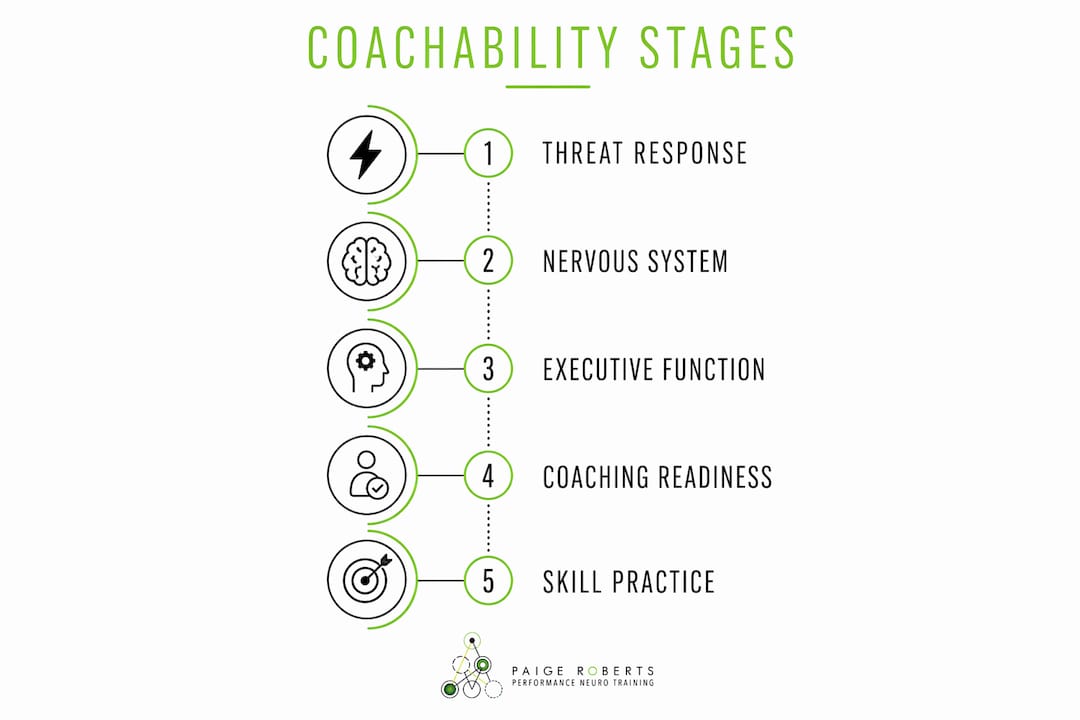
The cascade looks like this: nervous-system dysregulation reduces executive function, and reduced executive function lowers coaching readiness. An athlete who cannot hold a new movement pattern in working memory, or who impulsively rejects corrective feedback, is not being difficult. Their hardware is running a protection program.
Relational trauma adds another layer. Multiple trauma exposures can make an athlete 1.34–10 times more likely to struggle forming the trust-based relationship with a coach that learning requires. Attachment history shapes how safe authority figures feel, which directly affects whether feedback lands as guidance or threat.
| Executive Function | What It Does for Coachability | How Trauma Disrupts It |
|---|---|---|
| Attention | Sustains focus on instruction | Hypervigilance pulls focus to threat cues |
| Working memory | Holds new information during practice | Stress hormones reduce capacity |
| Impulse control | Allows pause before reacting to feedback | Survival mode shortens the pause |
| Planning | Sequences skill steps | Prefrontal suppression collapses sequencing |
What trauma-affected coachability looks like in training and rehab
Observable signs are often mislabeled as attitude problems. Knowing what you are actually seeing changes everything.
- Shutting down mid-drill or going silent after correction
- Hypervigilance: scanning the room, startling at noise, difficulty settling
- Inconsistent follow-through — executes well one session, forgets everything the next
- Sudden defensiveness or anger when feedback is delivered neutrally
- Somatic bracing: visible muscle tension, shallow breathing, guarded posture
- Dissociation during repetitive drills (glazed eyes, mechanical movement, no retention)
- Over-reliance on avoidance: skipping the hardest rehab exercises, finding reasons not to train
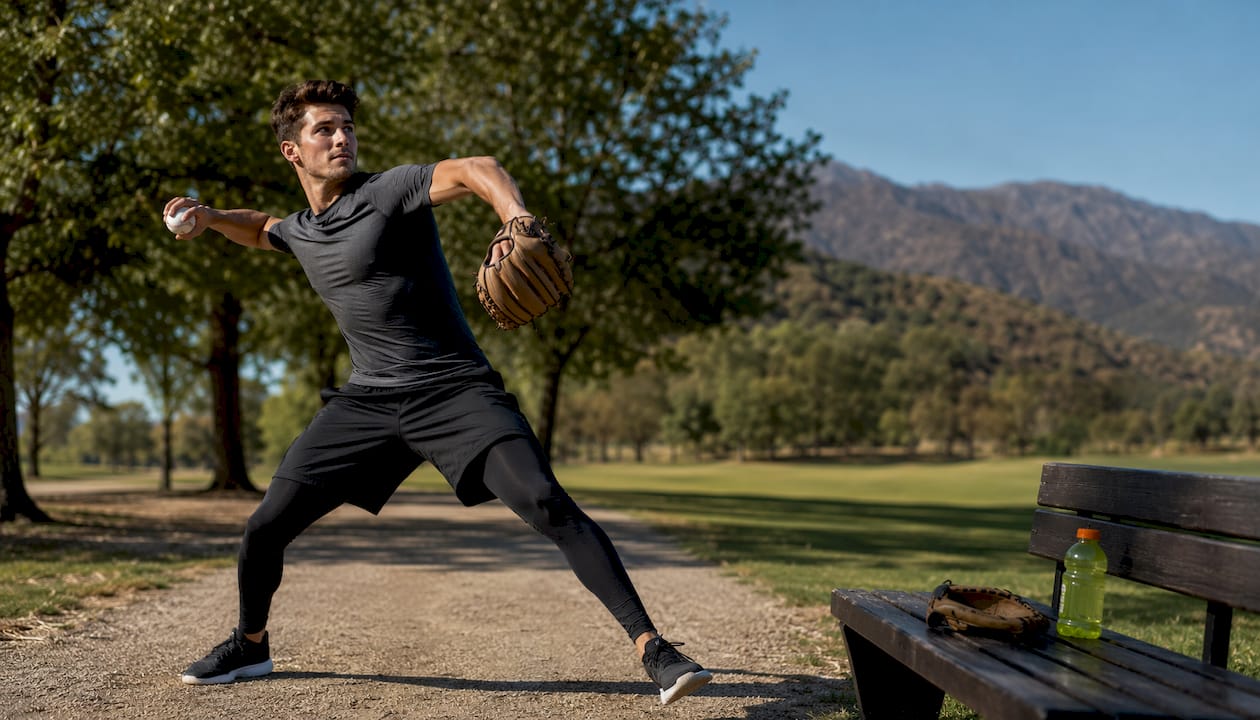
A pitcher returning from Tommy John surgery, for example, might execute a throwing progression perfectly in isolation but freeze and lose mechanics the moment a coach watches closely. That freeze is not a skill gap. It is a nervous-system response to perceived evaluation threat.
Pro Tip: Before each session, ask the athlete to rate their body tension on a 1–10 scale and note where they feel it. A score above 6 is a signal to regulate before any skill work begins. Two minutes of slow exhale breathing can shift the baseline enough to make coaching land.
Evidence-based ways to restore coaching readiness
The staged approach that works follows a simple sequence: regulate, orient, engage, practice. Skipping stages is the most common mistake coaches make with trauma-affected athletes.
Regulate means bringing the nervous system out of survival mode first. Breathing protocols with extended exhales (four counts in, six counts out), slow rhythmic movement, and grounding exercises all activate the parasympathetic branch. Somatic regulation is not a warm-up luxury; it is a prerequisite.
Orient means helping the athlete establish present-moment safety. Brief environmental check-ins ("What do you notice right now that feels okay?"), consent-based language ("I'd like to give you some feedback — is now a good time?"), and predictable session structure all reduce threat detection.
Engage is where co-regulation enters. A coach who maintains a calm, regulated baseline helps the athlete's nervous system borrow that stability. This is not passive; it requires the coach to actively monitor their own state.
Practice is where skill work happens — but only in short, low-threat bursts. Micro-skills training with immediate positive reinforcement builds new neural pathways without retriggering survival responses.
Refer to a licensed mental health professional when you observe persistent dissociation, suicidal ideation, ongoing self-harm, or panic severe enough to stop rehab entirely. Trauma-informed coaching techniques are appropriate for dysregulation that responds to regulation strategies within a session. Clinical trauma is not.
How coaches should adapt their approach with trauma-affected athletes
| Do | Don't |
|---|---|
| Ask consent before giving corrective feedback | Deliver surprise corrections mid-drill |
| Use neutral, descriptive language ("Your elbow dropped") | Use shame-adjacent language ("You always do this") |
| Establish a predictable session structure | Vary format unpredictably to "keep them sharp" |
| Pause and regulate when the athlete shuts down | Push through shutdown as a mental toughness test |
| Name the behavior without judgment ("I notice you went quiet") | Interpret behavior as attitude or laziness |
| Build in explicit recovery time between hard reps | Stack high-intensity feedback without breaks |
Sample consent script: "Before we review the film, I want to check in. Is there anything you need from me today to feel ready to look at this together?"
Red flags requiring immediate referral:
- Persistent dissociation that does not resolve within a session
- Disclosure of active self-harm or suicidal ideation
- Panic responses that escalate rather than settle with regulation attempts
- Trauma disclosures that exceed the coach's scope of practice
Coach self-regulation matters as much as technique. Entanglement occurs when the coach's nervous system mirrors the athlete's dysregulation, which reinforces rather than interrupts the survival cycle. Maintaining your own regulated baseline is not optional; it is the intervention.
Realistic timelines for restoring coachability
Progress is real, but it is not linear and it is not fast.
- Days to weeks: Basic regulation gains. Athletes learn to recognize their own nervous-system state and apply simple tools (breathing, grounding) to shift it before sessions.
- Weeks to months: Skill consolidation and relational trust. Consistent feedback uptake improves as the coach-athlete relationship builds safety. Defensive language in sessions decreases noticeably.
- Months to longer: Deep attachment-pattern work, especially for athletes with multiple ACEs, typically requires clinical support alongside coaching. Coachability is context-dependent and mutable — what looks fixed often shifts when method, timing, or environment changes.
Progress metrics worth tracking: session-to-session regulation baseline scores, consistency of applying feedback across sessions, reduction in defensive or avoidant language, and retention of new skills from one session to the next.
Factors that slow recovery include high ACE scores, ongoing situational stress (financial pressure, relationship conflict, ongoing injury pain), and limited access to trauma-literate practitioners. Severity and multiplicity of trauma are the strongest predictors of timeline length.
Performance Neuro Training and Alpha Imprinting in practice
Consider an athlete who tore her ACL during a collegiate soccer season. Eighteen months post-surgery, her mechanics were sound but she consistently froze before contact situations. Standard mental skills coaching had not moved the needle. What changed the outcome was a nervous-system–first approach: pre-session priming routines to establish regulation, followed by Alpha Imprinting protocols designed to reprogram the specific threat associations tied to contact.
Alpha Imprinting, as developed within Performance Neuro Training, works by pairing sport-specific movement patterns with nervous-system safety cues, gradually replacing the defensive association with a performance-ready state. The process is not talk-based; it operates at the level of the nervous system itself.
Questions to ask any provider offering this kind of work:
- What are your credentials, and what is your referral pathway when clinical issues arise?
- How do you assess nervous-system state before and during sessions?
- What evidence base informs your protocols?
- How do you coordinate with the athlete's medical and rehab team?
Pro Tip: The Energy Optimization Workbook from Robertsneurotraining is a practical starting point for athletes who want to begin nervous-system priming before committing to a full program. It covers regulation baselines, priming sequences, and energy management strategies.
Note: Performance Neuro Training is a practitioner resource, not a substitute for licensed clinical care when clinical-level trauma is present.
Key Takeaways
Trauma reduces coachability by dysregulating the nervous system, and restoring coaching readiness requires regulation-first approaches before any skill work can stick.
| Point | Details |
|---|---|
| Survival mode blocks learning | Fight/flight/freeze suppresses the executive functions attention, working memory, and planning that coaching depends on. |
| Multiple traumas multiply the barrier | Athletes with multiple trauma exposures can be 1.34–10 times more likely to struggle forming the trust needed for coaching. |
| Coachability is malleable | 2025 Sports Medicine guidance confirms coachability is a trainable competency, not a fixed trait. |
| Regulate before you coach | The staged sequence — regulate, orient, engage, practice — is the evidence-aligned order; skipping regulation wastes session time. |
| Robertsneurotraining offers a starting point | Performance Neuro Training and Alpha Imprinting address nervous-system dysregulation in injured athletes; the Energy Optimization Workbook is an accessible first step. |
The gap between wanting coaching and being able to use it
The hardest part of trauma-affected coachability is the gap between intention and capacity. An athlete can want to improve, believe in their coach, and still find their body refusing to cooperate. The feedback lands, the drill begins, and something shuts down before the instruction can take hold. From the outside it looks like resistance. From the inside it feels like failure.
A coach who responds to that shutdown with increased pressure — more repetitions, sharper correction, louder instruction — is not being demanding. They are being uninformed. The athlete's survival self, as coaching literature describes it, is not coachable in the same way the healthy self is. Pushing performance before the athlete's healthy self is present can re-energize survival strategies and set progress back.
The shift that works is not softer coaching. It is smarter sequencing: safety first, relationship second, skill third. That sequence feels counterintuitive to coaches trained to maximize session productivity. But for a nervous system still running a protection program, it is the only sequence that actually produces results.
A note on privacy: the vignettes in this article are anonymized composites. Coaching is not therapy, and the boundary between the two must be maintained. When clinical-level trauma is present, referral to a licensed mental health professional is not optional.
Robertsneurotraining's Performance Neuro Training for injured athletes
Injured athletes who have hit a wall in rehab — not because of physical limitations, but because their nervous system is still in protection mode — are exactly who Performance Neuro Training was built for. Dr. Paige Roberts developed this approach specifically for athletes dealing with the intersection of sports injury and trauma-related dysregulation, where standard mental skills work falls short.

The program uses Alpha Imprinting to reprogram nervous-system responses at the level where the block actually lives, not at the level of conscious thought. The Energy Optimization Workbook gives athletes a structured, self-directed starting point: regulation baselines, priming sequences, and energy management tools they can use between sessions. Olympic-level athletes have used these methods to return to competition after injuries that had stalled their progress for months.
The next step is straightforward: download the workbook to begin building your regulation baseline, or schedule a consult to discuss whether Performance Neuro Training fits your situation. If red flags are present — persistent dissociation, active self-harm, clinical-level panic — coordinate with a licensed mental health provider first. Robertsneurotraining works alongside clinical care, not instead of it.
Sources and further reading
- Adverse Childhood Experiences and Long-Term Outcomes (PMC, 2026 academic review) — Peer-reviewed meta-analysis on ACEs effects on relationship formation and performance adjustment; highest-evidence source for the 1.34–10× figure used in this article.
- Sports Medicine Guidance on Coachability (Springer, 2025) — Defines coachability as a malleable, physiologically influenced competency; peer-reviewed.
- Academic Adjustment in Children and Adolescents with ACEs (Springer Nature, European Journal of Psychology of Education) — Multilevel meta-analysis (1,726,810 participants) showing trauma symptoms consistently undermine motivation, engagement, and achievement; peer-reviewed.
- Why Your Executive Coach Must Understand Relational Trauma (Annie Wright, LMFT) — Practitioner commentary on survival-mode physiology and coaching; clinician-authored.
- Is Trauma Present? The Survival Self in Coaching (ART in Coaching) — Practitioner guidance on entanglement and coach self-regulation.
- What Has Trauma Got to Do with Coaching? (Julia Vaughan Smith) — Practitioner paper on the survival self and the limits of push-based coaching.
- Who Is "Uncoachable"? (Simon Western, Substack) — Practitioner commentary on coachability as context-dependent; opinion-level evidence.
- Roberts Neurotraining — Performance Neuro Training and Alpha Imprinting — Program overview and consult booking; practitioner resource.
Evidence note: peer-reviewed sources carry the strongest evidentiary weight. Practitioner commentary and program resources are useful for applied guidance but should not be treated as equivalent to controlled research. For clinical-level trauma, consult a licensed mental health professional. This article is general information, not clinical advice — confirm your specific situation with a qualified provider.
Contact Dr. Paige Roberts through robertsneurotraining.com for questions, referrals, or to discuss whether Performance Neuro Training is appropriate for your situation.