

Trauma disrupts an athlete's focus by pushing the nervous system into threat mode, where the amygdala takes over and the prefrontal cortex, the part of the brain responsible for voluntary attention and decision-making, goes quiet. That shift is not a mindset problem. It is a physiological one, and it shows up on the field as intrusive memories mid-play, hypervigilance to crowd noise or a specific opponent, dissociation during high-pressure moments, or the sudden mechanical breakdown athletes call the yips.
Coaches and athletes usually notice the symptoms before anyone names the cause: a pitcher who can't release the ball cleanly after a bad outing, a gymnast who blanks mid-routine, a returning athlete who flinches at contact they used to shrug off. These are not signs of weak character. They are a nervous system still bracing for the last threat.
A few steps help immediately. Build a felt sense of safety before asking for performance, through predictable routines and language that signals control is available to the athlete. Teach one brief regulation technique, like slow exhale breathing, that the athlete can use between reps. And if symptoms persist beyond a few weeks or intensify under pressure, connect the athlete with a trauma-informed clinician rather than waiting for it to resolve on its own.
Pro Tip: Before a rep that historically triggers tension, cue the athlete with a short, neutral phrase like "same drill, new rep" instead of reviewing what went wrong last time. Reviewing the mistake reactivates the threat memory right before you need calm focus.
Key Takeaways
Trauma disrupts athletic focus by shifting brain activity from the prefrontal cortex to the amygdala, and restoring performance requires nervous-system regulation alongside psychological processing, not physical rehab alone.
| Point | Details |
|---|---|
| Threat mode blocks attention | The amygdala overrides the prefrontal cortex, disrupting voluntary focus and decision-making under pressure. |
| Symptoms are physiological, not attitude | Intrusive memories, hypervigilance, dissociation, and the yips are nervous-system responses, not character flaws. |
| Injury triggers compound over time | Concussions, repeated injuries, and abuse exposure all elevate risk of trauma-driven focus problems. |
| Integrated care outperforms physical-only rehab | Addressing psychological readiness alongside tissue healing lowers re-injury risk and speeds return to play. |
| Multiple therapies target different needs | EMDR, brainspotting, trauma-focused CBT, and mindfulness each address different aspects of trauma-driven attention loss. |
This article is general information, not a substitute for advice from a qualified doctor. Consult a qualified healthcare professional about your own circumstances before acting on anything here.
Table of Contents
- How Trauma Rewires the Brain Circuits Behind Focus
- Which Trauma Types and Sport Events Most Often Break Focus
- What Trauma-Driven Focus Loss Looks Like in Practice and Competition
- What the Research Says About Prevalence and Outcomes
- How Trauma Slows Rehab and Raises Re-Injury Risk
- Why Recovery Requires a Biopsychosocial Approach, Not Just Physical Rehab
- Practical Strategies Athletes and Coaches Can Use Right Now
- Which Therapies Help and When to Refer to a Specialist
- Building a Trauma-Informed Training Environment
- How Roberts Neurotraining Approaches Trauma-Driven Focus Problems
- A Clinician's Note to Athletes
- Sources
How Trauma Rewires the Brain Circuits Behind Focus
Attention is not one skill. It's a coordination job between several brain regions, and trauma disrupts that coordination at a structural level. Understanding the wiring explains why willpower alone rarely fixes a post-trauma focus problem.
The core imbalance runs between the amygdala and the prefrontal cortex. The amygdala scans for threat and fires fast, before conscious thought catches up. The prefrontal cortex normally keeps that alarm in check, letting an athlete choose where to direct attention rather than react to every stimulus. After trauma, that relationship flips. The amygdala becomes more reactive and the prefrontal cortex loses some of its regulatory pull, which shifts activity away from the region responsible for deliberate, top-down attention. The result: an athlete's focus gets hijacked by whatever the amygdala flags as dangerous, whether that's a specific movement, a sound, or a facial expression from a coach.
The hippocampus complicates things further. It handles memory encoding and retrieval, and chronic stress hormones can impair its function, which is part of why traumatized athletes sometimes struggle to follow multi-step instructions or recall a play call they've executed hundreds of times. Add in the periaqueductal gray, a brainstem structure involved in freeze and flight responses, and you get the physiological basis for an athlete going completely still under pressure, unable to react at all.
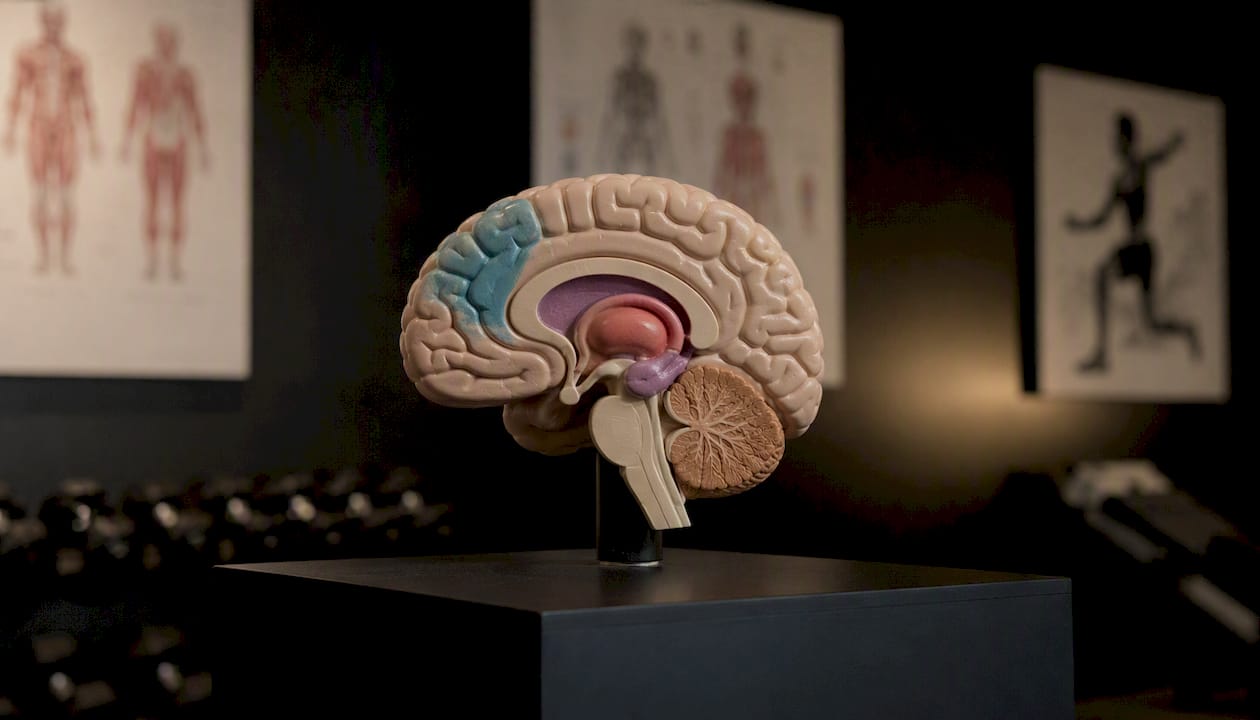
Stress hormones drive the whole cascade. Adrenaline sharpens short-term reactivity but narrows attention to a single perceived threat. Cortisol, when chronically elevated, impairs working memory and slows the kind of flexible decision-making that team sports demand. Neither hormone is the enemy in isolation; both are supposed to spike and recede. The problem is a nervous system that never fully stands down.
On the field, this translates into predictable patterns:
- Narrowed attention that misses peripheral cues, like a cutting teammate or an approaching defender.
- Impulsive, rushed decisions that bypass the deliberation an athlete would normally apply.
- Delayed reaction time on drills the athlete has run cleanly for years.
- Difficulty shifting attention back to the task after a triggering moment, sometimes for the rest of the session.
Trauma and PTSD research in elite athlete populations points to a pattern worth flagging directly: threat-driven attention shifts are not occasional lapses. They're the nervous system doing exactly what it evolved to do, just at the wrong moment, against the wrong target.
Which Trauma Types and Sport Events Most Often Break Focus
Not every stressor produces the same disruption, and knowing which exposures tend to trigger focus problems helps athletes and coaches catch the pattern earlier rather than chalking it up to a bad stretch.
Sport-specific traumas are the most common trigger set:
- Acute injuries, especially concussion, which combine physical trauma with a sudden loss of control over the body.
- Repeated injuries to the same joint or region, which compound fear of re-injury with each recurrence.
- Publicly humiliating performance failures, like a dropped catch in a championship game or a blown serve at match point.
- Verbal or physical abuse from coaches or teammates, which teaches the nervous system to treat the training environment itself as unsafe.
- Witnessing a serious injury or critical incident involving a teammate.
Trauma from outside sport rarely stays outside sport. Childhood adversity, interpersonal violence, and accidents unrelated to athletics all shape how reactive an athlete's nervous system is when a new stressor arrives. Developmental adversity and team dynamics compound over time, meaning an athlete who grew up in a high-conflict household may respond to ordinary coach criticism with a disproportionate threat response years later.
A common pattern practitioners describe: a pitcher takes two consecutive line drives off the mound, and within a season develops a throwing block that no amount of mechanical coaching resolves, because the block isn't mechanical. It's protective dissociation that the body built after the second impact.
Watch for trigger reappearance in specific settings: return-to-play drills that mimic the original injury mechanism, high-stakes competition where the stakes echo a past failure, and direct coach feedback delivered in a tone that resembles a past negative experience.
What Trauma-Driven Focus Loss Looks Like in Practice and Competition
The neuroscience explains the mechanism. This is what it looks like when you're standing on the sideline watching it happen.
The symptom list is broader than most athletes expect. Intrusive imagery, replaying the injury or failure uninvited during a drill. Rumination, getting stuck reviewing a mistake instead of moving to the next play. Overthinking a movement that used to be automatic, sometimes called "paralysis by analysis," which is often trauma-driven rather than a simple confidence dip. Hypervigilance to specific cues, like flinching at contact or scanning the crowd for a particular voice. Dissociation, a sense of watching yourself perform from outside your body. Attentional narrowing, where the visual field seems to shrink to a single point. And slowed decision-making, where an athlete who reads the field instantly under normal conditions suddenly hesitates.
These symptoms follow a chain, and recognizing the chain helps you intervene earlier than waiting for the final failure. Physiological arousal spikes first, often below conscious awareness. That arousal narrows cognitive processing, shrinking the athlete's attention to whatever the amygdala flagged. Narrowed cognition then interferes with fine motor control, since precise movement requires the kind of relaxed, distributed attention that threat states shut down. The end result is either an error, a freeze, or in some cases a complete inability to execute a previously automatic skill.
A quick checklist coaches and athletes can use during sessions to flag the pattern early:
- Does the athlete flinch, blink, or hesitate at a specific, repeatable moment in a drill?
- Does performance drop sharply after a specific type of feedback or correction?
- Does the athlete seem to "disappear" mentally during high-pressure reps, then snap back afterward?
- Is there a consistent physical tell, like shallow breathing or tightened shoulders, before a mistake?
- Does the athlete overexplain or over-apologize after errors that used to get shrugged off?
Sport type shapes how this presents. Individual and precision sports like golf, tennis, or gymnastics tend to surface trauma-driven focus loss as isolated, highly visible technical breakdowns, since there's no teammate to cover the gap and every rep is scrutinized. Team ball sports often mask the same problem longer, because a struggling athlete can be substituted or their role adjusted, delaying the moment the issue becomes undeniable. Either way, the underlying mechanism is identical. Only the visibility differs.
What the Research Says About Prevalence and Outcomes
The scale of this problem is larger than most locker room conversations suggest, and the research, while still developing, is consistent on the direction of the effect even where exact numbers vary by study population.
Estimates on trauma and PTSD symptom rates in athlete populations vary by sport, level, and injury history, but reviews of elite athletes note that trauma and PTSD rates may be elevated compared to the general population in some samples, with elevated risk tied specifically to injury history and abuse exposure. A narrative review of mental health outcomes following athletic injury documents links between injury events, mood symptoms, fear of re-injury, and poor rehab adherence, patterns appearing across multiple sports and competitive levels.
The outcomes tied to unaddressed trauma-related focus problems are measurable in ways that matter to performance staff, not just clinicians:
- Delayed rehabilitation timelines, often driven by fear-based movement avoidance rather than physical limitation.
- Elevated re-injury risk, tied to poor psychological readiness at the point of return to play.
- Reduced performance consistency, especially under competitive pressure compared to practice conditions.
- Higher rates of early retirement or sport disengagement following unresolved trauma responses.
Researchers are candid about the limits here. Study populations vary widely by sport, gender, and competitive level, and much of the athlete-specific trauma literature is smaller in scale than the broader PTSD research base. The signal is real and consistent in direction. The precise numbers still need larger, longer athlete cohorts before anyone should treat them as fixed.
How Trauma Slows Rehab and Raises Re-Injury Risk
A torn ACL is a tissue injury. It is also, very often, a nervous-system event, and treating only the first half of that equation is why so many rehab timelines stall for reasons an MRI can't explain.
Fear changes how the body processes pain and moves. An athlete bracing against re-injury will unconsciously guard the area, altering muscle firing patterns and movement mechanics in ways that can create compensation injuries elsewhere. That guarding also affects adherence: athletes who feel unsafe in their own body tend to skip the parts of a rehab program that provoke anxiety, even when those are the exact exercises that build confidence back.
Psychological readiness is now recognized as a real predictor of outcomes, not a soft add-on to physical clearance. An integrated biopsychosocial framework for injury recovery links addressing psychological readiness and adherence to improved recovery outcomes including potentially faster clearance and lower risk of re-injury. Traditional rehab models that focus purely on tissue repair often overlook psychological factors, which can explain discrepancies between clearance rates and actual performance recovery.
Practical rehab adjustments that make a real difference:
- Build brief nervous-system regulation into every session, not as an afterthought after the physical work.
- Set micro-goals inside each rehab phase so the athlete gets repeated small wins instead of one distant finish line.
- Scaffold graded exposure to sport-specific tasks slowly, starting well below the intensity that provokes fear.
- Keep communication constant between physical therapist, sport psychologist, and coach so the athlete isn't getting conflicting signals about readiness.
Pro Tip: If an athlete's rehab has technically hit every physical benchmark but performance still lags in scrimmage or competition, stop adding more physical load and start asking what specific moment or contact type they're avoiding. That's usually where the real work is.
Why Recovery Requires a Biopsychosocial Approach, Not Just Physical Rehab
An injury is never just tissue damage. It's a disruption to identity, routine, social standing on a team, and a nervous system's basic sense of safety, and treating only the physical piece leaves the other three unaddressed.
The biopsychosocial model treats these dimensions as interconnected rather than separate problems to solve in sequence. A shoulder that's structurally healed can still fail under competitive pressure if the athlete's nervous system never processed the fear that came with the original injury. That's not a motivation issue. It's an incomplete recovery.
Coordinated care requires everyone on the team understanding their specific lane:
| Role | Core Responsibility |
|---|---|
| Athlete | Communicates symptoms honestly and engages with both physical and psychological components of recovery. |
| Coach | Adjusts feedback style and pacing, avoiding re-exposure to triggering cues before the athlete is ready. |
| Physiotherapist | Manages tissue healing and graded physical loading, coordinating pace with psychological readiness. |
| Sport psychologist or trauma clinician | Addresses fear responses, attention regulation, and processes the trauma driving avoidance behavior. |
| Medical provider | Oversees clearance decisions and flags when symptoms suggest a need for specialist referral. |
Evidence on integrated rehab approaches shows that programs combining mental skills training with physical rehab outperform physical-only protocols, particularly on measures like adherence and confidence at return to play. Siloed care, where the physical therapist never talks to the sport psychologist, tends to produce athletes who are cleared on paper but still guarded on the field.
Practical Strategies Athletes and Coaches Can Use Right Now
You don't need a clinical degree to start reducing threat responses during training. You need a sequence, and you need to apply it consistently rather than only after a visible breakdown.
Start with regulation, because you cannot build skill on top of a nervous system stuck in threat mode. Bottom-up techniques work directly on physiology:
- Paced breathing. A slow exhale, longer than the inhale, signals safety to the nervous system faster than any verbal reassurance.
- Grounding through the senses. Naming five things the athlete can see, then four they can hear, interrupts the spiral of intrusive imagery.
- Cue-based routines. A consistent pre-performance sequence, the same three steps before every serve or free throw, gives the prefrontal cortex something concrete to anchor to.
- Graded exposure drills. Reintroduce the triggering movement at low intensity first, building back up only as the athlete's response stays calm.
- Attention-shifting practice. Deliberately practice moving focus from internal sensation to an external target and back, which rebuilds the flexible attention trauma disrupts.
Once regulation is in place, rebuild confidence with structured practice rather than throwing the athlete back into full-intensity reps. This is where attention control training becomes useful as a standing practice, not a one-time fix.
For coaches, the environment matters as much as the drills:
- Use language that offers choice where possible, rather than commands that remove all sense of control.
- Deliver corrective feedback privately when the mistake is tied to a known trigger.
- Watch for over-apologizing or flinching, both signs the feedback loop itself has become a threat cue.
- Build in predictable structure, since unpredictability is one of the fastest ways to keep a nervous system on alert.
Pro Tip: Sequence matters. Never introduce a new skill demand in the same session where you're also doing trauma-related regulation work. Clinicians consistently find that stacking the two reactivates the trauma memory instead of building past it.
Pro Tip: If an athlete freezes mid-drill, don't immediately re-run the same rep. Give them thirty seconds of paced breathing first. Running it again immediately just reinforces the freeze response.
Which Therapies Help and When to Refer to a Specialist
Regulation drills and coaching adjustments help day to day, but persistent trauma-driven focus loss usually needs a clinical intervention, and knowing which one fits which situation saves an athlete months of trial and error.
Trauma-focused CBT helps athletes identify and restructure the thought patterns that fuel rumination and catastrophic thinking after injury or failure. It tends to work over several months and is well suited to athletes whose main issue is anxious anticipation rather than acute flashback-style intrusions.
EMDR (Eye Movement Desensitization and Reprocessing) targets specific traumatic memories directly, often producing noticeable shifts in as few as several sessions for a single, well-defined incident like one bad injury or one humiliating public failure.
Brainspotting works with the body's stored trauma response through fixed eye positions and is frequently used with the performance blocks and yips that resist standard mechanical coaching, since it targets the dissociative freeze pattern directly rather than the surface symptom.
Mindfulness-based approaches build the athlete's baseline capacity to notice and redirect attention without judgment, which is less about resolving a specific traumatic memory and more about building the general attention-regulation skill trauma erodes.
A simple referral guide: if focus problems persist more than a few weeks despite regulation practice, if there's a specific incident the athlete avoids discussing entirely, or if dissociation shows up regularly during competition, that's a signal to bring in a trauma specialist rather than continuing with mental-skills coaching alone. Elite athlete populations show elevated rates of trauma-related symptoms alongside a strong tendency to mask those symptoms, which means self-reporting alone often misses the problem until performance forces the issue.
Sport psychologists and trauma clinicians coordinate best when they share a basic recovery timeline with the athletic medical team, so a return-to-play decision accounts for psychological readiness alongside physical clearance rather than treating them as separate checkboxes.
Building a Trauma-Informed Training Environment
Reducing re-traumatization risk on a team is a policy decision, not just an individual clinician's job, and the principles are straightforward enough to apply immediately.
Trauma-informed sports environments run on four pillars: safety, choice, collaboration, and trustworthiness. Concretely, that means predictable practice structures, feedback that offers options rather than commands, and coaches who follow through on what they say.
A short script that works better than the typical correction: instead of "You keep messing that up," try "Let's look at that rep together. What did you notice?" The second version invites the athlete into problem-solving rather than putting them on the defensive, which keeps the prefrontal cortex engaged instead of triggering a threat response.
Team-level policies worth adopting:
- Structured debriefs after difficult competitions or incidents, rather than letting athletes process alone.
- Clear, low-barrier access to mental health support, not just a phone number buried in a handbook.
- Return-to-play pacing that includes psychological check-ins, not just physical benchmarks.
How Roberts Neurotraining Approaches Trauma-Driven Focus Problems
Performance Neuro Training, developed by Dr. Paige Roberts, treats trauma-driven focus loss as a nervous-system problem first, which is why the work centers on retraining the system directly rather than relying on talk-based coaching alone.
Program features include:
- A proprietary method called Alpha Imprinting, designed to help reprogram automatic threat responses that block flow states.
- QEEG-informed planning, using brain activity data to guide the specific regulation work an athlete needs.
- Telehealth delivery, making the work accessible without requiring in-person sessions for every appointment.
- Sport-specific modules, addressing the distinct pressure points of sports like baseball, tennis, and equestrian disciplines.
A typical engagement moves through three phases:
- Assessment, mapping the specific triggers and nervous-system patterns behind the athlete's focus problem.
- Targeted regulation training, using Alpha Imprinting to shift the athlete's baseline stress response.
- Graded exposure back into sport-specific tasks, rebuilding confidence under conditions that mirror real competition.
This work is designed to run alongside clinical trauma therapy, not replace it. An athlete working through EMDR or trauma-focused CBT for a specific incident can pair that clinical work with nervous-system training aimed specifically at restoring performance under pressure.
A Clinician's Note to Athletes
Every athlete I've worked with who struggled with focus after trauma believed, at some point, that the problem was a character flaw. It never was. Your nervous system did exactly what it was built to do: protect you. The work now is teaching it that the threat has passed, so your attention can go back to the game instead of the guard rail. That takes real, structured work, not a pep talk. If something in this article sounds like your own experience, reach out to a trauma-informed clinician or Roberts Neurotraining's intake process and start there.
Sources
- A Cure for the Yips | Psychotherapy Networker
- The Mind as Rehabilitation Co-Pilot: An Integrated Biopsychosocial Framework for Injury Recovery and Return-to-Performance
- Integrated approaches to injury recovery (Frontiers in Psychology, 2022)
- Trauma and PTSD Among Elite Athletes | Psychology Today