
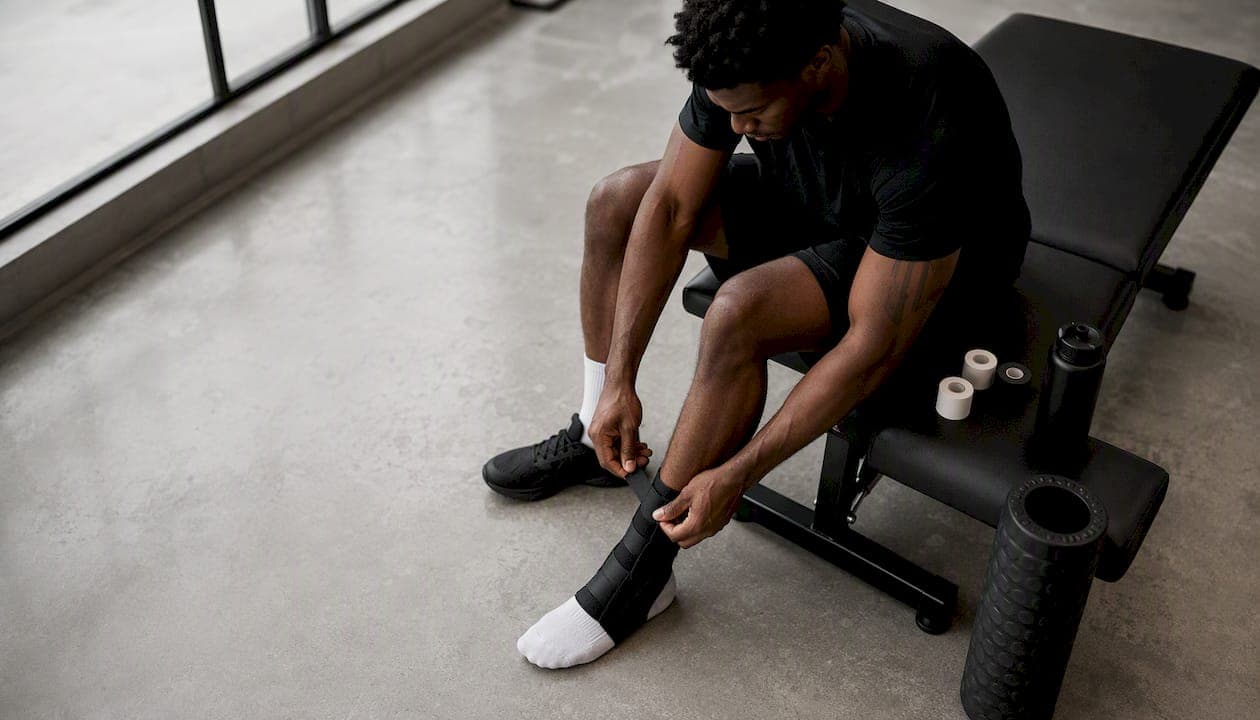
Sports-related trauma covers two distinct but overlapping problems: acute or overuse physical injury, and psychological trauma responses that can follow injury, witnessing injury, abuse, or other threatening events in sport. Both need attention, and they often need it from different specialists at the same time.
If you're dealing with an obvious injury, a sports medicine evaluation comes first. If something else is going on, intrusive memories of the moment you got hurt, dread before a specific drill, a sense of watching yourself from outside your body, that's a signal to add mental-health screening to the plan. Neither problem cancels out the other, and treating only one usually stalls recovery.
Key Takeaways
Sports-related trauma combines physical injury and psychological stress responses, and lasting recovery requires addressing both through coordinated medical, rehabilitative, and trauma-informed mental-health care.
| Point | Details |
|---|---|
| Two-part definition | Sports-related trauma includes acute or overuse physical injury and stressor-related psychological responses, which often overlap. |
| Prevalence is significant | Elite athlete samples show PTSD-related trauma disorder rates between 13% and 25%, likely undercounted due to underreporting. |
| Watch for delayed symptoms | Trauma signs like avoidance, hypervigilance, or the yips can surface weeks after physical clearance, not just immediately. |
| Treatment needs coordination | Effective recovery pairs physical rehab with trauma-focused psychotherapy and clear communication between providers. |
| Nervous-system work fills a gap | Robertsneurotraining's Alpha Imprinting protocol targets automatic fear responses that standard rehab and talk therapy can miss. |
Table of Contents
- What Is Sports-Related Trauma and What Are Its Main Types?
- What Causes Sports-Related Trauma and Who Is Most at Risk?
- What Are the Signs of a Sports-Related Trauma Response?
- How Do Clinicians Diagnose Sports-Related Trauma?
- How Common Is Sports-Related Trauma?
- What Treatment and Recovery Options Work Best?
- How Can Coaches and Teams Prevent Re-Traumatization?
- What Are Nervous-System–Focused Recovery Approaches?
- When Should You Seek Urgent Help?
- Why a Trauma-Informed Outlook Actually Improves Performance
- A Faster Path Back Through Nervous-System Recovery
- Where to Learn More
- Frequently Asked Questions
- Sources
What Is Sports-Related Trauma and What Are Its Main Types?
A sports injury is a physical event: a torn ligament, a stress fracture, a concussion. Sports-related psychological trauma is what the nervous system does in response to a threatening event, which might be that same injury, or might be something else entirely, like watching a teammate's leg buckle awkwardly on a landing. The two frequently travel together, but one can absolutely exist without the other. An athlete can tear an ACL and heal cleanly on the psychological side. Another athlete can walk away from the same injury with a fear response so strong they flinch on every cutting drill for a year.
Clinicians generally sort the physical side into two buckets. Acute injuries happen from a single traumatic event: a bad landing, a collision, a fall. Chronic or overuse injuries build slowly from repetitive load, tendinitis, stress fractures, and the kind of shoulder pain that shows up after a thousand throwing motions rather than one bad one. Both categories can trigger a trauma response, though acute events tend to do it more often simply because they're sudden and often visually or physically shocking.
On the psychological side, the relevant categories include:
- Acute stress reaction: a short-term stress response in the days immediately following a frightening event, often resolving on its own.
- Sports injury–related stressor disorder: a condition researchers have proposed specifically for athletes whose injury triggers a persistent stress response tied to the sporting context.
- Post-traumatic stress disorder (PTSD): a longer-lasting condition marked by intrusive memories, avoidance, and hyperarousal that can follow injury, abuse, or witnessed trauma.
A systematic review of sports injury and stressor-related disorder in competitive athletes argued that standard PTSD frameworks don't fully capture what happens to athletes, whose identity and livelihood are often tied directly to the body part that got hurt. That's a different kind of loss than most PTSD research accounts for.
What Causes Sports-Related Trauma and Who Is Most at Risk?
Falls are the single biggest mechanism behind sports injuries, accounting for more than one in four cases across clinical data. Collisions, overuse, and career-threatening events round out the rest, along with two mechanisms people underestimate: witnessing someone else's severe injury, and experiencing abuse or maltreatment within a sport program. Both can produce trauma responses just as real as the kind that follows a personal injury.
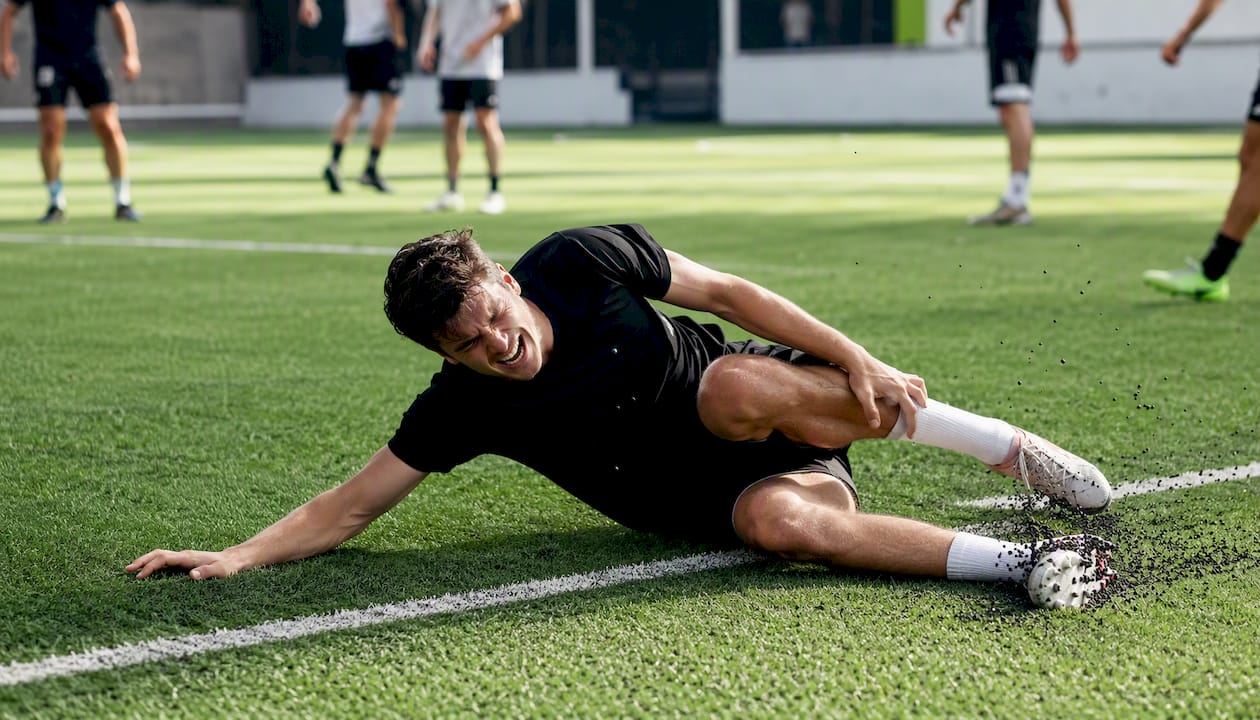
Individual risk runs higher for younger athletes still developing coping skills, anyone with prior trauma or adverse childhood experiences, and athletes competing at levels where the stakes (scholarships, contracts, Olympic qualification) turn an ordinary injury into a threat to identity and income. Heavy training loads without adequate recovery windows and thin social support networks both raise the odds that an injury tips into a lasting stress response rather than a manageable setback.
Organizational risk factors matter just as much and get discussed far less. Coaching cultures that punish vulnerability, travel schedules that isolate athletes from their usual support systems, and weak safeguarding policies all create the conditions where trauma takes root and goes unnoticed. A Baseball parent's guide to overuse injury makes a similar point about youth athletes specifically: the injury itself is often less damaging long-term than the environment an athlete has to recover in.
Pro Tip: Ask new athletes about prior injuries and prior trauma history during intake, not just current symptoms. A history of unresolved trauma from a previous sport or a previous life event is one of the strongest predictors of how someone will respond to their next setback.
What Are the Signs of a Sports-Related Trauma Response?
Symptoms show up across four domains, and they don't always arrive together.
Physical signs include pain or guarding that persists well past expected healing time, altered movement patterns (an athlete who subtly protects a healed joint for months), and disrupted sleep or appetite that has no clear medical explanation.
Emotional and cognitive signs are the ones coaches most often miss: hypervigilance around the mechanism of injury, avoidance of specific plays or positions, intrusive memories of the event, derealization during competition, and a spike in performance anxiety that some athletes describe as "the yips," a sudden, baffling loss of a previously automatic skill.
Behavioral signs include withdrawal from teammates, inconsistent adherence to rehab exercises, changes in risk-taking (either recklessly pushing through pain or becoming unusually cautious), and in some cases substance misuse as a coping mechanism.
The timeline matters. Acute stress reactions typically show up within days and often resolve within a few weeks. PTSD and chronic trauma-driven pain behaviors tend to show up later and persist, sometimes not becoming obvious until an athlete is medically cleared to return and suddenly can't perform the way they used to. Research on elite athletes suggests PTSD and related trauma disorders affect between 13% and 25% of some study populations, a wide range that reflects real differences across sport type, injury severity, and sample size. Reading more on how unresolved trauma affects performance helps explain why some athletes plateau even after a clean bill of physical health.
How Do Clinicians Diagnose Sports-Related Trauma?
Assessment generally moves through a sequence: medical triage first, then a musculoskeletal evaluation, then a neurocognitive screen if there's any chance of concussion, and finally a trauma or PTSD screen if the athlete's presentation warrants it.
Useful tools at each stage include:
- Brief validated PTSD screening instruments, used when an athlete reports intrusive memories, avoidance, or hyperarousal after an injury or traumatic event.
- Standard sports-concussion assessment tools, used to rule out a neurological cause before assuming psychological origin.
- Functional movement screens, used to distinguish pain-driven guarding from trauma-related protective behaviors that persist even after tissue has healed.
Differential diagnosis is trickier than it looks. An athlete who won't fully load a repaired knee might be guarding against real pain, or might be protecting against the memory of the moment it gave out. Those two things look almost identical on a field but call for different interventions. Reviewing attention control patterns after injury can help clinicians separate the two by watching where an athlete's focus goes under pressure.
Pro Tip: Instead of asking "are you traumatized?", which most athletes will reflexively deny, ask "what goes through your mind right before that specific movement?" Specific, situational questions surface trauma responses that direct questions about mental health almost never do.
How Common Is Sports-Related Trauma?
The honest answer is: more common than most locker rooms assume, and still under-studied.
| Metric | Figure | Source |
|---|---|---|
| PTSD/trauma disorder prevalence in elite athlete samples | 13%–25% | PubMed systematic review |
| Share of sports injuries caused by falls | Over 25% | Cleveland Clinic |
| Sports injury categories tracked clinically | Acute and chronic/overuse | NIAMS |
That 13% to 25% range comes from a limited number of elite athlete samples, and the spread itself tells you something: prevalence depends heavily on sport, injury severity, and how researchers define the disorder. A systematic review proposing a new stressor-disorder framework noted that existing tools likely undercount athletes because standard PTSD criteria don't map cleanly onto sport-specific losses, like a pitcher who develops a trauma response to the exact arm angle that got him hurt. Traits that make elite athletes successful, compartmentalization, perfectionism, a practiced ability to dissociate from pain, are the same traits that make them unusually good at hiding this, which is part of why the Psychology Today overview on trauma among elite athletes argues the real numbers likely run higher than what gets reported.
What Treatment and Recovery Options Work Best?
Physical recovery follows familiar rehab principles: relative rest rather than complete immobilization, progressive loading, and structured physiotherapy. That part of the playbook hasn't changed much in decades, and it works.
The psychological side has its own evidence-based toolkit. Trauma-focused psychotherapies, including cognitive behavioral therapy variants, cognitive processing therapy, and prolonged exposure, carry solid clinical backing for treating PTSD, and EMDR is frequently used as an adjunct. None of these were designed specifically for athletes, but clinicians increasingly adapt them to sport-specific triggers rather than generic trauma scenarios.
What actually moves the needle is coordination, not just access to good individual treatments. That means:
- Sports medicine and physiotherapy handle the tissue.
- Mental-health providers trained in trauma handle the stress response, ideally with some understanding of the sport itself.
- A designated point person keeps both tracks talking to each other so nobody assumes the other side has it covered.
Return-to-play decisions should weigh functional milestones (strength, range of motion, sport-specific movement tests) alongside psychological readiness. An athlete can hit every physical benchmark and still freeze the first time they face the exact drill that hurt them; that's a graded-exposure problem, not a strength problem. A Basketball-focused recovery guide from Hoop Mentality makes a similar case for sport-specific graded return, and the principle holds across sports: rushing the exposure step is how athletes end up physically cleared but functionally stuck.
Pro Tip: Build a two-person minimum communication loop, physical therapist and mental-health provider, with a standing biweekly check-in, even if it's a five-minute call. Most breakdowns in athlete recovery happen because each side assumes the other one is monitoring for trauma symptoms, and neither actually is.
How Can Coaches and Teams Prevent Re-Traumatization?
Trauma-informed practice in sport borrows from a broader framework built on five principles: safety, trustworthiness, choice, collaboration, and empowerment. A Roadmap to Remedy report on trauma-informed sport argues this has to be organizational, not just individual, meaning a single well-meaning coach can't fix a program that has no reporting structure and no consistency in how injuries get handled.
Practical steps that scale across a team or organization:
- Build consistent routines around injury reporting so athletes know exactly what happens next, removing the uncertainty that often deepens a stress response.
- Screen for psychological symptoms alongside physical ones during standard injury check-ins, not as a separate, stigmatized process.
- Give athletes real input into return-to-play pacing rather than a fixed timeline handed down with no discussion.
- Maintain clear, accessible reporting routes for abuse or unsafe conduct, and follow through visibly when reports are made.
The U.S. Center for SafeSport's guidance on trauma-sensitive coaching makes a point worth repeating to any coach who thinks this is soft: consistent structure and supportive relationships aren't a concession to fragile athletes. They speed recovery and reduce the odds of re-injury from an athlete who's still guarding against a threat that's already passed. Programs looking to build this into team culture might start with team psychological safety practices or a broader look at why team trauma affects group performance, since one athlete's unresolved trauma response rarely stays contained to that one athlete.
Pro Tip: Never schedule an athlete's first return-to-play session as their first exposure to the triggering drill in front of the full team. Run it privately or with one trusted staff member first. Public failure during a graded-exposure attempt often does more damage than the original injury.
What Are Nervous-System–Focused Recovery Approaches?
Nervous-system–focused methods work on a different layer than talk therapy alone. Where cognitive approaches address the thoughts and narratives around a traumatic event, nervous-system approaches target the automatic, pre-conscious response, the flinch, the freeze, the gated fear reaction that fires before an athlete has time to think anything at all.
This is a newer clinical area, and the evidence base is still developing relative to established psychotherapies like CBT and prolonged exposure. What's clear from existing research is that trauma responses have a physiological signature, not just a psychological one, and that addressing only the narrative side sometimes leaves the automatic reaction untouched. That's a real evidence gap worth naming plainly: nervous-system methods complement standard psychological and medical care, they don't replace it, and any reputable practitioner should say so upfront.
In practice, a session typically looks less like traditional talk therapy and more like structured exposure paired with nervous-system regulation techniques, working toward two concrete outcomes: reducing the automatic fear gate around a specific movement or situation, and helping an athlete relearn a motion pattern without the old protective flinch attached to it.
One recurring pattern among elite athletes is that the traits that make them exceptional, tight compartmentalization, high pain tolerance, an ability to dissociate under pressure, are the exact traits that let a trauma response hide in plain sight for years before it finally shows up as a performance block nobody can explain with tape review alone.
Programs like the one described at Robertsneurotraining work from this premise: an athlete who's medically cleared and still can't find their old form often isn't dealing with a skill problem. Further reading on neurological patterns and injury recovery and somatic coping strategies for trauma symptoms covers the mechanics in more depth.
Pro Tip: If an athlete is medically cleared and their strength numbers look fine, but they still hesitate on one specific movement, don't assume it's mental toughness. That hesitation is often a nervous-system signature of unresolved trauma, and it usually responds better to targeted nervous-system work than to more reps of the same drill.
When Should You Seek Urgent Help?
Some situations need immediate medical attention, full stop. That includes open fractures, any suspected concussion involving loss of consciousness, and signs of neurological deficit like numbness, weakness, or confusion that doesn't clear quickly.
On the mental-health side, urgent red flags include suicidal ideation, severe dissociation where an athlete seems disconnected from their surroundings or body for extended periods, and an inability to function in daily life, not just on the field, but at school, work, or home.
Outside of those emergencies, a reasonable rule of thumb is to arrange a mental-health screening if psychological symptoms persist beyond two to six weeks after a serious injury or traumatic sporting event. That window gives normal acute stress reactions time to resolve on their own while still catching a developing PTSD pattern before it becomes deeply entrenched.
This article offers general information and isn't a substitute for personalized medical or psychological care. Confirm any specific concern with a qualified clinician.
Why a Trauma-Informed Outlook Actually Improves Performance
Most locker rooms still treat psychological trauma as separate from, or secondary to, physical rehab. That's backward. The nervous system doesn't distinguish neatly between "mental" and "physical" the way training staff org charts do. An athlete's flinch on a specific cut, their hesitation before a specific throw, their sudden loss of a skill they've had since childhood, these are nervous-system events with physical consequences, whether or not there's tissue damage left to explain them.
The resistance to trauma-informed practice usually comes from a fear that it's coddling, that acknowledging trauma somehow excuses underperformance or builds fragility. The opposite tends to be true. Athletes who get support for the automatic fear response underneath an injury return to competition faster and more completely than athletes who are simply told to push through it. Ignoring the nervous-system layer doesn't make an athlete tougher. It just makes the problem invisible until it shows up as an unexplained performance block six months later.
If standard rehab has cleared an athlete physically and something is still clearly off, the answer usually isn't more physical therapy. It's integrated care that treats the nervous system as part of the injury, not an afterthought to it.
A Faster Path Back Through Nervous-System Recovery
Standard rehab and trauma-focused therapy both matter, and neither one always reaches the automatic fear response that keeps a cleared athlete from performing like themselves again. Robertsneurotraining's Alpha Imprinting protocol works specifically on that layer, targeting the nervous-system patterns behind panic, performance anxiety, and post-injury hesitation that talk therapy and physical rehab alone sometimes leave untouched.

Sessions run over telehealth and are built around each athlete's sport and specific trigger points, whether that's a throwing motion, a landing, or the exact moment before competition where the mind starts working against the body. This isn't a replacement for medical care or trauma therapy. It's a layer that works alongside them. If you're a coach, clinician, or athlete watching someone stall out despite a clean physical bill of health, learn more about the Alpha Imprinting protocol and how sport-specific programs, including equestrian and tennis applications, are structured, and book an initial consultation to see whether it fits the recovery gap you're trying to close.
Where to Learn More
- The PMC systematic review proposing a sports-specific stressor disorder framework explains why generic PTSD criteria fall short for athletes.
- The Roadmap to Remedy report lays out organizational trauma-informed guidance for sports bodies and safeguarding.
- The U.S. Center for SafeSport's trauma-sensitive coaching toolkit gives coaches practical, field-tested strategies for supporting athletes without slowing performance development.
Frequently Asked Questions
What is sports-related trauma, in simple terms? It's the combination of physical injury and psychological stress responses that occur during or because of sports participation, including acute injuries, overuse conditions, and trauma disorders like PTSD triggered by injury, abuse, or witnessed harm.
Is sports-related trauma the same as a concussion? No. A concussion is a specific physical brain injury with its own diagnostic pathway. Trauma is a psychological stress response that can occur with or without a concussion, and the two require different assessment tools even though symptoms sometimes overlap.
Can an athlete have trauma without a physical injury? Yes. Witnessing a teammate's severe injury, experiencing abuse within a program, or living through a career-threatening event can all trigger trauma responses even when the athlete's own body was never hurt.
How long does it take to recover from sports-related trauma? Acute stress reactions often resolve within a few weeks. PTSD and more entrenched trauma patterns can take significantly longer and generally respond best to coordinated trauma-focused therapy rather than time alone.
When should a coach involve a mental-health professional? Bring one in when psychological symptoms, avoidance, intrusive memories, unexplained performance drops, persist beyond two to six weeks after a serious injury, or immediately if there's any sign of suicidal ideation or severe dissociation.
This article is general information, not a substitute for advice from a qualified doctor. Consult a qualified healthcare professional about your own circumstances before acting on anything here.
Sources
- Sports injury and stressor-related disorder in competitive athletes: a systematic review and a new framework — PMC
- Sporthumanrights