
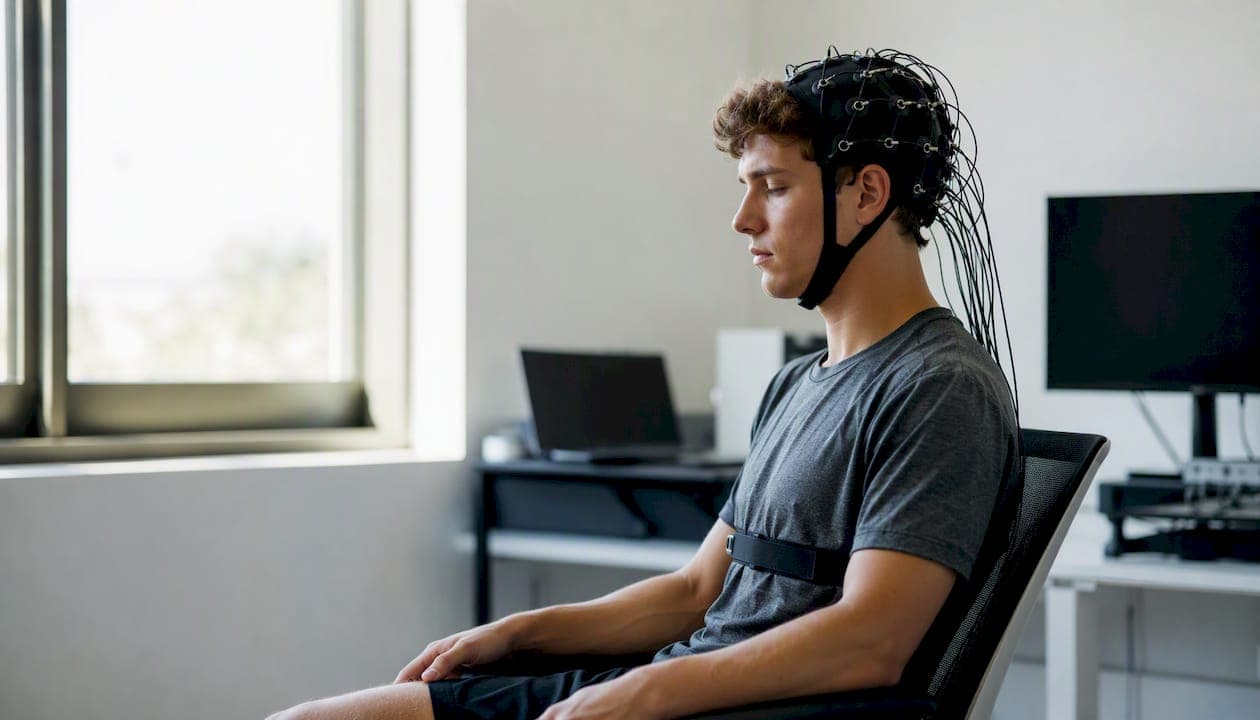
Clutch performance training is neuroscience-based nervous-system retraining that teaches athletes to regulate autonomic arousal and perform reliably under pressure. The recommended path: baseline assessment (HRV monitoring and QEEG brain mapping) → targeted autonomic and EEG protocols → integration with sport-specific practice → ongoing maintenance. Before committing to any program, verify that the provider holds credentials in clinical neuroscience or sports psychology and can describe specific EEG targets and HRV metrics they track.
Key Takeaways
Neuroscience-based clutch performance training works by retraining vagal flexibility and EEG-state control, producing measurable HRV and attention improvements within 6–10 weeks of consistent, protocol-guided practice.
| Point | Details |
|---|---|
| Core mechanism | Vagal flexibility and targeted EEG-state control (SMR, FMT, Mu) create autonomic headroom for precision under pressure. |
| Evidence base | A 2025 meta-analysis found large pooled EEG-NFT effects on attention and motor outcomes, but high heterogeneity means protocol quality matters. |
| Realistic timeline | Measurable HRV gains typically appear in 4–6 weeks; durable competition-level transfer generally requires 12–20 guided sessions. |
| Selection criteria | Choose programs offering QEEG assessment, named EEG targets, HRV progress tracking, and credentials in neuroscience or sports psychology. |
| Robertsneurotraining | Performance Neuro Training and Alpha Imprinting deliver QEEG-guided, HRV-monitored programs via telehealth, with a free workbook as a starting point. |
Table of Contents
- What does clutch performance training actually cover?
- How clutch training works: vagal flexibility and EEG control
- What the research shows — and where it falls short
- The clutch-training toolbox: protocols, delivery, and session norms
- Who benefits most, and who should be cautious
- How to choose a clutch performance training program or coach
- A practical 8–10 week sample program
- What success can look like: outcome highlights
- Safety, ethics, and informed consent in neurotraining
- Why the nervous system is the missing variable in most performance programs
- Performance Neuro Training and Alpha Imprinting: what's included and how to start
- Sources
What does clutch performance training actually cover?
The phrase gets used loosely online, so a clear scope matters. Here, clutch performance training means nervous-system retraining through modalities like HRV biofeedback, resonance-frequency breathing, EEG neurofeedback (EEG-NFT), transcutaneous auricular vagus nerve stimulation (taVNS), and light/audio adjuncts such as Alpha Imprinting devices. It does not mean speed ladders, strength programs, or skill drills.
Included modalities:
- HRV biofeedback and resonance breathing
- EEG-NFT targeting Mu, SMR, and frontal midline theta (FMT) rhythms
- taVNS for vagal tone enhancement
- QEEG-guided coaching and brain mapping
- Light and audio-visual adjuncts (Alpha Imprinting)
This guide helps you evaluate programs, understand realistic timelines, and choose a coach. Physical conditioning and technical skill work sit outside its scope entirely.
How clutch training works: vagal flexibility and EEG control
Improved autonomic flexibility and targeted EEG-state control create what researchers call "autonomic headroom" — the capacity to stay precise when arousal spikes. A 2025 Frontiers review argues that vagal signaling and vagal flexibility underpin cognitive control, stress resilience, and recovery, and that HRV biofeedback and taVNS are among the most accessible interventions to build vagal tone.
Core mechanisms:
- Vagal tone and vagal brake: The vagus nerve modulates heart rate and arousal moment to moment. Releasing and reengaging the vagal brake rapidly is the physiological signature of clutch composure. Athletes trained in Polyvagal theory learn to read and steer these shifts.
- HRV as a readiness biomarker: A 2026 narrative review links performance anxiety to reduced HRV and recommends HRV monitoring as a practical, noninvasive readiness metric. Daily waking HRV trends reveal whether the nervous system is primed or depleted.
- EEG markers: SMR (12–15 Hz) reflects calm motor readiness; FMT (6–8 Hz at Fz) tracks focused attention; Mu rhythm suppression at sensorimotor cortex signals active motor engagement. A 2024 Frontiers review maps these rhythms to psychomotor efficiency and identifies them as neurofeedback targets for attention, motor readiness, and suppression of verbal-analytic interference.
- Interoception: National Geographic's synthesis of elite-athlete research shows that athletes who interpret rising heart rate as preparation rather than threat perform better under pressure. Advanced programs include interoceptive drills alongside HRV and EEG work.
Pro Tip: Measure your daily waking HRV for two weeks before starting any program. That rolling baseline tells a coach whether your nervous system is ready to absorb training load or needs recovery first.
What the research shows — and where it falls short
Multiple systematic reviews and randomized trials show that neurophysiological training (HRV biofeedback, EEG-NFT, targeted breathing) can improve attention, anxiety regulation, and motor precision. A 2025 systematic review and meta-analysis found that real-time EEG neurofeedback produces large pooled effects on attention and motor outcomes in elite athletes. The catch: the review also reported high heterogeneity and called for standardized protocols before firm conclusions can be drawn.
A 2024 scoping review of 48 EEG-NFB studies flagged limited sham controls, sparse blinding, and outdated spectral methods as recurring problems. Positive findings are real but not yet fully reproducible across labs.
Limitations to keep in mind:
- Most trials use small samples and short follow-ups (4–12 weeks)
- Effects vary by skill level: novices often show larger gains than experts
- Group averages mask wide individual variability
- Protocol differences (targeted rhythm, session count, feedback type) make cross-study comparisons unreliable
Realistic expectation: measurable HRV and attention improvements within 6–10 weeks of consistent practice; durable competition-level gains typically require 12–20+ guided sessions paired with in-sport transfer work.
The clutch-training toolbox: protocols, delivery, and session norms
A complete program combines autonomic training (HRV biofeedback + resonance breathing), EEG-NFT targeting sport-relevant rhythms, and in-sport transfer drills. The FSI approach to Mu-rhythm neurofeedback demonstrates that function-specific instruction can modulate Mu activity and influence visuomotor performance, though skill level and session count moderate outcomes.
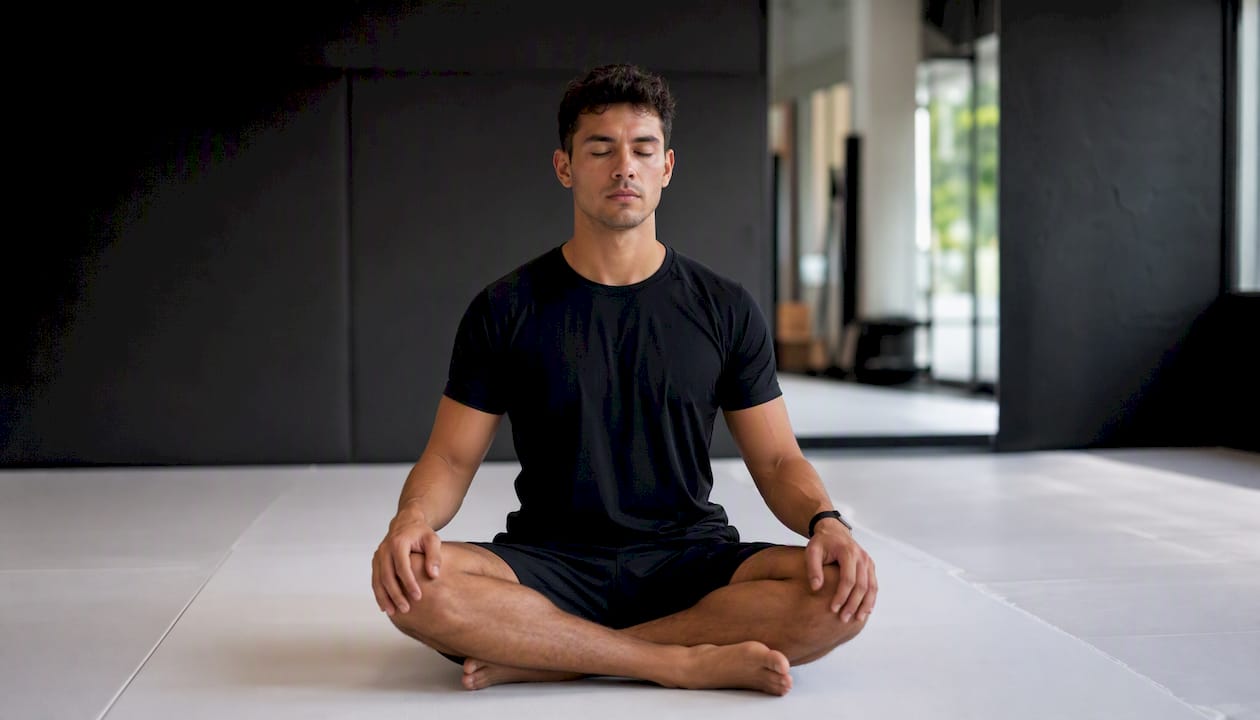
Practitioner case reports consistently show that EEG-NFT paired with psychological skills training produces larger, more durable changes than either approach alone, with session counts typically ranging from 6 to 20+ for lasting gains.
Safety note: Screen for seizure history, pacemakers, unstable cardiovascular conditions, and active severe psychiatric symptoms before beginning EEG-NFT or taVNS. Any flagged condition warrants physician clearance before proceeding.
Who benefits most, and who should be cautious
The best-fit athlete has anxiety, panic, or trauma-linked responses that activate under competitive pressure and already possesses solid sport-specific skills. Precision-sport athletes (golf, archery, shooting, tennis, baseball) and team athletes in high-stakes moments (penalty kicks, free throws, clutch at-bats) show the clearest gains in published case work.
Screening checklist before starting:
- No history of seizure disorders or epilepsy
- No implanted electronic devices (pacemakers, cochlear implants)
- No unstable cardiovascular conditions
- No active severe psychiatric symptoms (psychosis, acute mania)
- No recent head injury without medical clearance
- Willingness to practice daily between sessions
Consult a physician before beginning EEG-NFT or taVNS if any screening item applies. For complex trauma or psychiatric histories, coordinate with a licensed mental health clinician throughout the program.
How to choose a clutch performance training program or coach
Prioritize programs that combine individualized assessment (HRV and QEEG), transparent protocol targets, and measurable progress tracking. Use these questions verbatim on a discovery call:
- What specific EEG bands do you target, and why for my sport?
- How do you measure progress between sessions?
- What is your session cadence, and how many sessions does a typical program include?
- Do you use QEEG mapping before designing the protocol?
- Can you share outcome data or case examples from athletes in my sport?
- What credentials do you hold in neuroscience, neurofeedback, or sports psychology?
Pricing and timeline: Reputable programs in the United States typically run $150–$350 per guided session, with 10-week structured programs ranging from $2,000–$6,000 depending on session count and device options. Expect measurable HRV improvements within 4–6 weeks of daily practice. Durable competition-level gains generally require 12–20 guided sessions. Maintenance typically means monthly check-ins and continued daily HRV practice. Neuroscience-based training guides can help you map these timelines to your seasonal schedule.
A practical 8–10 week sample program
An 8–10 week plan pairs daily HRV practice, weekly guided HRV biofeedback, twice-weekly EEG-NFT blocks, and in-sport transfer drills.
- Week 1–2 — Baseline and assessment: Daily 10-minute waking HRV measurement; QEEG brain mapping session; establish resonance breathing frequency (typically 4.5–6 breaths/min).
- Week 3–4 — Autonomic foundation: Daily 20-minute resonance breathing; one guided HRV biofeedback session per week; introduce interoception awareness drills.
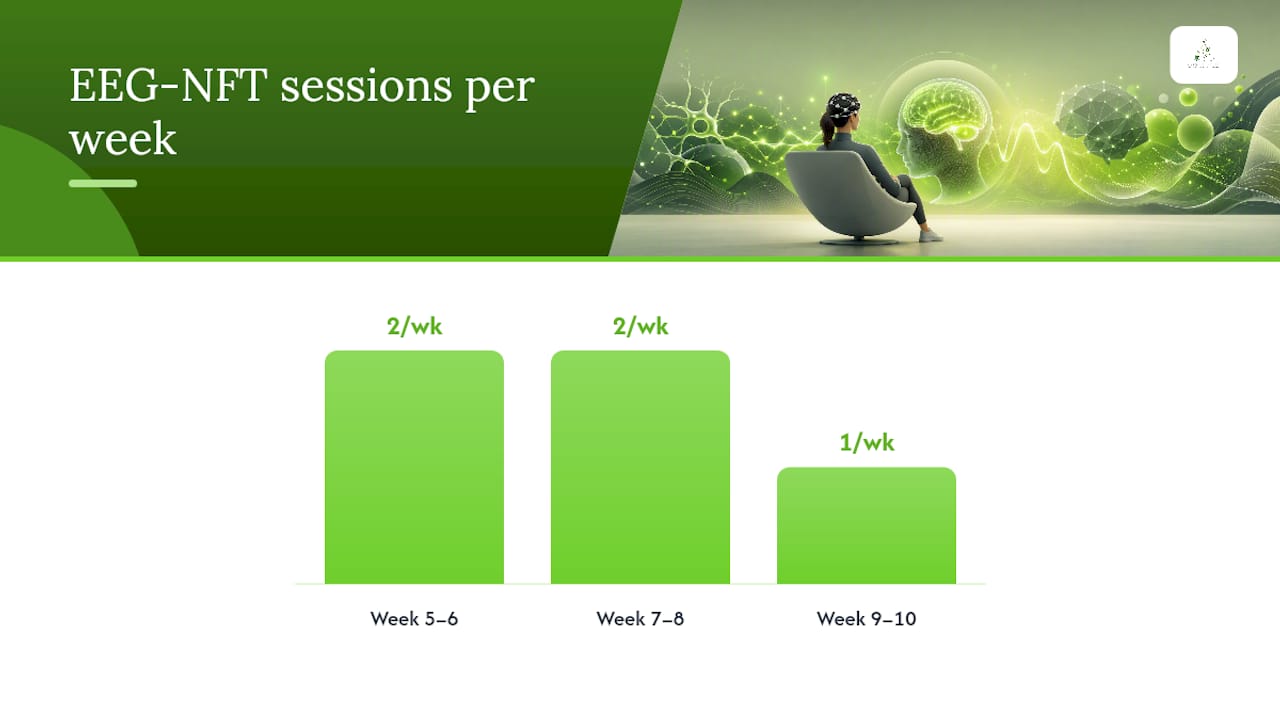
- Week 5–6 — EEG-NFT introduction: Add two EEG-NFT sessions per week targeting SMR or FMT per QEEG findings; continue daily HRV practice; begin in-sport transfer drills (pre-performance routines).
- Week 7–8 — Integration: Maintain EEG-NFT twice weekly; add simulated pressure scenarios in practice; coach reviews HRV trends and adjusts session targets.
- Week 9–10 — Transfer and maintenance planning: Reduce EEG-NFT to once weekly; increase in-sport application; establish long-term maintenance schedule (monthly guided sessions, daily HRV monitoring).
Progress tracking:
| Metric | Measurement method | Frequency |
|---|---|---|
| Resting HRV | Morning HRV app (e.g., HRV4Training) | Daily |
| QEEG markers | Clinician-administered EEG mapping | Pre/post program |
| Competition anxiety score | Validated self-report (e.g., CSAI-2) | Weekly |
| Precision performance metric | Sport-specific (e.g., shot accuracy, split time) | Weekly in practice |
What success can look like: outcome highlights
Typical outcome ranges across published case work and practitioner reports include improved resting HRV baselines, reduced competition anxiety scores, and measurable gains in precision metrics for skill sports. Individual variability is real: some athletes see meaningful shifts within six sessions; others need the full 20-session arc before competition-level transfer is consistent.
Athletes who combine HRV biofeedback with Alpha Imprinting protocols report steadier pre-performance routines and a reduced tendency to "overthink" under pressure. Precision-sport athletes in particular describe a shift from reactive anxiety management to proactive arousal steering.
Individual results depend on practice fidelity, integration with physical training, and the quality of the program design. No protocol produces identical outcomes across athletes.
Safety, ethics, and informed consent in neurotraining
Ethical delivery requires informed consent, a clear risk/benefit discussion, and secure handling of physiological and QEEG data. Before beginning any neurotraining program, a provider should walk through each of the following:
- Procedure description: What each session involves, what the athlete will experience, and what the equipment does.
- Risk disclosure: Known contraindications, rare adverse events (headache, fatigue after EEG-NFT), and the limits of current evidence.
- Session expectations: Typical session length, number of sessions, and what "progress" looks like.
- Data use and storage: How HRV and QEEG data are stored, who has access, and how long records are retained.
- Opt-out rights: The athlete's right to pause or discontinue at any point without penalty.
For device-based interventions (taVNS, light/audio adjuncts), confirm that the device is used within manufacturer-specified parameters and that the provider has screened for contraindications. Light-based devices require screening for photosensitive conditions. taVNS is generally well-tolerated but should not be used with pacemakers or implanted neural devices.
Why the nervous system is the missing variable in most performance programs
Most performance programs treat anxiety as a mental problem to think your way out of. That framing misses the biology. Vagal-centered and EEG-guided training works because it addresses the actual substrate: the autonomic nervous system and the cortical rhythms that govern attention and motor control. When those systems are dysregulated, no amount of visualization or positive self-talk reliably overrides the physiological response. When they are trained, composure becomes a repeatable skill rather than a lucky state.
Performance Neuro Training and Alpha Imprinting represent an evidence-aligned approach to this problem. The protocol combines QEEG-guided EEG neurofeedback with HRV-monitored autonomic training and in-sport transfer work. The coaching philosophy is straightforward: integrate nervous-system training with sport practice, monitor readiness via daily HRV, and periodize neurotraining load the same way a strength coach periodizes physical load.
Performance Neuro Training and Alpha Imprinting: what's included and how to start
Athletes who have worked through the evidence in this article and want a structured, QEEG-guided program have a clear next step with Robertsneurotraining. The Performance Neuro Training program, led by Dr. Paige Roberts, delivers individualized QEEG brain mapping, HRV-guided autonomic training, and Alpha Imprinting sessions via telehealth, with optional in-home light and audio-visual devices for between-session practice. The 10-week Energy Optimization Program covers assessment through maintenance, with session cadence and protocol targets set from your QEEG data.
The discovery call covers your QEEG assessment results, the specific EEG bands and HRV metrics your plan will target, and what a realistic timeline looks like for your sport and competitive schedule. Start with the free Energy Optimization Workbook to map your current nervous-system baseline before the call.
Sources
The sources below are systematic reviews, meta-analyses, and authoritative reviews relevant to vagal-centered and EEG neurotraining for sport performance.
- The vagus nerve: a cornerstone for mental health and performance optimization in recreation and elite sports
- # Effects of real-time EEG neurofeedback training on cognitive, mental, and motor performance in elite athletes: a systematic review and meta-analysis
- A new EEG neurofeedback training approach in sports: the effects function-specific instruction of Mu rhythm and visuomotor skill performance
- Performance anxiety, heart rate variability, autonomic nervous system, athletes, sport cardiology, psychophysiology, stress
- EEG neurofeedback and psychomotor efficiency: review and implications for sports performance
- How elite athletes train their nerves for Olympic pressure | National Geographic
- Neurofeedback for Sports Performance - Mindstate Psychology Blog
This article is general information, not a substitute for advice from a qualified doctor. Consult a qualified healthcare professional about your own circumstances before acting on anything here.