
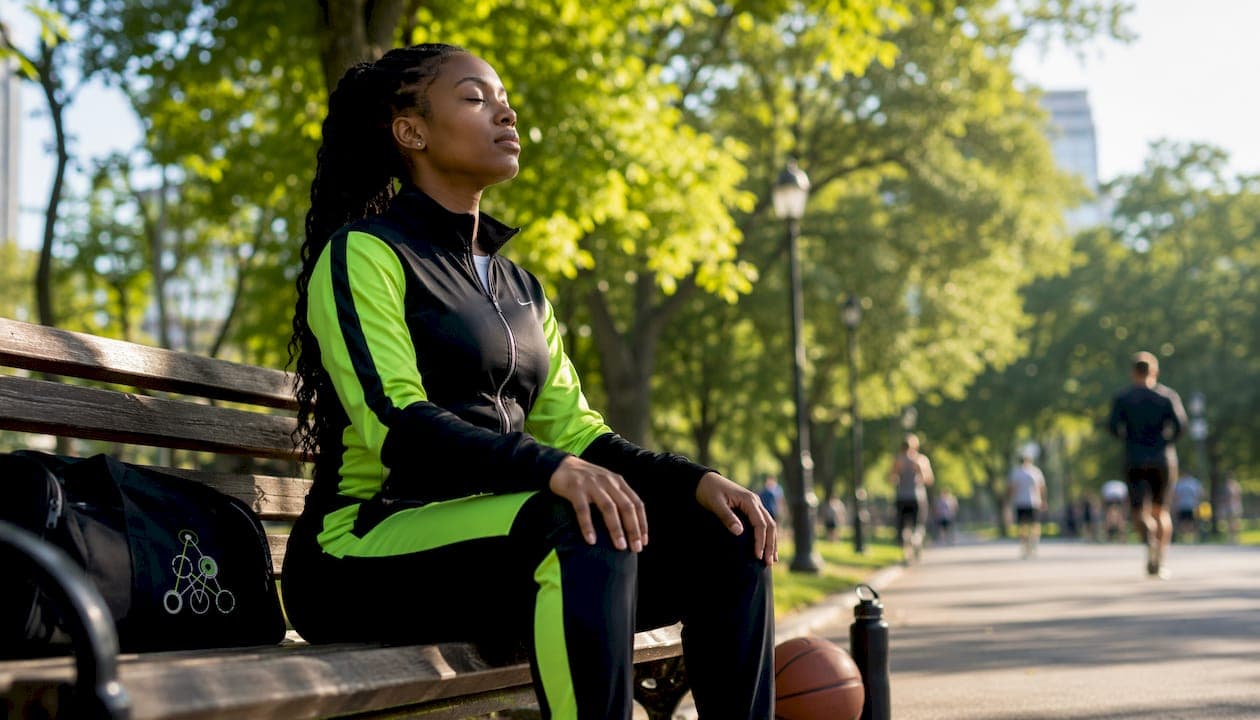
Your nervous system decides whether you perform or fall apart before your mind gets a vote. That's the core claim of polyvagal theory in sports, and it's backed by peer-reviewed neuroscience published in Frontiers in Psychology. Developed by Dr. Stephen Porges, the framework identifies three hierarchical autonomic states that govern everything from your focus under pressure to whether your legs go dead in the final seconds of a game.
Those three states are:
- Ventral vagal (safe/social): Your optimal performance state. The prefrontal cortex is fully online, you can read the game, adapt, and access everything you've trained. Athletes call this "the zone." Neurophysiologically, it's ventral vagal regulation.
- Sympathetic (fight/flight): Heart rate spikes, perception narrows, muscles tense. A coach's neutral feedback sounds like an attack. Your body is running a survival program, not a performance program.
- Dorsal vagal (freeze/shutdown): The system decides the threat is too overwhelming. Athletes describe moving through concrete or watching themselves from outside their body. This is where the yips live.
The vagus nerve is the biological highway connecting these states to your brain, heart, and gut. Heart Rate Variability (HRV), the beat-to-beat variation in your heart rhythm, is the most accessible real-time window into which state you're operating from. High resting HRV signals a well-regulated nervous system with the resilience to handle competitive stress. Low HRV predicts vulnerability to performance choking when cognitive and autonomic demands collide simultaneously.
Understanding polyvagal theory in athletics means accepting one uncomfortable truth: you cannot simply decide to feel calm. You have to shift your physiological state first. Everything else follows.
How polyvagal theory explains performance anxiety and the yips
Performance anxiety isn't a mental weakness. It's a nervous system state, and polyvagal theory gives it a precise address. When an athlete's autonomic system reads competition as threat rather than challenge, the sympathetic branch fires, flooding the body with cortisol and adrenaline. The result is the familiar cascade: racing heart, tunnel vision, muscle tension, and the catastrophic inner monologue that feels impossible to stop.
As Deb Dana, who has done more than anyone to make polyvagal theory accessible, puts it:
That reframe matters enormously for athletes. The negative self-talk isn't the root cause. It's a downstream effect of a dysregulated autonomic state. Chasing the thoughts with cognitive techniques while the nervous system stays in threat mode is like mopping the floor while the faucet runs. Visualization and self-talk only work reliably from a ventral vagal baseline. From sympathetic or dorsal states, those same tools become unreliable at best.
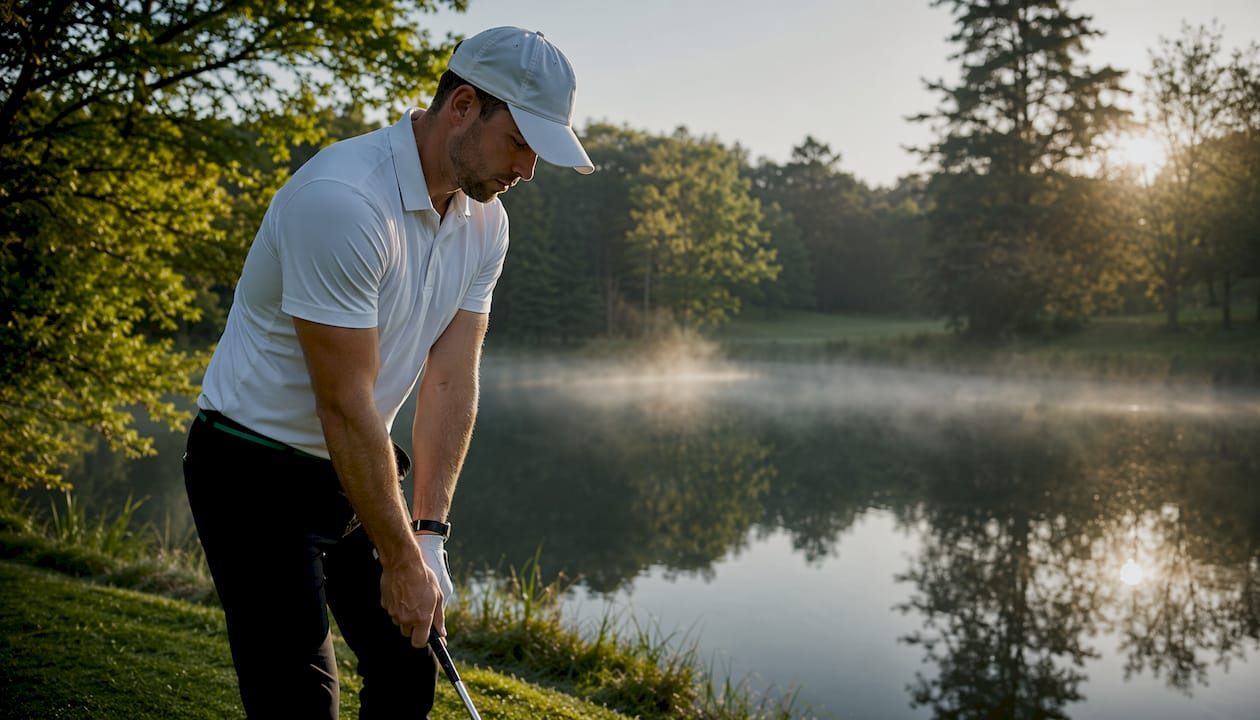
The yips are the most dramatic example of dorsal vagal shutdown in sports. A golfer who has made thousands of putts suddenly can't execute a three-footer. A baseball pitcher loses the ability to throw to first base. The yips phenomenon involves the nervous system interpreting a high-stakes moment as existential threat, triggering either a freeze response or a chaotic fight-or-flight overactivation that hijacks fine motor control. No amount of willpower overrides a dorsal vagal shutdown. The fix has to be physiological.
Key nervous system effects athletes experience across the three states:
- Ventral vagal: Clear decision-making, fluid movement, emotional resilience, access to trained skills
- Sympathetic: Narrowed attention, muscular bracing, impaired fine motor control, threat-scanning cognition
- Dorsal vagal: Dissociation, numbness, movement dysfunction, complete skill access failure (the yips)
HRV monitoring gives coaches and athletes a concrete way to track which state is dominant. High resting HRV predicts resilience and swift physiological recovery after competitive stress. Low HRV, common in anxiety disorders and PTSD, correlates with performance choking when cognitive load and autonomic load collide. Tracking HRV daily, not just during competition, reveals patterns that tell you far more than subjective mood reports.
Why team dynamics and social cues regulate your nervous system
The vagus nerve doesn't just respond to your own breathing or thoughts. It scans the social environment constantly, reading faces, voices, and posture for signals of safety or threat. This is what Dr. Porges called the social engagement system, and it's why a coach's tone of voice can shift an athlete's autonomic state faster than any breathing exercise.
Social neurobiology research shows that eye contact, vocal prosody (the rhythm and warmth of speech), and physical touch all activate ventral vagal pathways. A calm, steady voice from a coach in a timeout doesn't just feel reassuring. It literally changes the athlete's physiological state through a process called co-regulation. The nervous system of one person entrains to the nervous system of another, which is why team culture has neurophysiological consequences, not just psychological ones.
HRV synchrony among group members corresponds with improved collective functioning, communication, and emotional alignment. Research has found this physiological entrainment in musicians, classmates, and performers during emotionally intense shared experiences. For sports teams, it means that a locker room culture of psychological safety isn't a soft concept. It's a measurable neurophysiological condition that either supports or undermines individual regulation.
Core social neurobiology principles for sports environments:
- Facial cues matter: Neutral or tense facial expressions from coaches register as threat signals in athletes' nervous systems, even when no criticism is intended.
- Vocal tone is a regulator: Slow, warm, varied speech activates the ventral vagal pathway; flat or sharp tones trigger sympathetic arousal.
- Touch has direct vagal effects: Appropriate physical contact (a hand on the shoulder, a high-five) sends safety signals through the social engagement system.
- Group HRV coherence is real: Teams with strong interpersonal trust show physiological synchrony that supports collective performance.
Building team psychological safety is therefore a nervous system intervention, not just a leadership philosophy. The same applies to youth sports, where the research on sportsmanship and character development shows that safe, supportive environments produce athletes who regulate better under pressure.
Pro Tip: Before a high-stakes competition, have coaches and team leaders deliberately slow their speech, make steady eye contact, and use physical affirmation. These aren't motivational tricks. They're direct inputs to your athletes' autonomic nervous systems.
Practical tools: Safe and Sound Protocol and polyvagal-informed interventions

The Safe and Sound Protocol (SSP) is one of the most clinically grounded applications of polyvagal theory. Developed by Dr. Porges, it uses filtered music to stimulate the neural pathways of the middle ear, which connect directly to the vagus nerve and the social engagement system. Athletes who complete the SSP typically report reduced baseline anxiety, improved tolerance for competitive stress, and greater access to focused, present-state awareness during performance.
Beyond the SSP, several other polyvagal-informed tools have strong evidence behind them:
- Resonance-frequency breathing: Breathing at roughly six breath cycles per minute maximizes HRV and activates the ventral vagal brake. Longer exhales specifically dampen sympathetic arousal, making this the most accessible vagal regulation tool for athletes.
- HRV biofeedback: Real-time feedback on heart rate variability trains athletes to recognize and shift their autonomic state deliberately. Six weeks of resonance-frequency HRV biofeedback raises resting HRV and reduces trait anxiety.
- Transcutaneous auricular vagus nerve stimulation (taVNS): A non-invasive device stimulates the vagus nerve through the ear, improving executive function and reducing fatigue.
- Cold water facial immersion: Brief exposure of the face to cold water activates the diving reflex, rapidly increasing vagal tone and reducing acute sympathetic arousal.
- Mindfulness practices: Contemplative mindfulness, particularly body-scan and breath-focused techniques, builds vagal tone over time and improves the athlete's ability to notice and shift autonomic states.
| Intervention | Mechanism | Primary Outcome |
|---|---|---|
| Safe and Sound Protocol | Auditory neural stimulation via filtered music | Reduced baseline anxiety, improved social engagement |
| Resonance-frequency breathing | Lengthened exhale dampens sympathetic arousal | Higher resting HRV, faster recovery |
| HRV biofeedback | Real-time autonomic state feedback | Trained state-shifting, reduced trait anxiety |
| taVNS | Direct vagal nerve stimulation via ear | Improved executive function, reduced fatigue |
| Cold water facial immersion | Diving reflex activates vagal brake | Rapid reduction in acute sympathetic arousal |
| Mindfulness practices | Sustained attention builds vagal tone | Long-term autonomic flexibility |
Implementing these tools works best when sequenced correctly. Establish a regulated baseline first, then layer in cognitive techniques like visualization and self-talk. Reprogramming your nervous system for sports performance means building the physiological foundation that makes every other mental skill actually work.
Neuroscience-based training methods that go beyond standard sports psychology
Standard sports psychology has always had a sequencing problem. Coaches teach visualization, self-talk restructuring, and pre-performance routines, and then wonder why athletes who know all the techniques still fall apart when the stakes rise. The answer, from a polyvagal perspective, is that cognitive tools require a regulated nervous system as their operating platform. Without that foundation, the techniques have nothing solid to run on.
This is where neuroscience-based training methods, particularly those combining polyvagal principles with targeted nervous system reprogramming, produce results that cognitive approaches alone cannot reach. Robertsneurotraining, led by Dr. Paige Roberts (LCSW, CMPC, CSCS), addresses this gap directly through a proprietary method called Alpha Imprinting. The approach works by identifying the specific autonomic patterns, trauma responses, and chronic stress imprints that create mental blocks, then systematically reprogramming those patterns at the nervous system level.
The distinction from conventional sports psychology is the entry point. Rather than starting with thoughts and hoping the body follows, Alpha Imprinting works bottom-up. Eighty percent of vagus nerve signals travel from body to brain, which means bottom-up regulation methods are neurologically more direct than top-down mental effort alone. Addressing the body's stored patterns first creates the physiological conditions where cognitive strategies finally land.
Robertsneurotraining's clinical approach includes:
- Autonomic state mapping: Identifying which specific triggers push an athlete into sympathetic or dorsal vagal states during competition
- Trauma-informed nervous system work: Addressing past injuries, performance failures, and life stressors that have left chronic dysregulation patterns in the nervous system
- Nervous system reprogramming: Replacing maladaptive autonomic responses with trained ventral vagal access under pressure
- Energy optimization: Building the physiological resilience that sustains peak output across a full competition or season
- Integration with existing training: Embedding nervous system regulation into the athlete's existing preparation routines rather than treating it as a separate add-on
Athletes at the Olympic and professional level have worked with Robertsneurotraining and reported significant performance improvements, particularly in recovering from injury-related mental blocks and chronic performance anxiety. The program serves athletes across major leagues and elite competition levels, with the clinical credentials to back its methods.
Understanding nervous system regulation also reduces self-blame. When an athlete knows that freezing under pressure is an autonomic response, not a character flaw, it opens the door to targeted intervention rather than shame-driven effort that often makes dysregulation worse.
What to do next if you want to apply polyvagal principles
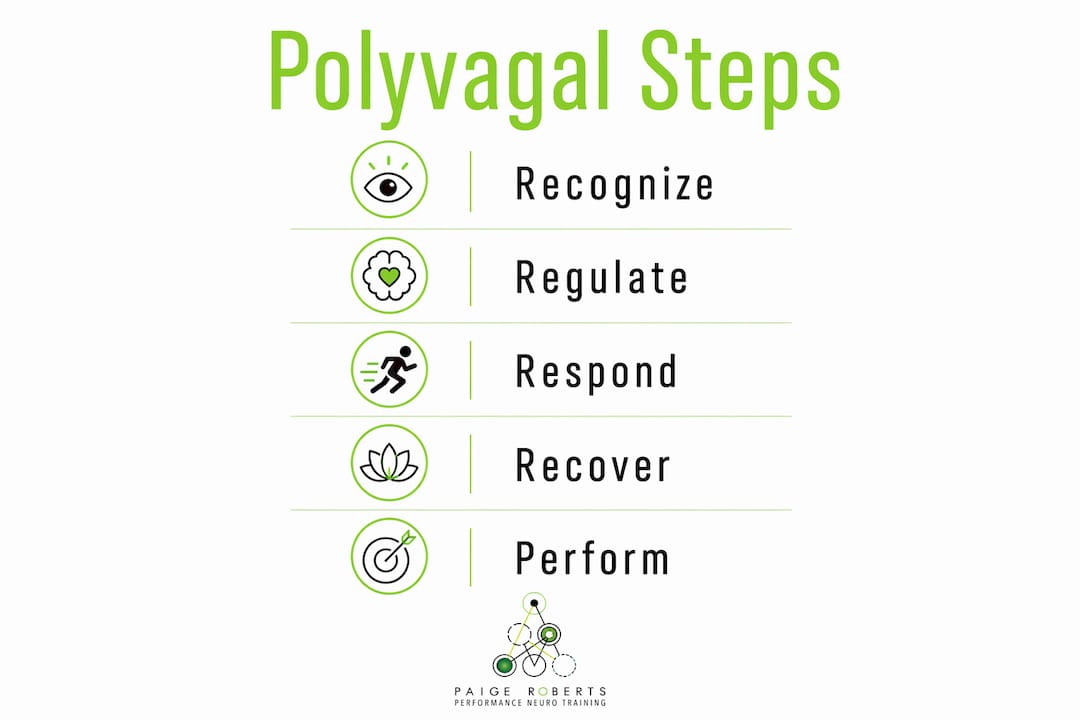
Knowing the theory is step one. Applying it requires a deliberate sequence, and most athletes skip straight to the cognitive tools without building the physiological foundation first.
The core benefits of ventral vagal regulation for athletes are clear: sharper executive function, steadier emotional responses, faster recovery from mistakes, and reliable access to trained skills when the pressure is highest. The Play Zone, the blended state of ventral vagal regulation with appropriate sympathetic activation, is where flow lives. Getting there consistently requires practice, not just intention.
Actionable next steps for athletes and sports professionals:
- Assess your baseline: Track daily HRV for at least two weeks to identify your autonomic patterns across training, competition, and recovery. This gives you real data, not guesswork.
- Build a breathing practice: Start with five minutes of resonance-frequency breathing daily (six breath cycles per minute, with extended exhales). This is the lowest-cost, highest-return vagal regulation tool available.
- Audit your social environment: Identify which relationships, coaches, and team dynamics push you toward threat states and which support ventral vagal regulation. Make deliberate changes where you can.
- Sequence your mental skills correctly: Only introduce visualization, self-talk work, and pre-performance routines after establishing a regulated physiological baseline. If those tools aren't working, the nervous system is the missing variable.
- Address unresolved trauma and injury responses: Past injuries and performance failures often leave chronic dysregulation patterns. Working with a nervous system training program designed for athletes addresses these at the root.
- Collaborate with qualified professionals: Seek out sports psychologists or therapists with specific training in polyvagal-informed care, HRV biofeedback, or trauma-informed sport psychology. Credentials to look for include CMPC (Certified Mental Performance Consultant) and LCSW with polyvagal training.
- Make it a routine, not a crisis intervention: Nervous system regulation works best as a daily practice, not something you reach for only when anxiety spikes before a big game.
The athletes who perform consistently at the highest levels aren't the ones with the best mental tricks. They're the ones whose nervous systems have been trained to stay regulated when everything around them is screaming threat.
How to assess and monitor your autonomic state during training and competition
Measuring autonomic state used to require a lab. Now it fits in your pocket, and the methods range from wearable technology to simple observational tools that coaches can use in real time.
HRV monitoring
HRV remains the gold standard for tracking cardiac vagal tone and autonomic resilience. Wearable devices like chest straps (Polar H10 is widely used in research settings) and consumer wristbands provide morning resting HRV scores that track nervous system readiness day to day. A dropping HRV trend over several days signals accumulated autonomic load, whether from training stress, poor sleep, or psychological pressure. Coaches who monitor team HRV data can adjust training intensity before athletes tip into sympathetic overdrive.
Subjective state check-ins
A simple three-question check-in before training or competition maps directly to polyvagal states without any technology. Ask athletes to rate their sense of safety (1–10), their energy level (1–10), and whether they feel connected to teammates or isolated. Patterns in these responses reveal autonomic state more reliably than mood questions alone, because they target the specific dimensions that ventral vagal, sympathetic, and dorsal vagal states affect differently.
Behavioral observation
Coaches trained in nervous system awareness can read autonomic state from observable behavior: eye contact quality, facial expression, vocal tone, movement fluidity, and response to feedback. An athlete who goes quiet, avoids eye contact, and moves stiffly is showing dorsal vagal signs. One who is reactive, argumentative, and hypervigilant is in sympathetic activation. Neither state supports peak performance, and both are visible before the athlete consciously registers the shift.
Breath rate and pattern
Breath rate is a direct window into autonomic state and requires no equipment. A resting breath rate above 15 breaths per minute typically indicates sympathetic activation. Irregular, shallow, or upper-chest breathing patterns signal the same. Teaching athletes to notice their own breath pattern during warm-up gives them an immediate self-assessment tool they can use anywhere, including mid-competition.
Biofeedback technology in training
Beyond HRV wearables, tools like HeartMath's Inner Balance sensor provide real-time HRV coherence feedback during training sessions. Athletes can practice shifting into coherence states deliberately, building the neural pathways that make ventral vagal access faster and more reliable under pressure. This kind of routine nervous system preparation builds the habit of regulation that transfers to competition.
Key Takeaways
Polyvagal theory gives athletes a neurophysiological framework for understanding why mental performance tools succeed or fail, and the answer almost always comes down to autonomic state.
| Point | Details |
|---|---|
| Ventral vagal state enables peak performance | Athletes can only access full cognitive and physical skills from a regulated ventral vagal baseline. |
| The yips are a nervous system response | Dorsal vagal shutdown or sympathetic overactivation hijacks fine motor control, not a mental weakness. |
| 80% of vagus nerve signals travel body to brain | Bottom-up regulation methods like breathing and social cues shift autonomic state more directly than mental effort alone. |
| HRV is the most accessible monitoring tool | High resting HRV predicts resilience and fast recovery; tracking it daily reveals autonomic patterns before they become performance problems. |
| Sequence matters: regulate first, then apply mental skills | Visualization and self-talk require a regulated nervous system to work; building that foundation is the missing step in most mental training programs. |