
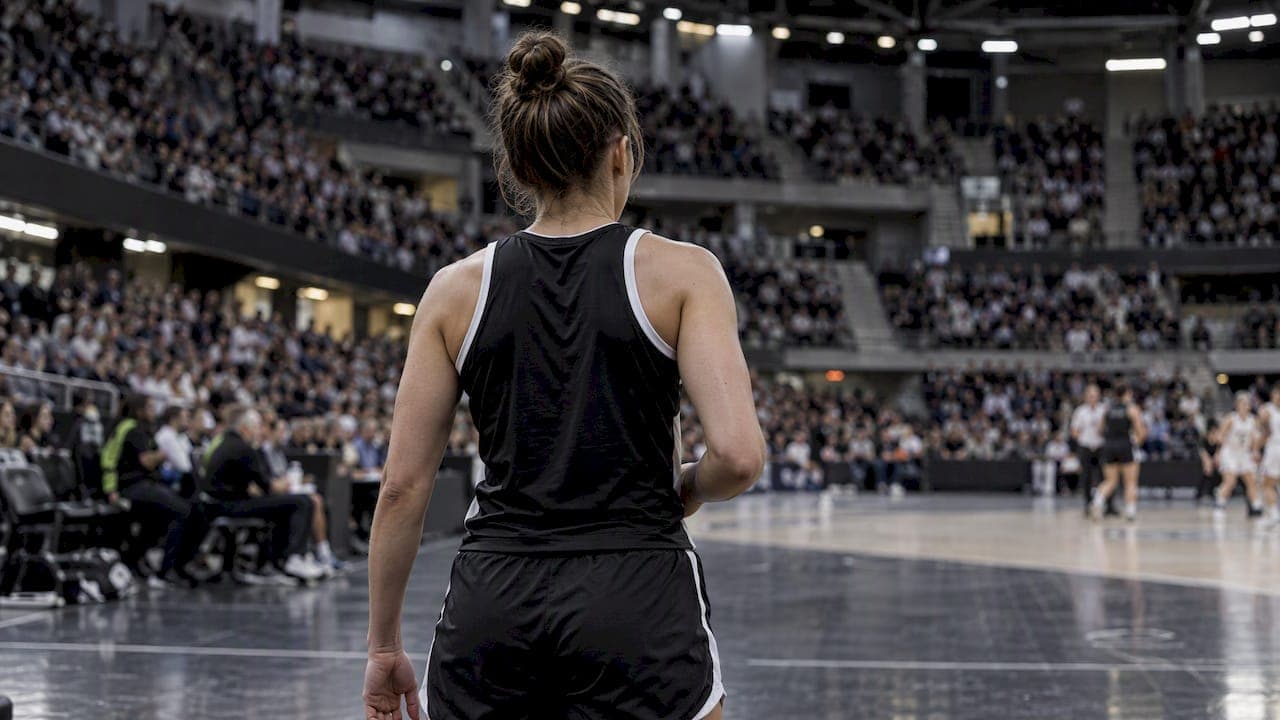
The fastest way to stop crowd-triggered panic is a three-step micro-routine: one slow grounding breath, one short instructional cue, then a single physical action you can execute right now. That resets attention faster than trying to calm down in the abstract. The lasting fix is different: retraining your nervous system through repeated, representative exposure to crowd noise in practice, not just managing the moment when it happens. If panic keeps returning despite consistent practice, that pattern is worth a specialist look rather than another pep talk.
TL;DR:
- Structured exposure programs over 8 to 12 weeks are more likely to produce lasting tolerance to crowd noise than single-session interventions.
- High-anxiety athletes are more vulnerable to crowd noise effects, often showing poorer discrimination and slower decision-making under pressure.
- The recommended in-the-moment routine involves a slow inhale, a concrete instruction, and a physical reset to quickly refocus attention in under five seconds.
- Practice of the reset routine during low-stakes activities should be fast and consistent to survive the adrenaline of real competition situations.
- Persistent panic or avoidance despite systematic training suggests a need for specialist assessment and personalized neurotraining.
Table of Contents
- Why crowd noise hijacks focus and memory under pressure
- The three-step routine to use when the crowd gets loud
- Training your nervous system to stop the block before it starts
- What the evidence actually shows, and where it falls short
- Signs it's time to bring in a specialist
- What years of nervous-system work reveal about crowd panic
- How Performance Neuro Training addresses crowd noise blocks directly
- Where to read more on this research
- Sources
- FAQ
Why crowd noise hijacks focus and memory under pressure
Crowd noise does not just distract you. It adds cognitive load on top of the mental math you're already doing mid-play, and that combination overwhelms working memory faster than either factor alone. Research on attentional control found that noise distraction raises error rates on tasks that require inhibition, the same mental skill you use to hold your shot selection or read a defense while a stadium roars around you, a pattern documented in a self-talk and attentional control study. Separate experiments using the Footbonaut system found that realistic stadium noise changed players' passing times and how engaged they felt during drills, evidence that stadium noise measurably shifts performance.
Not every athlete reacts the same way. A study on basketball referees found that participants with higher trait anxiety made significantly more errors specifically when crowd noise was present, while lower-anxiety participants held steady. That interaction matters for how you train:
- High-anxiety athletes need targeted, individualized work, not a blanket team talk before the game.
- The shift under pressure is physiological: heart rate climbs, attention narrows to the threat (the noise) instead of the task, and decision-making slows.
- What looks like a mental lapse is often the nervous system reallocating resources away from skill execution and toward scanning for danger.
High-anxiety athletes showed significantly poorer discrimination accuracy under pressing crowd noise conditions compared to their lower-anxiety peers, according to the Frontiers 2019 referee study. That gap is the reason generic composure advice often fails athletes who are already anxious before the whistle blows.
The three-step routine to use when the crowd gets loud
When noise spikes and your focus starts to slip, you need something you can execute in under five seconds, without thinking hard about it, because thinking hard is exactly what the noise has already made harder.
- Ground with one slow breath. Inhale through your nose for four counts, hold for two, exhale for six. The longer exhale nudges your nervous system out of fight-or-flight and back toward parasympathetic control.
- Use one instructional cue, not a motivational one. Say something concrete like "eyes up" or "soft hands" rather than "you've got this." Research comparing self-talk types found that instructional self-talk reduced errors in attention tasks, while motivational self-talk under noise distraction was more likely to backfire, a distinction confirmed in attentional control research on self-talk.
- Execute a single, small, physical action. Reset your stance, touch the ball, check your grip. Anything that moves your attention from the noise to your body and the next concrete task.
Coaches can build a matching signal system: a hand gesture or a single word that means "reset routine now," delivered from the sideline without breaking the flow of play. Teams that agree on this signal in practice use it far more reliably under real pressure than teams improvising in the moment. For more structured pre-competition routines, see this nervous system warmup guide.
Pro Tip: Practice the exact breath-cue-action sequence during low-stakes scrimmages until it takes less than five seconds, so it survives contact with real adrenaline.

Training your nervous system to stop the block before it starts
In-the-moment tactics manage a panic response you've already had. Training protocols aim to prevent the response from firing at that intensity in the first place, and that takes weeks, not a single session.
The general shape is progressive exposure:
- Start with low-volume recorded crowd noise during technical drills where the stakes are minimal.
- Add contextual decision pressure, like scored scrimmages, while noise plays in the background.
- Finish with full simulated crowd audio at competition volume during scenarios that mimic your actual event.
Pair each stage with somatic regulation work, breathing drills, progressive muscle relaxation, or light therapy consults for athletes managing broader nervous-system dysregulation. This is where structured programs typically sit inside an 8 to 12 week block: technical exposure work in the early weeks, layered decision-making drills in the middle, and specialist tools like nervous-system retraining protocols, QEEG-informed assessment, or group Alpha Imprinting sessions introduced once the athlete has a baseline tolerance for noise.
Systematic reviews of sport psychology interventions found that programs delivered across a full training cycle generally produce larger, more stable effects than techniques applied only right before competition, a pattern reported in meta-analytic subgroup findings. A single pre-game breathing exercise can help on the day, but it does not retrain the underlying threat response the way repeated, representative practice does. For athletes building this into a broader mental skill plan, this collection of performance optimization techniques covers complementary drills.
What the evidence actually shows, and where it falls short
The research base here is real but not uniform. Noise reliably increases cognitive load and error rates in controlled studies, and anxiety level reliably predicts who struggles most under crowd conditions. Where the evidence gets more cautious is on how much any single intervention helps and for how long.
| Finding | Source | Caveat |
|---|---|---|
| Noise raises errors on attention tasks | PLOS ONE self-talk study | Lab tasks, not full competition |
| High trait anxiety worsens noise effects | Frontiers 2019 referee study | Referee sample, not all athlete types |
| Stadium noise shifts passing performance | Footbonaut study, Otte et al. 2021 | Soccer-specific setup |
| Psychological interventions show moderate effects | Systematic reviews, 2023 | Heterogeneous methods, more robust trials needed |
Expect modest to moderate improvements rather than a complete elimination of anxiety symptoms, and expect measurable change to require weeks of repeated training rather than a single workshop.
Signs it's time to bring in a specialist
Most athletes can build tolerance to crowd noise through structured practice alone. A smaller group needs more targeted help, and knowing which category you're in saves time.
- You avoid competitions, drills, or specific venues because of anticipated crowd noise.
- Panic responses persist or worsen despite consistent exposure practice over several weeks.
- Performance drops sharply in front of crowds even though technical skill is unaffected in practice.
A specialist assessment commonly starts with a structured interview, sometimes paired with a QEEG brain scan to map baseline nervous-system activity, followed by an individualized exposure plan delivered one-on-one or through a team workshop. Coming in with a clear timeline of when the panic started and what you've already tried helps the assessment move faster.
What years of nervous-system work reveal about crowd panic

Crowd noise anxiety rarely shows up as pure fear of sound. It shows up as a nervous system that learned, at some point, often after an injury or a public mistake, to treat competition arenas as threat environments. The athletes I've seen make the fastest progress aren't the most talented ones. They're the ones willing to practice the reset routine in low-stakes settings until it's boring, then trust it under real noise.
Coaches integrating this into regular training should treat nervous-system work like conditioning: scheduled, repeated, and measured, not reserved for athletes already in crisis. One athlete I worked with went from full freeze responses at away games to a consistent pre-shot routine within a single competitive season, once the training moved from talking about calm to practicing it under real noise.
— Paige
How Performance Neuro Training addresses crowd noise blocks directly
Breathing drills and exposure practice go a long way, but some nervous-system patterns are stubborn enough to need a more direct approach. Performance Neuro Training's 12-Week Energy Optimization Program combines QEEG brain scans, Alpha Imprinting, and structured exposure work into a single track built specifically for athletes whose performance drops under crowd pressure despite normal practice.
The program is intended for competitive athletes, teams preparing for high-stakes seasons, and performers seeking to improve performance beyond standard mental skills coaching. Group and team Alpha Imprinting sessions work well for squads facing a specific venue or moment repeatedly. One-on-one mentoring fits athletes dealing with a more individual trigger history. Most engagements run several weeks, matching the exposure timeline that produces stable results rather than a temporary fix. You can review program details and book a consultation to find the right starting point.
Where to read more on this research
For readers who want to verify the science directly: the Frontiers referee study covers anxiety and crowd noise interaction, the PLOS ONE self-talk research breaks down attentional control under distraction, and the Footbonaut passing study documents real-world stadium noise effects. For breathing fundamentals, this mindfulness primer is a useful starting point, and this guide to performance anxiety covers complementary skills-based strategies.
Sources
- The effect of motivational and instructional self-talk on attentional control under noise distraction
- Meta-analytical reviews and systematic evidence on psychological interventions in athletes
FAQ
What is the fastest way to calm crowd noise anxiety during a game?
Use a three-step reset: one slow breath with a longer exhale, one short instructional cue like "eyes up," then a single physical action such as resetting your stance. This shifts attention from the noise back to a concrete, executable task within seconds.
Is crowd noise anxiety the same as social anxiety?
No. Crowd noise anxiety is a sport-specific nervous-system response triggered by stadium or arena sound during competition, while social anxiety involves fear of general social evaluation across many settings. An athlete can have one without the other, and training approaches differ accordingly.
How long does it take to retrain a crowd noise panic response?
Most structured programs use an 8 to 12 week progressive exposure block, moving from low-volume noise in practice to full competition-level simulation. Research on training interventions suggests gains delivered across a full training cycle are more stable than techniques used only right before competition, according to subgroup analysis of sport psychology interventions.
Can technology simulate crowd noise for practice?
Yes. Recorded stadium audio played during technical drills is a standard way to build tolerance gradually, and some programs use structured audio-visual tools alongside brain-based assessments to personalize the exposure plan. Performance Neuro Training pairs this kind of exposure work with QEEG brain scans to track nervous-system baselines during training.
When should an athlete see a specialist instead of practicing alone?
If panic persists or worsens despite weeks of consistent exposure practice, or if an athlete starts avoiding venues or competitions altogether, that pattern warrants a specialist assessment. A typical evaluation includes a structured interview and often a brain scan to guide an individualized plan.