
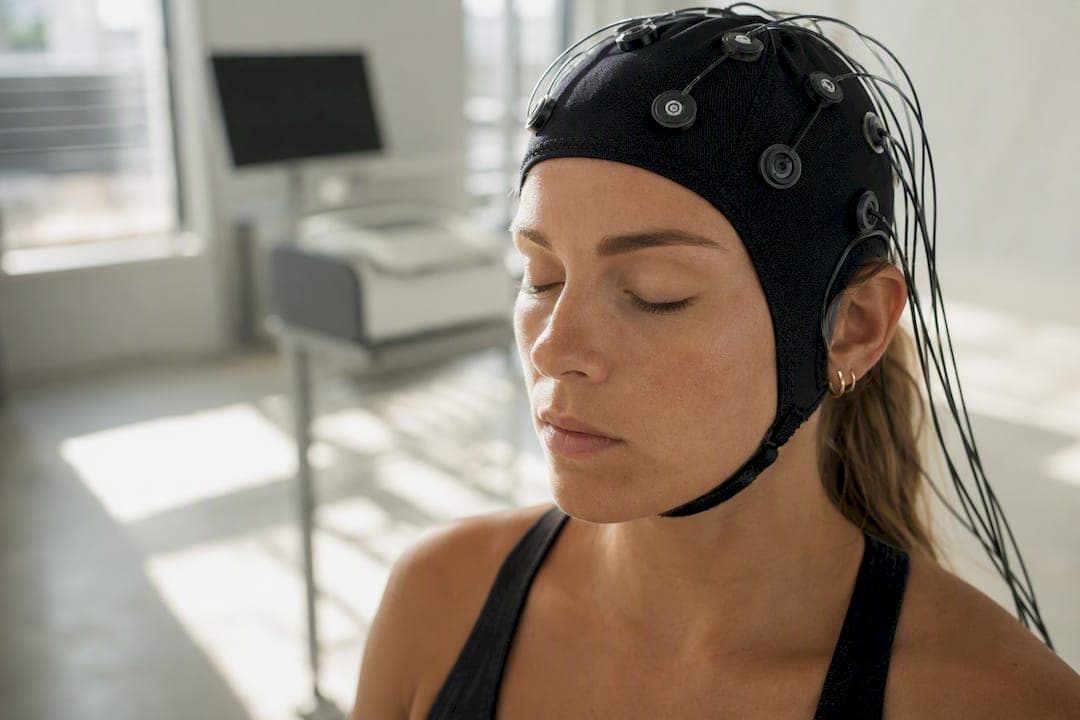
Nervous system reset techniques for athletes refers to neuroscience-based performance neurotraining, primarily Alpha Imprinting and QEEG-guided neurofeedback, not breathing drills or cold plunges. These methods aim to reprogram trauma and anxiety responses so an athlete can access flow under competitive pressure. Early clinical and case-report evidence is promising for concussion recovery and performance blocks, though large controlled trials are still catching up to clinical practice.
TL;DR:
- Nervous system reset techniques for athletes focus on Alpha Imprinting and QEEG-guided neurofeedback, targeting trauma and performance anxiety rather than general wellness methods.
- These protocols typically involve baseline brain scans, intensive training phases, and in-home reinforcement, with progress checked through objective neurophysiological measures like QEEG data.
- Evidence is promising but remains exploratory, showing measurable shifts in reaction time and symptoms, yet lacking large controlled trials or universal medical endorsement.
- Choosing a reputable program requires licensed clinicians, objective pre- and post-assessment data, and clear coordination with medical teams; beware of unsubstantiated guarantees.
- Athletes often experience significant improvements in performance and anxiety once their nervous system stop bracing against unresolved threats, emphasizing measurable, targeted neurotraining over anecdotal claims.
Table of Contents
- What Do Nervous System Reset Techniques Actually Cover?
- How Does Nervous System Retraining Work Neurologically?
- What Happens in a Typical Reset Protocol?
- Is There Real Evidence Behind Nervous System Recovery Strategies?
- How Do You Choose a Nervous System Reset Program?
- A Practitioner's View on What Actually Moves the Needle
- Ready to Reset Your Nervous System for Competition?
- Sources
What Do Nervous System Reset Techniques Actually Cover?
This term gets used loosely online to describe breathwork, cold exposure, and meditation; see this nervous system reset primer for contrasting definitions and a broader wellness perspective. That is not what this article covers, and it is not what elite athletes typically need when a mental block or injury history is actively costing them performance. The scope here is narrower and more clinical: neuroscience-based performance neurotraining designed to identify and correct measurable dysfunction in the nervous system.
The core components an athlete should expect to encounter include:
- Alpha Imprinting, a proprietary protocol that targets and reprograms trauma-linked and anxiety-linked response patterns.
- QEEG (quantitative electroencephalography) baseline scans, which map electrical activity across the brain before any training begins.
- Neurofeedback variants, including Live Z-Score Training, that give the brain real-time feedback to shift specific activity patterns.
- In-home light and audio-visual protocols that extend clinic work between sessions.
- Telehealth delivery, which makes ongoing coaching possible for traveling athletes and teams.
These tools target three problem areas most often: persistent symptoms after concussion, performance anxiety that shows up specifically in competition, and trauma-related blocks that trace back to a bad fall, a hard hit, or an injury that never fully resolved mentally even after the body healed.
How Does Nervous System Retraining Work Neurologically?
QEEG gives clinicians something musculoskeletal testing cannot: an objective read on cortical activity. A physical therapist can measure range of motion and strength all day and still miss a lingering neurophysiological signature from an old injury. An exploratory study of Division I football athletes paired countermovement jump testing with qEEG and found that previously injured athletes showed lower reactive strength and jump height alongside greater sensorimotor rhythm asymmetry, patterns invisible to standard return-to-play testing.
That is the logic behind pairing QEEG with targeted retraining: find the pattern, then train against it. Live Z-Score Training, a neurofeedback approach, has shown in exploratory research that specific EEG metrics track with specific symptom domains.
What the data shows: In one exploratory analysis, changes in theta/alpha ratio and beta-related power after Live Z-Score Training predicted reductions in cognitive and affective symptoms among patients with persistent post-concussive symptoms.
Alpha Imprinting fits inside this same framework as a brief, targeted intervention rather than an open-ended talk-therapy process. It works alongside QEEG data rather than in place of it, aiming at the specific neural patterns that keep an athlete's body bracing for a threat that already passed.
None of this is settled science yet. Researchers writing on QEEG integration into concussion rehabilitation note that the approach is low-cost and provides objective physiological data, but adoption as a standard of care remains limited because the evidence base, while growing, is still exploratory.
What Happens in a Typical Reset Protocol?
Programs built around this approach tend to follow a consistent arc, though the pacing varies by sport and injury history.
- Baseline assessment. Expect a QEEG or WAVi brain scan, a sport-specific performance baseline (reaction time, force output, or sport-specific drills), and a symptom inventory covering anxiety, focus, and any lingering post-injury flags.
- Initial intensive phase. Many athletes start with a concentrated block, sometimes structured as a 10-week program, mixing 1:1 sessions with take-home protocols.
- In-home reinforcement. Light and audio-visual devices extend the clinical work between sessions, letting the nervous system practice the new pattern daily instead of once a week.
- Progress checkpoints. A second QEEG scan, updated reaction-time testing, and sport metrics get compared against baseline to see what actually shifted.
- Booster sessions. Ahead of a season opener, a return from injury, or a major competition, athletes often schedule tune-up sessions rather than starting over.
Group workshops and cohort formats exist for teams that want to address performance anxiety at scale rather than one athlete at a time.
Pro Tip: Ask any program for the specific metrics they will re-test after training, not just how you feel. "I felt calmer" is nice. A second QEEG scan showing measurable change plus a faster reaction-time score is proof.
Is There Real Evidence Behind Nervous System Recovery Strategies?
The honest answer: promising, exploratory, and not yet definitive. That is not a knock against the approach. It is where most physiological performance research sits before it becomes mainstream.
- Live Z-Score Training showed EEG metric changes that predicted symptom reductions in an exploratory sample of persistent post-concussive syndrome patients, with theta/alpha ratio and beta power tracking to different symptom clusters.
- Small-sample case reports have documented QEEG normalization alongside symptom resolution after a series of neurofeedback sessions in post-concussion cases, though these are not controlled trials.
- The Division I football study found that previously injured athletes carried measurable neuromechanical and neurophysiological differences even after clearing standard return-to-play criteria, pointing toward multimodal assessment as more accurate than force-plate or strength testing alone.
The realistic takeaway: expect meaningful, measurable shifts in reaction time, symptom load, and self-reported anxiety for many athletes. Do not expect a guaranteed cure, and be wary of anyone who promises one. Major professional medical societies have not endorsed QEEG-guided neurofeedback as standard concussion care, a limitation researchers themselves acknowledge even as clinical interest grows.
How Do You Choose a Nervous System Reset Program?
Not every provider offering "brain training" or "neurofeedback" operates at the same standard. A short vetting process saves an athlete or team from wasting a season on something that produces feelings without data.
Credentials and data to expect from a legitimate program:
- Licensed clinicians with specific QEEG training and neurofeedback certification, not a weekend course.
- Pre- and post-training QEEG reports (WAVi or comparable systems) that you can actually see.
- Outcome measures tied to sport performance, not just mood surveys.
- Willingness to coordinate with your existing medical team, including your physician or athletic trainer.
Before signing on, ask these questions directly:
- What assessment tools will you use, and can I see a sample report?
- What is the realistic timeline for measurable change given my specific history?
- How will you coordinate with my current medical or coaching staff?
- What happens if the initial protocol does not produce results?
Red flags are usually easy to spot once you know what to look for: no objective measures offered, language that promises a guaranteed fix, or an absence of any licensed clinician overseeing the protocol.
A Practitioner's View on What Actually Moves the Needle
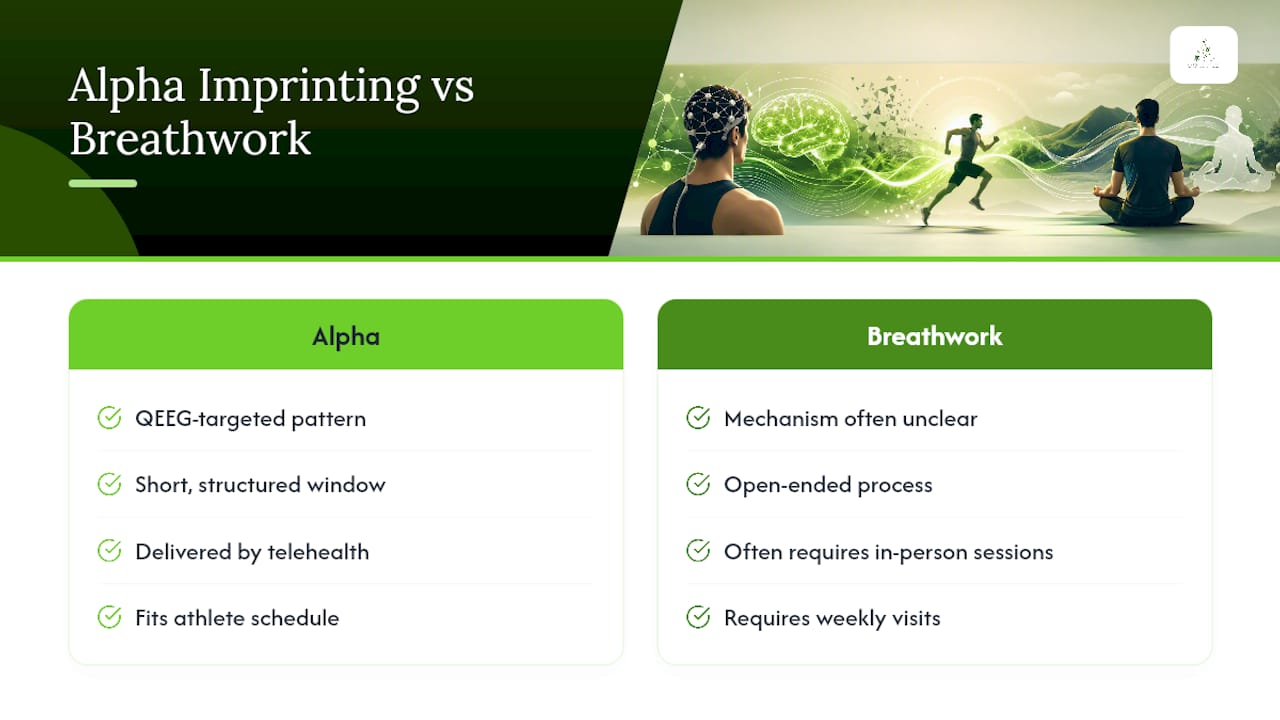
Most conversations about nervous system reset techniques focus on the buzzword and skip the mechanism. Alpha Imprinting works because it targets a specific pattern identified through QEEG, then trains against it in a short, structured window rather than an open-ended process. Delivered through telehealth, it fits into a competitive athlete's actual schedule instead of demanding weekly office visits during a training block.
The proof that matters most is not the theory. It is athletes who walked in stuck, including Olympic medalists, and walked out competing at a level their body had already been capable of, once the nervous system stopped bracing against a threat that was long gone.
— Paige
Ready to Reset Your Nervous System for Competition?
Roberts Neurotraining is built for athletes who need results measured in objective data, not just how a session felt. The Alpha Imprinting protocol pairs with QEEG scans to target the exact pattern holding your performance back, delivered through telehealth so travel and training schedules never get in the way.
Whether you are recovering from a concussion, carrying a trauma response from a bad injury, or fighting competition anxiety that never shows up in practice, the path forward starts with a baseline. Download the Energy Optimization Workbook to start the preparatory work now, or book a QEEG assessment directly to see what your own brain data shows. Teams and coaching staff can also inquire about group workshops built around the same neurotraining framework used with individual athletes.
Sources
- Challenges and Research Opportunities for Integrating Quantitative Electroencephalography Into Sports Concussion Rehabilitation
- Changes in EEG Activity Following Live Z-Score Training Predict Changes in Persistent Post-concussive Symptoms: An Exploratory Analysis
- Countermovement jump and quantitative electroencephalography assessment in Division I football athletes: An exploratory neurophysiological study of return-to-play readiness