
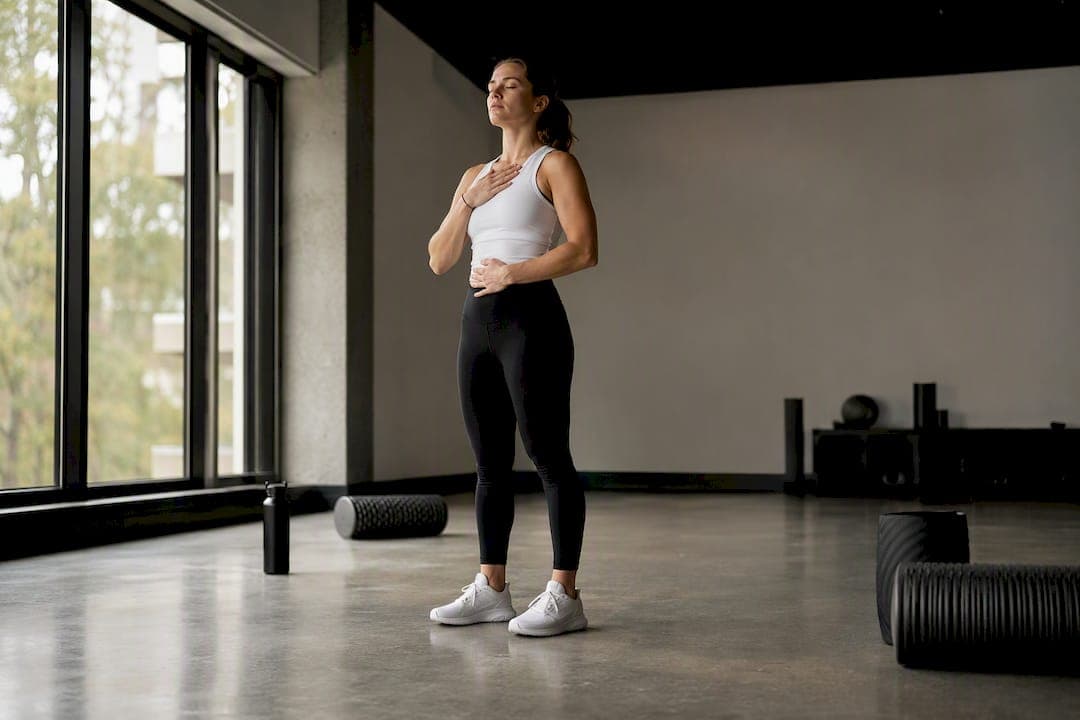
Calm the nervous system first, then rebuild the skill through graded practice. That order matters more than most athletes and coaches realize. A 2026 meta-analysis of 46 trials covering 2,049 athletes found psychological interventions significantly reduce competitive anxiety, with Mindfulness-Acceptance-Commitment (MAC) showing the largest overall effect. Exercise and Sports Science Australia's position statement on performance under pressure backs a similar sequence: regulate the state, then reintroduce the skill under gradually increasing pressure.
Three things you can do right now:
- Run an exhale-biased breathing cycle for 60 to 90 seconds before your next attempt.
- Pick one physical grounding cue (feet, grip, breath) and return to it the instant you feel the spike.
- Shrink the task to a single, low-stakes micro-step instead of forcing the full movement.
Pro Tip: If the block persists after two to three weeks of graded practice, or it's paired with dread, avoidance, or sleep disruption, that's your signal to bring in a sport psychologist or licensed clinician rather than pushing through alone.
Key Takeaways
Resolving a performance block requires calming the nervous system before rebuilding the skill through graded, pressure-tested practice, with professional referral when red flags appear.
| Point | Details |
|---|---|
| Regulate before you drill | Use a breathing protocol and grounding cue before attempting the blocked skill again. |
| Grade pressure gradually | Reintroduce stakes over four to six weeks, tracking regulated-state ratings at each step. |
| Match therapy to the athlete | MAC and relaxation techniques show strong effects; biofeedback often suits junior athletes best. |
| Watch for red flags | Progressive avoidance, sleep disruption, or no improvement after graded exposure means it's time to refer. |
| Consider nervous-system-first training | Robertsneurotraining's Alpha Imprinting process targets the protective response directly, fitting athletes whose blocks resist standard coaching. |
Table of Contents
- In-the-Moment Interventions to Help Athletes Overcome Performance Blocks
- Building a Short-Term Plan to Prevent Blocks From Returning
- Clinical and Sport-Psychology Approaches Worth Knowing
- A Coach's Action Plan for the Next Session
- How Nervous-System Training Fits Into the Bigger Picture
- What Actually Causes a Performance Block
- The Myths That Keep Athletes Stuck Longer Than Necessary
- Why Conditioning and Nutrition Matter More Than Athletes Assume
- Frequently Asked Questions
- Sources
In-the-Moment Interventions to Help Athletes Overcome Performance Blocks
When a block hits mid-competition, you don't have time for a therapy session. You need something you can run in fifteen seconds. These drills work because they interrupt the threat response before it hijacks motor execution.
- Quiet eye / vergence fixation: hold a steady gaze on a single point for one to two seconds longer than feels natural before initiating the movement, which reduces visual and cognitive disruption during high-pressure moments.
- Exhale-focused breathing: lengthen the exhale relative to the inhale to downshift arousal fast.
- Left-hand contraction: briefly squeezing a ball in the left hand has been used anecdotally by practitioners to shift hemispheric activation before pressure moments.
- Grounding sensory cue: a specific word, touch point, or sound that pulls attention back into the body.
- Brief imagery: five seconds of rehearsing the successful version of the exact next rep.
- The 5-second rule: give yourself five seconds to reset, then commit fully to the next attempt without further deliberation.
A simple protocol worth practicing: inhale for 4 counts, hold for 2, exhale for 6. This 4-2-6 pattern biases the nervous system toward the exhale, which tends to lower sympathetic arousal.
A rehearsable micro-routine:
- Notice the spike (tight chest, racing thoughts, tunnel vision).
- Run one 4-2-6 breath cycle.
- Fix your gaze and hold it half a second longer than usual.
- Say your grounding cue silently.
- Commit to the next rep within five seconds.
Pro Tip: Rehearse this sequence in low-pressure drills first. An athlete who's never practiced a reset under calm conditions won't be able to access it under real pressure. Build the pattern until it's automatic, the same way you'd groove any other skill. Robertsneurotraining's nervous system preparation routines walk through how to structure that repetition.
Building a Short-Term Plan to Prevent Blocks From Returning
A single good session doesn't fix a recurring block. What does is a structured four to six week cycle that gradually reintroduces pressure while tracking how the nervous system responds.
Sample micro-plan:
- Weeks 1 to 2: Isolate the blocked skill in a completely safe context. No scoring, no audience, minimal stakes. Track completion rate and perceived calm on a 1 to 10 scale.
- Weeks 3 to 4: Add one pressure variable at a time (a small audience, a timer, a scorekeeper). Log regulated-state ratings before and after each session.
- Weeks 5 to 6: Layer in competition-like stakes and measure execution consistency against your baseline from week one.
Do grade pressure incrementally and log how the athlete's regulated state holds up at each step. Don't jump straight to full competitive stakes, and don't repeat the same pressure level past the point of visible improvement without adding a new variable.
Both the ESSA position statement and a broader review of performance under pressure point to pre-performance routines, implicit learning, and carefully implemented pressure training as effective tools for keeping skill execution automatic instead of over-thought.
Track three metrics weekly: completed practice reps at each pressure tier, self-rated regulated state before and after sessions, and a simple performance KPI specific to the sport (first-serve percentage, free-throw rate, or split times).
Clinical and Sport-Psychology Approaches Worth Knowing
Not every block resolves with drills and a training plan. Some need professional support, and knowing which approach fits which situation saves months of frustration.
- CBT: reframes the thought patterns feeding the block, often paired with exposure work.
- MAC (mindfulness-acceptance-commitment): showed the largest overall effect on competitive anxiety in the 2026 network meta-analysis.
- Biofeedback / HRV training: particularly useful for junior athletes, per the same meta-analytic data.
- Neurofeedback: trains self-regulation of brain activity patterns linked to anxiety and focus.
- EMDR / brainspotting: used for severe or trauma-linked blocks, typically combined with graded exposure.
EMDR and brainspotting require licensed clinical oversight. Case-based work on treating performance blocks recommends collaboration between sport psychologists and clinicians when trauma or past injury is driving the block, rather than one practitioner working in isolation.
The 2026 meta-analysis found MAC's effect size (SMD = -1.33) and relaxation techniques for cognitive anxiety (SMD = -1.54) among the strongest signals across the 46 trials reviewed, with biofeedback showing particular benefit for younger athletes. That's a meaningful case for matching the technique to the athlete's age and anxiety profile rather than defaulting to one method for everyone.
Pro Tip: Ask any practitioner offering EMDR or brainspotting whether they collaborate with a sport psychologist or medical provider. A credentialed clinician working alone on a sport-specific block is a red flag, not a shortcut.
A Coach's Action Plan for the Next Session
Your response in the next 48 hours matters more than a season-long fix. Start by asking, not fixing.
Diagnostic questions to ask your athlete:
- How does your body feel right before the block happens?
- Has anything changed recently: sleep, nutrition, life stress, injury history?
- Is this new, or has it happened before under similar conditions?
Action plan for the next session:
- Lower the stakes of the environment (fewer eyes, smaller space, no scoreboard).
- Start at the easiest version of the skill and progress only after visible calm.
- Use a co-regulation cue, your own steady presence, a shared breath, a calm verbal anchor.
- Log the session: completion rate, regulated-state rating, and one KPI.
Pro Tip: Drop "just try harder" and "shake it off" from your vocabulary. Both language cues ignore that a block is a protective nervous-system response, not a lack of effort. Try instead: "Let's find the easiest version of this and build from there." That framing supports nervous-system regulation instead of fighting against it.
When a Performance Block Needs Specialist Care
Watch for progressive avoidance of the skill or sport entirely, mood or cognitive changes, disrupted sleep, or an inability to perform even after weeks of graded exposure. Any of those signals daily functioning is being affected, not just competition.
Start with a sport psychologist or licensed mental performance clinician. If the block traces back to an injury or trauma, involve medical or clinical care alongside the sport psychology work rather than after it.
Pro Tip: Trauma-focused methods like EMDR should only proceed under a licensed clinician's supervision, ideally one coordinating directly with the athlete's sport psychologist or coach.
How Nervous-System Training Fits Into the Bigger Picture
Most performance-block protocols treat the mind and the nervous system as separate systems needing separate fixes. Robertsneurotraining works from a different premise: the block is a nervous-system response first, and skill execution follows once that system feels safe again. That's the logic behind reprogramming the nervous system for sports performance rather than only addressing the thoughts sitting on top of it.
This approach tends to fit best for:
- Athletes with recurring blocks that resist standard mental-game coaching.
- Performers whose block traces back to a specific injury or setback.
- High-pressure competitors (Olympic, professional league, elite amateur) who need measurable, repeatable results under real stakes.
Pro Tip: Before booking any provider for this kind of work, ask about their credentials, whether they collaborate with clinicians when trauma is involved, what timeline they expect for measurable change, and how they track progress session to session.
What Actually Causes a Performance Block
A performance block, sometimes called choking or a slump depending on severity and duration, happens when conscious, effortful control overrides the automatic motor patterns an athlete has already built through thousands of repetitions. The skill is still there. Access to it gets interrupted.
The trigger is usually a mix of psychological and physiological factors working together. Psychologically, high stakes, an audience, or a past failure at the same skill create a threat signal. Physiologically, that signal activates the sympathetic nervous system, tightens muscles that need to stay loose, and narrows attention in ways that disrupt fine motor timing. A golfer whose putting stroke has worked thousands of times suddenly can't trust it on the 18th green, not because the mechanics changed, but because the nervous system flagged that moment as dangerous.
Injury history plays a bigger role than most training programs acknowledge. An athlete returning from a torn ACL might have full physical clearance and still hesitate on a cutting movement, because the nervous system remembers what happened last time that movement was attempted at speed. That's not weakness. It's a protective response doing exactly what it evolved to do, just misapplied to a sports context where the "danger" is really just pressure.
Slumps differ from single-moment chokes mainly in duration and reinforcement. A choke is one bad rep under acute pressure. A slump is weeks of accumulated threat-response, often made worse by overanalyzing mechanics that were never the actual problem.
The Myths That Keep Athletes Stuck Longer Than Necessary
Bad advice about performance blocks is everywhere, and most of it makes the problem worse, not better.
Myth: "Just push through it." Forcing repetition of a skill the nervous system has flagged as unsafe usually reinforces the threat association rather than resolving it. Pushing through more reps under the same conditions that created the block tends to deepen the pattern.
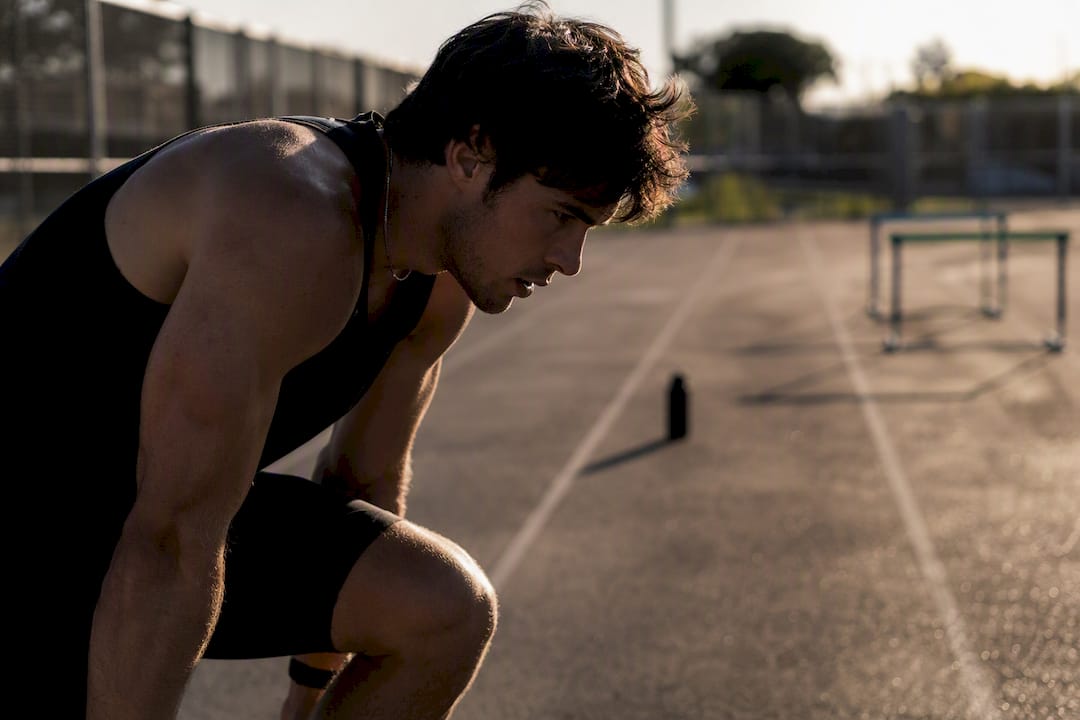
Myth: "It's purely mental, so mindset tricks alone will fix it." Blocks involve real physiological arousal, tightened muscles, altered breathing, narrowed visual attention. Treating it as only a confidence problem skips the nervous-system piece entirely.
Myth: "Only weak-minded athletes get blocked." Some of the most well-documented cases involve elite, highly accomplished performers. A block reflects a threat response, not a character flaw or lack of preparation.
Myth: "Fixing the technique will fix the block." Immediately tinkering with mechanics right after a block often reinforces the threat link between that skill and danger, rather than addressing why the nervous system flagged it in the first place. Technique refinement works better once automaticity has been restored through calm, graded practice.
Myth: "It'll just go away on its own with time." Some blocks fade. Many don't, especially when the same triggering conditions keep recurring without any structured intervention.
Why Conditioning and Nutrition Matter More Than Athletes Assume
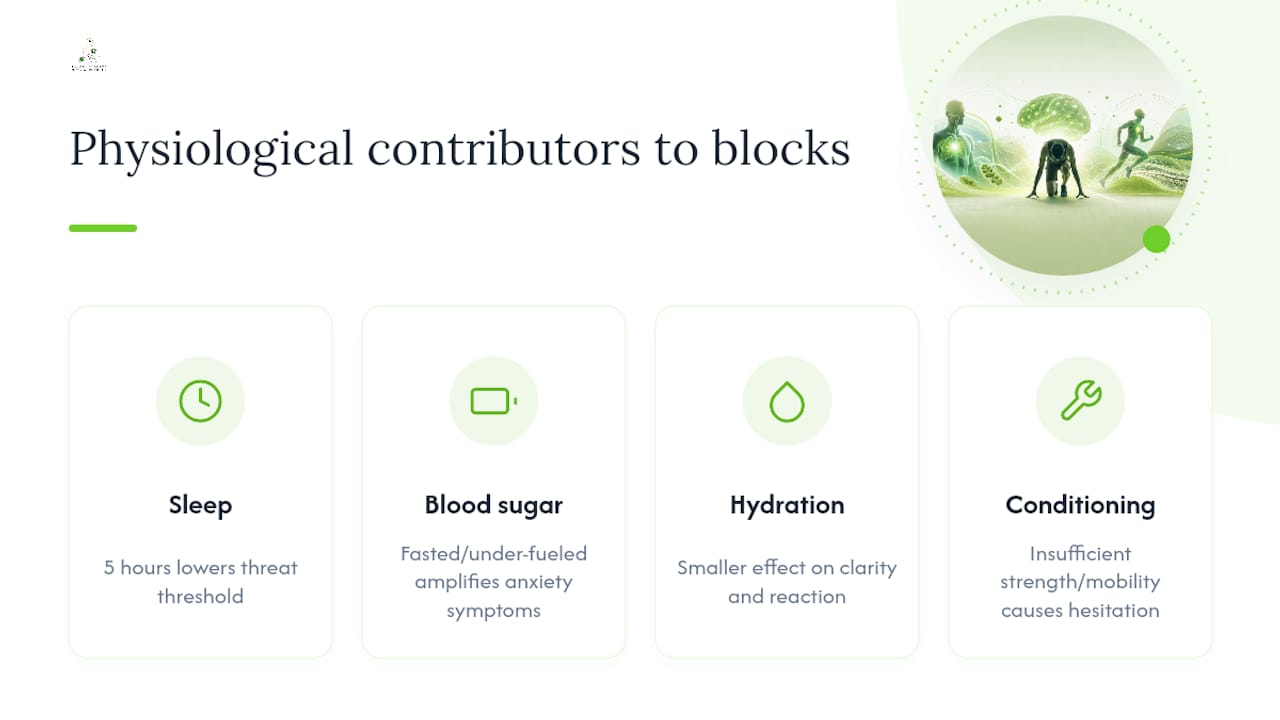
Physical readiness and mental resilience aren't separate categories. An under-recovered nervous system has less capacity to regulate itself under pressure, no matter how much visualization work an athlete does.
Sleep debt is probably the most underrated contributor to performance blocks. A nervous system running on five hours of sleep has a lower threshold for perceiving threat, which means smaller stressors trigger bigger reactions. Athletes managing recurring blocks should treat sleep consistency as seriously as they treat their skill practice.
Blood sugar stability affects this too. An athlete who trains or competes in a fasted or under-fueled state is asking a stressed nervous system to also manage low energy availability, a combination that tends to amplify anxiety symptoms rather than mask them. Hydration status has a similar, if smaller, effect on cognitive clarity and reaction time under pressure.
Physical conditioning also determines how safe a movement feels. An athlete who hasn't built adequate strength or mobility for a specific movement pattern has a legitimate physiological reason for hesitation, not just a psychological one. That's why mental training and physical output are linked rather than parallel tracks that never intersect. Building the physical capacity for a movement removes one more legitimate reason the nervous system has to flag it as risky.
A Nervous-System-First Perspective
Most performance-block advice treats the mind as software you can debug with the right mindset tricks. It's not. The nervous system runs the show, and until it feels safe, no amount of visualization or positive self-talk will override a protective response that's doing exactly its job. Graded practice, multidisciplinary care when needed, and patience with the process outperform force every time.
Start With a Process Built for This Exact Problem
You've read the drills, the training plan, and the referral criteria. If the block keeps recurring despite doing everything right, that's usually a sign the nervous system needs direct, targeted work rather than another mindset tweak.
Robertsneurotraining approaches performance blocks differently than standard sport psychology coaching: instead of talking through the anxiety, the Alpha Imprinting process works directly with the nervous system to clear the protective response causing the block in the first place. That's the piece most mental-game programs skip entirely. Athletes recovering from injury, carrying past trauma, or stuck in a slump that hasn't responded to standard coaching tend to see the fastest shifts with this approach. If you're ready to find out whether this fits your situation, start with the process overview and see what a session actually involves.
Frequently Asked Questions
What's the fastest way to help athletes overcome performance blocks in competition? Start with an exhale-biased breathing pattern and a grounding cue, then shrink the next attempt to a smaller, more manageable step rather than forcing the full skill immediately.
Is a performance block the same thing as choking? Choking usually refers to a single high-pressure moment of breakdown, while a block or slump reflects the same nervous-system pattern repeating across sessions or weeks.
Can athletes fix a performance block without therapy? Many mild to moderate blocks respond well to graded practice, breathing protocols, and pre-performance routines; persistent or trauma-linked blocks typically need a licensed clinician.
How long does it take to resolve a recurring performance block? A structured four to six week graded-exposure plan resolves many blocks, though severe or trauma-related cases combined with clinical care can take longer.
Do coaches need special training to help with performance blocks? Coaches don't need clinical credentials to support an athlete through graded practice and language shifts, but should know when to refer to a sport psychologist or licensed clinician.
This article is general information, not a substitute for advice from a qualified doctor. Consult a qualified healthcare professional about your own circumstances before acting on anything here.
Sources
- The Effect of Different Psychological Interventions on Athletes’ Competitive Anxiety: A Systematic Review and Bayesian Network Meta-Analysis | Sports Medicine - Open
- Performance Under Pressure in Sport: A Position Statement from Exercise and Sports Science Australia (ESSA)
- Performance blocks in sport : recommendations for treatment and implications for sport psychology practitioners
- Performance under pressure review (PMC article)