
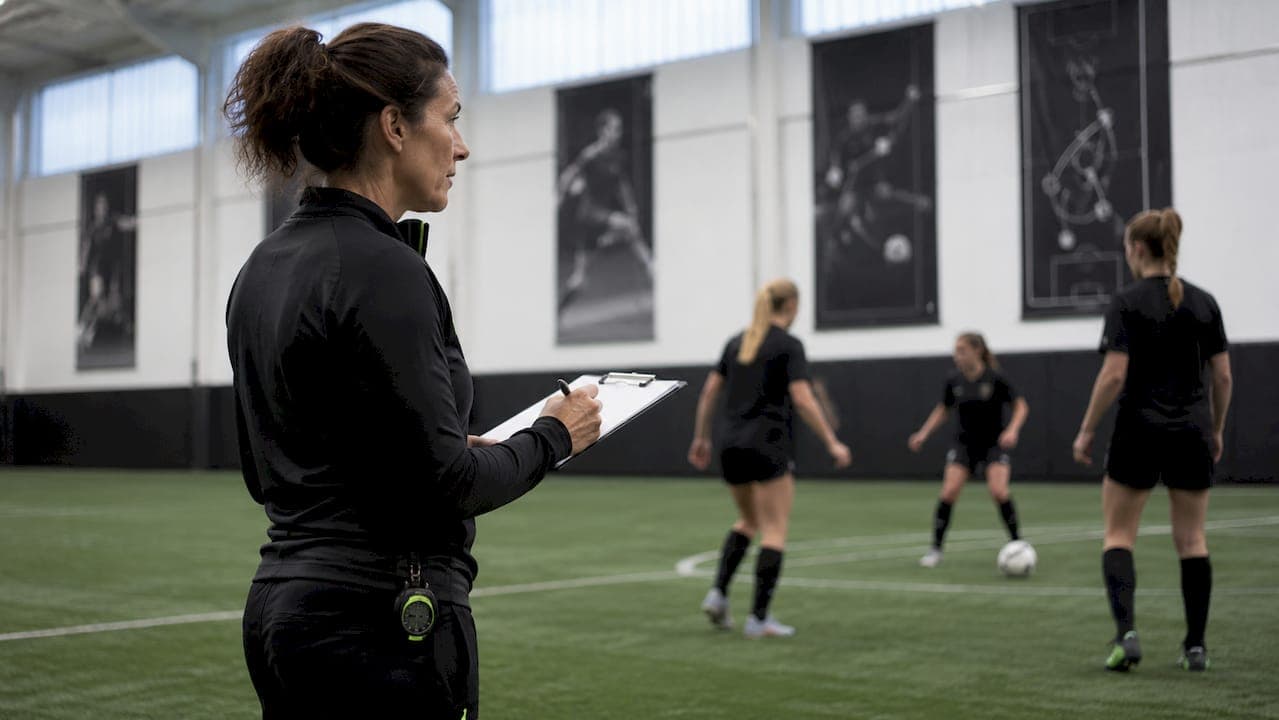
Mirror neurons are brain cells that fire both when an athlete performs an action and when they observe the same action in a teammate, creating the neurological foundation for intuitive coordination. The role of mirror neurons in team dynamics goes far beyond simple imitation. These cells drive pre-cognitive anticipation, emotional attunement, and the kind of wordless synchrony that separates good teams from great ones. For sports coaches and team leaders, understanding the human mirror neuron system (MNS) is not optional neuroscience trivia. It is a direct window into why your team reads each other on the field, why your emotional state shapes collective performance, and how targeted training can sharpen both.
How do mirror neurons enable intuitive anticipation in team sports?
Mirror neurons enable team members to decode and map a teammate's movements onto their own motor repertoire within fractions of a second. This process is automatic and pre-cognitive. It happens before conscious thought, which is exactly why elite athletes seem to "just know" where a teammate is going.
This mechanism is called motor resonance. When a midfielder watches a striker plant their foot before a shot, the midfielder's motor cortex activates as if preparing to make that same movement. The brain is not just watching. It is simulating. That simulation creates anticipatory readiness, the neurological basis for fluid team coordination.
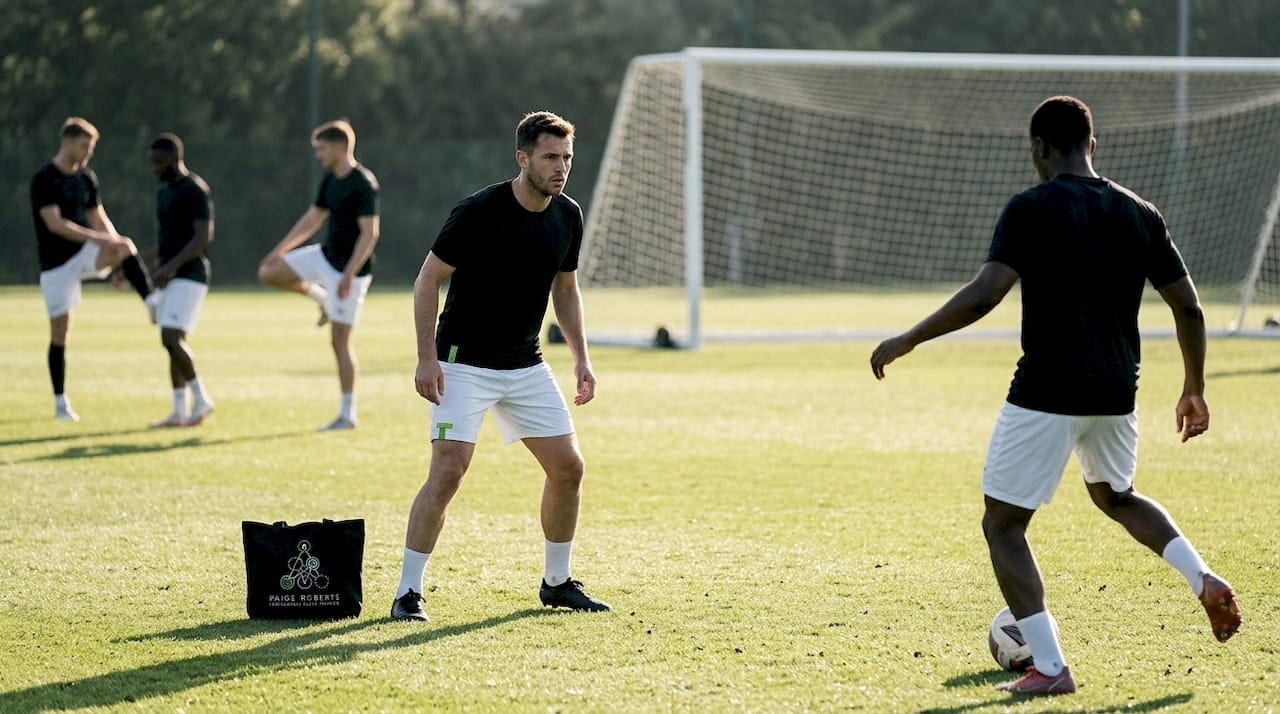
The MNS is also highly malleable. Musicians and athletes who log thousands of hours of shared practice develop stronger, faster motor resonance with their teammates. This is neuroplasticity at work. The more your athletes practice together, the more precisely their mirror neuron systems calibrate to each other's movement signatures.
Hyperscanning EEG research shows stronger inter-brain coupling during cooperation than during competition. That finding matters practically. Cooperative training environments do not just build morale. They build measurable neural synchrony between teammates.
- Shared repetition sharpens anticipation. Repeated joint practice encodes teammates' movement patterns into each other's motor systems.
- Observation counts as training. Watching a teammate perform a skill activates the same neural pathways as executing it.
- Cooperative framing accelerates coupling. Framing drills as collaborative rather than competitive increases inter-brain synchrony.
- Nonverbal cue decoding improves with exposure. The longer athletes train together, the faster they read subtle body language signals.
Pro Tip: Design at least one practice session per week where athletes observe each other's technique in silence before executing. This deliberate observation phase activates motor resonance and accelerates anticipatory coordination.
What is the emotional impact of mirror neurons on team cohesion?
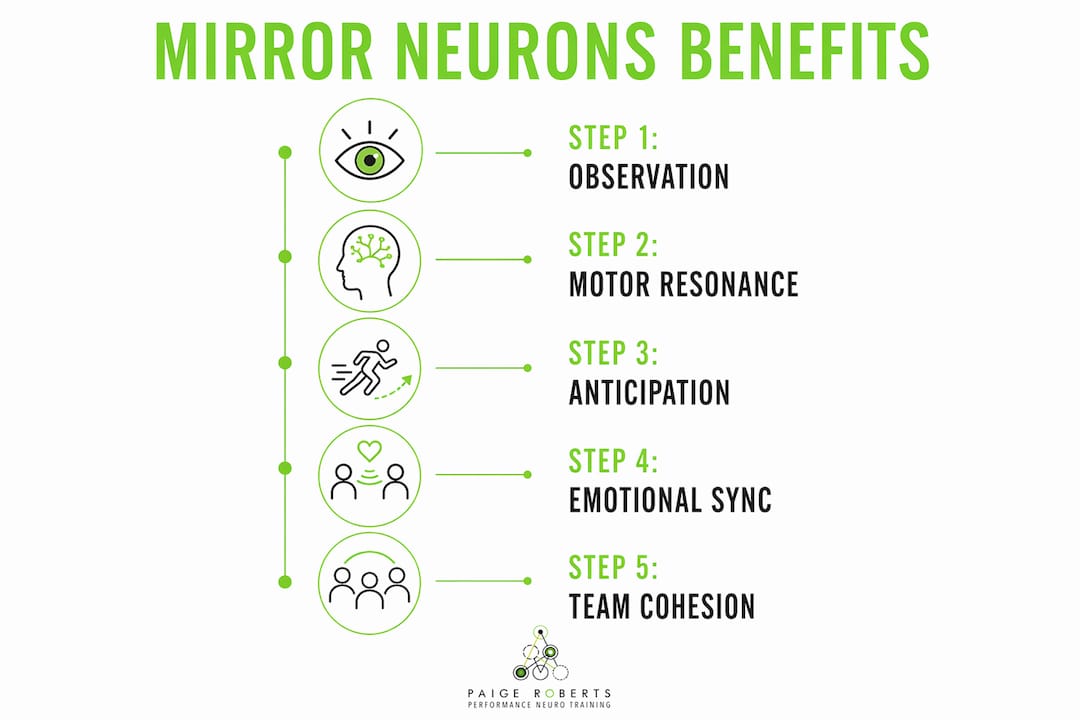
Mirror neurons transmit emotional states, not just physical movements. A leader's internal emotional condition broadcasts biologically to every person in the room. Leaders' internal states are continuously broadcast to teams via mirror neurons, making self-awareness and emotional regulation core leadership skills, not soft skills.
The team's mentalizing network then amplifies these signals. Mirror neurons provide the raw data. The mentalizing network interprets it, building narratives about what the leader is feeling and why. A coach who suppresses frustration during a timeout does not hide it. The team's nervous systems detect it and construct a story around it.
"Chronic stress or suppressed frustration in leaders invisibly radiates through mirror neurons, which teams pick up and amplify via mentalizing networks, eroding trust and team performance."
The Mirror Leadership framework, which integrates emotional appraisal and Polyvagal theory, confirms that emotionally attuned leaders build biologically grounded trust. That trust is not a feeling. It is a physiological state in each team member's nervous system. When it erodes, performance follows.
- Emotional contagion is involuntary. Athletes cannot choose not to pick up a coach's stress. The MNS operates below conscious awareness.
- Positive emotional states are equally contagious. Calm confidence in a leader primes the team's nervous systems for focused execution.
- Psychological safety has a neurological address. It lives in the team's collective autonomic nervous system state, shaped daily by the leader's emotional output.
Pro Tip: Before entering a high-stakes practice or game, spend three minutes in slow diaphragmatic breathing. This activates the vagal brake, shifts your autonomic state toward calm, and changes what your mirror neurons broadcast to the team.
For a deeper look at how psychological safety connects to neurological trust, the research on sports teams is clear: leaders who regulate first create teams that perform under pressure.
How do neurochemical mechanisms shape mirror neuron activity?
The strength of motor resonance in any individual is not fixed. It depends on the balance between excitatory and inhibitory neurochemical activity in the primary motor cortex. The human mirror neuron system is modulated by excitatory glutamatergic and inhibitory GABAergic mechanisms, and that balance directly determines how strongly an athlete's motor system responds when watching a teammate.
Intracortical facilitation (ICF) reflects glutamatergic activity and correlates with stronger motor resonance. Short-interval intracortical inhibition (SICI) reflects GABAergic activity and dampens it. Athletes with higher ICF relative to SICI show stronger action observation responses. This explains why two athletes watching the same play can have very different levels of anticipatory readiness.
This variability has direct coaching implications. It means that some athletes are neurochemically primed for rapid motor resonance, while others need more observation repetitions to achieve the same effect. Personalized training approaches that account for this variability will outperform one-size-fits-all methods.
| Neurochemical mechanism | Effect on motor resonance | Coaching implication |
|---|---|---|
| Glutamatergic (ICF) | Increases motor cortex excitability | Supports faster action observation responses |
| GABAergic (SICI) | Inhibits motor cortex excitability | Slows or dampens motor resonance |
| High ICF / Low SICI ratio | Stronger mirror neuron response | Athlete anticipates teammates more rapidly |
| Low ICF / High SICI ratio | Weaker mirror neuron response | Athlete benefits from more observation-based training |
Understanding this neurochemical picture does not require a neuroscience degree. It requires recognizing that athletes differ in how quickly they sync with teammates, and that observation-based training is a legitimate tool for closing that gap.
What practical steps can coaches take to harness mirror neuron dynamics?
Translating mirror neuron science into coaching practice starts with one principle: the nervous system learns from what it observes as much as from what it executes. Motor resonance involves involuntary motor simulation, meaning athletes physically prime their neural pathways simply by watching skilled peers perform. That is not a metaphor. It is measurable cortical activation.
Here are five concrete steps coaches can apply immediately:
- Build shared practice volume. Joint repetition is the primary driver of MNS calibration between teammates. Prioritize training formats where the full team moves together rather than in isolated skill stations.
- Use structured observation sessions. Have athletes watch film or live demonstrations with a specific focus cue ("watch the point guard's hip angle before the pass"). Directed observation sharpens motor resonance more than passive viewing.
- Model the emotional state you want. Before practice, set your own autonomic state deliberately. Your nervous system is the team's reference point. Arrive regulated.
- Create cooperative drill structures. Frame competitive drills as team problem-solving rather than individual rivalry. Cooperative framing increases inter-brain neural coupling, as hyperscanning research confirms.
- Debrief with empathy, not just analysis. After mistakes, a leader's emotional response is biologically transmitted to the whole group. Calm, constructive debriefs protect the team's neurological safety and keep mirror neuron systems in a receptive state.
The table below compares two common training approaches through the lens of mirror neuron science.
| Training approach | Mirror neuron effect | Best used for |
|---|---|---|
| Isolated skill repetition | Low inter-athlete motor resonance | Individual technique refinement |
| Shared team practice | High inter-athlete motor resonance | Anticipatory coordination and synchrony |
| Passive film review | Moderate motor simulation | Pattern recognition and tactical awareness |
| Directed observation with cues | Strong, targeted motor priming | Specific movement anticipation |
| Cooperative problem-solving drills | Elevated inter-brain coupling | Trust, cohesion, and fluid team flow |
For coaches ready to go deeper, neuroscience-based training approaches offer structured frameworks for applying these principles across a full season. The science of team collaboration neuroscience is no longer theoretical. It is coachable.
Key Takeaways
Mirror neurons drive team performance by transmitting movement patterns and emotional states between athletes, and coaches who train these systems deliberately will build faster, more cohesive teams.
| Point | Details |
|---|---|
| Motor resonance is trainable | Shared practice and directed observation strengthen inter-athlete neural synchrony over time. |
| Leaders broadcast emotional states | A coach's internal condition transmits biologically to the team via mirror neurons, shaping collective performance. |
| Neurochemical variability is real | ICF and SICI ratios explain why athletes differ in anticipatory responsiveness and need individualized observation training. |
| Cooperative framing builds neural coupling | Framing drills as collaborative rather than competitive increases measurable inter-brain synchrony. |
| Observation counts as execution | Watching skilled peers activates the same motor pathways as performing the skill, accelerating learning. |
What I've learned coaching at the intersection of neuroscience and team dynamics
The most surprising thing I've observed working with athletes is how little coaches realize they are the emotional thermostat for the entire team. You can run perfect drills, install brilliant tactics, and still watch performance collapse under pressure. The reason is almost always neurological, not technical.
What the mirror neuron research confirms is something I've seen repeatedly: athletes don't just follow instructions. They absorb the nervous system state of the person leading them. A coach who walks into a locker room carrying unprocessed anxiety sends that signal to every athlete in the room before saying a single word. The team's mirror neurons pick it up. Their mentalizing networks build a story around it. And suddenly the whole group is operating from a threat state rather than a performance state.
The hardest part of applying this science is that it demands self-work from leaders first. Most coaches are trained to focus outward, on the athletes, the tactics, the opponent. Mirror neuron science redirects that focus inward. Your regulation is the team's regulation. That is not a comfortable truth, but it is an accurate one.
The teams I've seen apply these principles consistently, building shared practice volume, using directed observation, and prioritizing leader emotional regulation, develop a quality of coordination that looks almost telepathic from the outside. It is not telepathy. It is neuroscience. And it is coachable.
— Paige
Robertsneurotraining and the neuroscience of team performance
Robertsneurotraining, led by Dr. Paige Roberts, applies neuroscience directly to the challenges coaches and athletes face in high-performance sports environments.
The Energy Optimization Workbook gives coaches and athletes a structured, science-backed tool for managing the nervous system states that mirror neuron research identifies as critical. It addresses the energy regulation, emotional attunement, and performance readiness that determine how well a team synchronizes under pressure. If you want to move from understanding mirror neuron science to applying it with your team, the workbook is the practical starting point. You can also explore team cohesion through neuroscience for additional frameworks built on the same research.
FAQ
What are mirror neurons and why do they matter for sports teams?
Mirror neurons are brain cells that activate both when an athlete performs an action and when they observe the same action in a teammate. They create the neurological basis for intuitive coordination, anticipation, and emotional attunement within a team.
How do mirror neurons affect a coach's influence on team performance?
A coach's internal emotional state transmits biologically to athletes via mirror neurons, with the team's mentalizing network amplifying those signals into narratives that shape collective performance and trust.
Can mirror neuron responsiveness be improved through training?
Yes. Shared practice and observation strengthen the mirror neuron system through neuroplasticity, improving the speed and accuracy with which athletes anticipate and synchronize with teammates.
What is motor resonance and how does it apply to team sports?
Motor resonance is the involuntary activation of an observer's motor cortex when watching another person move. In team sports, it primes athletes neurologically for action before they consciously decide to move, enabling faster and more fluid coordination.
How does neurochemistry influence individual differences in team synchrony?
The balance between glutamatergic (ICF) and GABAergic (SICI) activity in the motor cortex determines how strongly each athlete's mirror neuron system responds during action observation, explaining why some athletes sync with teammates faster than others.