

Psychological injury recovery is the structured process by which individuals heal from mental and emotional harm caused by trauma, stress, or injury. Unlike a broken bone, this type of wound has no visible cast and no fixed timeline. 20–30% of people with serious physical injuries develop PTSD, which means psychological trauma healing is not a rare edge case. It is a clinical reality that demands the same attention as any physical diagnosis. For athletes, mental health professionals, and anyone managing performance anxiety or trauma, understanding the mental health recovery process is the first step toward lasting change. Robertsneurotraining works specifically in this space, applying neuroscience to help athletes rebuild their nervous systems after injury and stress.
What is psychological injury recovery?
Psychological injury recovery is the process of restoring mental, emotional, and neurological function after trauma or prolonged stress has disrupted normal functioning. The clinical term most often used is trauma recovery, though psychological injury recovery also encompasses conditions like adjustment disorder, burnout, and performance anxiety that do not always meet the full PTSD threshold. Both terms are valid and used throughout this article.
True recovery requires restoring core psychological needs: safety, belonging, autonomy, competence, dignity, and meaning. When trauma disrupts these needs, the nervous system stays locked in survival mode. Recovery is the work of unlocking it.

The signs of psychological injury are not always obvious. They include persistent anxiety, emotional numbness, sleep disruption, difficulty concentrating, and a loss of confidence in previously mastered skills. For athletes, this often shows up as the yips, performance freezing, or an inability to return to pre-injury form even after the body has healed. Recognizing these signs early is the difference between a short recovery and a chronic one.
What are the stages of psychological injury recovery?
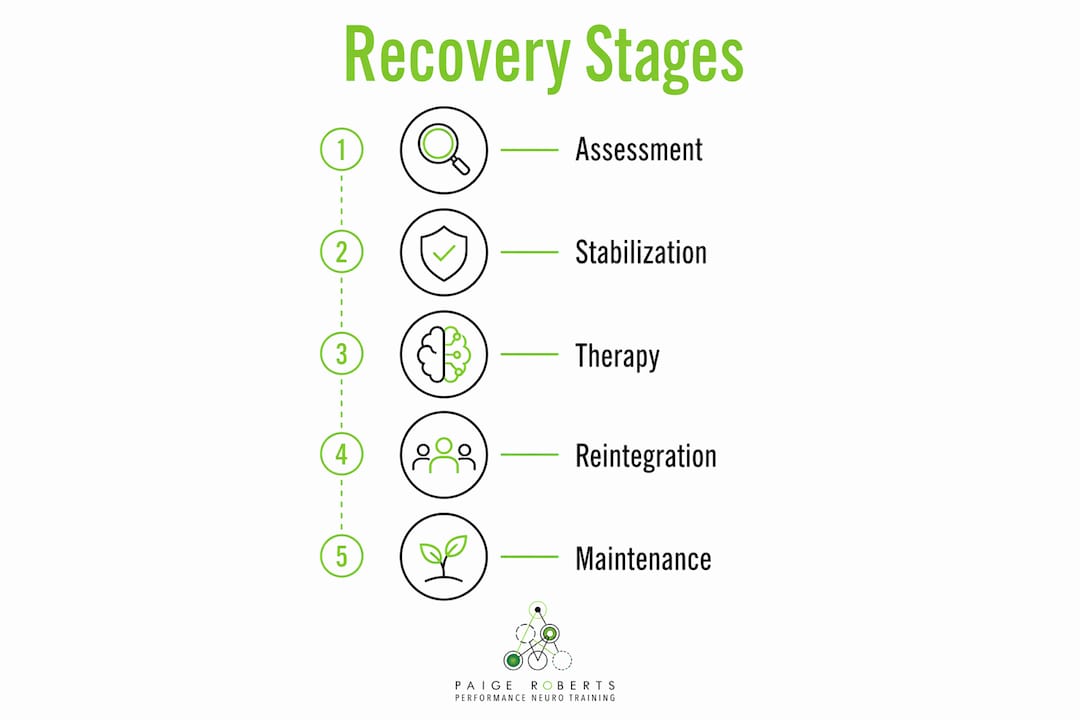
Recovery does not move in a straight line. Symptom fluctuations and setbacks are common and are part of healthy healing, not signs of failure. Understanding the general stages helps people set realistic expectations and stay the course when progress stalls.
- Initial distress. The nervous system is in acute reaction mode. Shock, hypervigilance, emotional flooding, and physical symptoms like racing heart or insomnia are typical. This stage is the body doing exactly what it was designed to do after a threat.
- Stabilization. The person begins to establish safety and routine. Symptoms may still spike, but there are windows of calm. This is where external structure, including sleep schedules, nutrition, and movement, begins to matter most.
- Processing and integration. With support, the individual starts to make sense of what happened. Therapy, nervous system work, and relational healing all play a role here. This is the longest and most variable stage.
- Identity re-establishment. The person rebuilds a sense of self that is not defined by the injury or trauma. For athletes, this often means reconnecting with their identity as a competitor on their own terms.
- Meaning-making. The final stage involves integrating the experience into a broader life narrative. This does not mean the trauma was good. It means it no longer controls the story.
A critical clinical benchmark: if distressing symptoms persist beyond 4 weeks without improvement, professional intervention is recommended. Waiting longer significantly increases the risk of chronic psychological injury.
Pro Tip: Track your symptoms weekly using a simple 1–10 scale for sleep quality, anxiety, and focus. Patterns across four weeks tell you more than any single bad day.
How does psychological recovery differ from physical injury recovery?
Physical injuries have measurable markers. An MRI shows a torn ligament. A blood test confirms inflammation. Psychological injuries have no equivalent scan, which makes them easier to dismiss and harder to treat. Workplace psychological injuries result in longer recovery times and higher costs than physical injuries, largely because of this complexity and the stigma that delays treatment.
The table below compares the two recovery types across key dimensions.
| Dimension | Physical injury recovery | Psychological injury recovery |
|---|---|---|
| Visibility | Visible symptoms, measurable markers | Invisible symptoms, self-reported |
| Timeline | Relatively predictable | Highly variable, non-linear |
| Social support | Widely understood and offered | Often withheld due to stigma |
| Return-to-play criteria | Clearance based on physical tests | No universal standard; requires clinical judgment |
| Risk of premature return | Pain signals act as a natural brake | No pain signal; social pressure drives early return |
The social dimension is where psychological recovery gets most complicated. A person with a broken leg receives meals, visits, and sympathy. A person with PTSD or performance anxiety often receives pressure to "get back to normal." That pressure causes real harm. Returning to work or sport prematurely leads to presenteeism and burnout, which worsens long-term outcomes.
"The absence of a visible wound does not mean the absence of a real one. Psychological injuries deserve the same structured recovery plan as any physical diagnosis." — Dr. Paige Roberts
Early intervention changes the trajectory. Integrated care, meaning therapy alongside physical treatment, produces better outcomes than treating each in isolation. The biopsychosocial injury model formalizes this approach and is increasingly standard in elite sports medicine.
What are the best therapies for psychological injury recovery?
Evidence-based therapy is the foundation of effective psychological trauma healing. The most well-researched starting point is Cognitive Behavioral Therapy.
- Cognitive Behavioral Therapy (CBT). Early intervention with CBT significantly reduces the risk of long-term disability after psychological injury. CBT works by identifying and restructuring thought patterns that maintain distress after trauma.
- Exposure therapy through titration. Gradual, small-dose exposure to stressors prevents re-traumatization and supports integration. This approach, sometimes called titrated exposure, is particularly effective for athletes who need to return to the environments where their trauma occurred.
- Relational therapy. Healing trauma is relational. Rebuilding trust through safe therapeutic relationships rewires the nervous system in ways that solo techniques cannot replicate. The quality of the therapeutic relationship predicts outcomes as much as the specific method used.
- Nervous system regulation work. Techniques like breathwork, somatic therapy, and neurofeedback directly target the physiological state that keeps the nervous system stuck in threat mode.
- Lifestyle integration. Stable routines in sleep, nutrition, and exercise provide external scaffolding for nervous system regulation. Recovery does not happen only in the therapy room. It happens in the structure of daily life.
For athletes managing performance anxiety, nutrition plays a specific role. Adequate selenium intake, for example, supports neurological function during high-stress recovery periods. Racepack's selenium guide for athletes covers safe intake ranges and food sources worth knowing.
Pro Tip: Pair each therapy session with one concrete lifestyle action that same day, whether a 20-minute walk, a consistent bedtime, or a single nutritious meal. The nervous system responds to patterns, not one-off efforts.
How can athletes support their own psychological injury recovery?
Athletes face a specific version of psychological injury that standard clinical frameworks do not always address. The identity fusion between self and sport means that an injury is not just a physical setback. It is an existential one. Recovery for athletes requires strategies built for that reality.
- Mental reprogramming. The nervous system learns fear and avoidance the same way it learns a skill: through repetition. Mental reprogramming for athletes uses structured techniques to replace threat-based patterns with performance-ready ones.
- Trauma-informed coaching. Coaches and sports professionals who understand trauma responses create environments where athletes can be honest about their struggles. Trauma-informed practices in sports settings reduce the stigma that delays treatment.
- Psychological safety within teams. Re-establishing psychological safety within teams and mentorship networks is critical for nervous system recovery post-injury. An athlete who fears judgment from teammates will not disclose symptoms, and undisclosed symptoms do not get treated.
- Flexible return-to-play planning. A flexible, individualized return-to-sport plan reduces burnout risk and supports sustainable recovery. Rigid timelines set by external pressure, rather than clinical readiness, consistently produce worse outcomes.
- Alpha Imprinting and neuroscience-based tools. Robertsneurotraining's Alpha Imprinting method directly targets the nervous system patterns that block athletic performance after trauma. Olympic Medalists who have used this approach report significant improvements in their ability to access a flow state under competition pressure.
The recovery and wellness resources at Racepack offer additional perspective on how physical and mental recovery intersect for competitive athletes across disciplines.
Key takeaways
Psychological injury recovery requires early intervention, structured therapy, and nervous system regulation to prevent chronic impairment and restore full function.
| Point | Details |
|---|---|
| Define the injury clearly | Psychological injury includes PTSD, burnout, and performance anxiety, not just clinical trauma diagnoses. |
| Act within four weeks | Symptoms persisting beyond four weeks without improvement require professional intervention to avoid chronic outcomes. |
| Recovery is non-linear | Setbacks are a normal part of healing, not evidence that recovery has failed. |
| Therapy plus lifestyle works best | CBT, relational therapy, and stable daily routines together produce better outcomes than any single approach. |
| Athletes need sport-specific support | Mental reprogramming, psychological safety, and flexible return-to-play plans address the unique demands of athletic recovery. |
What I've learned about recovery that most people get wrong
Most people expect psychological injury recovery to feel like progress. They picture a steady climb from bad to better. What actually happens is messier. You have a great week, then a terrible day, and suddenly it feels like you are back at square one. You are not. That bad day is part of the process, not a reversal of it.
The other thing I see constantly is people treating recovery as something that happens in a therapy office and nowhere else. The nervous system does not compartmentalize. It responds to everything: the quality of your sleep, whether you feel safe in your relationships, whether your coach respects your limits. Therapy is the map. Your daily life is the terrain.
Stigma is the biggest obstacle I encounter, especially with athletes. The culture of sport rewards pushing through pain. That works for muscle soreness. It does not work for trauma. An athlete who white-knuckles their way back to competition without addressing the psychological wound underneath will hit a wall, and that wall is usually harder than the original injury.
The most effective recoveries I have seen share one thing: the person stopped trying to rush it. They built structure, found safe relationships, and let the nervous system do what it is designed to do when given the right conditions. That is not passive. That is the work.
— Paige
Robertsneurotraining's approach to psychological injury recovery
Robertsneurotraining works at the intersection of neuroscience and athletic performance, specifically for athletes navigating psychological injury, trauma, and performance anxiety. The program led by Dr. Paige Roberts uses Alpha Imprinting to reprogram the nervous system at the root level, clearing the mental blocks that prevent athletes from returning to full performance.

QEEG Brain Scans provide objective data on how the brain is functioning, allowing treatment to be tailored rather than generic. The full recovery process integrates nervous system training, mental performance coaching, and individualized protocols built for athletes at every level, from collegiate competitors to Olympic Medalists. If psychological injury is affecting your performance, this is where evidence-based neurotraining begins.
FAQ
What is psychological injury recovery?
Psychological injury recovery is the process of healing mental and emotional harm caused by trauma, stress, or injury. It involves restoring core psychological needs like safety, autonomy, and meaning through therapy, nervous system regulation, and lifestyle support.
What are the signs of psychological injury in athletes?
Signs include persistent anxiety, emotional numbness, sleep disruption, loss of confidence, and an inability to perform at pre-injury levels even after physical healing. Performance freezing and the yips are common sport-specific presentations.
How long does psychological trauma healing take?
Recovery timelines vary widely and are non-linear. Clinical guidelines recommend professional intervention if distressing symptoms persist beyond four weeks without improvement, as early treatment significantly reduces the risk of chronic impairment.
What therapy works best for psychological injury?
Cognitive Behavioral Therapy is the most well-researched option and reduces the risk of long-term disability when applied early. Relational therapy, somatic work, and neurofeedback are effective complements, particularly for nervous system regulation.
How does Robertsneurotraining support psychological injury recovery?
Robertsneurotraining uses Alpha Imprinting and QEEG Brain Scans to assess and retrain the nervous system patterns that block performance after trauma. The program is designed specifically for athletes dealing with psychological injury, performance anxiety, and trauma responses.