

Return-to-sport mental readiness indicators are standardized psychological and behavioral markers that measure an athlete's confidence, anxiety, and resilience after injury to determine safe readiness for competition. These indicators sit alongside physical benchmarks as equal partners in return-to-play criteria, not afterthoughts. Psychological readiness assessment explains more variance in return-to-sport decisions than objective functional symmetry measures alone. That finding reframes how athletes and support teams should think about clearance: the mind is not secondary to the body. Tools like the ACL-RSI scale and the Injury-Psychological Readiness to Return to Sport (I-PRRS) scale give clinicians and coaches concrete numbers to work with, replacing guesswork with evidence. Multi-modal protocols combining psychological and functional testing reduce reinjury rates by 47% compared to time-based clearance alone.
1. What are the most validated psychological readiness scales?
The ACL-RSI is the most widely used tool in psychological readiness assessment. It is a 12-item instrument that measures confidence, emotions, and risk appraisal on a 0–100 visual analog scale. A shorter 6-item version exists for resource-limited settings. Higher scores indicate greater psychological readiness, and most clinicians treat scores below 60 as a caution flag for premature return.
The I-PRRS (Injury-Psychological Readiness to Return to Sport) scale targets a broader injury population beyond ACL reconstruction. It captures confidence in performing sport-specific movements without reinjury. The Tampa Scale of Kinesiophobia (TSK-11) measures fear of movement and reinjury specifically, making it the go-to tool when kinesiophobia is the primary concern. The KOOS (Knee Injury and Osteoarthritis Outcome Score) includes psychological subscales that complement functional data.
- ACL-RSI: 12 items, 0–100 scale, covers confidence, emotions, and risk appraisal
- I-PRRS: Broader injury applicability, focuses on movement confidence
- TSK-11: Kinesiophobia-specific, 11 items, flags fear of reinjury
- KOOS subscales: Integrates psychological and functional data in one tool
- Visual analog short forms: Useful for quick, repeated screening during rehab
Pro Tip: Administer the ACL-RSI at multiple points during rehabilitation, not just at clearance. Tracking score trends over time reveals whether an athlete is progressing psychologically or plateauing.
2. Which indicators most strongly predict successful return to sport?

Kinesiophobia and general anxiety account for over 40% of psychological readiness variance after ACL reconstruction. Kinesiophobia alone contributes 22.3% of that variance, and general anxiety adds another 18.1%. Together, these two factors explain a striking portion of why athletes struggle to return confidently. Fear of reinjury is not irrational; it is a measurable, trainable variable.
Sport confidence mediates mental toughness and the resilience needed to tolerate performance stress. Athletic identity, meaning how central sport is to a person's self-concept, ties directly to sport confidence. Athletes with strong athletic identity tend to push through discomfort, but they also risk ignoring genuine warning signs. Support teams need to distinguish between productive confidence and reckless optimism.
Fear of reinjury, depression, and anxiety affect muscle recovery and return-to-sport success. Athletes with high anxiety and depression show more pain, greater quadriceps weakness, and lower return-to-sport rates. Psychological support is not optional in these cases. It is a clinical necessity.
The following indicators carry the strongest predictive weight in readiness evaluations:
- Sport confidence score on the ACL-RSI or I-PRRS
- Kinesiophobia level measured by TSK-11
- General anxiety assessed through validated anxiety scales
- Fear of reinjury as a standalone self-report item
- Athletic identity strength as a moderating factor on confidence
- Depression screening to catch Profile 4 athletes before premature clearance
Overly optimistic athletes with low reinjury anxiety but incomplete physical recovery face higher reinjury rates. That counterintuitive finding is one of the most important in recent sports psychology research. Low anxiety is not always a green light.
3. How to apply mental readiness indicators in practice
APKASS 2024 consensus explicitly endorses multifaceted return-to-play decision-making that includes psychological readiness alongside functional testing. Purely time-based clearance is no longer defensible. Every return-to-play protocol should integrate at minimum one validated psychological scale alongside limb symmetry testing and sport-specific functional tasks.
Interpreting scores requires context. An ACL-RSI score of 55 in week 8 of rehabilitation means something different than the same score in week 24. Rehabilitation professionals should track score trajectories and flag athletes who plateau below 65 for targeted psychological intervention. A single score at clearance tells only part of the story.
- Combine tools: Pair ACL-RSI with TSK-11 to capture both confidence and fear separately
- Set score thresholds: Use 65 on the ACL-RSI as a minimum readiness benchmark, adjusting for sport demands
- Involve the full team: Coaches, physiotherapists, and sports psychologists should review scores together before clearance decisions
- Use the 3R framework: Recognize, Regulate, and Refocus teaches athletes real-time metacognitive awareness during fatigue and cognitive overload, outperforming generic pre-performance routines
- Access low-cost options: Smartphone apps and standardized checklists bridge the gap in resource-limited settings without sacrificing assessment quality
Pro Tip: Build psychological readiness check-ins into every rehabilitation milestone, not just the final clearance appointment. Athletes who practice self-assessment throughout rehab arrive at return-to-sport decisions with far more self-awareness.
Understanding psychological injury recovery as a parallel process to physical healing changes how support teams structure their timelines. Mental recovery does not automatically follow physical recovery. It requires its own targeted work.
4. What psychological profiles do injured athletes fall into?
Research identifies four distinct psychological profiles in athletes recovering from ACL reconstruction. Each profile carries different implications for return-to-sport timing, reinjury risk, and the type of support needed. Recognizing which profile an athlete fits allows support teams to personalize both rehabilitation and mental preparation.
| Profile | Key Characteristics | Return Timeline | Reinjury Risk |
|---|---|---|---|
| Profile 1: Confident/Optimistic | High confidence, low anxiety, strong athletic identity | Fastest return | Low when physical readiness matches |
| Profile 2: Intermediate | Moderate confidence, manageable anxiety | Average timeline | Moderate |
| Profile 3: Overconfident/Low Anxiety | Very low reinjury anxiety, incomplete physical recovery | Averages 270 days, premature return common | Highest reinjury rate |
| Profile 4: Anxious/Depressive | High anxiety, depression, pain, quadriceps weakness | Longest or no return | High non-return rate |
Profile 3 is the most counterintuitive finding in recent literature. These athletes feel ready and often push for early clearance. Their low anxiety scores can mislead clinicians into approving return before physical benchmarks are met. The result is the highest reinjury rate of all four profiles.
Profile 4 athletes face the opposite problem. Fear of reinjury and depression suppress muscle recovery and reduce the likelihood of returning to sport at all. These athletes need structured psychological support, not just encouragement. Cognitive behavioral strategies, graded exposure to sport-specific movements, and consistent mental skills training all play a role.
Mental reprogramming for athletes addresses the nervous system patterns that keep Profile 4 athletes stuck. Confidence in sport is not a personality trait. It is a trainable skill, and the role of confidence in sport applies across disciplines, from golf to contact sports to aquatic competition.
5. How does the biopsychosocial model change return-to-play decisions?
The biopsychosocial model treats injury recovery as the product of biological, psychological, and social factors working together. Physical healing is necessary but not sufficient for safe return. An athlete's mental state, social support network, and relationship with their sport all shape the outcome. The biopsychosocial injury model gives support teams a framework to assess all three dimensions systematically.
Stakeholder collaboration is the practical expression of this model. When a physiotherapist, sports psychologist, coach, and athlete all review readiness data together, decisions improve. No single professional has the full picture. The physiotherapist sees limb symmetry. The psychologist sees anxiety scores. The coach sees competitive behavior. The athlete knows what they feel. All four perspectives belong in the room.
Sport-specific training also plays a role in psychological readiness. Athletes who practice sport-specific movements during rehabilitation rebuild both physical capacity and mental confidence simultaneously. Generic gym-based rehab without sport context leaves a psychological gap that shows up at the moment of return.
Key Takeaways
Psychological readiness indicators are as predictive as physical benchmarks in return-to-sport decisions, and ignoring them raises reinjury risk significantly.
| Point | Details |
|---|---|
| Use validated scales | ACL-RSI and TSK-11 give objective scores that track psychological readiness across rehabilitation. |
| Kinesiophobia drives variance | Fear of movement accounts for 22.3% of readiness variance; measure and address it directly. |
| Profile 3 is the hidden risk | Low anxiety with incomplete physical recovery produces the highest reinjury rates of all profiles. |
| Multi-modal protocols work | Combining psychological and functional testing reduces reinjury rates by 47% versus time-based clearance. |
| Mental skills are trainable | The 3R framework and targeted interventions build real-time coping capacity, not just pre-game routines. |
Why I think the mental side of return to sport is still underserved
Working with athletes across professional leagues and Olympic programs, I see the same pattern repeatedly. Physical clearance gets the green light, and psychological readiness gets a brief conversation in the hallway. That gap is where reinjuries happen.
The athletes who struggle most are not always the anxious ones. Profile 3 athletes, the ones who feel completely ready and push hardest for early return, are the ones I watch most carefully. Their confidence is real. Their physical readiness is not. Matching those two things is the actual work.
Standardized tools like the ACL-RSI matter because they remove the subjectivity from that conversation. A score of 52 is harder to argue with than a feeling. But numbers alone do not replace knowing the athlete. I have seen athletes score 75 on the ACL-RSI and still freeze at the first contact drill. The score is a starting point, not a verdict.
The 3R framework changed how I approach mental skills work with recovering athletes. Teaching someone to recognize their cognitive state in real time, regulate it, and refocus on the task is far more useful than a pre-game visualization script. It works under fatigue. It works under pressure. It works when the stakes are real.
My strongest advice to support teams: do not wait for clearance to start psychological readiness work. Start it in week one of rehabilitation. By the time an athlete is physically ready, their mental readiness should already be built.
— Paige
Robertsneurotraining's approach to mental readiness for athletes
Athletes who have cleared physical benchmarks but still feel stuck before returning to competition are not failing. Their nervous system is responding to real signals. Robertsneurotraining works directly with that nervous system through Alpha Imprinting, a method that reprograms the patterns driving performance anxiety, mental blocks, and fear responses after injury.
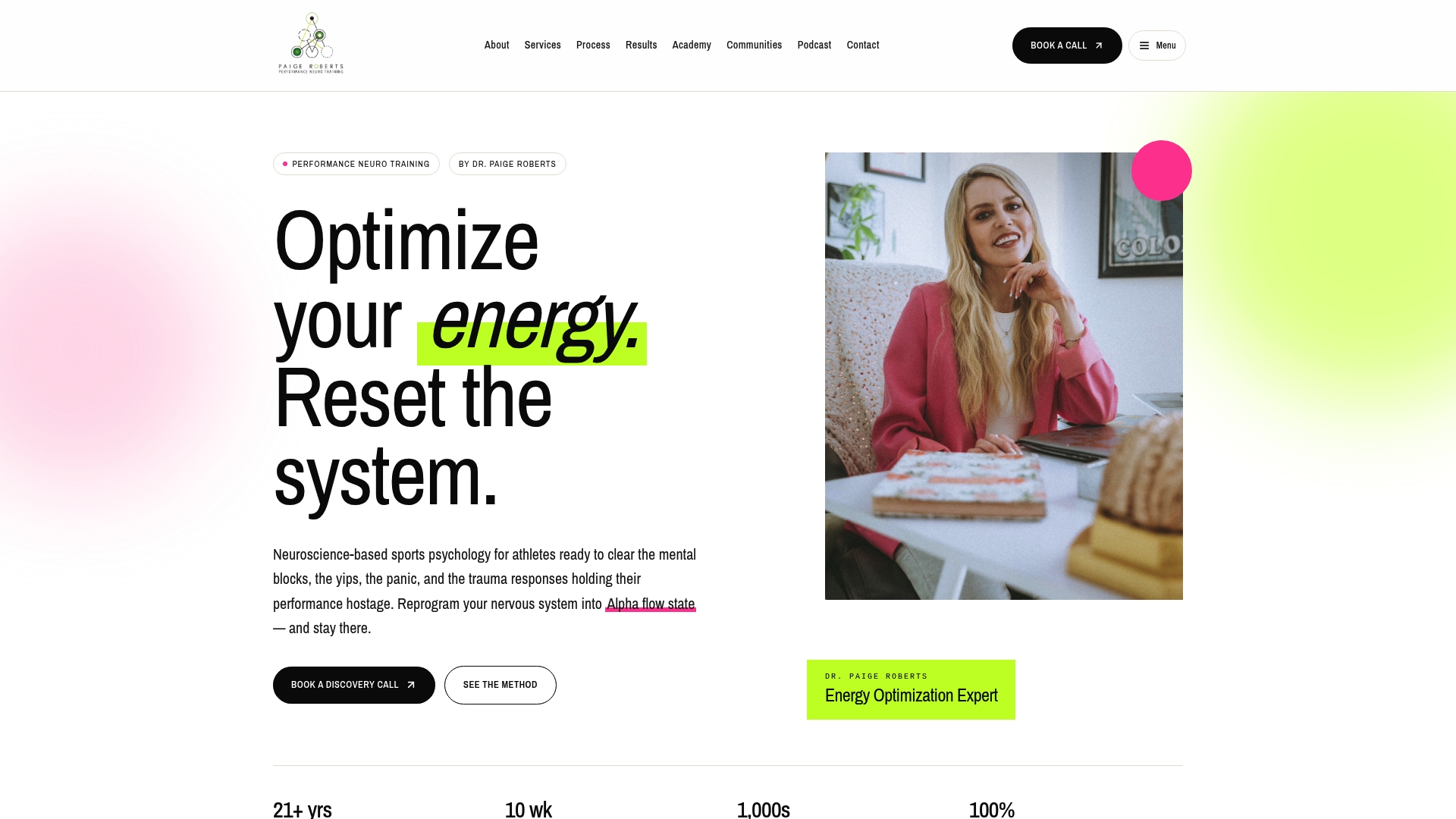
Dr. Paige Roberts works with athletes across disciplines, including cycling, water polo, and combat sports, to build the mental readiness that standardized scales measure but cannot create on their own. QEEG brain scans provide objective neurological data to guide training. The result is an athlete who does not just score well on a readiness scale but actually performs with confidence when it counts.
FAQ
What is the ACL-RSI scale?
The ACL-RSI is a 12-item psychological tool that measures confidence, emotions, and risk appraisal on a 0–100 scale. Scores below 60 typically indicate insufficient psychological readiness for return to sport.
How does fear of reinjury affect return-to-sport outcomes?
Kinesiophobia and general anxiety account for over 40% of psychological readiness variance after ACL reconstruction. High fear of reinjury reduces rehabilitation adherence and lowers the probability of successful return.
Can an athlete be too confident to return safely?
Yes. Athletes with very low reinjury anxiety but incomplete physical recovery return faster but reinjure more often. Low anxiety is not a reliable indicator of physical readiness and should always be cross-checked against functional benchmarks.
What is the 3R framework in sports rehabilitation?
The 3R framework, Recognize, Regulate, and Refocus, teaches athletes to apply mental skills based on their real-time cognitive state rather than a fixed pre-performance script. It performs better than generic routines under fatigue and competitive pressure.
Do multi-modal return-to-play protocols actually reduce reinjury?
Multi-modal protocols that combine psychological readiness scores with functional testing reduce reinjury rates by 47% compared to time-based clearance alone. That evidence makes psychological assessment a clinical standard, not an optional add-on.