

The subconscious mind is defined as the collection of automatic mental processes that govern learned skills, stress responses, and split-second decisions without conscious input. In athletics, the role of subconscious mind mechanics is not secondary to conscious effort. It is the primary driver of performance. Athletes who understand this shift their training from willpower-based repetition to nervous system programming. Coaches who grasp it build mental resilience into practice, not just game-day pep talks. Robertsneurotraining, led by Dr. Paige Roberts, applies neuroscience directly to this gap, using methods like Alpha Imprinting to reprogram automatic athletic responses at the nervous system level.
How does the subconscious mind control athletic performance?
The subconscious mind controls athletic performance by executing learned motor patterns faster than conscious thought can form. When a shortstop fields a ground ball or a sprinter explodes off the blocks, the basal ganglia, a deep brain structure, fires the movement sequence automatically. Conscious thinking does not initiate these actions. It observes them after the fact.
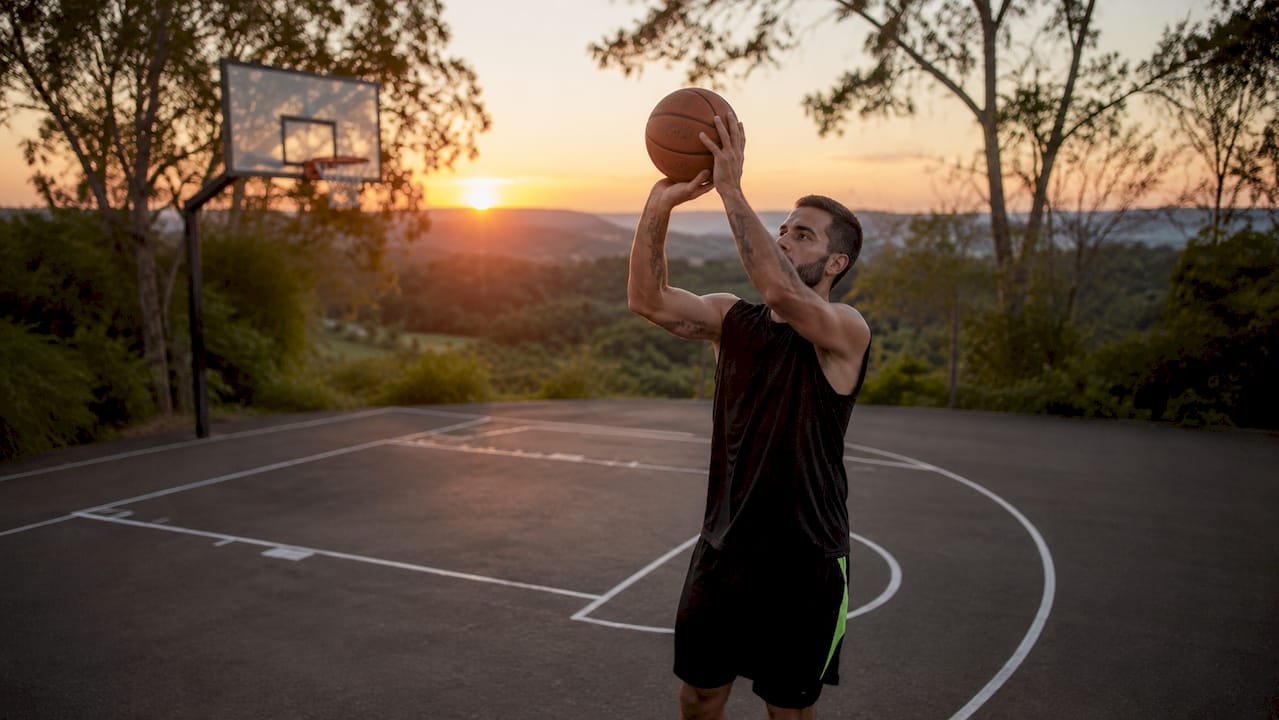
Research confirms this directly. The verbal mind narrates actions after they occur, not before. That means what athletes experience as "deciding" to make a move is actually a post-hoc story the conscious brain tells about what the subconscious already did. Elite performance depends on getting conscious narration out of the way.
This is where the "illusion of conscious control" causes real damage. Athletes who try to consciously manage a skill they have already automated, such as a golfer rethinking their swing mid-round, slow their performance and introduce error. The subconscious system is faster, more efficient, and more accurate for trained movements. Conscious interference is the enemy of automaticity.
Increased cognitive load significantly impairs the subliminal processing that automatic athletic skills depend on. When an athlete is anxious, distracted, or overthinking, executive attention resources get consumed by conscious processing. Fewer resources remain for the subconscious to do its job. Open-skill sports like basketball, soccer, and tennis are especially vulnerable because they require constant real-time adaptation.
- Muscle memory is stored subconsciously through repetition and encoded in the basal ganglia
- Automaticity allows athletes to perform complex skills without conscious step-by-step control
- Conscious interference with automated skills increases error rate and slows reaction time
- High cognitive load from anxiety or distraction reduces subconscious processing capacity
Pro Tip: During competition, trust the training. If you catch yourself thinking through a movement you have practiced thousands of times, redirect attention to a single external cue, like the ball or the target, and let the subconscious take over.
In what ways does the subconscious mind affect athletic anxiety and mental resilience?
The subconscious mind regulates emotional and physiological states under pressure, often before an athlete consciously registers stress. Heart rate, muscle tension, and breathing patterns all shift in response to subconscious threat appraisals. Athletes who cannot manage these automatic responses lose composure before they lose the game.
Body language is one of the clearest windows into this process. Submissive postures invite opponent pressure and signal internal defeat, while fatigue makes it harder to regulate nonverbal cues. This creates a feedback loop: poor body language signals weakness to the brain, which deepens the stress response, which worsens performance. The subconscious reads the body's own signals and responds accordingly.
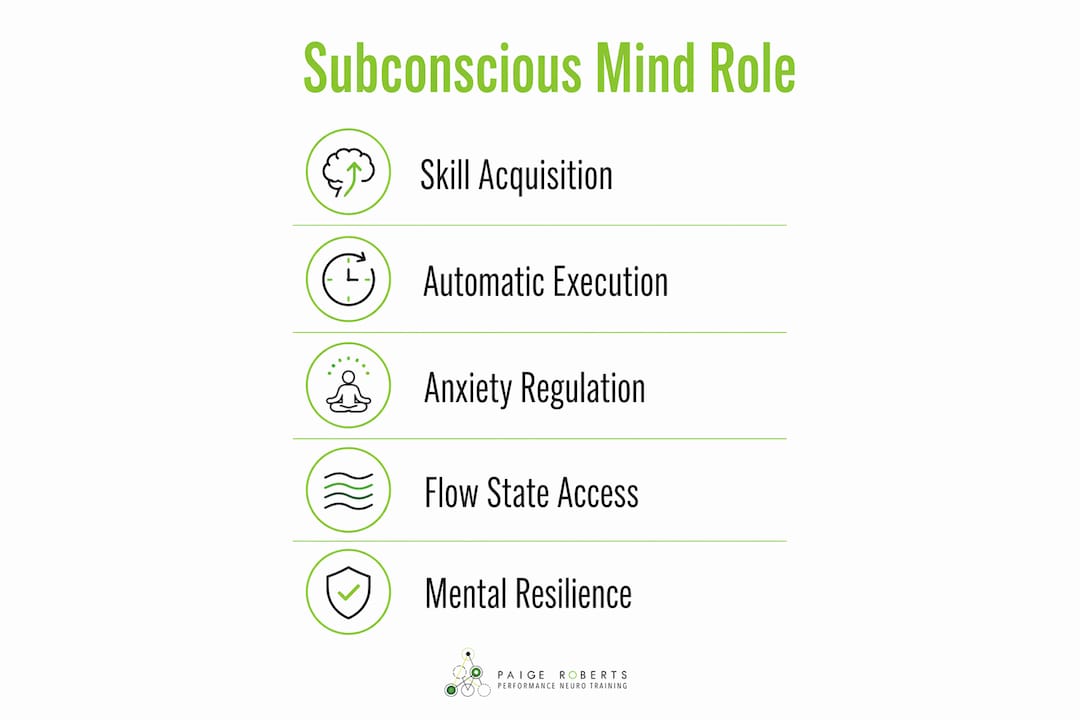
Mental resilience is not a personality trait. Mental toughness is a trainable collection of habits built through reset routines that interrupt negative feedback loops during performance dips. A reset routine is a brief, repeatable physical or cognitive action, such as a breath pattern, a word, or a physical gesture, that signals the nervous system to return to baseline. Coaches who build these into practice give athletes a real tool, not just motivation.
Shifting focus from uncontrollable outcomes to controllable processes builds confidence and reduces anxiety. Empty affirmations do not work. Believable self-talk paired with specific action does. An athlete who tells themselves "I control my effort and my reset" has a subconscious anchor. An athlete who tells themselves "I will win" without a process has nothing to hold onto when pressure peaks.
- Identify two or three physical reset cues to use during competition, such as a breath, a word, or a posture shift
- Practice these resets in training so they become automatic under pressure
- Monitor body language as a performance signal, not just an expression
- Focus self-talk on process and effort, not outcome
Pro Tip: Build your reset routine into every practice session, not just high-stakes moments. The subconscious learns through repetition. A reset that only appears in games will not fire reliably when you need it most.
What is the relationship between intuition, flow state, and the subconscious mind in sports?
Intuition in sports is defined as rapid subconscious decision-making informed by accumulated experience. When a point guard "just knows" to pass before the defender moves, the basal ganglia has already processed context, pattern, and probability. The basal ganglia supports automatic routines that allow athletes to act without conscious reasoning. This is not guessing. It is the nervous system executing a pattern it has seen thousands of times.
Flow state is the peak expression of subconscious control. In flow, skilled action happens without conscious narration. Athletes describe it as effortless, time-distorted, and deeply automatic. The subconscious drives rapid decisions in real time while the conscious mind steps back. Flow is not a lucky accident. It is what happens when subconscious programming is deep enough and conscious interference is low enough.
The common mistake athletes make is overvaluing conscious analysis during competition. Film study and tactical thinking belong in preparation. During performance, conscious analysis competes with the subconscious for processing resources and almost always loses. Athletes who learn to trust their subconscious athletic beliefs perform more consistently than those who rely on in-game deliberation.
- Flow state produces peak execution with minimal conscious effort
- Intuition reflects pattern recognition stored in subconscious neural networks
- Both flow and intuition require deep, consistent practice to develop
- Conscious analysis during performance disrupts both intuition and flow
- Coaches can support flow by reducing cognitive load in competition environments
How can athletes and coaches enhance subconscious mind training?
Subconscious mind training requires consistent, long-term practice. Effective subconscious training builds automatic neural responses over months or years, not weeks. Athletes who expect quick mental fixes misunderstand how the nervous system encodes behavior. The subconscious does not update from a single session. It updates from repeated, emotionally engaged practice.
Visualization techniques for athletes are one of the most research-supported tools for subconscious programming. When an athlete vividly imagines a skill execution, the brain activates many of the same neural pathways as physical practice. Hypnosis and visualization help offload decision-making to the subconscious nervous system, creating consistent automatic performance. This is why elite programs include mental rehearsal as a non-negotiable training component, not an optional add-on.
Subthreshold visual stimuli below conscious awareness can improve stabilization of movement patterns when paired with normal training. This finding points to a broader principle: the subconscious absorbs information that the conscious mind never registers. Coaches who understand this design practice environments that shape subconscious patterns intentionally, not accidentally. For youth athletes especially, the training environment itself becomes a form of subconscious programming. The role of muscle memory in pitching illustrates exactly how early subconscious encoding shapes long-term athletic skill.
| Training method | Target skill | Primary benefit |
|---|---|---|
| Visualization | Movement execution and decision-making | Encodes neural patterns without physical repetition |
| Hypnosis | Automatic performance under pressure | Reduces conscious interference during competition |
| Deliberate practice | Automaticity and muscle memory | Builds basal ganglia-encoded motor programs |
| Body language training | Confidence and stress regulation | Interrupts negative nonverbal feedback loops |
| Reset routine practice | Anxiety management and focus | Creates reliable subconscious anchors for composure |
Film review serves a specific subconscious function when used correctly. Watching your own performance with attention to body language and nonverbal patterns, not just tactical decisions, helps athletes identify and interrupt negative automatic behaviors. Nonverbal behaviors can be reshaped as habits that affect performance under pressure. Coaches who include body language review in film sessions give athletes a tool most programs ignore entirely.
Pro Tip: Use a consistent pre-performance cue, such as a specific breath, phrase, or physical gesture, to signal your nervous system that it is time to perform. Repeat this cue in every practice so it becomes a reliable trigger for your optimal performance state.
Key Takeaways
The subconscious mind governs athletic performance through automatic neural systems, and training it directly through visualization, reset routines, and deliberate practice produces more consistent results than conscious effort alone.
| Point | Details |
|---|---|
| Subconscious drives performance | The basal ganglia executes learned skills faster than conscious thought, making automaticity the goal of elite training. |
| Cognitive load disrupts automaticity | Anxiety and overthinking consume executive resources, reducing the subconscious processing that athletic skills depend on. |
| Body language shapes internal states | Submissive postures trigger stress responses; training body language as a habit directly improves resilience under pressure. |
| Flow requires subconscious trust | Flow state occurs when conscious interference is low and subconscious programming is deep, not when athletes think harder. |
| Consistent practice builds the subconscious | Visualization, hypnosis, and deliberate practice encode automatic responses over months, not sessions. |
What I have learned from watching athletes fight their own nervous systems
Most athletes I work with arrive believing their mental game is a willpower problem. They think if they just want it badly enough, or focus harder, they will perform better. That belief is the obstacle. The subconscious does not respond to effort. It responds to repetition, pattern, and emotional encoding.
The athletes who make the biggest breakthroughs are the ones who stop fighting their automatic responses and start training them. They learn that a panic response before competition is not a character flaw. It is a nervous system pattern that was encoded at some point, and it can be changed. That realization alone shifts the entire mental game in athletics.
What I find coaches consistently underestimate is how much the training environment shapes subconscious programming. Every drill, every correction, every emotional tone in the gym is writing code into the athlete's nervous system. Coaches who understand this design practice with that in mind. They use performance state management as a daily practice, not a crisis intervention.
Mental resilience is not something athletes have or do not have. It is a collection of trained responses. The athletes I have seen perform under the most extreme pressure are not the ones who feel no anxiety. They are the ones whose nervous systems have been trained to reset quickly and return to automaticity. That is a skill. It is teachable. And it starts with understanding that the subconscious mind is not working against you. It is waiting to be trained.
— Paige
How Robertsneurotraining trains the subconscious mind for peak performance
Athletes who understand the subconscious mind's role in performance still need a structured method to reprogram it. Robertsneurotraining provides exactly that.

Dr. Paige Roberts uses Alpha Imprinting to directly reprogram the nervous system, clearing mental blocks, panic responses, and trauma patterns that prevent athletes from reaching flow. The program also uses QEEG brain scan technology to identify each athlete's unique neurophysiological patterns, making mental training specific rather than generic. Olympic medalists and professional athletes across major leagues have used this approach to recover performance after injury and life stressors. If the subconscious mind is the engine of athletic performance, Robertsneurotraining is the mechanic.
FAQ
What is the role of the subconscious mind in athletics?
The subconscious mind governs automatic skills, stress responses, and split-second decisions in sports. It executes learned motor patterns through structures like the basal ganglia, faster than conscious thought can form.
How does the mental game in athletics affect physical performance?
Mental states directly influence physiological responses, including muscle tension, heart rate, and reaction time. Increased cognitive load from anxiety or overthinking reduces the subconscious processing capacity that athletic skills depend on.
What are the best visualization techniques for athletes?
Vivid mental rehearsal of skill execution activates the same neural pathways as physical practice. Hypnosis and structured visualization help encode automatic performance responses in the subconscious nervous system.
How does an athlete reach a flow state?
Flow occurs when subconscious programming is deep and conscious interference is low. Athletes reach it by building automaticity through deliberate practice and reducing in-competition analysis.
Can mental resilience be trained, or is it a natural trait?
Mental resilience is a trainable set of habits. Believable self-talk paired with action and consistent reset routines build the subconscious anchors that sustain composure under pressure.