
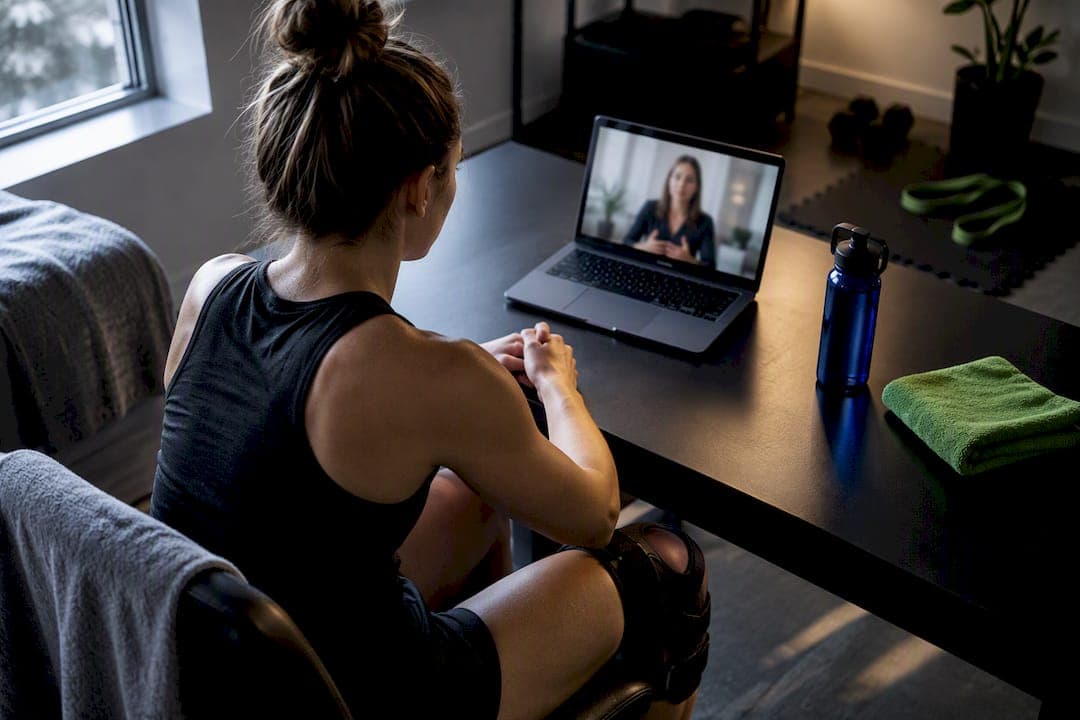
Yes, telehealth sports psychology can deliver both mental health care and performance focused mental skills for athletes, but the outcome depends entirely on matching the right provider type to your actual need. A licensed psychologist can treat anxiety, depression, or trauma over video; a certified mental performance consultant can build focus and routine skills but cannot diagnose or treat a clinical condition. Confirm licensure for your state, set an emergency plan before session one, and you're set. A neuroscience-based telehealth option is available and worth exploring.
TL;DR:
- Telehealth sports psychology is effective for mental skills training like imagery and self-talk, especially based on large-scale online studies showing measurable performance improvements.
- Licensing verification is essential, requiring providers to hold a license in your current state or practice under PSYPACT if applicable, to ensure legal and safe access across state lines.
- Clinical mental health care through telehealth is provided by licensed psychologists, while performance coaching is offered by certified consultants who cannot diagnose or treat mental health conditions.
- Emotional or performance-related issues such as injury-related trauma or severe anxiety may still require in-person or multidisciplinary care rather than solely remote interventions.
- Preparation before sessions includes having a private space, a reliable internet connection, your current location, and a clear training goal summary to maximize the benefit of telehealth services.
Table of Contents
- What Does Sports Psychology Telehealth Actually Cover?
- Who Provides Telehealth Sports Psychology and What Credentials Matter?
- How Do Telehealth Sports Psychology Sessions Work?
- Is Telehealth Sports Psychology Legal Across State Lines?
- Does Online Sports Psychology Training Actually Improve Performance?
- How Do You Choose the Right Telehealth Provider?
- Our Approach: Neuroscience-Based Telehealth With Roberts Neurotraining
- An Editorial Take on Coordinating Telehealth With Your Team
- Ready to Start Telehealth Sessions With Roberts Neurotraining?
- Sources
- FAQ
What Does Sports Psychology Telehealth Actually Cover?
Telehealth in this field splits into two lanes that get confused constantly: clinical mental health care and mental performance coaching. A licensed psychologist treats diagnosable conditions such as depression, anxiety disorders, disordered eating, or trauma, and can prescribe or coordinate medication in states that permit it. A Certified Mental Performance Consultant (CMPC) or performance coach, by contrast, works on the skills that show up on the field: focus, confidence, pre-competition routines, and recovering from a slump. Neither replaces the other, and a good telehealth intake should ask which lane you need before it books you anything.
Session formats vary by provider but tend to cluster around a few patterns:
- One-on-one video sessions, usually 45 to 60 minutes, weekly or biweekly
- Group workshops for teams working on shared issues like communication under pressure
- Brain informed remote plans built around a QEEG assessment, where an initial scan (often done in person or at a partner site) informs a personalized telehealth training sequence
- Asynchronous check-ins or homework review between live sessions, common in performance coaching models
Athletes who benefit most tend to fall into a few groups: recovering from injury and dealing with fear of re-injury, hitting a performance plateau despite solid physical preparation, managing competition anxiety that did not respond to self-help, or carrying old stress and trauma that resurfaces under pressure. Esports athletes now show up in this population too. A 2026 APA Monitor piece on esports psychology describes providers with mixed clinical, cognitive, and sport backgrounds working with competitive gamers on the same anxiety and focus issues seen in traditional sports. If you want a primer on the actual mental skills used in these sessions, mental performance optimization techniques for athletes is a useful starting point before your first call.
Who Provides Telehealth Sports Psychology and What Credentials Matter?
Two very different professional tracks operate under the same "sports psychology" umbrella, and mixing them up is the single most common mistake athletes make when booking a telehealth provider.
- Licensed psychologists with sport psychology proficiency hold a doctoral degree, a state license, and often additional training recognized by the American Psychological Association, which treats sport psychology as a formal proficiency area. They can diagnose, treat, and bill insurance for mental health conditions.
- CMPCs and performance consultants typically hold a master's or doctoral degree in sport psychology or a related field and certification through a governing body, but they are not licensed to diagnose or treat clinical disorders. They excel at goal setting, visualization, and routine building.
- Verify the license directly. Search your state licensing board's public database, not just the provider's website claim, before your first paid session.
- Ask about sport specific experience. A provider who has worked with your sport, or a comparable one, will translate concepts faster than a generalist.
- Confirm trauma informed and culturally competent practice, especially if past injury, discrimination, or family pressure factors into your presenting concern.
A short red flag list saves headaches: avoid anyone who guarantees a specific competitive outcome, refuses to state their license number or credential body, or pushes a single proprietary method as the only path to results. For a deeper look at how performance coaching differs from clinical work in practice, see what mental performance coaching for athletes actually involves day to day.
How Do Telehealth Sports Psychology Sessions Work?
Most sessions run on standard video platforms, 45 to 60 minutes, scheduled weekly during a competitive push or biweekly during maintenance. Some practices blend formats: an initial in-person or lab based QEEG scan, followed by ongoing virtual sessions that reference that baseline data. Others run entirely virtual from intake through completion.
The interventions themselves are often surprisingly concrete. A large controlled trial run through BBC Lab UK, involving 44,742 participants, tested brief online psychological skills interventions and found that imagery and self-talk training produced measurable performance gains compared to a control group, along with increases in effort and more favorable pre-performance emotion. That is not a small pilot study. It is one of the largest psychological skills trials ever run, and it happened entirely online.
Before your first session, get a few things in order:
- A private space where you will not be interrupted or overheard
- A stable internet connection and a tested camera and microphone
- Your current physical location on hand (your provider needs this for safety reasons, covered next)
- A short written note on your training context, recent results, and what you want out of the work
A typical flow looks like this: the provider reviews your goals, teaches or refines one skill (imagery, an if-then plan for a specific competition scenario, an arousal regulation breathing pattern), then assigns a short practice task before the next session. Homework matters more here than in general talk therapy because performance skills, like physical skills, decay without repetition.
Pro Tip: Treat mental skills homework the way you treat strength training. Five minutes of imagery practice daily beats one long session once a week, because consistency is what moves a skill from conscious effort to automatic response under pressure.

Is Telehealth Sports Psychology Legal Across State Lines?
Behavioral health telehealth is governed by where the patient is physically sitting during the session, not where the provider's office is located. Telehealth states plainly that providers must meet the licensing requirements of the state where the patient is located, which catches a lot of traveling athletes off guard.
- Ask your provider directly whether they hold a license in the state you're currently in, not just the state where they're based.
- Check the PSYPACT map if your provider practices under this interstate compact. PSYPACT lets participating psychologists provide telepsychology across member states without a separate license in each one, but only if both your state and theirs participate.
- If you travel frequently for competition, tell your provider before you book. Some practices pause sessions during travel to non-covered states; others have licenses in multiple states specifically for this reason.
Emergency planning is not optional paperwork. Telehealth guidance recommends collecting the patient's physical address at every single session, keeping a locally valid emergency contact on file, and identifying the nearest emergency services when a session happens somewhere new, like a tournament hotel. This matters most during acute distress, when a provider three states away can't call local responders without knowing where you actually are.
On billing: insurance coverage for telehealth mental health care varies by plan and by whether your provider is in-network. The CMS No Surprises Act resources are worth a skim if you're worried about surprise out-of-network charges, though state-by-state insurance rules vary too much to generalize here. Performance coaching with a CMPC is typically private pay and rarely billed to insurance at all, since it isn't a treated medical condition.
Does Online Sports Psychology Training Actually Improve Performance?
The strongest evidence for brief online psychological skills work comes from that same BBC Lab UK trial, and it's worth sitting with what the researchers actually found rather than the watered down version that circulates online.
Participants who completed brief imagery and self-talk interventions showed measurable performance improvements compared to a control group, alongside increases in effort, arousal, and pleasant emotion before competition. The scale of the study, over 44,000 participants, gives the finding real weight rather than the shaky footing of a small university sample.
The catch: a single brief exposure produces a short-term bump, not a permanent transformation. Translating a lab gain into a durable competitive edge requires coached repetition and folding the skill into regular training, not a one-time online module. This is precisely why ongoing telehealth sessions with a real provider tend to outperform a self-guided app: someone is checking whether you actually practiced, and adjusting the skill when it isn't sticking.
Professional consensus backs the integrated approach. The International Society of Sport Psychology's position stand recommends evidence-based, context-driven services and specifically names online tools and telehealth as legitimate, complementary parts of athlete mental health support, not a lesser substitute for in-person work. Online sports psychology tends to help most when it's paired with someone tracking your progress, not when it's a one-off video watched alone. For more on why mental training translates into physical output on the field, this breakdown of the mechanism is worth reading.
How Do You Choose the Right Telehealth Provider?
Work through this in order, and don't skip steps just because a provider's website looks polished.
- Define your need first. Are you dealing with a diagnosable condition (see a licensed psychologist) or performance friction with no clinical component (a CMPC may be sufficient)?
- Verify license coverage for your actual location, including travel patterns, and ask how they handle emergencies during a session.
- Ask about their method and how they measure progress. Vague answers about "helping you reach your potential" with no measurement plan are a warning sign.
- Confirm experience with your sport or a comparable one, plus trauma informed and culturally competent practice if relevant to your history.
- Book a single trial session before committing to a package. Fit matters more than credentials alone.
| Decision Point | What to Check | Why It Matters |
|---|---|---|
| Need type | Clinical diagnosis vs. performance skill gap | Determines whether you need a licensed psychologist or a CMPC |
| Licensure | State where you're physically located, not provider's home state | Legal requirement per Telehealth |
| Emergency plan | Address collection, local contact, nearest services | Required for safe telebehavioral care |
| Sport fit | Direct or comparable sport experience | Speeds rapport and relevance of examples |
If a provider can't answer the licensure question directly, or a trial session feels generic and scripted, that's your signal to look elsewhere or to escalate toward in-person or multidisciplinary care, especially for injury related trauma that may need hands-on assessment alongside the psychological work.
Our Approach: Neuroscience-Based Telehealth With Roberts Neurotraining
One approach takes a different route than standard mental skills coaching: training the nervous system itself, not just teaching cognitive strategies on top of it. The Alpha Imprinting protocol is delivered through telehealth sessions and is built to clear the mental blocks and performance anxiety that often trace back to past injury or unresolved stress, rather than managing symptoms around them.
Available telehealth offerings include:
- QEEG Brain Scans ($1,500), used to inform a brain-based training plan before deeper work begins
- One on One Mentoring ($300 per session), for ongoing individualized support
An experienced practitioner brings extensive direct work with Olympic and professional level athletes to this brain-informed model. If injury history, competition anxiety, or a performance plateau sounds familiar, an intake call may be a practical next step.
An Editorial Take on Coordinating Telehealth With Your Team
Telehealth sports psychology works best as one piece of a coordinated plan, not a solo intervention running parallel to everything else your coach and medical staff are doing. If you're mid return-to-play after an injury, your psychologist or performance consultant needs to know what your physical therapist is clearing you for, and vice versa. Skipping that coordination is how athletes end up mentally ready for a level of play their body isn't cleared for yet, or physically cleared while still carrying fear responses nobody addressed.

Practice between sessions matters more than the session itself, frankly. A weekly video call with no repetition in between is a conversation, not training. Track something concrete, whether that's a self-rated confidence score before competition or a simple log of when you used a planned coping response.
And know your escalation point. If symptoms intensify, if an old trauma resurfaces with more intensity than the telehealth format can safely hold, or if the picture is clearly multidisciplinary (concussion history plus mood symptoms, for instance), move toward in-person or a coordinated team of specialists rather than staying remote out of convenience.
— Paige
Ready to Start Telehealth Sessions With Roberts Neurotraining?
If you've been managing competition anxiety, a stubborn performance plateau, or the lingering effects of an injury on your confidence, a neuroscience-informed approach through Roberts Neurotraining gives you a path that goes beyond standard mindset coaching. Rather than teaching you to manage anxious thoughts, the Alpha Imprinting protocol and QEEG-informed programs work to retrain the nervous system response underneath them, delivered directly through telehealth so you don't need to travel to get it.

Before your first call, have three things ready: your current physical address (for session safety planning), a short summary of your training goals, and any recent medical notes related to injury or ongoing treatment. From there, the services page outlines the 12-Week Energy Optimization Program and light therapy consult options, and a discovery call is the fastest way to find out which one fits your situation. If you're weighing certification or deeper practitioner training instead, the academy page covers Alpha Imprinting and light therapy credentialing paths. Book your intake and find out what a brain-informed approach can do that standard coaching hasn't.
This article is general information, not a substitute for advice from a qualified doctor. Consult a qualified healthcare professional about your own circumstances before acting on anything here.
Sources
- Brief Online Training Enhances Competitive Performance: Findings of the BBC Lab UK Psychological Skills Intervention Study
- PSYPACT map — PSYPACT
- International society of sport psychology position stand: elite athlete mental health revisited
FAQ
Is Telehealth Sports Psychology as Effective as In-Person Care?
For many concerns, yes, particularly focused skills work like imagery and self-talk training, which showed measurable gains in a large BBC Lab UK trial. Complex trauma, severe clinical symptoms, or cases needing physical assessment alongside psychological care may still call for in-person or multidisciplinary support.
Can a Sports Psychologist Practice Telehealth Across State Lines?
Only if they hold a license in the state where you're physically located during the session, or if both states participate in PSYPACT. Always confirm this before booking, especially if you travel for competition.
What's the Difference Between a Sports Psychologist and a Mental Performance Coach?
A licensed sports psychologist can diagnose and treat clinical conditions and typically holds a doctoral degree recognized under the APA's sport psychology proficiency. A CMPC or performance coach focuses on skills like focus and routine building but cannot treat diagnosable mental health conditions.
How Much Does Telehealth Sports Psychology Cost With Roberts Neurotraining?
Pricing depends on the program: one-on-one mentoring runs $300 per session, the 12-Week Energy Optimization Program is $4,500, and QEEG brain scans are $1,500. Full details for each offering are listed on the services page.
What Should I Have Ready Before My First Telehealth Session?
A private, quiet space, a tested internet connection and camera, your current physical address for safety planning, and a short note on your training goals and recent history. Providers following telebehavioral health best practices will also ask about emergency contacts before starting.