

Athletic nervous system conditioning is the deliberate training of neural pathways to improve brain-muscle communication, regulate stress responses, and sharpen performance under pressure. This is the recognized field of neuromuscular and autonomic training, and coaches increasingly treat it as a foundational pillar alongside strength and conditioning work. Key metrics like heart rate variability (HRV) and vagal tone give athletes and coaches measurable windows into nervous system health. The Robertsneurotraining approach, led by Dr. Paige Roberts, applies neuroscience directly to sports performance, targeting the mental blocks and anxiety responses that physical training alone cannot fix.
What is athletic nervous system conditioning?
Athletic nervous system conditioning is the structured process of training both the central and autonomic nervous systems to perform better under physical and psychological stress. The central nervous system controls movement commands. The autonomic nervous system governs recovery, stress response, and energy regulation. Both systems must work together for an athlete to perform at their ceiling.
Neuroplasticity is the mechanism that makes this training possible. The brain and spinal cord remodel neural pathways through repeated, deliberate stimulus. Each training session that challenges the nervous system within a controlled range creates small structural changes. Over time, those changes add up to faster reaction times, better movement efficiency, and stronger stress tolerance.
The vagus nerve sits at the center of autonomic regulation. It connects the brain to the heart, lungs, and gut, and its tone directly reflects how well an athlete recovers between efforts. HRV, the variation in time between heartbeats, is the most reliable real-time marker of vagal tone and nervous system readiness. HRV guides training intensity by reflecting whether the nervous system is primed to absorb load or needs recovery.
| Adaptation | Timeframe | Key Metric |
|---|---|---|
| Initial HRV improvement | 2–4 weeks | Heart Rate Variability |
| Measurable vagal tone increase | 6–8 weeks | Vagal tone via HRV |
| Autonomic balance improvement | 4–8 weeks | HRV, resting heart rate |
| Neural braking reduction | 4–8 weeks | Power output, force production |
Most athletes see measurable improvements in nervous system regulation within 2–4 weeks of consistent daily practice. That timeline is short enough to fit inside a standard training block, which makes nervous system work immediately practical for coaches building periodized programs.
What exercises and techniques condition the athletic nervous system?
The most effective nervous system exercises for athletes fall into three categories: breathwork, deliberate stress exposure, and neuromuscular movement drills. Each targets a different layer of the nervous system, and combining them produces faster adaptation than any single method alone.
Breathwork is the entry point for most athletes. Slow, controlled breathing activates the parasympathetic branch of the autonomic nervous system and directly increases vagal tone. Breathwork requires 6–8 weeks of consistent daily practice, at a minimum of 10 minutes per session, to produce structural nervous system adaptations. That means breathwork is not a pre-competition trick. It is a training discipline.

Cold exposure is a faster-acting tool. Cold exposure 2–3 times weekly for 2–3 minutes per session improves HRV and reduces cortisol over 4 weeks. The mechanism is straightforward: cold activates the sympathetic nervous system, and the deliberate act of staying calm inside that activation trains the athlete's ability to regulate under stress.
Neuromuscular movement drills target the connection between neural control and physical output. High-velocity stability exercises, balance challenges under fatigue, and reactive agility patterns all force the nervous system to refine its motor commands. This is where nervous system reprogramming meets physical performance directly.
Practical techniques coaches can implement immediately:
- Diaphragmatic breathing: 5–10 minutes daily, inhale for 4 counts, exhale for 6–8 counts
- Cold shower exposure: 2–3 minutes, 2–3 times per week, focusing on calm breathing throughout
- Reactive movement drills: Partner-cued direction changes at high speed, 3–4 sets of 10 reps
- Neurofeedback sessions: Used by elite programs to train real-time brainwave regulation
- Progressive breath holds: Controlled CO2 tolerance training to build composure under physiological stress
Pro Tip: Never add cold exposure or breath holds on top of a dysregulated nervous system. High-intensity training on a dysregulated system worsens fatigue. Stabilize breathing and sleep quality first, then layer in deliberate stress exposures.
What are the benefits of nervous system conditioning for athletes?
The most underappreciated benefit of nervous system conditioning is power output. The nervous system acts as a governor on force production. Neural inhibition, or "self-imposed braking," limits how much force an athlete can actually express, regardless of muscle size. Targeted nervous system training removes those limits by retraining the brain's threshold for what is "safe" to produce.
Recovery speed is the second major benefit. Autonomic balance, the ratio of sympathetic to parasympathetic activity, determines how fast an athlete returns to baseline after a hard effort. Athletes with well-conditioned nervous systems recover faster between sets, between games, and across a season. This is why nervous system regulation in recovery has become a focus for professional sports teams.
The mental performance benefits are equally concrete. Competition anxiety, panic responses, and trauma-linked performance blocks all originate in the nervous system. Training the system to regulate itself under stress does not eliminate the stress response. It teaches the athlete to return to baseline faster after activation.
"Resilience in elite athletes is a multi-system process where nervous system training upgrades brain-body communication for faster adaptation and recovery. The goal is not to eliminate stress but to improve the athlete's capacity to return to baseline efficiently, distinguishing healthy activation from chronic sympathetic overdrive."
The numbered list below captures the core performance benefits coaches and athletes report from consistent nervous system training:
- Increased power output through reduced neural inhibition and higher force production thresholds
- Faster recovery between training sessions and competition efforts via improved autonomic balance
- Lower competition anxiety through trained regulation of the sympathetic stress response
- Sharper coordination as refined neural pathways improve movement precision and timing
- Greater mental composure under pressure, including in high-stakes competition moments
Youth athletes benefit from this work too. Mentally preparing young athletes to stay composed under physiological challenge is a direct application of nervous system conditioning principles at the developmental level.
How do athletes and coaches integrate nervous system conditioning into training?
Integration follows a three-phase structure. Phase one focuses on regulation: breathing protocols, sleep quality, and reducing chronic sympathetic load. Phase two builds capacity: adding cold exposure, progressive breath holds, and moderate exercise volume. Phase three introduces challenge exposure: high-stress simulations, competition-level intensity, and reactive drills under fatigue.
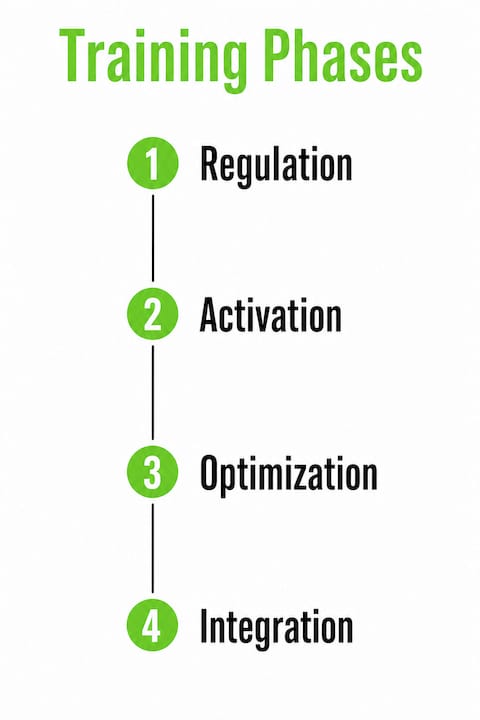
| Phase | Focus | Methods | Duration |
|---|---|---|---|
| 1. Regulation | Stabilize baseline | Breathwork, sleep hygiene | Weeks 1–2 |
| 2. Capacity building | Increase tolerance | Cold exposure, moderate exercise | Weeks 3–6 |
| 3. Challenge exposure | Perform under stress | Reactive drills, simulations | Weeks 7+ |
A sample weekly structure for athletes in phase two looks like this: Monday, Wednesday, and Friday include 30 minutes of moderate aerobic work combined with 10 minutes of breathwork post-session. Tuesday and Thursday focus on neuromuscular drills and cold exposure. Saturday includes a longer breathwork session or neurofeedback. Sunday is full recovery with no deliberate nervous system load.
Consistent moderate exercise, 30 minutes at moderate intensity 3–4 times per week, builds measurable vagal tone improvements over 4–8 weeks. That timeline maps directly onto a standard mesocycle, making it easy to align nervous system work with physical periodization.
Pro Tip: Track HRV every morning before training. A drop of more than 10% from your rolling 7-day average signals that the nervous system needs recovery, not more load. Adjust that day's session accordingly rather than pushing through.
The most common integration mistake is treating nervous system work as an add-on at the end of a full training day. Coaches who integrate nervous system training as a primary training variable, not an afterthought, see faster and more durable performance gains.
Key Takeaways
Athletic nervous system conditioning builds the brain-body communication that physical training alone cannot develop, making it a non-negotiable component of elite athlete preparation.
| Point | Details |
|---|---|
| Definition and mechanism | Nervous system conditioning remodels neural pathways through deliberate, repeated stimulus to improve performance and stress regulation. |
| HRV as the key metric | Heart rate variability reflects nervous system readiness daily and should guide training intensity decisions. |
| Phase-based integration | Start with regulation, build capacity, then add challenge exposure. Skipping phase one worsens fatigue. |
| Power output gains | Neural inhibition limits force production; targeted training removes those limits regardless of muscle size. |
| Timeline for results | Most athletes see measurable HRV improvements within 2–4 weeks and structural adaptations within 6–8 weeks. |
Why nervous system conditioning is the training variable most coaches still ignore
After working with athletes across multiple levels, from youth competitors to Olympic medalists, I keep seeing the same pattern. Coaches build detailed programs for strength, speed, and skill. They track every rep and every sprint. Then they wonder why an athlete freezes under pressure, loses power in the final minutes, or takes weeks to recover from a hard block.
The nervous system is the answer almost every time. Physical capacity is not the ceiling. Neural capacity is.
What I have found is that active nervous system training produces results that passive relaxation never touches. Telling an athlete to "calm down" does nothing. Training them to stay composed inside a breath hold, inside a cold shower, inside a high-speed reactive drill, that changes the system at a structural level. The composure they build in training shows up automatically in competition.
The other thing I want coaches to understand is that this work is not soft. It is not meditation as a substitute for hard training. It is deliberate exposure to physiological challenge with the specific goal of expanding what the nervous system can handle. That is exactly the same principle as progressive overload in the weight room. Apply it to the nervous system and the results are just as measurable.
— Paige
Robertsneurotraining's approach to nervous system performance
Robertsneurotraining, led by Dr. Paige Roberts, works directly with athletes who have hit performance ceilings that physical training cannot break. The program targets the neural patterns behind mental blocks, competition anxiety, and post-injury performance loss.

The core method is Alpha Imprinting, a process designed to reprogram the nervous system at the level where anxiety and trauma responses live. Athletes who have worked through the personalized training process report returning to their sport with both restored confidence and expanded performance capacity. The Energy Optimization Workbook supports daily nervous system management between sessions. If you are ready to address what physical training cannot fix, the process page is the right starting point.
FAQ
What is athletic nervous system conditioning?
Athletic nervous system conditioning is the deliberate training of neural pathways to improve brain-muscle communication, regulate stress responses, and increase performance under pressure. It targets both the central and autonomic nervous systems through breathwork, movement drills, and controlled stress exposure.
How long does it take to see results from nervous system training?
Most athletes see measurable HRV improvements within 2–4 weeks of consistent daily practice. Structural adaptations like increased vagal tone typically develop over 6–8 weeks of sustained training.
What are the best nervous system exercises for athletes?
Diaphragmatic breathwork, cold exposure, reactive movement drills, and progressive breath holds are the most evidence-supported methods. Each targets a different layer of autonomic and neuromuscular function.
Can nervous system conditioning reduce competition anxiety?
Yes. Training the nervous system to return to baseline faster after sympathetic activation directly reduces the panic and anxiety responses athletes experience under competitive pressure. The goal is faster recovery from stress, not elimination of the stress response.
How does HRV help athletes condition their nervous system?
HRV is a real-time marker of nervous system readiness and recovery status. Tracking daily HRV allows athletes and coaches to adjust training intensity based on actual physiological readiness rather than a fixed schedule.