
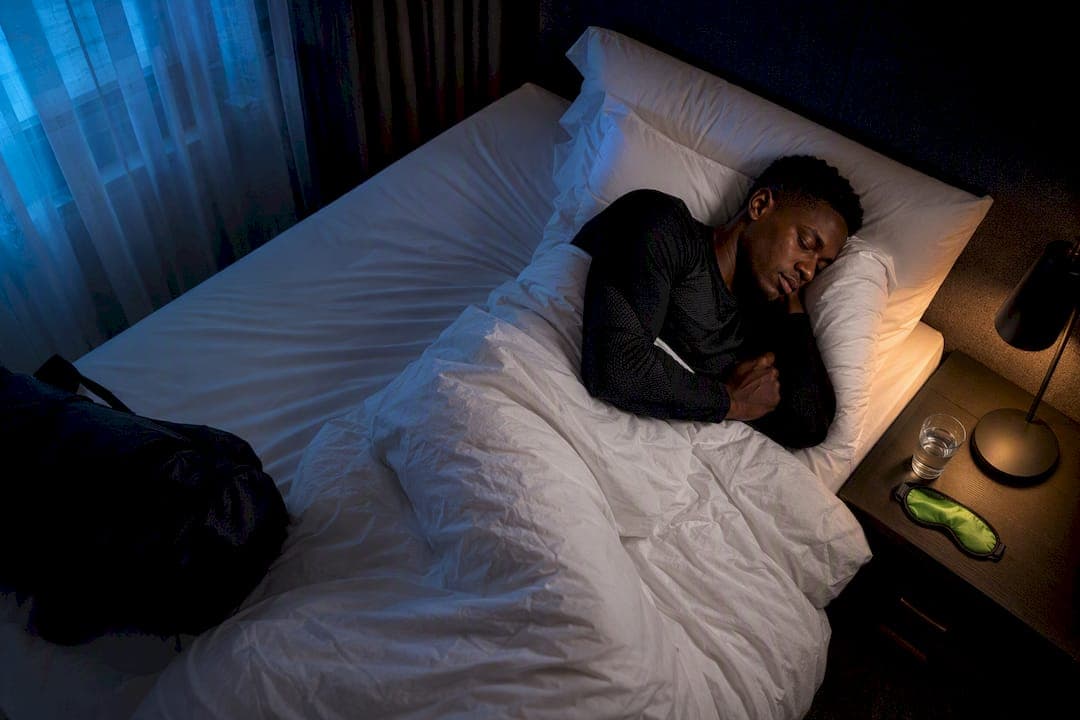
Sleep and athletic performance are directly linked: losing sleep measurably slows you down, weakens your output, and dulls your decision-making within days, while sleep extension and strategic napping reverse much of that damage. The strongest, most consistent evidence points to two interventions worth trying first: track your nightly sleep for a week to find your baseline, then add a 20 to 30 minute nap before heavy training days or bank extra sleep in the week leading into competition.
TL;DR:
- Sleep extension and strategic napping consistently improve athletic reaction times, skill accuracy, and mood, especially in heavily trained athletes.
- Chronic sleep debt suppresses recovery hormones like testosterone and growth hormone, increasing injury risk over time, unlike acute one-night deprivation which heals quickly.
- Response times and motor control deteriorate significantly under sleep restriction, leading to more errors, missed reads, and lower performance quality in sports.
- Individualized tracking of sleep duration and regularity is essential for optimizing recovery, as most athletes need between 8 and 10 hours of sleep per night.
- Nervous-system regulation techniques can address performance anxiety that interferes with sleep, complementing basic sleep strategies for better recovery outcomes.
Table of Contents
- Sleep and Athletic Performance: The Physical Cost of Losing Sleep
- How Sleep Loss Wrecks Reaction Time and Decision-Making
- Which Sleep Fixes Actually Move the Needle
- How Much Sleep Should Athletes Get?
- Managing Sleep Around Competition and Travel
- Tracking Your Sleep: Metrics and Tools That Matter
- Sleep Considerations for Female Athletes, Injury Recovery, and Concussion
- Where Nervous-System Training Fits Into the Sleep Picture
- What Realistic Progress Looks Like
- Ready to Build a Sleep and Recovery Plan That Fits Your Nervous System
- Sources
- FAQ
Sleep and Athletic Performance: The Physical Cost of Losing Sleep
A 2025 systematic review pooling 45 studies gives the clearest picture yet of what sleep loss does to the body under load. Researchers found sleep deprivation produced significant, measurable drops across nearly every physical domain tested. This is not a vague "you'll feel tired" finding. It's quantified.
The meta-analysis reports standardized mean differences (SMDs) that translate roughly like this: skill control took the biggest hit, followed by aerobic endurance and explosive power, with speed and maximum force also declining. Perceived exertion rose at the same time, meaning the same workout felt harder even when the actual physical task hadn't changed.
By the numbers: Sleep-deprived athletes showed effect sizes of -0.87 for skill control, -0.66 for aerobic endurance, -0.63 for explosive power, -0.52 for speed, -0.35 for maximum force, and +0.39 for rated perceived exertion, according to the systematic review and meta-analysis.
That last point matters more than it looks. A rising RPE at a fixed workload means your brain is telling your body to slow down or quit sooner, even though nothing about your fitness has changed overnight. This is one of the reasons sleep-deprived athletes underperform in training long before a coach sees the numbers drop on a stopwatch.
Not all sleep loss hits the same way. The research distinguishes between three patterns that show up constantly in athlete populations:
- Total sleep deprivation (staying awake through the night before competing, common with red-eye travel or shift-working parents of young athletes) causes the sharpest, most acute drops in output.
- Partial sleep restriction (getting 4 to 6 hours instead of a full night, the most common scenario during training camps or exam weeks for student-athletes) produces smaller single-night effects but compounds fast across a week.
- Chronic short sleep (repeatedly logging under 7 hours over weeks or months) does the most lasting damage because it interferes with the hormonal repair processes that happen during deep sleep.
That chronic pattern deserves special attention, because it operates through a mechanism many athletes never think about. Sleep functions as a regenerative window for the endocrine system. When you consistently shortchange it, cortisol stays elevated and the anabolic hormones responsible for tissue repair, testosterone and growth hormone, get suppressed. Your body shifts into a catabolic state exactly when you're asking it to adapt and rebuild.
This has direct consequences for injury risk. Immune function and tissue repair both depend on adequate sleep, and athletes running a sleep deficit over weeks are working with a body that's slower to heal microtrauma and more vulnerable to overuse injuries. A single bad night probably won't tear a hamstring. Weeks of five-hour nights while training loads climb is a different story, and it's one strength coaches rarely connect back to the sleep log.
How Sleep Loss Wrecks Reaction Time and Decision-Making
Physical output isn't where sleep loss does the most damage. Cognition takes a harder hit, and for sport, cognition often decides the outcome before strength does.
The clearest data on this comes from the psychomotor vigilance task (PVT), a standard lab measure of sustained attention and reaction speed. Sleep-restricted subjects consistently show slower response times and more lapses in attention on the PVT, and that slowing tracks almost linearly with how many hours of sleep were lost. A tennis player returning serve, a goalkeeper reading a penalty kick, a sprinter reacting to the gun: all of these depend on the exact reaction window that sleep loss erodes first.
Skill accuracy follows the same pattern. Basketball players tested after sleep restriction show measurable drops in free-throw and three-point shooting percentage, not because their shooting mechanics changed, but because fine motor control and focus degrade under fatigue. The research linking sleep interventions to sport-specific skill outcomes found the reverse holds too: athletes who extended their sleep improved shooting accuracy and sprint times in the same testing window.
One night versus weeks of short sleep produces different failure modes:
- A single night of total deprivation causes sharp, obvious cognitive slowing that most athletes can feel and that usually recovers within a day or two of normal sleep.
- Chronic partial restriction produces a subtler, creeping decline that athletes often don't notice because they've adapted to feeling foggy. It shows up instead as more unforced errors and slower recognition of tactical patterns.
- Both patterns increase what researchers call "microsleep" episodes, brief lapses in attention lasting a second or two, which in contact sports or split-second-timing events can be the difference between a clean read and a costly mistake.
Quick stat: Athletes tested under acute sleep loss show measurably impaired skill control, with an effect size of -0.87 in the pooled analysis, the single largest deficit recorded across all performance domains studied.
Translate that into a game context and it means more turnovers, more missed reads on a break, more blown assignments in a set play your team has run a hundred times in practice. The body might still be capable of the movement. The brain is a step slower to call it. If you want a deeper look at how attention control specifically shapes in-game decisions, attention training research covers how athletes rebuild that focus after a slump or setback.
Which Sleep Fixes Actually Move the Needle
Not every sleep intervention delivers the same payoff, and a review of 25 intervention studies conducted between 2011 and 2021 makes the hierarchy fairly clear. Sleep extension and strategic napping produced the most consistent, measurable gains in physical and cognitive performance. Basic sleep hygiene advice, on its own, showed limited effect once training loads got heavy.
That's a useful thing to know before you invest energy in the wrong fix. A systematic review of these intervention trials found that telling athletes to "just improve your sleep hygiene" rarely moved the needle much for anyone already training at a high volume. Extension and napping did.
Sleep extension typically means deliberately increasing time in bed to 9 or 10 hours nightly for one to several weeks, rather than just protecting a standard 7 to 8 hour window. Small trials using this protocol reported faster reaction times, improved sprint times, better mood, and higher shooting accuracy compared to baseline. The gains weren't massive in any single metric, but they showed up across multiple domains at once, which is unusual for a single intervention.
Napping works on a shorter timescale and splits into two useful protocols depending on what you need:
- A short nap of about 20 to 30 minutes gives a quick boost to alertness and reaction time without entering deep sleep, so you wake up sharp rather than groggy. This is the better choice a few hours before a game or a heavy training session.
- A longer nap completing a full sleep cycle can deliver more substantial recovery benefits, useful the day before a big event or during a multi-day tournament when night sleep is compressed.
Both protocols showed improvements in sprint and jump metrics in intervention trials, though the effect size varies by sport and by how sleep-deprived the athlete was going in.
Light manipulation and mindfulness-based approaches show promise but sit on thinner evidence. Timed bright-light exposure in the morning can help reset a circadian rhythm that's drifted from travel or late-night competition, and mindfulness practices before bed have shown modest reductions in the time it takes to fall asleep. Neither has the volume of controlled trials behind it that sleep extension and napping do.
Pro Tip: If you can only change one thing this month, pick sleep extension over any supplement, gadget, or hygiene checklist. The evidence base is strongest there, and it costs nothing but time in bed.
The honest caveat here is that most of this evidence comes from small trials, often 10 to 30 athletes, across a handful of sports. That's enough to trust the direction of the effect. It's not enough to hand every athlete an identical prescription. Individualized trial and error, tracking your own response to a given protocol over a few weeks, still beats copying someone else's routine.
How Much Sleep Should Athletes Get?
There's no single number that fits every athlete, but the ranges researchers use as a starting point give you something concrete to test against. Endurance athletes and anyone running a habitual sleep debt tend to need more than 8 hours a night, not the flat 7 to 9 range often quoted for the general population.
Here's a practical sequence to build a personal sleep protocol around:
- Set your nightly baseline first. Track total sleep time and how you feel across a normal week before changing anything. Most competitive athletes need somewhere between 8 and 10 hours, and endurance-sport athletes often sit at the higher end of that range.
- Use short naps for a same-day boost. A 20 to 30 minute nap in the early afternoon raises alertness for an evening session without leaving you groggy, since you wake before entering deep sleep.
- Use longer naps for real recovery. A 90 minute nap, timed to complete a full sleep cycle, works better the day before competition or on a heavy multi-session training day, when a short nap won't cut it.
- Avoid napping too close to bedtime. Napping after roughly 3 PM risks delaying that night's sleep onset, which defeats the purpose.
- Adapt the "3-2-1" wind-down rule for competition. Three hours before sleep, cut off heavy alcohol and intense training. Two hours before, avoid large meals that force digestion to compete with sleep onset. One hour before, start a consistent wind-down routine (dim lights, no screens, same sequence every night) so your body recognizes the cue.
- Time caffeine deliberately. Caffeine's half-life runs 5 to 6 hours for most people, so a competition-day dose taken to sharpen reaction time should land early enough that it clears before your target bedtime, and never right before a nap you're relying on for recovery.
Pro Tip: If your pregame routine and the 3-2-1 rule conflict, for example, a night match that ends at 10 PM, shift the whole sequence earlier in the day rather than skipping steps. Protect the one-hour wind-down even if it means compressing the two-hour meal window slightly.
None of this replaces individualized testing. A distance runner logging 90 miles a week needs a different sleep opportunity than a tennis player playing three matches in a weekend tournament. Track how you respond, adjust by 30 minute increments, and give any change at least a week before judging it.
Managing Sleep Around Competition and Travel
Competition itself disrupts the sleep it depends on, and the data on this is stark. Elite athletes routinely fail to hit basic sleep targets, total sleep time above 7 hours and sleep efficiency above 85%, specifically during training blocks and on competition nights. A systematic review and meta-analysis covering training and competition effects on elite athlete sleep found that scheduling, not motivation or discipline, is the biggest driver of these losses.
Competition nights alone tend to cost athletes roughly 60 minutes of total sleep time compared to a normal training night, and early-morning sessions compound the problem by cutting sleep from the other end. Starting training after 9 AM when the schedule allows it preserves meaningfully more total sleep than an early call time, according to the same review.
Travel adds a separate layer of disruption, especially across time zones. A few strategies consistently help:
- Pre-travel sleep banking. Extending sleep by an hour or two in the days before a trip creates a buffer against the sleep debt that travel almost always produces.
- Timed light exposure. Morning light exposure after eastward travel and evening light exposure after westward travel both help reset circadian timing faster than doing nothing.
- Eastward trips are harder than westward ones. Flying east requires advancing your body clock, which the circadian system resists more than the delay required flying west. Build in an extra recovery day when the itinerary allows it.
- Melatonin, used carefully. Some athletes use low-dose melatonin timed to the destination's evening to help shift circadian rhythm, though individual response varies enough that it's worth testing well before a competition, never for the first time on travel day itself.
- Protected sleep windows at the team level. Coaching staff who build a fixed, non-negotiable sleep window into travel schedules, rather than leaving it to individual discipline, see better compliance across a roster.
Scheduling is the one variable a team can actually control, more than motivation, more than gear, more than most of what gets coached. It's worth treating as seriously as a training plan.
Tracking Your Sleep: Metrics and Tools That Matter
Three numbers matter more than any others once you start tracking: total sleep time (TST), sleep efficiency (SE, the percentage of time in bed actually spent asleep), and sleep regularity, how consistent your sleep and wake times are night to night. A high TST with poor regularity, sleeping 9 hours some nights and 5 the next, can still leave you underrecovered even if the weekly average looks fine.
Consumer wearables are a reasonable starting point for tracking TST and regularity. They correlate reasonably well with research-grade actigraphy for total sleep time, though their accuracy drops noticeably for sleep-stage detection, meaning the "deep sleep" and "REM" breakdowns on your phone app deserve some skepticism.
For those three tracking tiers, here's roughly what each is good for:
- Consumer wearables (rings, watches, fitness bands) work well for tracking trends in TST and bedtime consistency over weeks, which is exactly what most athletes need for day-to-day decision-making.
- Research-grade actigraphy offers more validated total sleep time data and is what most of the studies cited in this article actually used, but it's not something most athletes will have access to outside a sports-science lab.
- Polysomnography remains the clinical gold standard for diagnosing sleep disorders because it measures brain activity directly, but it requires an overnight lab visit and isn't a tool for routine self-monitoring.
If you notice a pattern of trouble falling asleep, waking repeatedly through the night, loud snoring paired with daytime exhaustion, or a sleep schedule that seems chronically out of sync no matter what you try, that's a signal to talk to a physician about insomnia, sleep apnea, or a circadian rhythm disorder rather than trying to fix it with another nap protocol.
Sleep Considerations for Female Athletes, Injury Recovery, and Concussion
General sleep guidance built mostly from male-athlete data doesn't transfer cleanly to every population, and three groups deserve their own approach.
Female athletes face sleep challenges tied to hormonal fluctuation across the menstrual cycle, on top of the same training and travel stressors everyone deals with. Emerging research on female athlete sleep argues against simply extrapolating male-derived protocols and instead calls for sex-specific planning that accounts for cycle-phase symptoms, which can shift both sleep quality and recovery needs week to week.
Concussion recovery brings its own sleep disruption pattern. Athletes recovering from a concussion commonly report trouble falling asleep, fragmented sleep, and daytime fatigue that doesn't match their usual pattern, a cluster sometimes called concussion sleep problems. The conservative approach favored in return-to-play protocols treats sleep disruption as a symptom to monitor, not something to push through, and generally recommends against aggressive sleep restriction or forced early wake times during the recovery window. Nervous-system dysregulation after a head injury can also feed the anxiety and hypervigilance that make sleep onset harder, which is a piece of the puzzle general sleep hygiene advice doesn't address on its own. Reviewing how neurological patterns affect injury recovery gives useful context here.
- Youth athletes carrying adult-level training loads need proportionally more sleep, not less, since growth and repair processes are still developing.
- High training-load periods for any athlete, regardless of age, are exactly when sleep should be protected most, not sacrificed for extra reps.
- Any athlete with persistent post-injury sleep disruption lasting more than a few weeks should get a formal evaluation rather than assuming it will resolve on its own.
Where Nervous-System Training Fits Into the Sleep Picture
Sleep interventions fix half the equation. The other half is why an athlete's nervous system stays wired at 11 PM in the first place, and that's usually anxiety, unresolved trauma from a past injury, or a chronic stress response that no amount of sleep hygiene touches directly.
A neuroscience-based approach addresses sleep problems from the nervous-system side rather than the sleep-schedule side. Techniques aim to reprogram stress and fear responses that keep athletes in a heightened state, complicating sleep onset before important events despite good wind-down routines. Brain scans provide data-based insights into neural patterns, while light therapy supports circadian regulation alongside nervous-system interventions.
In practice, this pairs naturally with the sleep strategies covered above. An athlete using sleep banking and nap protocols to prepare for a tournament, while also carrying performance anxiety from a past injury, often finds the anxiety itself is what's sabotaging sleep onset the night before competing. Addressing the nervous-system pattern directly can clear that obstacle in a way a nap schedule alone can't. Case-based work on this pairing shows up in how athletes recover from performance slumps using Alpha Imprinting alongside standard recovery protocols.
- Nervous-system regulation targets the anxiety and hypervigilance that interfere with sleep onset, a mechanism sleep hygiene checklists don't reach.
- QEEG assessment personalizes the starting point instead of applying a generic protocol to every athlete.
- Light therapy supports the circadian side of the equation while nervous-system work supports the psychological side, and the two are meant to run together rather than in sequence.
What Realistic Progress Looks Like
Reaction time, perceived effort, and shooting or handling accuracy tend to improve first, often within a week or two of consistent sleep extension or nap protocols. Deeper physical adaptations, injury resilience, hormonal recovery, chronic fatigue reversal, take longer and depend on weeks of consistent change, not a few good nights before a meet.
A reasonable trial runs four weeks: track your baseline for week one, add extended time in bed and a nap protocol for week two, hold it steady through week three while logging how training feels, and reassess in week four. If sleep quality still isn't improving despite consistent effort, that's the point to escalate to a professional rather than keep tweaking on your own.
The evidence base here is real but still built mostly on small trials. Individual response varies enough that self-monitoring beats copying someone else's exact protocol.
— Paige
Ready to Build a Sleep and Recovery Plan That Fits Your Nervous System
Sleep protocols only work as well as the nervous system underneath them lets them work, and that's the gap Performance Neuro Training is built to close. Instead of another generic sleep-hygiene checklist, the 12-Week Energy Optimization Program pairs sleep-banking and nap strategy with Alpha Imprinting work aimed at the anxiety and stress patterns that keep athletes wired at night in the first place.
A QEEG brain scan gives you a data-based starting point rather than a guess, mapping exactly which neural patterns are working against your recovery before a plan gets built. For teams, Group & Team Alpha Imprinting sessions extend the same approach to a full roster, and a Light Therapy Device Consult helps individualize circadian support for athletes dealing with travel schedules or night competition. Book a consult to map out a sleep-and-recovery plan built around your actual nervous-system patterns, not a generic sleep chart.
Sources
- Effects of sleep deprivation on sports performance and perceived exertion in athletes and non-athletes: a systematic review and meta-analysis - PubMed
- Effects of training and competition on the sleep of elite athletes: a systematic review and meta-analysis | British Journal of Sports Medicine
This article is general information, not a substitute for advice from a qualified doctor. Consult a qualified healthcare professional about your own circumstances before acting on anything here.
FAQ
Can sleep improve your athletic performance?
Yes. Sleep extension and strategic napping are the two interventions with the strongest evidence behind them, improving reaction time, sprint performance, mood, and skill accuracy in controlled trials. Basic sleep hygiene advice alone tends to show much smaller effects once training load gets heavy.
What is the 3-2-1 sleep rule for athletes?
It's a wind-down framework: stop heavy alcohol and intense exercise three hours before bed, avoid large meals two hours before, and start a consistent screen-free wind-down routine one hour before sleep. Athletes with late competition times can shift the whole sequence earlier rather than skip steps.
How much sleep do athletes actually need?
There's no universal number, but most competitive athletes need between 8 and 10 hours nightly, with endurance athletes and those carrying a chronic sleep debt often needing the higher end. Individualized tracking over a week or two, rather than a fixed rule, gives the most reliable target for each athlete.
Does sleep loss increase injury risk?
Chronic short sleep suppresses the anabolic hormones responsible for tissue repair and keeps cortisol elevated, both of which slow recovery from training stress and microtrauma. A single bad night is unlikely to cause an injury on its own, but weeks of sleep debt during heavy training raises the risk meaningfully.
Can nervous-system training help with sleep problems tied to performance anxiety?
Yes, when the sleep disruption is driven by pre-competition anxiety or unresolved stress from a past injury rather than a medical sleep disorder. Performance Neuro Training's Alpha Imprinting method targets that stress response directly, which can clear an obstacle that sleep hygiene changes alone don't address; current pricing for the 12-Week Energy Optimization Program is listed on the site.